Table of Contents >> Show >> Hide
- Why Deep-Fry a Turkey?
- The Safety Talk You Should Not Skip
- What You Need to Deep-Fry a Turkey
- Choose the Right Turkey
- How to Thaw a Turkey the Right Way
- How to Measure the Oil Without Creating a Backyard Volcano
- How to Prep the Turkey for Maximum Flavor
- Step-by-Step: How to Deep-Fry a Turkey
- Pro Tips for a Perfect Fried Turkey
- Common Mistakes That Ruin Fried Turkey
- How to Carve, Serve, and Store Leftovers
- What the Experience of Frying a Turkey Is Really Like
- Final Thoughts
Deep-frying a turkey is the culinary equivalent of showing up to Thanksgiving in a velvet blazer: bold, slightly dramatic, and impossible to ignore. Done right, it gives you crisp, bronze skin and juicy meat in a fraction of the time it takes to roast a whole bird. Done wrong, it can turn into the kind of holiday story your relatives tell forever, and not in a flattering way.
That is why the secret to a perfect deep-fried turkey is not just hot oil and confidence. It is planning, safety, temperature control, and a healthy respect for the fact that water and 350-degree oil are sworn enemies. In this guide, you will learn exactly how to deep-fry a turkey, what equipment you need, how to prep the bird, how long to cook it, and which mistakes to avoid if you would like your holiday to feature applause instead of panic.
Why Deep-Fry a Turkey?
Let’s start with the obvious question: why deep-fry a turkey at all? Because when it works, it really works. Deep-frying cooks the turkey quickly, which helps the meat stay moist while the skin turns beautifully crisp. It also frees up your oven for stuffing, casseroles, pies, and the other dishes that mysteriously require every square inch of kitchen space on a holiday.
A good fried turkey has three big advantages:
- Speed: A whole turkey can cook in under an hour, depending on size.
- Texture: The skin becomes crackly and golden instead of pale and floppy.
- Juiciness: The quick cooking time helps protect the meat from drying out.
In other words, deep-frying is not just a flashy stunt. It is a genuinely great cooking method, provided you follow the rules.
The Safety Talk You Should Not Skip
Before we get to the crispy part, here is the truth: traditional turkey fryers deserve caution. A large pot of very hot oil plus an open flame can go sideways fast. That is why safety experts strongly warn against careless setup and, in some cases, discourage oil-based turkey fryers entirely.
If you decide to deep-fry a turkey, do it like a pro:
- Fry outdoors only, never in a garage, under a roof overhang, or on a wooden deck.
- Set the fryer on a flat, stable, nonflammable surface such as concrete or bare pavement.
- Keep children, pets, and football spectators with questionable balance far away.
- Never leave hot oil unattended.
- Use a turkey that is completely thawed and thoroughly dry.
- Never stuff a turkey you plan to deep-fry.
If that sounds strict, good. Fried turkey rewards discipline. This is not the moment to “wing it,” unless you are talking about the turkey itself.
What You Need to Deep-Fry a Turkey
To deep-fry a turkey successfully, gather everything before you heat a drop of oil. Once the oil is hot, there should be no running around the yard looking for tongs, thermometers, or your sense of responsibility.
Equipment
- Outdoor turkey fryer with a large pot and burner, or a large electric fryer designed for turkey
- Turkey fryer basket, rack, or hook for lowering and lifting the bird
- Propane tank, if using a propane fryer
- Long, heat-safe gloves
- Paper towels
- Instant-read meat thermometer
- Fry thermometer, if your setup does not include one
- Large sheet pan or tray for resting the turkey
Ingredients
- One whole turkey, ideally in the 10- to 14-pound range
- Peanut oil, vegetable oil, or another high-heat oil
- Dry rub, Cajun seasoning, salt and pepper, or an injection marinade
Peanut oil is a popular choice because it has a high smoke point and a fairly neutral flavor. Vegetable or canola oil can also work well. The key is using an oil that can handle high heat without throwing a smoky tantrum.
Choose the Right Turkey
Not every turkey is a good frying candidate. Bigger is not better here. A moderate-size bird is easier to handle, cooks more evenly, and is less likely to cause oil overflow drama.
For most setups, a turkey around 10 to 12 pounds is ideal, though some fryers can safely handle a bit larger. Check your fryer manufacturer’s instructions and never force a turkey that barely fits. This is cooking, not a suitcase challenge at the airport.
Your turkey should also be:
- Completely thawed if previously frozen
- Unstuffed
- Free of the giblets and neck
- Pat-dry inside and out
If the turkey is even slightly icy inside, do not fry it. Ice turns to steam instantly in hot oil, and that can cause dangerous splattering or overflow.
How to Thaw a Turkey the Right Way
If you bought a frozen bird, give yourself enough time. In the refrigerator, turkey thawing takes longer than people think. A whole turkey often needs several days, depending on weight. The safest move is to thaw it in the fridge, not on the counter, not in the garage, and definitely not in the “it looks mostly fine” zone of optimism.
Once thawed, keep the turkey refrigerated until you are ready to prep it. Before frying, remove the packaging, neck, and giblets. Check both cavities. Many a cook has seasoned a turkey beautifully, only to discover the giblet bag later like an unwelcome holiday surprise.
How to Measure the Oil Without Creating a Backyard Volcano
This is one of the most important steps. Do not guess how much oil you need. Measure it before heating.
The easiest method
- Place the raw, thawed turkey in the fryer pot.
- Add water until the turkey is just covered, or according to your fryer’s guidance.
- Remove the turkey and note the water line.
- Dry the pot thoroughly.
- Fill with oil to that same line when you are ready to fry.
This trick helps prevent overfilling, which is the classic cause of oil spilling over the sides once the bird is lowered in. No one wants Thanksgiving with bonus fire department sirens.
How to Prep the Turkey for Maximum Flavor
The best deep-fried turkey is not just cooked correctly. It is seasoned well. Because the cooking time is short, flavor-building should happen before the bird hits the oil.
Option 1: Dry Rub
A dry rub is simple and effective. Use salt, black pepper, garlic powder, onion powder, paprika, cayenne, or your favorite Cajun blend. Rub it all over the outside and lightly inside the cavity. This helps create a flavorful crust and gives the skin color and character.
Option 2: Injection Marinade
Injection marinades are popular for fried turkey because they deliver flavor directly into the meat. Butter-based mixtures with garlic, herbs, lemon, or Cajun seasoning are common choices. Inject into the breast, thighs, and legs in several spots for even distribution.
Option 3: Brine, Then Dry Thoroughly
You can brine a turkey before frying, but there is one non-negotiable rule: after brining, the bird must be dried extremely well. Leave it uncovered in the refrigerator for several hours if possible to help the skin dry out. Wet turkey plus hot oil equals instant regret.
One more seasoning tip: go easy on sugar-heavy rubs. Sugar browns quickly, and in a fryer it can move from gorgeous to suspiciously dark in a hurry.
Step-by-Step: How to Deep-Fry a Turkey
1. Set up the fryer outdoors
Choose a flat open area away from your house, garage, railings, patio furniture, or anything else you do not want to explain to your insurance company. Make sure the fryer is stable and level.
2. Prep the turkey completely
Remove the neck and giblets. Pat the turkey very dry inside and out with paper towels. Tuck the legs if needed and place the bird in the fryer basket or on the rack.
3. Heat the oil
Bring the oil to about 350°F. Some fryers recommend preheating slightly higher so the temperature settles back after the bird goes in, but the goal during cooking is generally around 325°F to 350°F.
4. Turn off the burner before lowering the turkey
This is a pro move and a safety move. Turn off the flame, then slowly lower the turkey into the oil. Do not drop it in. Do not rush. Lowering it gradually helps reduce bubbling and splashing.
5. Turn the burner back on and monitor the temperature
Once the turkey is fully submerged and the oil has settled, relight the burner if using propane. Maintain the oil temperature near 350°F, adjusting the heat as needed.
6. Cook for about 3 to 4 minutes per pound
This is your rough estimate, not your final truth. A 12-pound turkey may take around 36 to 48 minutes. Start checking doneness toward the lower end of the range.
7. Check the internal temperature
Use an instant-read thermometer in the thickest part of the breast and the innermost part of the thigh without touching bone. The safe minimum is 165°F. Many experienced turkey cooks prefer to see the thigh a little higher for ideal texture, but 165°F is the key safety benchmark.
8. Lift, drain, and rest
Carefully lift the turkey out and let the excess oil drain back into the pot. Transfer the turkey to a tray or pan lined with paper towels. Let it rest for about 20 minutes before carving so the juices can redistribute.
Pro Tips for a Perfect Fried Turkey
- Dry the bird like you mean it. Even a little water can cause aggressive splattering.
- Use two thermometers. One for the oil, one for the meat. Guesswork is not a seasoning.
- Do a full safety check before heating. Stable fryer, clear area, propane connected correctly, extinguisher nearby if appropriate for grease fires.
- Keep the lid off traditional outdoor pots. Follow your manufacturer’s instructions; most open fryers are not a lid-on situation.
- Let the turkey come out cleanly. Lift slowly and steadily so hot oil drains safely.
- Rest before carving. The turkey is excited, but it still needs 20 minutes.
Common Mistakes That Ruin Fried Turkey
Using a partially frozen turkey
This is the biggest and most dangerous mistake. If there is ice in the cavity or under the skin, do not fry it.
Skipping the oil measurement step
Eyeballing the oil level is how people end up with overflow. Measure first with water, then dry everything completely.
Trusting time more than temperature
Minutes per pound is helpful, but the thermometer decides when the turkey is done.
Frying too close to the house
Outdoor only means outdoor only. Not “half outdoors.” Not “inside the garage because it is windy.” Just outdoors.
Overcrowding the fryer with a huge bird
A turkey that barely fits is a safety issue and a cooking issue. Choose a size your equipment can handle confidently.
How to Carve, Serve, and Store Leftovers
Once the turkey has rested, carve it as you would a roasted bird. The skin may be delicate and extra crisp, so a sharp knife helps. Serve immediately while the exterior still has that fresh-fried crunch.
For leftovers, do not let cooked turkey sit out all afternoon while everyone wanders back for “just one more little slice.” Refrigerate leftovers within 2 hours, sooner if the weather is very hot. Store them in shallow containers and use within 3 to 4 days. Reheat leftovers to 165°F.
What the Experience of Frying a Turkey Is Really Like
Anyone who deep-fries a turkey for the first time usually expects one of two things: either a magical, effortless holiday triumph or a cinematic disaster involving smoke, yelling, and a neighbor holding a fire extinguisher. The actual experience, when done correctly, falls somewhere in the middle. It feels less like a stunt and more like a carefully managed outdoor cooking project.
The first surprise for many people is how calm the process becomes when the prep work is solid. A fully thawed bird, a dry surface, measured oil, and organized tools take most of the fear out of the equation. The real stress usually happens before the burner turns on, not after. People worry about the oil level, second-guess the size of the turkey, and stare at the thermometer as if it might lie for sport. But once the turkey is lowered slowly and the oil settles into a steady bubble, the mood changes. Suddenly, it becomes very clear that the “secret” to fried turkey is mostly respect for process.
Another common experience is that the turkey cooks much faster than expected. People who are used to roasting a turkey for hours often keep glancing at the clock and asking, “That’s it?” Yes, that is it. The speed feels almost suspicious the first time. But when the thermometer confirms the bird is done and the skin is deeply golden, the appeal becomes obvious. You get that big holiday centerpiece without spending half the day babysitting an oven.
Flavor is usually the next revelation. A fried turkey does not taste greasy when it is cooked properly. Instead, the skin comes out crisp and the meat stays juicy, especially in the breast, which is where roasted turkeys often wave the white flag and dry out. Many cooks also say the experience changes how they think about seasoning. With a fried turkey, injections and assertive rubs shine because the cooking method locks in flavor fast.
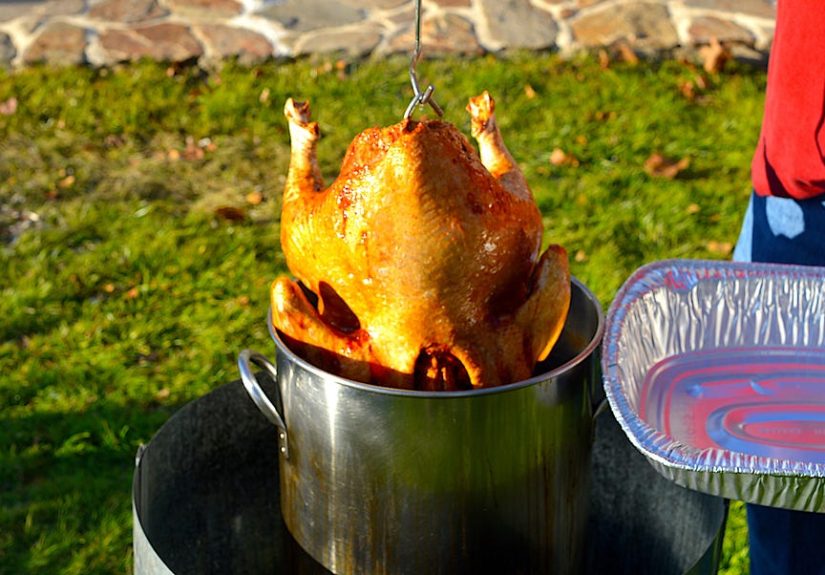
There is also a social side to it. Deep-frying a turkey tends to turn one person into the “outside cook” while everyone else drifts in and out offering advice they did not earn. You will likely hear at least one person say, “Looks done to me,” long before the thermometer agrees. You may also become the accidental holiday attraction, because people love to watch a turkey emerge from hot oil looking like it won a beauty contest.
Perhaps the biggest lesson from experienced turkey fryers is that confidence should come from repetition of good habits, not from bravado. The people who do this well every year are usually the least casual about it. They measure. They dry. They monitor. They rest the bird. They store leftovers quickly. In other words, the best fried turkey experiences are not built on luck. They are built on preparation so boring and sensible that the final result feels almost unfairly impressive.
Final Thoughts
Deep-frying a turkey is one of those cooking projects that rewards attention to detail. The payoff is huge: crackly skin, juicy meat, faster cooking, and a holiday centerpiece that makes people stop mid-conversation. But the real key to success is not fearlessness. It is respect for safety, temperature, and timing.
Choose the right bird, thaw it fully, dry it thoroughly, measure the oil correctly, fry outdoors, and verify doneness with a thermometer. Follow those steps, and your deep-fried turkey can go from “ambitious idea” to “best turkey on the table” without turning Thanksgiving into an emergency training exercise.