Table of Contents >> Show >> Hide
- First Things First: Make Sure It Is Actually a Finger Fracture
- The Main Rule: Protect the Healing Bone Before Protecting Your Fitness Ego
- What Exercise Usually Looks Like in the Early Healing Phase
- Exercises to Avoid Until You Are Cleared
- How to Modify Your Routine Without Losing Momentum
- When to Start Finger Motion and Rehab Exercises
- How to Tell If You Are Doing Too Much
- A Simple Weekly Workout Template
- Recovery Habits That Make Exercise Safer
- When You Can Return to Full Workouts
- What Real-Life Experience With a Finger Fracture Often Feels Like
- Conclusion
A finger fracture sounds small until you try to do literally anything active and realize your entire fitness routine apparently depends on ten tiny overachievers. Suddenly, gripping a dumbbell feels suspicious, planks look rude, and even pulling up your leggings becomes a tactical operation.
The good news is that a broken finger does not automatically mean total couch exile. In many cases, you can stay active while your finger heals. The trick is to protect the fracture, respect the treatment plan, and choose workouts that do not ask your injured hand to grip, press, catch, brace, twist, or absorb impact. That last part matters more than most people think.
If you are wondering how to exercise with a finger fracture, the short version is this: get the injury properly diagnosed, follow your splint or cast instructions, keep the finger protected, and shift your workouts toward lower-body training, cardio, and core work that do not stress the hand. Then, when your clinician clears you, add motion and strength back gradually instead of trying to make up for lost time in one heroic-but-questionable gym session.
This guide walks you through exactly how to do that, including safe workout ideas, exercises to avoid, smart modifications, and what the experience often feels like in real life.
First Things First: Make Sure It Is Actually a Finger Fracture
A fractured finger can cause pain, swelling, bruising, stiffness, tenderness, and trouble bending or straightening the finger. Sometimes the finger looks crooked, shortened, or oddly rotated. A classic clue is when the injured finger crosses over a neighboring finger while making a partial fist. That is not your hand being dramatic. That is your hand filing a complaint.
Some people can still move a broken finger, which is exactly why they assume it is “just jammed.” Bad plan. A finger may still move and still be fractured. If you have obvious deformity, numbness, severe swelling, an open wound, a bone coming through the skin, or major trouble moving the finger, get medical care quickly.
Why the urgency? Because the type of fracture affects the exercise rules. A stable, nondisplaced fracture treated with splinting is a different situation from a fracture involving a joint, a rotated finger, or a break that requires reduction or surgery. In other words, two people can both say, “I broke my finger,” and still have wildly different return-to-workout timelines.
The Main Rule: Protect the Healing Bone Before Protecting Your Fitness Ego
Yes, it is frustrating to back off. No, your finger does not care about your training streak. Bones heal on biology, not ambition.
If your provider put you in a splint, cast, or buddy taping setup, treat that as part of the workout plan, not an annoying accessory. Your job during the early phase is to avoid anything that can shift the healing bone, increase swelling, or turn a manageable fracture into a longer, messier recovery.
That means exercise selection should be based on one question: Can I do this without loading, gripping, twisting, or accidentally bumping the injured finger? If the answer is no, that movement is not “modified.” It is just not your movement right now.
What Exercise Usually Looks Like in the Early Healing Phase
Best bets: lower-body cardio
For many people, the safest starting point is cardio that keeps the hand out of the action. Walking is usually the all-star here. It is low impact, easy to scale, and does not require your finger to audition for a stunt role. Depending on comfort and your provider’s advice, you may also tolerate:
- Walking outdoors or on a treadmill
- Stationary biking without hard gripping
- Recumbent biking
- Stair climbing if balance is solid and hand use is minimal
- Gentle hikes on even terrain
What should be approached more cautiously? Anything where you instinctively grab handles, brace with your hands, or risk falling. That includes some ellipticals, spin classes with aggressive upper-body involvement, outdoor cycling on crowded roads, and any cardio setup where balance is sketchy.
Strong choices: lower-body strength training
You can usually build a very respectable leg day without asking your finger to do much at all. Smart options may include:
- Bodyweight squats
- Sit-to-stands from a bench
- Split squats
- Step-ups
- Glute bridges or hip thrusts without hand loading
- Wall sits
- Standing calf raises
- Leg press or lower-body machines only if you can get in and out safely without stressing the hand
- Seated or lying hamstring curls and leg extensions, again only if setup is hand-friendly
The general theme is simple: train the lower body, not your ability to improvise bad decisions with one functioning hand.
Core work that does not turn into finger work
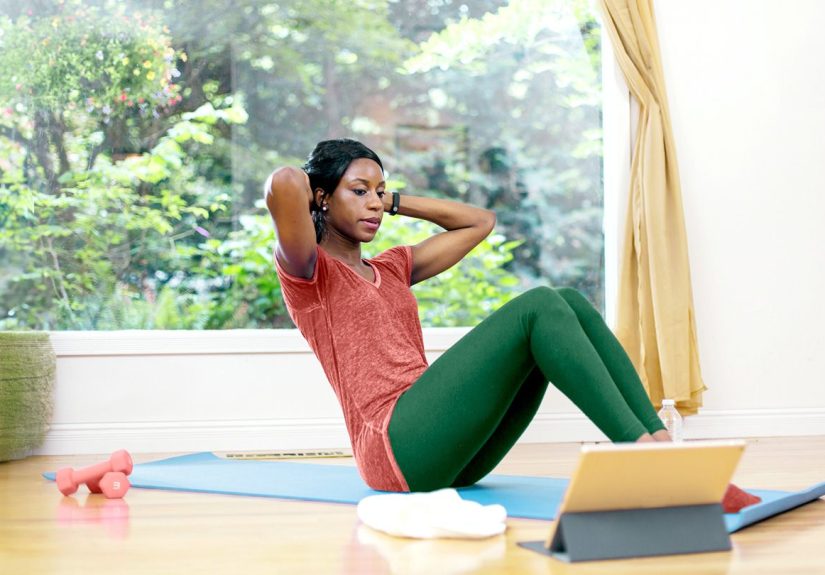
Some core exercises are surprisingly finger-heavy. Planks, push-up holds, mountain climbers, and many yoga poses ask your hands to bear weight. Those are usually poor choices early on. Better options often include:
- Dead bugs
- Supine marches
- Heel taps
- Posterior pelvic tilts
- Glute bridge variations
- Side-lying clamshells
- Seated trunk rotations without hand resistance
If an ab move requires you to grip a cable, hold a plate, or balance on your hands, it is probably not the winner today.
Exercises to Avoid Until You Are Cleared
This is where many active people get tripped up. A finger fracture may feel “small,” but a shocking number of exercises depend on grip strength, pinch strength, hand stability, or the ability to catch yourself if you lose balance.
In most cases, you should avoid or postpone the following until your clinician says otherwise:
- Dumbbell and barbell lifting
- Kettlebell work
- Pull-ups, chin-ups, and hanging exercises
- Push-ups and planks
- Bench press and overhead press
- Rowing machines
- Battle ropes
- Rock climbing
- Racquet sports
- Ball sports that involve catching, dribbling, or contact
- Boxing, martial arts, and most contact sports
- Swimming if hand force or finger motion is painful or not yet approved
- Yoga flows that put body weight through the hands
Also be careful with “creative” workarounds. If your plan sounds like something you came up with at 2 a.m. after watching one motivational reel and drinking too much pre-workout, it is probably not medically elegant.
How to Modify Your Routine Without Losing Momentum
If you are a runner
Good news: many runners can keep running or walking if the injury is protected and there is no major risk of falling. Start by asking whether arm swing aggravates the finger or whether outdoor conditions make a fall more likely. If yes, choose treadmill walking, brisk walking, or easy runs on predictable surfaces.
If you are a lifter
This is your lower-body era. Build sessions around squats, lunges, step-ups, machine-based leg work, glute training, and core exercises that do not involve loading the hands. You may need lighter loads, slower tempo, and more unilateral lower-body work. That is not a downgrade. It is called adaptation, and it is one of the least glamorous but most useful fitness skills.
If you love classes
Group fitness can be tricky because a lot of classes move fast and assume two fully cooperative hands. Tell the instructor before class starts. Skip any station that involves gripping, catching, pushing, punching, or supporting body weight through the hand. If the class cannot be modified safely, that is your cue to choose a different format for a few weeks.
If yoga or Pilates is your thing
You may still be able to do selected mat work, breathing drills, hip mobility, lower-body sequences, and supine core work. But poses like plank, downward dog, side plank, crow, or anything with hand pressure are often poor fits early on. Think less “flow state” and more “strategic cherry-picking.”
When to Start Finger Motion and Rehab Exercises
This is the part where patience quietly wins. Many people want a universal answer like, “Start exercises on day 10 and be fabulous by day 21.” Fingers do not work like that.
Some hand fractures can begin gentle exercises after a few weeks, while others need more protection, especially if the fracture is unstable, involves a joint, or required surgery. In many cases, finger fractures need a period of immobilization first, and then carefully timed range-of-motion work to reduce stiffness and swelling. If your provider or hand therapist gives you a rehab plan, follow that plan instead of freelancing.
Once cleared, rehab often focuses on gentle motion before strength. Examples may include:
- Opening and closing the hand gently
- Controlled finger bends and straightening
- Tabletop or hook-fist style movements
- Tendon-gliding style exercises
- Light functional use of the hand as approved
The key word is gentle. Rehab should not look like revenge. If the finger becomes more swollen, more painful, or stiffer the next day, that is a clue to back off and check in.
How to Tell If You Are Doing Too Much
During recovery, discomfort and stiffness can happen. What you do not want is a workout that clearly sets the finger backward. Watch for:
- Increasing swelling after exercise
- Throbbing pain that lingers or worsens
- New bruising or redness
- Numbness or tingling
- The finger looking more crooked or rotated
- Difficulty doing normal daily tasks that were getting easier before
- A splint that suddenly feels too tight or causes skin irritation
A good rule of thumb, no pun intended, is this: if daily activities are not comfortable yet, your workout probably should not be more demanding than daily activities.
A Simple Weekly Workout Template
If you want structure, here is a practical example of how to exercise with a broken finger while keeping the injured hand protected:
Day 1
Brisk walk or stationary bike for 25 to 40 minutes, then bodyweight squats, step-ups, glute bridges, and calf raises.
Day 2
Mobility and core: dead bugs, heel taps, side-lying clamshells, hip mobility, gentle walking.
Day 3
Lower-body strength: split squats, wall sits, leg machine work if safe, plus easy cardio.
Day 4
Recovery day: walking, stretching for non-injured areas, light movement, and absolutely zero attempts to “test” the finger with random household lifting.
Day 5
Cardio interval session on a bike or treadmill, using intensity that does not compromise balance or hand protection.
Day 6
Lower-body and core repeat with small progressions in time, reps, or control.
Day 7
Rest, rehab exercises if prescribed, and general movement.
This kind of plan helps you maintain conditioning without pretending your finger is merely being “a little sensitive.”
Recovery Habits That Make Exercise Safer
Exercise is only part of the picture. A few boring but powerful habits can improve the recovery process:
- Keep follow-up appointments and imaging if ordered
- Wear the splint or buddy tape exactly as instructed
- Do not smoke, since smoking can slow tissue repair and bone healing
- Manage swelling with elevation and cold therapy if your clinician recommends it
- Return to sport gradually, not in one dramatic leap
- Use hand therapy if stiffness, weakness, or function becomes an issue
Also, remember that pain often improves before the bone is ready for normal stress. Feeling better is encouraging, but it is not a magic hall pass to jump into pull-ups, pickleball, or heavy deadlifts.
When You Can Return to Full Workouts
There is no one-size-fits-all finish line. Some finger fractures heal relatively quickly, while others need more time, especially if they are displaced, involve the joint, or needed surgery. Full return to sport or lifting depends on bone healing, alignment, pain, motion, grip function, and your specific activity. For some people that means a few weeks of careful modification. For others it means a longer ramp-up over a couple of months.
The smartest return is gradual. Start with lower loads, shorter sessions, and controlled movements. Let the finger prove it can handle daily life first, then gentle training, then more demanding sports or lifts. Fitness comes back faster when you stop trying to bully the healing timeline.
What Real-Life Experience With a Finger Fracture Often Feels Like
People dealing with a finger fracture often say the strangest part is not the pain. It is the constant surprise. You do not realize how often you use a finger until you try to zip a jacket, open a water bottle, carry groceries, type, wash your hair, tie a shoe, or pull a bedsheet straight. Exercise becomes a similar lesson in humble pie. Movements that once felt automatic suddenly require negotiation, creativity, and the emotional maturity to accept that today is not the day for burpees.
A lot of active people also go through the same mini drama arc. First comes optimism: “It is just one finger. I will be back tomorrow.” Then comes reality: you try holding a dumbbell, gripping a bike handle too firmly, or setting up for a push-up and your hand immediately votes no. After that, there is usually a period of adaptation where your workouts look less exciting on paper but become much smarter in practice. Walking gets longer. Leg work gets cleaner. Core training becomes more intentional. You stop chasing the perfect routine and start building the possible one.
Many people find that the hardest part is mental, not physical. If exercise is your stress relief, injury can make you feel restless, off-schedule, and weirdly grumpy at inanimate objects. The splint catches on clothing. The buddy tape makes simple tasks feel clumsy. You may feel fit enough to do more, but not cleared enough to trust it. That gap is frustrating. Still, this phase can be surprisingly useful. It teaches pacing, patience, and how to maintain consistency without needing every workout to feel “normal.” That is a valuable skill long after the fracture heals.
Another common experience is discovering that progress is not always dramatic. Sometimes it looks like being able to walk longer without guarding your hand. Sometimes it is getting through a lower-body session without accidentally using the injured finger to help yourself off the bench. Sometimes it is noticing that swelling is down, stiffness is less annoying, and daily tasks are easier. These are not flashy wins, but they count. Recovery often moves like that: quietly, then all at once.
People who do best tend to be the ones who stop trying to “win” against the injury and start working with it. They ask better questions. Instead of “How can I do my usual routine anyway?” they ask, “How can I stay active without making this worse?” That shift changes everything. It leads to safer exercise choices, fewer setbacks, and a smoother return to the activities they actually care about.
So if your current workout season involves walking, split squats, stationary biking, careful rehab, and muttering at your finger like it has betrayed the team, you are not failing. You are recovering. And done right, that recovery can still make you stronger, more disciplined, and more aware of how to train around limitations without losing momentum.
Conclusion
Learning how to exercise with a finger fracture is really about respecting the healing process while refusing to let one injured digit hijack your whole routine. Get the fracture diagnosed, protect it properly, train around it intelligently, and return to hand-heavy exercise only when your provider says the bone and finger function are ready. Until then, lower-body work, safe cardio, core training, and gradual rehab can keep you moving without sabotaging recovery.
Your finger may be injured, but your entire fitness identity is not. Keep the plan smart, the expectations realistic, and the heroics for later.