Table of Contents >> Show >> Hide
- What Are Afro Curls?
- What You Need Before Bed
- The Golden Rule: Damp, Not Soaking Wet
- Method 1: Two-Strand Twists for Soft Afro Curls
- Method 2: Bantu Knots for Tight, Springy Curls
- Method 3: Braid-Outs for Stretched Afro Curls
- Method 4: Flexi Rods or Perm Rods for Uniform Afro Curls
- Method 5: Sponge Curls for Short Afro Hair
- How to Protect Afro Curls While You Sleep
- The Morning Takedown: Where the Magic Happens
- How to Choose the Right Overnight Method for Your Hair Type
- Common Mistakes That Ruin Overnight Afro Curls
- How to Make Afro Curls Last Longer
- Simple Overnight Afro Curl Routine
- Real-Life Experience: What Actually Works When You Want Afro Curls Overnight
- Conclusion
Afro curls have a special kind of magic: bold shape, springy definition, soft volume, and the ability to make even a plain T-shirt look like a deliberate fashion choice. The good news? You do not need a curling iron, a salon appointment, or three hours of dramatic mirror staring to create beautiful afro curls overnight. With the right moisture, sectioning, heatless setting method, and nighttime protection, you can wake up with fuller, more defined curls that look intentionalnot like your pillow won an argument.
This guide explains how to get afro curls overnight using beginner-friendly techniques such as two-strand twists, Bantu knots, braid-outs, flexi rods, sponge curls, and the pineapple method. Whether your hair is type 3 curly, type 4 coily, transitioning, relaxed, or naturally straight and you want a temporary afro-inspired curl pattern, the secret is simple: shape the hair while it is slightly damp, let it dry completely, protect it while you sleep, and separate it gently in the morning.
Before we begin, one honest note: overnight curls are styling results, not a permanent texture change. If your hair is naturally coily, these methods help define and stretch your existing curl pattern. If your hair is wavy or straight, they create temporary curls that may need extra hold. Either way, your hair can absolutely wake up looking more fabulous than it did at bedtime. Your pillow does not get the final vote.
What Are Afro Curls?
Afro curls usually refer to tight, voluminous curls or coils with a rounded, fluffy shape. They can range from soft corkscrews to dense, springy coils, depending on your natural texture and the technique you use. For natural hair, afro curls often mean enhancing type 3C, 4A, 4B, or 4C patterns. For looser hair textures, the goal is to create a heatless curly set that mimics afro-style volume.
The most important thing to understand is that afro curls need both definition and volume. Definition comes from the set: twists, knots, braids, rods, or coils. Volume comes from separating, fluffing, and lifting the roots after the hair has dried. Too much product can give definition but crush volume. Too little product can create fluff but no shape. The sweet spot is hydrated hair with light-to-medium hold.
What You Need Before Bed
You do not need a beauty supply store haul worthy of a shopping documentary. Start with a few basics:
- A spray bottle with water
- Leave-in conditioner or curl cream
- Light styling mousse, gel, or twisting cream
- Wide-tooth comb or detangling brush
- Hair clips for sectioning
- Small satin scrunchies, bobby pins, or soft hair ties
- Oil or serum for takedown, such as jojoba, argan, or a lightweight hair oil
- Satin bonnet, silk scarf, or satin pillowcase
For thick or very dry hair, a richer cream may help. For fine hair, use mousse or a lightweight curl lotion so your curls do not collapse under product weight. For 4C hair, moisture and patience are the dream team. For straight or relaxed hair, choose a setting mousse with hold so the curl has something to remember by morning.
The Golden Rule: Damp, Not Soaking Wet
The most common overnight curl mistake is going to bed with hair that is too wet. Wet hair may feel like it will create better curls, but if it is still damp in the morning, the set can unravel into frizz before breakfast. Aim for hair that is slightly damp, soft, and flexiblenot dripping, not crunchy, and not so wet that your pillowcase starts filing a complaint.
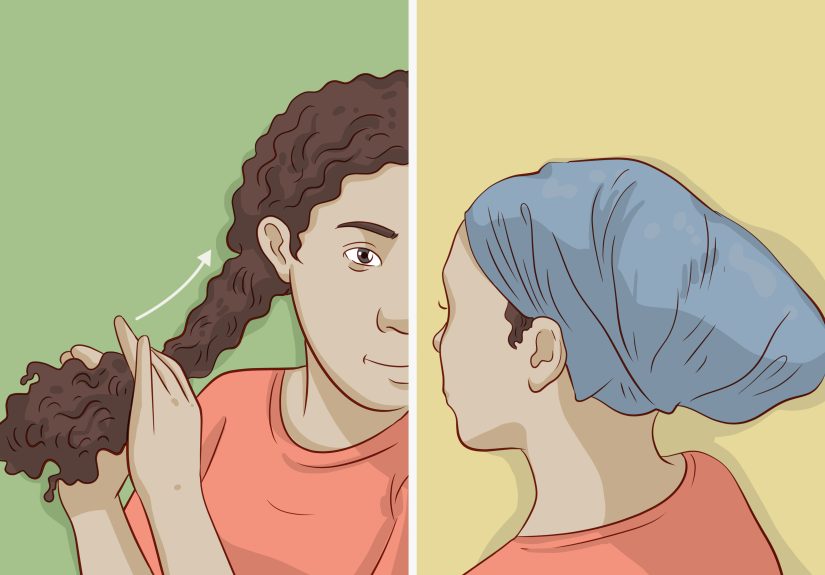
If you are starting after wash day, blot your hair with a microfiber towel or soft cotton T-shirt first. If your hair is already dry, mist each section lightly with water before applying product. The hair should feel moisturized, not soaked.
Method 1: Two-Strand Twists for Soft Afro Curls
The two-strand twist-out is one of the best ways to get afro curls overnight, especially for natural hair. It gives definition, reduces tangling, stretches shrinkage, and creates a soft, rounded curl pattern.
How to Do It
- Start with clean, detangled, slightly damp hair.
- Divide your hair into 8 to 16 sections. Smaller sections create tighter curls; larger sections create fluffier curls.
- Apply leave-in conditioner, then a small amount of twisting cream or mousse.
- Split one section into two strands.
- Twist the strands around each other from root to tip.
- Coil the ends around your finger or wrap them with a tiny perm rod if your ends are loose.
- Repeat until your whole head is twisted.
- Cover with a satin bonnet or scarf and sleep.
In the morning, make sure your twists are fully dry. Rub a drop of oil between your fingers, then gently unravel each twist. Separate each curl only where it naturally wants to split. Finally, pick the roots lightly for volume without combing through the ends.
Best For
Two-strand twists work beautifully on type 3 and type 4 hair. They are especially helpful if you want soft afro curls with a natural-looking finish rather than uniform ringlets.
Method 2: Bantu Knots for Tight, Springy Curls
Bantu knots are excellent for creating tight, bouncy afro curls overnight. This method works on natural, relaxed, and transitioning hair. The smaller the knot, the tighter the curl. The larger the knot, the looser and fluffier the result.
How to Do It
- Part damp, detangled hair into small square or triangle sections.
- Apply leave-in conditioner and a styling product with hold.
- Twist one section from root to tip.
- Wrap the twist around itself at the base to form a small knot.
- Secure it with a bobby pin or tuck the end under the knot.
- Repeat all over your head.
- Sleep with a satin bonnet, preferably one roomy enough not to flatten the knots.
For more defined curls, create 12 to 20 knots. For bigger afro volume, create 6 to 10 larger knots. When you take them down, do not rush. Bantu knots can look a little “party balloon spiral” at first, but once separated and fluffed, they become soft, full curls.
Best For
Bantu knots are great for tight afro curls, shorter natural hair, stretched natural hair, and relaxed hair that needs more curl memory. They are also a smart option when you want a heatless style with noticeable shape.
Method 3: Braid-Outs for Stretched Afro Curls
A braid-out creates a slightly more stretched, zigzag curl pattern than a twist-out. If your hair shrinks a lot or tangles easily, braids can help elongate your curls while still giving shape.
How to Do It
- Divide damp hair into 6 to 12 sections.
- Apply leave-in conditioner and mousse or curl cream.
- Braid each section from root to end.
- For smoother ends, add a small roller or coil the ends around your finger.
- Cover with satin and sleep.
- Unbraid carefully in the morning and separate with oiled fingers.
Braid-outs are perfect when you want afro curls with length. They are also forgiving for beginners because braids tend to stay secure overnight. If your roots puff faster than your ends, try flat braiding or cornrowing the first inch before switching to a regular braid.
Method 4: Flexi Rods or Perm Rods for Uniform Afro Curls
If you want more polished curls, flexi rods or perm rods are your best friends. They create consistent curls from root to tip and work well on natural, relaxed, and straight hair. The trade-off? Sleeping on rods can feel like resting your head on a bag of tiny pool noodles. Beauty is brave, but comfort matters too.
How to Do It
- Start with damp hair and apply a setting mousse.
- Divide hair into small sections.
- Wrap each section smoothly around a rod from ends to roots.
- Bend the rod or secure the roller.
- Let hair dry overnight.
- Remove rods gently and separate curls for volume.
Use smaller rods for tight afro curls and larger rods for fluffy curls. If your hair is thick, do not make sections too large or the inside may stay damp. A dry set is the difference between “wow” and “well, we tried.”
Method 5: Sponge Curls for Short Afro Hair
If you have a short afro, a curl sponge can help create defined coils quickly before bed. It works best on short natural hair with enough texture to coil.
How to Do It
- Mist hair lightly with water.
- Apply a small amount of curl cream or styling foam.
- Move the sponge in small circular motions across your hair.
- Keep the direction consistent for even coils.
- Let the hair dry, then sleep with a satin bonnet.
This is one of the fastest ways to get afro curls overnight on short hair. Do not press too hard; gentle circles are enough. Your scalp is not a kitchen counter, and the sponge is not there to scrub it.
How to Protect Afro Curls While You Sleep
Night protection is not optional if you want defined curls in the morning. Cotton pillowcases can create friction, absorb moisture, and rough up the curl pattern. A satin bonnet, silk scarf, or satin pillowcase helps reduce frizz and preserve moisture.
If your hair is long enough, you can use the pineapple method by gathering your curls loosely on top of your head with a satin scrunchie. For shorter hair, a bonnet is usually easier. For Bantu knots or rods, choose a roomy bonnet so the style is not smashed flat.
Avoid tight bands around the edges. The hairline is delicate, and tight styles can cause breakage over time. Your overnight style should feel secure, not painful. If your scalp feels sore, loosen the style immediately.
The Morning Takedown: Where the Magic Happens
The morning takedown determines whether your overnight curls become a gorgeous afro or a cloud of confusion. First, check that your hair is completely dry. If it feels cool or damp, give it more time or use a blow-dryer on a cool or low setting for a few minutes.
- Coat your fingertips with a tiny amount of oil or serum.
- Unravel twists, braids, knots, or rods gently.
- Separate each curl where it naturally divides.
- Use an afro pick at the roots only.
- Shake your hair lightly to encourage shape.
- Finish with a light mist of holding spray if needed.
Do not comb through the curls unless you want a fuller, less defined afro. That can be a beautiful look too, but it is a different destination. Think of separation like seasoning: start small, then add more if needed.
How to Choose the Right Overnight Method for Your Hair Type
For 4C Hair
Try small two-strand twists, flat twists, or Bantu knots. Use a moisturizing leave-in and a cream with hold. Make sure the hair is not too wet before bed, because dense coils may take longer to dry. For maximum definition, work in smaller sections.
For 4A and 4B Hair
Twist-outs and Bantu knot-outs are excellent. If you want more length, choose braids. If you want round, springy curls, choose knots or rods. A satin bonnet helps preserve the pattern overnight.
For 3B and 3C Hair
Use twists, plopping, or flexi rods. Lighter products usually work better, because heavy creams can flatten the curl. A mousse layered over leave-in conditioner can give bounce without stiffness.
For Relaxed or Straight Hair
Use flexi rods, perm rods, or Bantu knots with a setting mousse. The hair needs hold because it does not naturally coil as tightly. Smaller sections will create a more afro-like curl pattern.
Common Mistakes That Ruin Overnight Afro Curls
Using Too Much Product
More product does not always mean more definition. Too much cream can leave hair sticky, heavy, or flaky. Start with a small amount and add only if the section feels dry.
Taking Hair Down Before It Dries
This is the fastest route to frizz. Hair sets as it dries. If it is still damp, the curl shape has not locked in yet.
Skipping Detangling
Knots become more obvious after the hair sets. Detangle gently before twisting, braiding, or rolling so the finished curls look smooth.
Making Sections Too Large
Large sections may dry slowly and create weak definition. If your hair is thick, smaller sections are worth the extra bedtime effort.
Sleeping Without Satin or Silk
Friction is the quiet villain of overnight styling. Protect your curls so they do not spend eight hours wrestling with cotton.
How to Make Afro Curls Last Longer
To keep your afro curls for several days, avoid touching them too much. At night, loosely retwist large sections or pineapple your hair if it is long enough. Sleep with a satin bonnet or scarf. In the morning, refresh curls with a light mist of water and leave-in conditioner, then fluff the roots.
If curls start losing shape, turn them into a puff, half-up style, side part, or pinned afro. Day-three hair often has the best volume, so do not panic when the original definition softens. That is not failure; that is character development.
Simple Overnight Afro Curl Routine
Here is an easy routine you can follow tonight:
- Mist hair lightly with water.
- Apply leave-in conditioner section by section.
- Add mousse or curl cream for hold.
- Create 10 to 16 two-strand twists or Bantu knots.
- Coil or roll the ends.
- Cover with a satin bonnet.
- In the morning, unravel with oiled fingers.
- Separate, fluff, and pick the roots.
This routine gives a balance of definition, moisture, and volume. Once you learn how your hair responds, adjust the number of sections, product amount, and setting method.
Real-Life Experience: What Actually Works When You Want Afro Curls Overnight
Here is the honest part: learning how to get afro curls overnight is part technique, part patience, and part accepting that hair has a personality. Some nights, your twists come out like a magazine photo. Other mornings, one side looks red-carpet ready while the other side looks like it joined a jazz band at 2 a.m. That is normal. The goal is not perfection; the goal is learning your hair’s rhythm.
From experience, the best results usually happen when the hair is already in decent condition before styling. If your hair is dry, tangled, or loaded with old gel, the curls may look dull or uneven. A clean or lightly refreshed base makes a big difference. On wash day, the curls often look shinier and more defined. On older hair, the curls may look bigger and fluffier. Both can be beautiful, but they require different expectations.
For tight afro curls, Bantu knots are the most dramatic. They can transform stretched hair into springy curls overnight, especially when the sections are small. The catch is drying time. If the knots are too thick or too wet, they may still be damp in the morning. A good trick is to start on hair that is only 70 percent damp, not freshly dripping. Another trick is to make the knots flat and secure rather than bulky. Flat knots are often more comfortable to sleep on and may dry faster.
For everyday curls, two-strand twists are easier. They are comfortable, reliable, and beginner-friendly. Twists also give you control over curl size. Small twists create tighter definition, while chunky twists create big, soft afro volume. If your ends tend to frizz, add a tiny roller to each end or twirl the ends with a little extra cream. The ends are the giveaway. Smooth ends make the whole style look more polished.
Braid-outs are great when you want stretch. They may not look as round as twist-outs, but they help reduce shrinkage and give a fuller shape. On very coily hair, braids can create a defined pattern that lasts longer than loose twists. On looser hair, braids create waves rather than true afro curls, so rods on the ends can help.
The biggest lesson is this: do not attack the curls in the morning. Rushing the takedown ruins the work you did the night before. Use oil on your fingers, separate gently, and fluff slowly. The afro shape appears gradually. At first, the curls may look too separated or too “piecey.” Once you lift the roots and shake the hair, the shape softens. It is like watching popcorn become a hairstyle.
Also, satin protection is not just a fancy extra. It matters. A bonnet, scarf, or satin pillowcase keeps the curl pattern from drying out and rubbing against rough fabric. If you have ever gone to sleep with perfect twists and woken up with mysterious fuzz, friction was probably involved. Satin does not solve every problem, but it gives your curls a fighting chance.
Finally, the best overnight afro curls come from repetition. Take a quick photo each time you try a method and note what you used: number of twists, dampness level, product, and drying time. After a few tries, patterns appear. Your hair will tell you whether it prefers cream or mousse, knots or twists, small sections or medium ones. Listen to it. Hair may not speak English, but it definitely gives feedback.
Conclusion
Getting afro curls overnight is absolutely possible when you combine moisture, the right heatless styling method, and gentle nighttime protection. Two-strand twists create soft definition, Bantu knots create tight springy curls, braid-outs add stretch, and rods deliver polished shape. The best method depends on your texture, length, product choice, and how much time your hair needs to dry.
The formula is simple: start with detangled damp hair, apply product in sections, set the hair carefully, sleep on satin or silk, and take the curls down gently in the morning. Do not rush the drying process, do not overload the product, and do not separate curls like you are opening a stubborn bag of chips. Treat them kindly, fluff with confidence, and let the volume have its moment.
Afro curls are not just a hairstyle; they are a celebration of texture, shape, and personality. Whether your curls are natural, styled, tight, loose, fluffy, or fabulously unpredictable, the overnight method gives you a heatless way to wake up with more definition and less stress. And honestly, any routine that lets you sleep your way into better hair deserves applause.