Table of Contents >> Show >> Hide
- What “Foot Fungus” Usually Means
- Step Zero: Make Sure It’s Actually Fungus
- How to Get Rid of Athlete’s Foot Fast (The Evidence-Based Plan)
- Toenail Fungus: Why It’s Harder (and What Actually Works)
- So… Can Home Remedies Help Foot Fungus?
- The Two-Track Plan: Proven Treatment + Home Habits That Make It Stick
- How Long Does It Take to Get Rid of Foot Fungus?
- Preventing Foot Fungus From Coming Back (Because Recurrence Is Rude)
- FAQ: The Questions People Google at 1:00 a.m.
- Conclusion: Yes, Home Remedies Can Help But Mostly as Backup
- Experiences: What It’s Really Like Dealing With Foot Fungus (and What People Learn the Hard Way)
Foot fungus is the uninvited houseguest of the body: it shows up without asking, makes itself comfortable in warm, damp corners,
and somehow convinces you it’s “probably just dry skin.” Spoiler: if it’s itchy, peeling, burning, or your toenail is turning the
color of old cheddar, it might be fungus and it usually won’t leave just because you gave it a stern talking-to.
The good news: most foot fungus is treatable at home with the right over-the-counter (OTC) products and a few prevention habits.
The complicated news: “home remedies” can be hit-or-miss, and some are more “internet lore” than “actual help.” Let’s sort the
facts from the folklore and get your feet back to being boring (the highest compliment in foot health).
What “Foot Fungus” Usually Means
When people say “foot fungus,” they’re often talking about one of two common issues:
-
Athlete’s foot (tinea pedis): A fungal skin infection, usually between the toes or on the soles.
It can cause itching, burning, scaling, cracking, and peeling. -
Toenail fungus (onychomycosis): A fungal infection of the nail and nail bed.
Nails may thicken, turn yellow/white/brown, crumble, lift, or develop debris underneath.
There are also look-alikes eczema, psoriasis, contact dermatitis, bacterial infections, even just very dry skin. The right fix depends
on the right culprit, so if you’re not sure what you’re dealing with, don’t panic… but don’t guess forever, either.
Step Zero: Make Sure It’s Actually Fungus
If your foot has been itchy for a day after wearing new shoes, that might be irritation. If it’s been itchy for weeks, spreading,
peeling, and showing up like it pays rent fungus moves higher on the list.
Common athlete’s foot clues
- Itching or burning between toes
- Peeling, scaling, or cracking skin
- Redness, raw areas, or small blisters
- Symptoms worse after sweating or wearing tight shoes
Common toenail fungus clues
- Thickened nail (harder to trim)
- Yellow/white/brown discoloration
- Crumbly edges or rough texture
- Nail lifting from the nail bed
When to skip DIY and call a clinician
- You have diabetes, poor circulation, neuropathy, or a weakened immune system
- The foot is swollen, very painful, hot, oozing, or you have fever (possible bacterial infection)
- It’s spreading quickly, or you’ve had repeated infections
- You’ve tried OTC treatment correctly for 2–4 weeks with no improvement
- The nail is involved (toenail fungus often needs a longer game plan)
A clinician may scrape skin or nail material for testing. That’s not “extra.” It’s how you avoid treating psoriasis with antifungal cream
for three months and wondering why nothing happened.
How to Get Rid of Athlete’s Foot Fast (The Evidence-Based Plan)
For most athlete’s foot cases, OTC antifungal products are the front-line MVPs. The key is using them correctly and long enough.
Fungus is stubborn; it’s basically the toddler of microbes: if you stop too soon, it will return louder.
1) Use an OTC antifungal (and follow the label like it’s a recipe)
Common OTC active ingredients include terbinafine, butenafine, clotrimazole, miconazole, tolnaftate, and ketoconazole.
Some are creams; others are sprays, gels, or powders. Creams often work best for scaly or cracked areas; powders help with moisture.
- Clean and dry the area first. Yes, dry fungus loves moisture like it’s a spa membership.
- Apply as directed (often once or twice daily).
- Cover slightly beyond the rash. Fungus doesn’t respect property lines.
- Keep going after you feel better. Many labels recommend continuing for a period even after symptoms improve.
If the skin is very thick or “moccasin-style” (covering the sole like a dusty slipper), treatment can take longer and sometimes needs
prescription help. If it’s not improving, don’t just switch products every three days like you’re speed-dating creams.
2) Dry is the new cure: fix the environment fungus loves
Medication kills fungus. Your daily habits keep it from coming back. The goal is simple: less moisture, less re-exposure, less drama.
- Dry between your toes after showers and workouts. A towel is good; a cool blow-dryer setting can be extra thorough.
- Change socks daily (or more often if you sweat). Choose moisture-wicking fabrics when possible.
- Rotate shoes so pairs can fully dry. If you wear the same sneakers every day, fungus basically gets a daily reservation.
- Use antifungal powder in shoes if you’re prone to sweaty feet.
3) Don’t “treat” athlete’s foot with steroid cream alone
A topical steroid can reduce redness and itching, but it doesn’t kill fungus and it can make fungal infections look better while they
quietly get worse. If you’re using a combination product, follow medical guidance.
Toenail Fungus: Why It’s Harder (and What Actually Works)
Toenail fungus is the slow cooker of infections. Skin infections can clear in weeks; nails can take months because nails grow slowly.
Even when treatment works, the “proof” often arrives when the healthy nail grows out.
What treatment usually looks like
-
Topical nail solutions/lacquers: These can help, especially for mild cases, but require consistent use and patience.
Some prescription options require long daily use periods (often many months). -
Oral antifungal medication: Often more effective for many cases, but requires medical oversight due to potential side effects
and drug interactions (your clinician may check labs depending on your situation). -
Nail trimming/debridement: Thinning and trimming thick nails (sometimes done by a professional) can improve comfort and help
topical meds reach where they need to go.
A practical reality check: if you have one slightly discolored nail, topical treatment plus good foot hygiene might be enough.
If several nails are thick and crumbly, it’s time to talk with a clinician about options because “vinegar + hope” is rarely a winning
strategy for nail fungus.
So… Can Home Remedies Help Foot Fungus?
Home remedies can sometimes support treatment especially by reducing moisture and irritation but they’re rarely the main event.
If you want the shortest path to improvement, OTC antifungals (and prescription care when needed) are the most reliable approach.
That said, people try home remedies for real reasons: cost, convenience, curiosity, and the very human desire to solve problems with things
already under the sink. Let’s walk through the common ones with a “helpful, not hype” filter.
Home remedies that may be supportive (with caveats)
-
Keeping feet extra dry (the most underrated “remedy”): Not glamorous, but powerful. Drying between toes, changing socks,
rotating shoes, and using powder can reduce recurrence risk. -
Vinegar soaks: Vinegar is acidic and may discourage fungal growth on the skin’s surface, but evidence is limited.
It may help some people with mild symptoms but it can irritate cracked skin. Consider it a “maybe” helper, not a cure. -
Tea tree oil (diluted): Some research suggests tea tree oil may have antifungal activity, but it can cause skin irritation
or allergic reactions. Never use it “neat” on sensitive or broken skin. Patch test first, and stop if burning/rash occurs. -
Epsom salt soaks: These can soothe and help with moisture control, but they aren’t proven antifungals.
Think “comfort,” not “kill switch.” -
Baking soda or antifungal powder: Can help absorb moisture and reduce odor. Helpful for the environment, not always enough
for an active infection.
Home remedies to avoid (or treat with extreme skepticism)
-
Hydrogen peroxide on skin/nails: Often recommended online, but it can irritate skin and there’s no solid evidence it reliably
treats athlete’s foot. If it stings, reddens, or dries you out, you’re not “killing fungus,” you’re just inflaming your skin. - Bleach soaks: Please don’t. Chemical burns are not a wellness trend.
-
Garlic pastes or harsh DIY concoctions: Garlic has compounds studied in labs, but DIY application can cause serious irritation
and even burns. Your feet deserve better. -
“Just let it air out” (while still wearing damp shoes): Fungus thrives in warm, moist environments so “airing out” has to
include truly dry socks, dry shoes, and consistent treatment.
Bottom line: the best “home remedy” is the one that supports proven treatment dryness, hygiene, shoe habits while an antifungal does the
actual fungus-fighting.
The Two-Track Plan: Proven Treatment + Home Habits That Make It Stick
Want a simple plan you can actually follow? Here you go:
Track 1: Treat the infection
- Use an OTC antifungal for athlete’s foot as directed (cream/spray/powder)
- Apply consistently and for the full recommended duration
- For toenail fungus, consider clinical diagnosis and discuss topical vs oral options
Track 2: Treat the lifestyle “petri dish”
- Dry between toes after showers and workouts
- Change socks daily (or more often if damp)
- Rotate shoes; let pairs dry fully
- Wear shower sandals in locker rooms, public showers, and pool areas
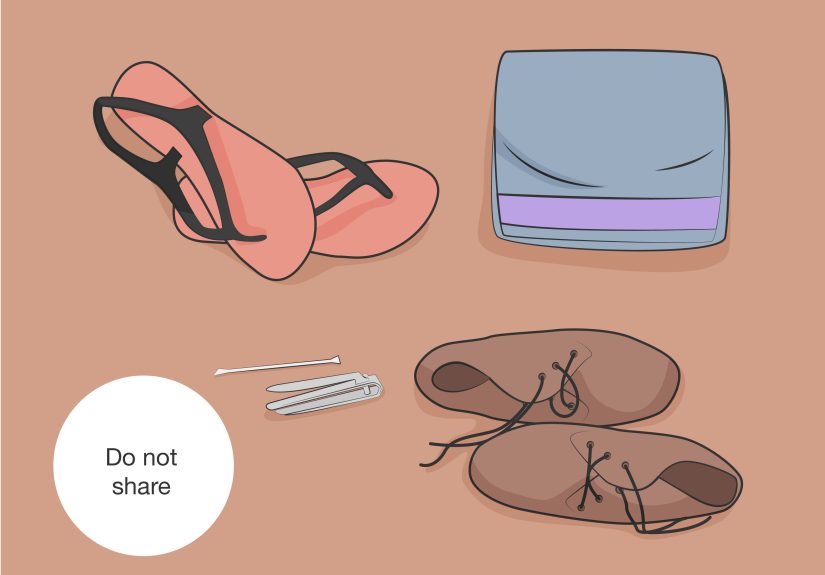
- Don’t share towels, socks, shoes, or nail tools
- Wash socks in hot water when possible and dry thoroughly
This combo is how you stop the cycle of “it went away” → “it came back” → “I bought five more creams.”
How Long Does It Take to Get Rid of Foot Fungus?
Athlete’s foot
Many mild cases improve within 1–2 weeks with appropriate OTC treatment, but some take longer. If it’s not improving after 2–4 weeks (or it’s
severe), check in with a clinician.
Toenail fungus
Expect months. Even with effective treatment, you often wait for the healthy nail to grow out. That can take a long time for toenails.
Consistency matters more than magical thinking.
Preventing Foot Fungus From Coming Back (Because Recurrence Is Rude)
Foot fungus is contagious and thrives in shared, damp places gyms, pools, communal showers and inside your own shoes if they stay moist.
Prevention is not complicated, but it is annoyingly consistent.
- Shower sandals: Use them in locker rooms, hotel bathrooms, and pool decks.
- Shoe rotation: Alternate pairs so shoes dry completely.
- Foot hygiene: Wash and dry daily, especially between toes.
- Sock strategy: Moisture-wicking socks help; changing damp socks helps more.
- Nail tool hygiene: Don’t share clippers; don’t use the same tool on infected and healthy nails without cleaning.
FAQ: The Questions People Google at 1:00 a.m.
Is foot fungus contagious?
Yes. It can spread through direct contact and shared surfaces like floors, towels, socks, shoes, and nail tools. Treating it promptly protects
both your feet and the people who share your shower.
Do I need to throw out my shoes?
Not always. Many people manage by rotating shoes, keeping them dry, using antifungal powder, and wearing clean socks. If a pair stays damp and
smelly no matter what you do, it may be time for retirement not because you “failed,” but because that shoe has chosen fungus as a roommate.
Can I still go to the gym or pool?
Usually yes, but be respectful: wear flip-flops in communal areas, keep feet clean and dry, and don’t walk barefoot on shared surfaces.
Conclusion: Yes, Home Remedies Can Help But Mostly as Backup
If your goal is to get rid of foot fungus efficiently, the most reliable path is an OTC antifungal for athlete’s foot (or medical treatment for
stubborn cases and toenail involvement) plus habits that keep feet dry and reduce re-exposure. Home remedies like vinegar soaks or diluted tea tree
oil may provide support for some people, but they’re rarely the strongest tool in the box and harsh DIY treatments can irritate skin and delay
real improvement.
Treat early, treat consistently, and treat the environment (socks, shoes, moisture) and your feet can go back to doing what they do best:
existing quietly at the end of your legs without becoming a full-time project.
Experiences: What It’s Really Like Dealing With Foot Fungus (and What People Learn the Hard Way)
If foot fungus had a marketing team, its slogan would be: “I’ll be back.” A lot of people don’t struggle because the infection is untreatable;
they struggle because real life gets in the way of consistent treatment. Here are patterns that come up again and again the kind you’ll hear from
gym regulars, nurses, travelers, and anyone who’s ever worn the same sneakers for “just one more day.”
One common experience is the almost-fix. Someone uses an antifungal cream for three or four days, the itching calms down, the skin
looks less angry, and they think, “Great, solved.” Then they stop and a week later, the peeling returns. What happened? The cream didn’t fail.
The fungus simply wasn’t fully eliminated yet. Many people learn that the real skill isn’t finding a product; it’s sticking with it long enough,
including those extra days after symptoms improve.
Another frequent story: the shoe trap. People treat their feet perfectly, but they keep putting their newly improved skin back into
the same damp, sweaty shoes every morning. It’s like washing your hands and then immediately shaking hands with a mud puddle. When people finally add
shoe rotation, dryer socks, and a little antifungal powder, they often notice fewer flare-ups not because the powder is a miracle drug, but because
the environment stops being a fungus-friendly sauna.
Many people also try a home remedy first because it feels “natural” or convenient. The experience is often mixed. Some report that vinegar soaks
reduce odor or soften thick skin so it’s easier to clean and dry. Others find the soaks sting and irritate cracks, making everything feel worse.
Tea tree oil gets similar reviews: a few people say it helps, but plenty stop because of redness or burning. The lesson most people land on is:
home remedies may be supportive for mild cases, but if symptoms are persistent, spreading, or involve the nail, it’s smarter to bring in the proven
antifungal tools sooner rather than later.
Toenail fungus comes with its own emotional journey: the timeline shock. People expect a topical solution to work in a couple weeks,
like it’s acne treatment. Then they learn nails grow slowly. Improvement can be subtle at first a clearer strip near the cuticle, less crumbling at
the edge and it can take months for a nail to look normal again. The folks who feel best about the process tend to set realistic expectations:
they track small changes, keep nails trimmed, and treat consistently. The folks who feel worst are usually the ones expecting overnight results and
switching approaches too quickly to know what’s helping.
Finally, people with recurring infections often discover one “aha” moment: prevention is part of treatment. Shower sandals,
sock changes, and shoe rotation don’t feel like “medicine,” but they’re what keep the problem from cycling back. And once someone finds the routine
that fits their life a spare pair of socks in the work bag, rotating shoes every other day, drying between toes after showers the whole situation
tends to get dramatically less annoying.
If you’re dealing with foot fungus right now, you’re not alone, and you’re not “gross.” You’re human with feet that occasionally get warm and moist.
The win is choosing a plan that’s both effective and realistic one you can actually follow until the fungus gets the message and moves out.