Table of Contents >> Show >> Hide
- Why Growing Strawberries in Pots Works So Well
- Choose the Right Strawberry Type (Yes, There’s More Than One)
- Pick a Pot That Helps (Instead of Sabotaging You)
- Soil and Potting Mix: The Secret to Sweeter, Happier Plants
- Planting Strawberries in Pots (Without Burying the Crown Alive)
- Sunlight: The Berry-Making Machine
- Watering Strawberries in Pots (Aka: Don’t Let Them Get Moody)
- Fertilizing: Feed the Plant, Not the Leafy Ego
- Flowers and Runners: Managing the Drama
- Pollination: The “Do I Need Bees?” Question
- Pests and Diseases in Containers (The Usual Suspects)
- Harvesting: When to Pick for the Best Flavor
- Overwintering Strawberries in Pots (Keeping Them Alive for Next Year)
- Common Mistakes (So You Don’t Accidentally Grow Sad Leaves)
- Quick FAQ: Pot Strawberry Questions People Google at 11:47 PM
- Real-World Experiences Growing Strawberries in Pots (What Actually Happens)
- Conclusion
If you’ve ever paid $6 for a pint of strawberries that taste like crunchy disappointment, welcome. Growing strawberries in pots is the backyard (or balcony) loophole: you get cleaner fruit, fewer weeds, and the smug satisfaction of eating berries you raised yourselfwithout committing half your yard to a strawberry empire.
The best part? Strawberries are naturally shallow-rooted, which makes them weirdly happy in containers. The trick is giving them what they want (sun, steady moisture, good drainage) without turning your pot into a swamp, a desert, or a tiny plant sauna. Let’s do this the easy, high-yield way.
Why Growing Strawberries in Pots Works So Well
Strawberries in containers aren’t a “cute alternative.” Done right, they’re an upgradeespecially if you’re short on space or your native soil is more “construction rubble” than “garden bed.”
- You control the soil. No mystery clay. No random pH drama. No “why is this patch always sad?”
- Fewer pests and diseases. Containers improve airflow and keep fruit off the dirt, which helps reduce rot.
- Mobility. Heat wave? Move to afternoon shade. Surprise frost? Pull them close to the house or into the garage.
- Cleaner berries. Less grit, fewer splashes, and less “is that soil or… something else?”
Choose the Right Strawberry Type (Yes, There’s More Than One)
Before you buy plants, pick the fruiting style that matches your patience level and snack schedule.
June-bearing strawberries
These produce one big, glorious crop in late spring/early summer. If you want a short season of “strawberry chaos” (freezer jam, pies, neighbors bribed with berries), June-bearers are your people.
Everbearing strawberries
Typically give a couple of flushesoften one in late spring/early summer and another later in the season. They’re a nice middle ground if you want more than one harvest without constant production.
Day-neutral strawberries
These can fruit repeatedly through the season under decent conditions, which makes them a top pick for containers. Expect smaller bursts during brutal heat and better production when temperatures are kinder.
Container-friendly variety examples you’ll commonly see recommended in the U.S. include day-neutral types like Albion, Seascape, and Tristar, plus everbearing options like Ozark Beauty and Quinault. Local garden centers usually stock varieties that behave well in your regiontake that hint.
Pick a Pot That Helps (Instead of Sabotaging You)
The container matters more than people think. Too small and you’ll be watering like it’s your new hobby. No drainage and you’ll be growing “root rot with a side of regret.”
Best pot size for strawberries
- Minimum: about 10–12 inches wide and 8–10 inches deep for a small cluster.
- Roomier is easier: a 12–16 inch diameter pot holds moisture more evenly and buffers heat better.
- Rule of thumb for spacing: give each plant breathing room (often around 6–8 inches between plants). In practice, that usually means 1 plant in a small pot, 2–3 in a medium pot, and more only in long planters or large tubs.
Container types that work great
- Classic pots or tubs: easiest for beginners; choose something sturdy with drainage holes.
- Window boxes: great for railings; watch wind and drying.
- Hanging baskets: strawberries look adorable cascadingjust don’t forget they dry fast.
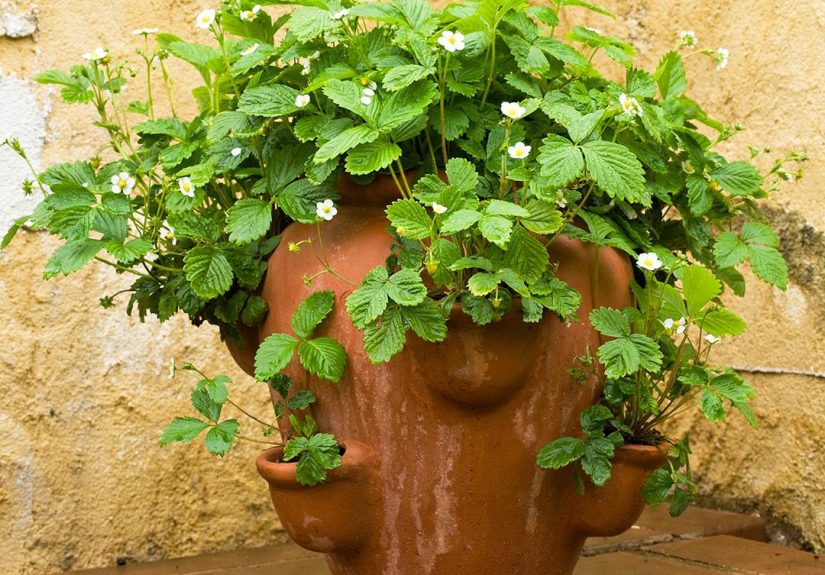
- Strawberry pots/towers: space-saving and fun, but they can be tricky to keep evenly watered.
Material tip: terracotta breathes (good), but dries quickly (also true). Plastic holds moisture longer (good) but can heat up in full sun (not as good). Fabric grow bags stay cooler and drain well, but you’ll water more often. Choose based on your climate and how frequently you want to check moisture.
Soil and Potting Mix: The Secret to Sweeter, Happier Plants
Use a quality potting mixnot garden soil. Garden soil compacts in containers, drains poorly, and generally behaves like it’s mad at you.
What strawberries want in a container mix
- Drainage + air: roots need oxygen as much as they need water.
- Moisture retention: consistent moisture helps prevent tiny berries and bitterness.
- Slightly acidic pH: strawberries typically prefer soil around the high-5s to low-6s.
Easy mix approach: a premium potting mix plus a handful of compost for biology and flavor. If your mix feels heavy, add perlite for drainage. If it dries too quickly, blend in a little coco coir (or choose a potting mix labeled for moisture control).
Small myth to skip: don’t add rocks at the bottom “for drainage.” It reduces soil volume and can actually worsen water behavior in containers. Use a pot with real drainage holes instead.
Planting Strawberries in Pots (Without Burying the Crown Alive)
The #1 planting mistake is putting the plant too deep. Strawberries have a “crown” (the thick base where leaves and roots meet). If the crown is buried, it can rot. If it’s too high, roots dry out.
When to plant
In many parts of the U.S., spring planting works well. If a late frost threatens, pots are easy: move them to shelter for the night and return them to sun in the morning.
Step-by-step: planting like a pro
- Fill the pot with moist potting mix, leaving a couple inches of headspace.
- Make a hole wide enough for the roots to spread naturally.
- Set the plant so the crown sits right at the soil surface (or just slightly above).
- Spread roots downwardavoid bending them upward into a “J” shape.
- Backfill gently, firm lightly, and water thoroughly until it drains.
- Add a thin mulch layer (straw or clean pine needles) to reduce splash and keep fruit cleaner later.
Sunlight: The Berry-Making Machine
For the best harvest, give strawberries full sun. In real-life numbers, aim for at least 6 hours, and preferably 8+ hours of direct sunlight for strong flowering and sweetness.
Hot-climate trick: if your summers are intense (hello, South and Southwest), consider morning sun with light afternoon shade. You’ll often trade a tiny bit of peak yield for healthier leaves and fewer scorched berries.
Watering Strawberries in Pots (Aka: Don’t Let Them Get Moody)
Container strawberries need steady moisture. Not “wet all the time.” Not “bone-dry, then a flood.” Think of it like keeping a sponge dampconsistent, not dripping.
Watering rules that actually work
- Check daily in warm weather. Small pots can dry out fast.
- Water deeply. Water until it runs out the bottom, then stop.
- Water early in the day. Leaves dry faster, which helps prevent fungal problems.
- Avoid soaking the crown. Aim for soil-level watering when possible.
Heat wave reality: during hot, windy stretches, some containers may need water once a day (or even twice). If you’re constantly chasing dryness, upgrade to a larger pot or add a bit more moisture-retentive material to the mix.
Fertilizing: Feed the Plant, Not the Leafy Ego
Strawberries like nutrients, but too much nitrogen makes them produce gorgeous leaves and suspiciously few berries. The goal is balanced feedingenough to support blooms and fruit without turning your plant into a decorative salad.
Simple feeding plan for container strawberries
- At planting: mix in a slow-release, balanced fertilizer (follow label rates).
- After establishment: begin light feeding with a diluted liquid fertilizer every 2–4 weeks during active growth and fruiting.
- Pause when stressed: if it’s extremely hot or the plant looks stressed, ease up on fertilizer and focus on water and shade management.
Pro tip: if you’re growing day-neutral strawberries for a long season, consistency matters more than intensity. Small, regular feedings often beat occasional heavy applications.
Flowers and Runners: Managing the Drama
Strawberries are ambitious. They want to do everything at once: flower, fruit, and send runners to colonize your entire patio. In pots, you’re the responsible adult.
Should you pinch flowers?
For many gardeners, pinching the first flush of flowers (especially early in the season or right after planting) helps the plant build roots and produce better later. If you’re planting in spring and want a strong plant, sacrificing a few early blossoms can pay off.
Should you cut runners?
If your goal is fruit in the same pot, yessnip most runners. Runners steal energy from berry production. If you want more plants, let one or two runners root into a small pot, then sever and transplant once rooted.
Pollination: The “Do I Need Bees?” Question
Outdoors, pollinators usually handle this. On a sheltered balcony or indoors, pollination can be spotty. If you get misshapen berries, try gently brushing inside flowers with a small paintbrush every couple of days while blooming. It’s oddly satisfying, like tiny plant matchmaking.
Pests and Diseases in Containers (The Usual Suspects)
Container strawberries have fewer problems than ground beds, but they’re not immune. Here’s what to watch for:
Common pests
- Birds: netting is often the simplest solution. Birds will harvest your strawberries at peak perfectionminutes before you planned to.
- Spider mites: thrive in hot, dry conditions; look for stippled leaves and fine webbing.
- Aphids: cluster on new growth; a strong water spray or insecticidal soap can help.
- Slugs/snails: more common if pots sit on the ground in damp areas; use barriers and keep the area tidy.
Common diseases (mostly preventable)
- Gray mold (Botrytis): fuzzy mold on fruit; reduce by improving airflow and avoiding wet berries.
- Powdery mildew: whitish coating on leaves; often worsens with poor airflow and stress.
- Crown rot: frequently linked to poor drainage or burying the crown too deep.
Prevention beats treatment: space plants reasonably, water at soil level, remove damaged leaves, and don’t let ripe fruit sit too long. Most strawberry issues are basically “bad airflow + wetness + time.”
Harvesting: When to Pick for the Best Flavor
Strawberries don’t sweeten much after picking. For the best taste, harvest when the berry is fully red. Pick in the cooler part of the day, and use scissors or pinch the stem just above the cap to avoid bruising.
What to expect: depending on type and conditions, it can be roughly a few weeks from flowering to ripe fruit. June-bearers tend to ripen in a concentrated window; day-neutral and everbearing types are more spread out.
Overwintering Strawberries in Pots (Keeping Them Alive for Next Year)
Strawberries are perennial in many climates, but pots expose roots to colder temperatures than in-ground plantings. If winters are cold where you live, plan to protect them.
Easy overwintering options
- Move pots to an unheated garage or shed after plants go dormant. Water lightly once in a while so roots don’t completely dry out.
- Insulate outdoors: cluster pots together against a protected wall and surround them with straw, leaves, or insulation.
- Bury the pot: if you have a yard, sink pots into the ground for winter to buffer root temps.
Container strategy note: many gardeners treat day-neutral strawberries in pots as “productive annuals”grow hard for one season, then replace with fresh plants the next year for peak yields. You can also keep them going multiple years if you’re willing to refresh soil and stay on top of care.
Common Mistakes (So You Don’t Accidentally Grow Sad Leaves)
- Pot has no drainage: roots suffocate, crown rots, dreams die.
- Crown buried: the plant struggles and may rot at the base.
- Inconsistent watering: tiny berries, bitter notes, stressed plants.
- Too much nitrogen: giant leaves, fewer fruits.
- Not enough sun: weak flowering and bland berries.
- Letting runners run wild: plants get tired and yields drop.
Quick FAQ: Pot Strawberry Questions People Google at 11:47 PM
How many strawberry plants per pot?
It depends on pot size, but crowding hurts airflow and yield. As a beginner, err on the side of fewer plants in a bigger container. You’ll get larger berries and less disease pressure.
Can I grow strawberries indoors?
Yes, especially day-neutral typesif you can provide strong light (a bright south-facing window or a grow light), moderate temperatures, and occasional hand pollination.
Why are my berries misshapen?
Often incomplete pollination. Try encouraging pollinators outdoors or hand-pollinating in sheltered spots. Also check for pest damage on flowers.
How long do potted strawberry plants last?
They can live multiple years, but production often declines over time. Many gardeners refresh plants every few seasons (or treat container strawberries as seasonal and replant for maximum harvest).
Real-World Experiences Growing Strawberries in Pots (What Actually Happens)
Let’s talk about the part most guides politely skip: the messy, hilarious reality of container strawberries. Not “perfect patio photo” strawberriesthe real ones. The ones you water in pajamas. The ones that make you whisper, “please don’t be a squirrel bite” before every harvest.
Experience #1: The first heat wave will humble you. Your plants look great in May, you feel unstoppable, and then July arrives like a hair dryer pointed directly at your containers. Suddenly the potting mix dries out faster than your sense of calm. The fix is boring but effective: bigger pots, mulch on top, and a routine. If you’re in a hot region, shifting pots to afternoon shade can be the difference between “cute berries” and “crispy leaves.” A self-watering container can also helpjust don’t let it turn into a permanent bog.
Experience #2: The birds will notice. You might think, “Surely the birds have better things to do.” They do not. Birds are professional berry reviewers with a strict policy of sampling only the ripest fruit. The first time you lose a perfect strawberry to a beak mark, you’ll consider building a tiny security system. Most people end up with light netting, a cage frame, or at least moving pots closer to a spot that’s harder to swoop into.
Experience #3: Runners are either free plants or free chaos. In containers, runners can quickly turn one pot into a tangled green wig. If your goal is fruit, snip most runners and keep the plant focused. If your goal is more plants, root a runner into a small nursery pot and label itbecause three weeks later, every runner looks like it belongs to every other plant, and your “simple propagation project” becomes a botanical guessing game.
Experience #4: Overwatering is sneakier than underwatering. Everyone warns you about dry pots (fair), but the silent killer is “I watered because I felt like watering.” If leaves look droopy, people often add more waterwhen the real issue is roots that can’t breathe. The best habit is simple: poke a finger into the mix. If the top inch is dry, water. If it’s still damp, go do literally anything else and leave the plant alone.
Experience #5: The best berries come from small adjustments, not heroic effort. Once you dial in sun, consistent moisture, and light feeding, strawberries become surprisingly generous. The jump from “meh” berries to “wow” berries often comes from tiny changes: moving the pot two feet into better sun, mulching to stabilize moisture, or thinning plants so air can move. You don’t need a complicated system. You need a plant that isn’t stressed.
And yesevery strawberry grower has that one moment where they eat a warm berry straight off the plant and realize they’ve been lied to by grocery store strawberries their entire life. It’s not just sweeter. It tastes like the word “strawberry” finally means something.
Conclusion
Growing strawberries in pots is one of the highest-reward garden projects for the amount of space it takes. Choose a container with real drainage, plant with the crown at soil level, use quality potting mix, give them strong sun, keep moisture steady, and feed lightly but consistently. Manage runners, protect ripening fruit from opportunistic wildlife, and overwinter pots if you want plants to return next season.
Do that, and your patio can become a tiny berry farmwith fewer weeds, fewer headaches, and way more snacks.