Table of Contents >> Show >> Hide
- Why the Right Wreath Hanging Method Matters
- Before You Hang Anything, Check These Three Basics
- Method 1: Use an Over-the-Door Wreath Hanger
- Method 2: Use a Removable Adhesive Hook
- Method 3: Hang It with Ribbon for a Softer, More Decorative Look
- Which Method Is Best?
- Common Mistakes to Avoid
- Extra Tips for Fresh Christmas Wreaths
- Real-World Experience: What Actually Happens When You Hang a Christmas Wreath
- Final Thoughts
A Christmas wreath can make even the most ordinary front door look like it has its life together. One minute your entry is just a door. The next, it is festive, welcoming, and giving off “someone here definitely owns a cookie tin” energy. The only problem is figuring out how to hang that wreath without scratching the door, fighting with flimsy hardware, or creating a decoration disaster that slides to the floor every time someone comes home.
The good news is that hanging a Christmas wreath is not complicated. You do not need a toolbox the size of a car trunk, and you definitely do not need to treat your front door like a construction site. In most cases, the best solution comes down to matching the hanging method to your door material, your wreath’s weight, and how permanent you want the setup to be.
In this guide, you will learn three easy methods to hang a Christmas wreath, plus smart tips on sizing, placement, and avoiding the small mistakes that turn holiday decorating into a comedy of errors. Whether you have a wood door, metal door, glass panel, or a storm door that already judges your decorating choices, there is a method here that works.
Why the Right Wreath Hanging Method Matters
Before you grab the first hook you find in the junk drawer, it helps to think about what you are hanging and where. A lightweight artificial wreath behaves very differently from a fresh evergreen wreath loaded with pinecones, bells, ornaments, and enough ribbon to start its own gift-wrapping business.
The right method should do three things well: hold the wreath securely, protect the surface underneath, and keep the wreath centered at a flattering height. That last part matters more than people think. A wreath hung too high looks awkward. A wreath hung too low can bang into the door handle, catch on a storm door, or end up looking like it gave up halfway through the season.
Before You Hang Anything, Check These Three Basics
1. Choose the Right Wreath Size
For a standard 36-inch front door, a wreath in the 22- to 30-inch range usually looks balanced. If your door is narrower, go smaller so the wreath does not overwhelm the space. If you have a taller or wider entry, or double doors, you can go bigger or use two matching wreaths for symmetry. If a storm door is involved, choose a thinner wreath so it does not get squished every time the door closes. Holiday cheer is wonderful; flattened greenery is less magical.
2. Think About the Surface
Wood, painted metal, fiberglass, glass, and steel all behave differently. Some surfaces work beautifully with removable adhesive hooks. Others are better suited to an over-the-door hanger or ribbon. Smooth surfaces are usually the friendliest for damage-free options. Rough, dusty, damp, or textured surfaces are far less cooperative.
3. Know the Weight
Check the wreath’s weight before choosing your hardware. A light faux wreath can often hang from a removable hook with no problem. A heavy fresh wreath may need a sturdier hanger or a reinforced ribbon setup. When in doubt, choose a hanging product rated higher than the actual weight of the wreath. Holiday decorating is not the time to test physics in public.
Method 1: Use an Over-the-Door Wreath Hanger
If you want the fastest, simplest, and least fussy method, an over-the-door wreath hanger is the clear winner. This is the classic approach for a reason. It slips over the top of the door, requires no tools, and works especially well for standard front doors.
Best For
Standard exterior doors, renters, heavier wreaths, and anyone who wants a reliable setup without committing to adhesives or fasteners.
What You Need
- An over-the-door wreath hanger sized for your door thickness
- A wreath with a built-in loop or sturdy wire frame
- Optional felt pads if you want extra protection against scratches
How to Do It
- Measure the thickness of your door so the hanger fits properly.
- Slip the hanger over the top of the door.
- Attach the wreath to the lower hook.
- Step back, center it visually, and adjust the height if your hanger is adjustable.
That is it. No drama, no drilling, no mystery. Many wreath hangers now come with padding or protective coating to reduce scratching, which is especially helpful on painted doors.
Pros
- Very easy to install and remove
- Strong enough for many medium and heavy wreaths
- No sticky residue
- Reusable year after year
Cons
- May be visible from the outside
- Can interfere with door closing if the fit is poor
- May scratch the door if unpadded
This is the method for people who like decorating that takes five minutes and looks like it took effort. A very respectable category of people, by the way.
Method 2: Use a Removable Adhesive Hook
If you want a clean look with no visible hanger, a removable adhesive hook is one of the best ways to hang a Christmas wreath. This method works especially well on smooth doors, glass, trim, and certain painted surfaces, as long as the product is rated for outdoor or indoor use as needed.
Best For
Smooth metal, fiberglass, painted doors, glass, and anyone who wants the wreath to appear as if it is floating in a very festive, highly organized way.
What You Need
- A removable adhesive hook rated for the wreath’s weight
- Isopropyl alcohol and a clean cloth
- Your wreath
How to Do It
- Clean the spot where the hook will go using isopropyl alcohol. Let it dry fully.
- Apply the hook according to the package directions.
- Press firmly for the recommended amount of time.
- Wait before hanging the wreath so the adhesive fully bonds.
- Hang the wreath and test it gently before walking away like a holiday decorating genius.
This waiting step matters. People skip it, then blame the hook, then act personally betrayed by adhesive technology. Let the product set properly.
Pros
- Minimal visual clutter
- No holes in the door or wall
- Great for glass and smooth surfaces
- Easy seasonal removal when used correctly
Cons
- Not ideal for rough, dirty, or damp surfaces
- Weight limits matter a lot
- Some products are better indoors than outdoors
For outdoor use, choose weather-resistant hooks made for exterior conditions. Regular indoor adhesive products may not love winter moisture, temperature swings, or the general chaos of December weather.
Method 3: Hang It with Ribbon for a Softer, More Decorative Look
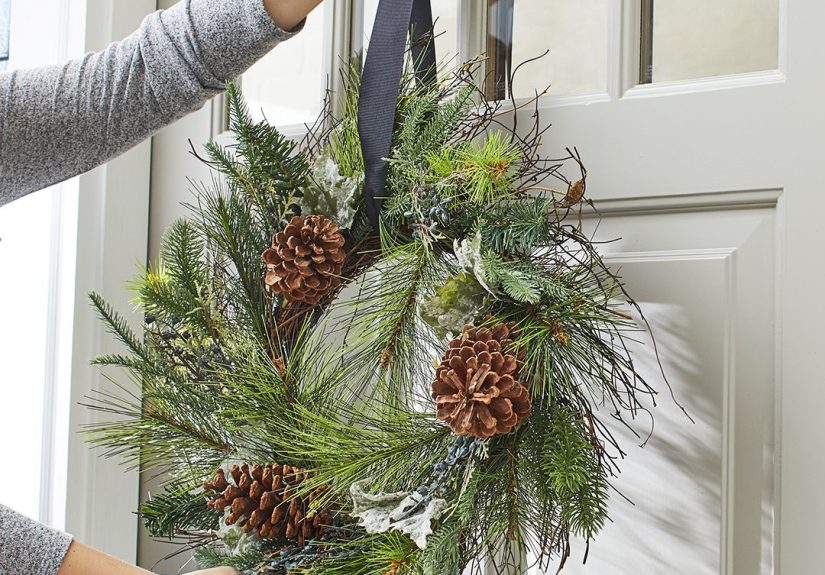
If you want a more traditional look, ribbon is a charming and surprisingly practical way to hang a Christmas wreath. This method works especially well when you want the ribbon itself to become part of the design. A velvet red ribbon, plaid ribbon, or satin gold ribbon can instantly make the wreath feel more finished.
Best For
Wood doors, interior doors, decorative styling, and anyone who wants the hanging method to look intentional rather than purely functional.
What You Need
- A sturdy ribbon long enough to loop around the wreath and reach the top of the door
- A secure attachment point on the back or top of the door
- The wreath
How to Do It
- Thread the ribbon through the wreath frame or tie it securely around the top.
- Adjust the length so the wreath hangs at the right height.
- Secure the ribbon at the top edge of the door or on the back side of the door using a hidden attachment method that suits your surface.
- Center the wreath and smooth the ribbon so it lies flat.
Ribbon is especially useful when you want a softer, more elegant look than a visible metal hook. It also works well indoors, where the back side of the door is easier to access and hide. If you have a metal door or a single-pane glass area, a magnetic hanger can create a similar clean look while keeping the front of the display neat and polished.
Pros
- Decorative and customizable
- Great for classic holiday styling
- Can be surprisingly sturdy when anchored well
- Easy to coordinate with bows, garland, and porch decor
Cons
- Needs a secure hidden anchor point
- Can shift if the ribbon is too slippery
- Not always the best choice for very heavy wreaths
Which Method Is Best?
If you want pure convenience, choose the over-the-door hanger. If you want a clean, nearly invisible look, choose the removable adhesive hook. If you want decorative charm and a more styled finish, choose ribbon.
In other words, the best way to hang a Christmas wreath depends less on “the perfect universal method” and more on your door, your wreath, and your tolerance for seasonal nonsense.
Common Mistakes to Avoid
Using the Wrong Hook for the Surface
Not every adhesive product works on every surface. Read the label, especially for outdoor use.
Ignoring Door Clearance
If the wreath is too thick, the storm door may crush it. If the hanger is too bulky, the door may not close smoothly.
Choosing Style Over Stability
Yes, that giant fresh wreath with bells, ornaments, pinecones, and dramatic ribbon looks amazing. But if it weighs a ton, it needs hardware that can actually support it.
Hanging It Too High or Too Low
Your wreath should feel centered and welcoming, not like it is trying to escape the door or hide near the doormat.
Extra Tips for Fresh Christmas Wreaths
If you are using a live wreath, placement matters even more. Fresh wreaths last longer in cool, shaded, protected areas. Avoid strong sun, direct heat, and overly warm indoor spots. If possible, mist the greenery from time to time, especially on the back, and keep the wreath out of harsh drying conditions. If your entry gets full afternoon sun, an artificial wreath may actually be the smarter choice.
Real-World Experience: What Actually Happens When You Hang a Christmas Wreath
In theory, hanging a Christmas wreath sounds like the kind of holiday task you can finish while casually sipping coffee and listening to cheerful music. In reality, it often becomes a tiny home-improvement test wrapped in ribbon. That is why experience matters. Once you have hung a few wreaths on different doors, you start to notice what really works and what only works in a perfectly staged catalog photo.
For example, the over-the-door hanger is usually the easiest method in real life. It is the one people reach for when they want the job done now, not after a long conversation with a package of instructions. It works especially well on busy mornings, when you are decorating between errands and do not have the patience to measure, clean, wait, and second-guess your life choices. The downside is that some hangers can shift slightly when the door opens and closes often, especially in households where the front door gets used like a revolving stage entrance.
Adhesive hooks tend to create the prettiest finished look, but they reward patience. People who rush this method often end up with the classic holiday moment: the wreath falls off three hours later, preferably right after you told someone, “This is so secure.” When done properly, though, adhesive hooks are excellent. They are especially helpful if you want your wreath centered perfectly without a visible hanger at the top. The key lesson from experience is simple: clean first, let the surface dry, apply carefully, and wait the full recommended time before adding weight.
Ribbon hanging feels the most festive because the ribbon becomes part of the decor. It is also the method that gets the most compliments, especially when the ribbon coordinates with porch planters, doormats, or garland. But it can be slightly more finicky than people expect. A silky ribbon may slide. A knot may shift. The wreath may sit one inch off-center and somehow that one inch will haunt you every time you walk past the door. The fix is usually easy: use a sturdier ribbon, secure it tightly, and adjust the length before you commit.
Another common real-world surprise is that door type changes everything. A heavy wood door feels solid and forgiving. A glass storm door is less forgiving and more dramatic. A metal door may open the door to magnetic solutions, which can be wonderfully neat, but only if the surface and weight are compatible. People also discover very quickly that a thin wreath behind a storm door is a much better idea than a thick, fluffy one that gets flattened into an awkward holiday pancake.
The biggest lesson of all is that the best wreath setup is the one that still looks good after a week of normal life. Kids come and go. Delivery people knock. Weather changes. Doors slam. Wind happens. A successful wreath is not just cute on day one. It is still centered, secure, and cheerful after all the real-life chaos of December. That is what makes these three methods so useful: they are simple, proven, and practical enough to survive the season without turning your front porch into a holiday blooper reel.
Final Thoughts
Learning how to hang a Christmas wreath does not have to be complicated. If you want the easiest all-around solution, use an over-the-door hanger. If you want a clean look with no visible hardware, go with a removable adhesive hook. If you want extra style and softness, use ribbon. Match the method to the surface, respect the weight of the wreath, and take a minute to center it properly.
That is really the whole secret. A beautifully hung wreath is one of the quickest ways to make your home feel warm, welcoming, and holiday-ready. And unlike tangled lights, it usually does not argue back.