Table of Contents >> Show >> Hide
- Why a Mushroom Omelette Works So Well
- Ingredients for a Classic Mushroom Omelette
- Equipment You Will Want
- How to Make a Mushroom Omelette: 15 Steps
- Step 1: Choose the right mushrooms
- Step 2: Clean them the smart way
- Step 3: Slice the mushrooms evenly
- Step 4: Preheat the skillet
- Step 5: Cook the mushrooms first
- Step 6: Season the filling
- Step 7: Remove the mushrooms and keep them ready
- Step 8: Crack and whisk the eggs
- Step 9: Wipe or reset the pan
- Step 10: Pour in the eggs
- Step 11: Pull the cooked egg toward the center
- Step 12: Stop while the top is still a little moist
- Step 13: Add the mushroom filling
- Step 14: Fold with confidence
- Step 15: Plate and serve immediately
- Tips for the Best Mushroom Omelette
- Common Mistakes to Avoid
- Easy Variations
- What to Serve with a Mushroom Omelette
- Why This 15-Step Method Works
- Kitchen Experiences: What Making a Mushroom Omelette Usually Teaches You
- Conclusion
If breakfast had a hall of fame, the mushroom omelette would already have a gold jacket and a smug little acceptance speech. It is fast, savory, flexible, and just fancy enough to make you feel like you know what you are doing in the kitchen, even if your spatula still looks nervous. Better yet, a good mushroom omelette turns a handful of everyday ingredients into something that tastes like a real meal instead of a rushed compromise.
The trick is not magic. It is method. Mushrooms need proper browning, eggs need gentle handling, and the filling should be ready before the eggs even hit the pan. Once you get that rhythm down, you can make a mushroom omelette for breakfast, brunch, lunch, dinner, or that strange hour when toast feels too boring and cereal feels like emotional defeat.
This guide walks through 15 clear steps for making a mushroom omelette at home, plus tips on choosing mushrooms, avoiding watery fillings, and getting that soft, folded finish without turning your pan into a crime scene.
Why a Mushroom Omelette Works So Well
Mushrooms bring deep, savory flavor and a meaty texture without making the omelette heavy. Eggs provide richness, structure, and protein. Add a little butter, a pinch of salt, maybe some herbs or cheese, and suddenly your skillet is doing excellent work on a weekday morning.
The best part is that mushroom omelettes are easy to customize. Cremini mushrooms give you earthy depth. White button mushrooms keep things mild and familiar. Shiitakes bring bigger personality. Add chives, thyme, spinach, goat cheese, Swiss, cheddar, or garlic depending on your mood and the contents of your refrigerator.
Ingredients for a Classic Mushroom Omelette
- 3 large eggs
- 1 to 1 1/2 cups sliced mushrooms, such as cremini or button
- 1 tablespoon butter, divided
- 1 teaspoon olive oil
- 1 tablespoon milk or water, optional
- Salt, to taste
- Black pepper, to taste
- 1 tablespoon chopped chives or parsley, optional
- 2 to 3 tablespoons shredded cheese, optional
Equipment You Will Want
- 8-inch nonstick skillet
- Medium bowl
- Fork or whisk
- Rubber spatula
- Knife and cutting board
How to Make a Mushroom Omelette: 15 Steps
Step 1: Choose the right mushrooms
Cremini mushrooms are a great place to start because they are flavorful, easy to find, and not outrageously expensive. White button mushrooms work too. If you want a bolder flavor, mix in shiitakes. Whatever you choose, pick mushrooms that look firm, dry, and fresh rather than slimy or sad.
Step 2: Clean them the smart way
Do not soak mushrooms like they are at a day spa. Wipe them with a damp paper towel or brush off dirt gently. Too much water makes it harder for them to brown, and a mushroom omelette should taste rich and savory, not steamed and apologetic.
Step 3: Slice the mushrooms evenly
Slice them thin enough to cook quickly but thick enough to keep some texture. Uneven pieces lead to uneven cooking, which is how you end up with one perfect bite and one suspiciously squeaky bite.
Step 4: Preheat the skillet
Set your nonstick skillet over medium to medium-high heat. Add the olive oil and half the butter. The fat should look hot and glossy before the mushrooms go in. If the pan is too cool, the mushrooms will release liquid and steam instead of sautéing.
Step 5: Cook the mushrooms first
Add the mushrooms in a single layer if possible. Let them cook for a minute before stirring, then sauté until they turn tender and lightly browned. This usually takes about 5 to 7 minutes. If they release moisture, keep cooking until that liquid mostly evaporates. That is the secret to avoiding a watery omelette.
Step 6: Season the filling
Sprinkle the mushrooms with a little salt and pepper near the end of cooking. Add garlic or thyme if you want extra flavor. Fresh herbs make the omelette taste more polished, like it has its life together.
Step 7: Remove the mushrooms and keep them ready
Transfer the cooked mushrooms to a plate or bowl. Do not leave them in the pan while you cook the eggs or they can overcook and dry out. Omelettes move fast, so this is the moment to make sure your filling is within arm’s reach.
Step 8: Crack and whisk the eggs
Crack 3 eggs into a bowl and whisk until fully blended. You can add a tablespoon of milk or water if you want a slightly lighter texture, but it is optional. Season with a pinch of salt and pepper. Whisk enough to combine the whites and yolks well, but you do not need to attack the bowl like it insulted you.
Step 9: Wipe or reset the pan
If the skillet has browned bits that may burn, wipe it carefully and return it to medium heat. Add the remaining butter. Swirl it around so the bottom is coated. An evenly buttered pan gives the eggs a better shot at cooking smoothly and releasing cleanly.
Step 10: Pour in the eggs
Once the butter is melted and slightly foamy, pour in the eggs. They should begin to set around the edges almost immediately. That is your cue that the pan temperature is in the sweet spot.
Step 11: Pull the cooked egg toward the center
Use a rubber spatula to gently drag the cooked edges inward while tilting the pan so uncooked egg flows to the open spaces. This creates a tender, even omelette instead of a thick hockey puck with ambitions.
Step 12: Stop while the top is still a little moist
Cook until the omelette is mostly set but still slightly glossy on top. Residual heat will continue cooking the eggs. If you wait until the surface looks completely dry in the pan, you are probably headed toward an overcooked omelette.
Step 13: Add the mushroom filling
Spoon the mushrooms onto one half of the omelette. Add cheese now if you are using it. A modest amount is best. Overstuffing feels ambitious in the moment and chaotic during the fold.
Step 14: Fold with confidence
Slide the spatula underneath the empty side and fold it over the mushrooms. Let the omelette sit for 15 to 30 seconds more if needed so the cheese melts and the center finishes cooking. This is not the time for panic. A slightly rustic fold still tastes amazing.
Step 15: Plate and serve immediately
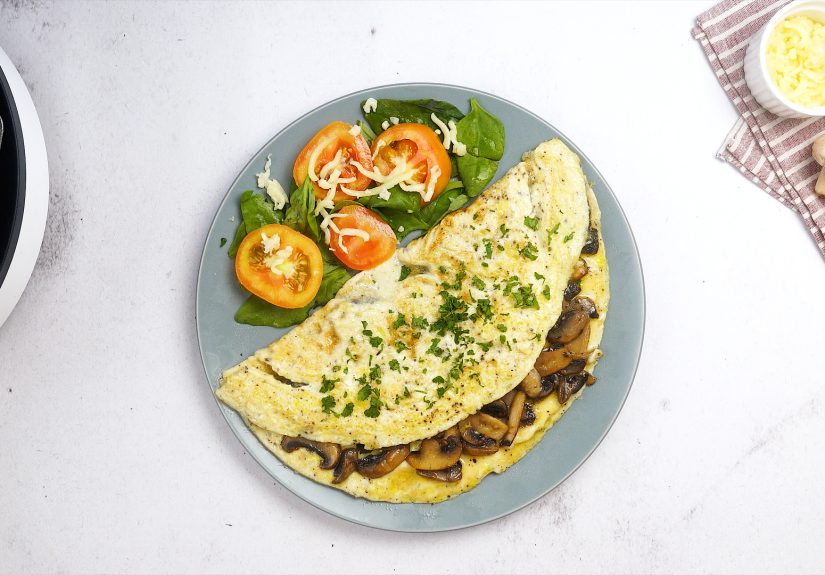
Slide the mushroom omelette onto a warm plate. Top with chives, parsley, or black pepper if you like. Serve it right away with toast, fruit, roasted potatoes, or a simple salad. Omelettes are not into long waits. They prefer applause while still warm.
Tips for the Best Mushroom Omelette
Use the right pan: An 8-inch nonstick skillet is ideal for a 2- or 3-egg omelette. Too large, and the eggs spread too thin. Too small, and the omelette gets awkwardly thick.
Cook mushrooms separately: This is the big one. Mushrooms contain a lot of moisture. If you toss raw mushrooms directly into the eggs, the filling can turn watery and the omelette can tear.
Do not overload the filling: A good omelette is a balance, not a storage unit for every vegetable in the fridge.
Keep the heat moderate: Very high heat can brown the eggs too fast before the center sets. Moderate heat is more forgiving and friendlier to home cooks.
Serve immediately: Omelettes wait for no one. The longer they sit, the firmer they get.
Common Mistakes to Avoid
Using wet mushrooms: Damp mushrooms steam. Dry mushrooms brown.
Skipping seasoning: Eggs and mushrooms both need salt to taste their best.
Overcooking the eggs: Dry eggs are the fastest route to breakfast disappointment.
Adding too much cheese: Cheese is delightful, but too much can overpower the mushroom flavor and make the omelette heavy.
Folding too late: If the eggs are fully firm before you fold, the omelette is more likely to crack.
Easy Variations
Mushroom and Swiss Omelette
Add shredded Swiss cheese for a nutty, melty finish that pairs naturally with sautéed mushrooms.
Mushroom Spinach Omelette
Wilt a handful of spinach into the mushrooms during the last minute of cooking for extra color and flavor.
Mushroom and Goat Cheese Omelette
Add small crumbles of goat cheese for a tangy, creamy contrast that makes the mushrooms taste even richer.
Herb Mushroom Omelette
Fresh chives, parsley, dill, or thyme brighten the whole dish and stop it from feeling too heavy.
What to Serve with a Mushroom Omelette
A mushroom omelette is substantial on its own, but it plays well with others. Try it with buttered toast, a side of fresh fruit, crispy breakfast potatoes, tomato slices, or a lightly dressed green salad. If you are making brunch, pair it with roasted asparagus or a yogurt parfait and pretend the morning is far more organized than it really is.
Why This 15-Step Method Works
This method breaks the process into practical stages: prep the mushrooms, build flavor, cook the eggs gently, then fold before the texture goes too far. That structure matters because omelettes happen quickly. When the filling is ready and the technique is simple, the whole dish becomes much easier to control.
It also makes the omelette repeatable. Once you know how to sauté mushrooms until browned, how to manage the egg flow in the pan, and when to fold, you can adapt the method to almost any filling combination. In other words, today’s mushroom omelette can become tomorrow’s spinach-feta masterpiece without drama.
Kitchen Experiences: What Making a Mushroom Omelette Usually Teaches You
The first time many people make a mushroom omelette, they expect the eggs to be the hard part. Surprise: the mushrooms are usually the real plot twist. They look innocent, then release a shocking amount of liquid into the pan like tiny edible pranksters. Once you experience that, you learn a valuable kitchen lesson fast: flavor comes from patience. Let the mushrooms cook long enough to lose moisture and pick up browning, and the omelette suddenly tastes deeper, toastier, and much more restaurant-worthy.
Another common experience is discovering that omelettes move faster than you think. You can casually stir pancake batter while checking your phone. An omelette does not respect that lifestyle. Once the eggs hit the skillet, your attention needs to be in the pan, not floating around the kitchen wondering whether coffee counts as breakfast. This is why experienced home cooks get everything ready first. Mushrooms cooked, cheese grated, herbs chopped, plate waiting, spatula nearby. It sounds simple, but that little bit of setup changes everything.
There is also the emotional journey of the fold. In theory, folding an omelette seems elegant and cinematic. In reality, it can feel like trying to close a sleeping bag while it is still deciding whether to cooperate. The encouraging truth is that a mushroom omelette does not need to look perfect to be excellent. Some of the best homemade omelettes are slightly uneven, a little rustic around the edges, and still absolutely delicious. That is part of their charm. They are forgiving enough for beginners and satisfying enough for people who cook all the time.
Over time, making a mushroom omelette teaches confidence. You start recognizing the sound of mushrooms sautéing properly. You notice when butter is foamy but not browned. You see the eggs go from liquid to softly set and understand exactly when to pull the pan from the heat. Those tiny observations add up. A recipe that once felt like a sequence of instructions begins to feel like instinct. That is when cooking gets really fun.
And then there is the best experience of all: customization. One day you add thyme and Swiss cheese. The next day you use spinach and goat cheese. Maybe you try caramelized onions, or a little garlic, or a sprinkle of chives on top because suddenly you are the kind of person who keeps fresh herbs around. The mushroom omelette becomes less of a single recipe and more of a reliable format for a good meal. It is quick enough for weekdays, cozy enough for weekends, and impressive enough to serve to someone else without needing to announce, “Please ignore the panicked energy in which this was made.” That is why this dish sticks around. It is simple, yes, but it also makes you feel capable. And honestly, breakfast could use more of that.
Conclusion
If you want a breakfast that feels classic, comforting, and just a tiny bit impressive, a mushroom omelette is hard to beat. Use fresh mushrooms, cook them until browned, keep the eggs tender, and do not overfill the pan. Follow these 15 steps and you will have a mushroom omelette that is savory, fluffy, and ready to rescue breakfast from mediocrity.