Table of Contents >> Show >> Hide
- What Does “Path of Totality” Actually Mean?
- The 2024 Solar Eclipse Path of Totality, Explained
- Why the Path of Totality Mattered So Much
- Total Eclipse vs. Partial Eclipse: A Difference That Is Not Even Close
- What Cities and Regions Got the Best Eclipse Experience?
- How to View a Total Solar Eclipse Safely
- Why the 2024 Eclipse Got So Much Attention
- How to Understand the Path of Totality on a Map
- What the Experience of Totality Feels Like
- Extended Experience: What It Was Like to Chase the 2024 Path of Totality
- Final Thoughts
- SEO Tags
If you heard people talk about the 2024 solar eclipse like it was the Super Bowl, a rock concert, and a spiritual awakening rolled into one, they were not exaggerating. The big phrase everyone kept repeating was “path of totality.” It sounds dramatic, and honestly, it deserves the drama. For the April 8, 2024 total solar eclipse, the path of totality was the narrow corridor where the Moon completely covered the Sun, turning daytime into an eerie twilight and revealing the Sun’s glowing corona. Outside that band, people still saw a partial eclipse, which is cool. But totality? That is the main event.
In plain English, the path of totality was the Moon’s shadow highway across Earth. It swept from Mexico into the United States and then into Canada. In the U.S., it entered through Texas and stretched northeast through parts of Oklahoma, Arkansas, Missouri, Illinois, Kentucky, Indiana, Ohio, Pennsylvania, New York, Vermont, New Hampshire, and Maine. Some nearby slivers of other states also caught totality, but the main story was a diagonal ribbon running from the Southwest to the Northeast. If you were in that ribbon, you saw the full show. If you were outside it, even by a little, you did not.
What Does “Path of Totality” Actually Mean?
The path of totality is the area on Earth where the Moon appears large enough to block the entire bright face of the Sun. That full cover-up is what makes a total solar eclipse different from a partial one. During totality, the sky darkens, temperatures can dip, and the Sun’s outer atmosphere, called the corona, becomes visible. This is the part people travel hundreds or even thousands of miles to see, because there is no substitute for it. A 99% partial eclipse may sound nearly identical to totality, but visually and emotionally, it is a completely different beast.
Think of it like this: a partial eclipse is like dimming the lights in a room. Totality is like someone flipping the whole building into a surreal, cosmic evening for a few minutes. That difference is why eclipse experts kept repeating the same advice before April 8: get into the path of totality if you can. It was not gatekeeping. It was public service.
The 2024 Solar Eclipse Path of Totality, Explained
The April 8, 2024 eclipse began over the Pacific and crossed North America from west to east. After touching Mexico’s Pacific coast, the path moved across northern Mexico and then entered the United States through Texas. From there, it cut a narrow band across the country before exiting through Maine and continuing into Canada and the Atlantic. The corridor was only a limited strip, not a coast-to-coast blanket, which is why maps were so important for travelers.
States in the U.S. Path of Totality
In the United States, the path crossed parts of:
- Texas
- Oklahoma
- Arkansas
- Missouri
- Illinois
- Kentucky
- Indiana
- Ohio
- Pennsylvania
- New York
- Vermont
- New Hampshire
- Maine
A few locations became especially famous in eclipse coverage. Texas drew major attention because totality first entered the U.S. there. Southern Illinois, especially Carbondale, was again a star after its memorable 2017 eclipse experience. Parts of Indiana, Ohio, and upstate New York also became hot destinations for skywatchers hunting a clear forecast and a few magical minutes under the Moon’s darkest shadow.
How Long Did Totality Last?
Not every town in the path got the same amount of darkness. The length of totality depended on exactly where you were inside the corridor. Near the centerline, people got the longest show. The eclipse’s longest duration was about 4 minutes and 28 seconds in Mexico. Many locations along the path saw roughly 3.5 to 4 minutes of totality, which is a generous amount of time in eclipse terms. It still feels brief, though. Ask anyone who watched it, and they will tell you those minutes vanish faster than free snacks in an office kitchen.
Why the Path of Totality Mattered So Much
The reason the path mattered is simple: only totality reveals the full eclipse experience. Inside the path, viewers could briefly remove eclipse glasses only when the Sun was completely covered. That is when the corona appeared, along with possible solar prominences at the edges. Outside the path, no matter how dramatic the partial eclipse looked, the Sun was never fully blocked, which meant eye protection had to stay on the entire time.
This distinction also mattered for science and education. The 2024 eclipse was not just a pretty sky event. Researchers used it to study the Sun, the corona, and even how Earth’s atmosphere responds when sunlight rapidly changes. Educators, museums, observatories, and universities used the event to teach everything from orbital mechanics to safe viewing habits. In other words, the path of totality was not just a tourist trail. It was a moving outdoor laboratory.
Total Eclipse vs. Partial Eclipse: A Difference That Is Not Even Close
Let’s settle a common misunderstanding. A location seeing 95% or even 99% coverage is not basically the same as being in totality. The remaining sliver of Sun is still incredibly bright. That tiny crescent keeps the sky much lighter than people expect, and it prevents the corona from becoming visible. Outside the path, you may get a weirdly dim afternoon. Inside the path, you get a haunting, breathtaking transformation of the world around you.
During totality, people often report:
- Sudden twilight-like darkness
- A noticeable drop in temperature
- A 360-degree sunset effect near the horizon
- Changes in animal behavior
- The visible solar corona around a blackened Sun
That is why eclipse veterans can sound a little dramatic. They are not being over-the-top. They are trying, perhaps desperately, to explain that a partial eclipse is a nice appetizer, while totality is the full five-course meal with fireworks.
What Cities and Regions Got the Best Eclipse Experience?
“Best” always depends on two things: your exact location inside the path and the weather. Still, several U.S. areas stood out before the eclipse because they offered long totality times, strong infrastructure, or a history of eclipse enthusiasm. Texas was heavily watched because totality entered the U.S. there during early afternoon. Southern Illinois also remained a fan favorite, especially Carbondale, which had already built eclipse credibility in 2017. Cities and towns in Indiana, Ohio, and New York drew attention too, particularly for travelers trying to balance accessibility with favorable cloud forecasts.
Another fun detail: all 48 contiguous U.S. states were able to see at least a partial eclipse on April 8, 2024. That gave the event national reach, even though only a narrower group of places got true totality. So yes, millions of Americans experienced the eclipse, but the people inside the path of totality were the ones who got the unforgettable version.
How to View a Total Solar Eclipse Safely
Eclipse excitement and eyeballs should never be allowed to duel. For the 2024 eclipse, eye safety guidance was consistent and clear: use certified eclipse glasses or a safe solar viewer whenever any part of the Sun is still visible. Regular sunglasses do not count. Not even your “very expensive designer sunglasses.” The Sun does not care how fashionable you are.
The only time it was safe to look with the naked eye was during full totality, when the Sun’s bright surface was completely covered. The second even a sliver of sunlight reappeared, eye protection had to go right back on. This rule is simple, important, and absolutely not optional.
Why the 2024 Eclipse Got So Much Attention
The 2024 eclipse was a major event because it crossed heavily populated parts of North America and offered long periods of totality in many locations. It also followed the 2017 “Great American Eclipse,” which gave people enough experience to know this was worth planning for. Add in social media, family road trips, science outreach, livestreams, and a healthy amount of weather-related anxiety, and the result was one of the most talked-about sky events in recent memory.
It also helped that total solar eclipses are rare for any one location. You cannot just shrug and say, “I’ll catch the next one next Tuesday.” In the contiguous United States, the next total solar eclipse will not arrive until 2044. That alone gave the 2024 event a now-or-never energy that pushed people onto highways, into parks, onto rooftops, and occasionally into epic traffic jams with a trunk full of snacks and high hopes.
How to Understand the Path of Totality on a Map
If you ever look at an eclipse map and think it resembles a weather forecast designed by a wizard, here is the simple version. The darkest central band is the path of totality. That band shows where the Moon’s umbra, the darkest part of its shadow, falls on Earth. Surrounding areas lie in the penumbra, where only part of the Sun is covered. The closer you are to the center of the dark band, the longer totality lasts.
For the 2024 eclipse, that dark band angled from southwest to northeast across the U.S. Map readers cared deeply about the centerline because a few extra seconds of totality can feel like gold. Weather watchers cared just as much about cloud cover. In the days leading up to April 8, many eclipse chasers were studying forecasts like final exam material.
What the Experience of Totality Feels Like
This is where science and emotion shake hands. Totality is not just something you see. It is something you feel. The daylight fades in a way that feels wrong but thrilling, like the afternoon has suddenly remembered it is allowed to be mysterious. Shadows sharpen. The air can cool. People get quiet, then loud, then quiet again. Some cheer. Some cry. Some stare at the sky with the kind of expression usually reserved for surprise marriage proposals or unexpectedly good pie.
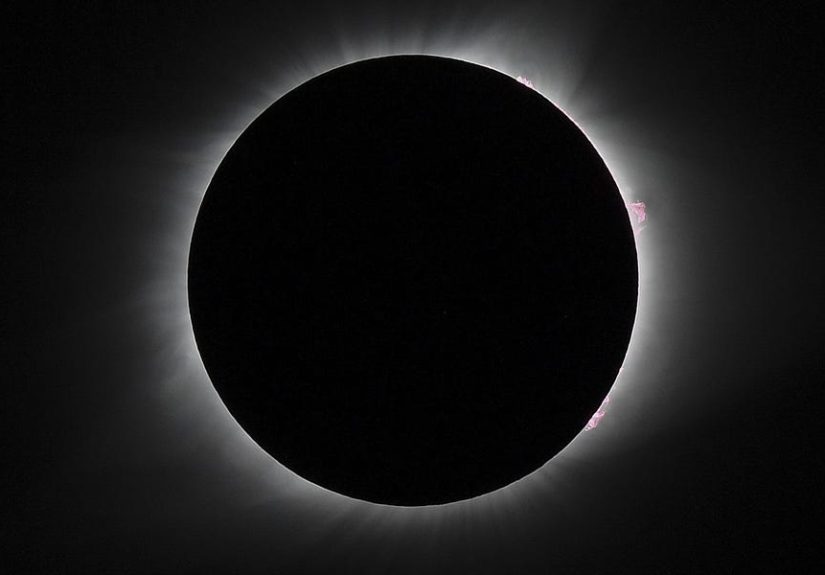
When the Sun finally disappears, the corona blooms into view around a black disk, delicate and ghostly. It looks less like a science diagram and more like the universe briefly pulled back a curtain. For many viewers, this moment explains why the path of totality matters so much. It is not just a location on a map. It is the doorway to the rarest part of the show.
Extended Experience: What It Was Like to Chase the 2024 Path of Totality
By the time eclipse day arrived, the path of totality had become more than a strip across a map. It had turned into a destination, a mission, and for some people, a mild obsession. Travelers booked hotels months ahead, campgrounds filled up, museums planned public events, and entire families built road trips around a few minutes of darkness. Some people chose Texas for the early entry point into the United States. Others aimed for Illinois, Indiana, Ohio, or New York, hoping to balance travel ease with a better weather outlook. Everybody seemed to have the same dream: stand in the right place at the right time and watch the universe do something unforgettable.
The experience often started long before totality itself. Hours ahead of the main event, parks and open fields buzzed with anticipation. People compared eclipse glasses, swapped weather apps, adjusted camera tripods, and made nervous jokes about clouds like amateur meteorologists with emotional damage. As the Moon began taking bites out of the Sun, the mood shifted. The light looked strange. The shadows became unusually crisp. The day felt as if someone had quietly edited reality.
Then came the final approach to totality, the moment eclipse chasers live for. The sunlight weakened fast, but not in the usual sunset way. It felt sharper, colder, and oddly theatrical. The horizon sometimes looked brighter than the land beneath the sky, producing that famous 360-degree sunset effect. Birds and insects reportedly changed behavior in some places, apparently convinced the schedule had become deeply confusing. Honestly, fair.
When totality arrived, the emotional response was often immediate. People gasped. They shouted. They laughed. Some fell silent in total disbelief. The Sun’s corona appeared as a pale, elegant halo around the Moon’s black disk, and the world seemed suspended for a few surreal minutes. Even seasoned skywatchers often describe totality as bigger, stranger, and more beautiful than photographs ever suggest. That is partly because photos flatten the experience. They cannot reproduce the temperature drop, the hush of a crowd, the fast-moving darkness, or the instinctive feeling that you are witnessing something both ancient and wildly alive.
And then, just like that, it ended. A bright bead of sunlight flashed back into view, glasses went on again, and the crowd usually erupted into applause or stunned chatter. Afterward came the universal reaction: part wonder, part gratitude, part “Wait, that was only a few minutes?” The path of totality gave people more than a celestial event. It gave them a memory with texture, sound, and emotion. It created one of those rare public moments when science, travel, family, and awe all lined up perfectly under the same darkened sky.
Final Thoughts
So, what was the path of totality for the 2024 solar eclipse? It was the narrow track where the Moon completely blocked the Sun on April 8, 2024, delivering the full total eclipse experience across parts of Mexico, the United States, and Canada. In the U.S., that meant a northeastward path from Texas to Maine. More importantly, it marked the difference between seeing a neat astronomical event and witnessing one of nature’s most jaw-dropping performances.
If there is one takeaway worth keeping, it is this: for a total solar eclipse, location is everything. The path of totality is not a technical detail buried in a map legend. It is the whole point. Stand inside it, and the sky changes character. Stand outside it, and you miss the rare moment when day briefly becomes cosmic twilight.