Table of Contents >> Show >> Hide
- First, What Experts Mean by “Narcissistic”
- How to Not Be a Narcissist: 10 Expert-Backed Habits That Actually Help
- 1. Stop treating every interaction like a performance review
- 2. Practice active listening, not just strategic waiting
- 3. Build empathy like it is a skill, because it is
- 4. Learn to survive criticism without acting like you were attacked by wolves
- 5. Apologize without adding a legal disclaimer
- 6. Share credit and own the mess
- 7. Check your sense of entitlement
- 8. Notice how often you use people for regulation
- 9. Ask for honest feedback from people who are not afraid of you
- 10. Consider therapy if the pattern is persistent
- What Not to Do If You Want to Change
- Real-Life Experiences: What Change Can Actually Look Like
- Conclusion
Everybody likes a little attention. That is called being human. Wanting every conversation to become your personal documentary series? That is where things get a little trickier.
The internet loves to throw around the word narcissist like confetti at a parade, but experts make an important distinction: being self-involved sometimes is not the same as having narcissistic personality disorder. Still, if you have started wondering whether you dominate conversations, get weirdly defensive over feedback, or treat apologies like a hostage negotiation, that self-awareness is actually a very good sign. Narcissism tends to thrive in denial. Growth starts with honesty.
So how do you not become the person who needs applause for loading the dishwasher? According to mental health experts, the answer is not self-hatred or pretending to be humble while secretly waiting for someone to say, “No, really, you are amazing.” The real work is deeper than that. It involves empathy, accountability, emotional regulation, better listening, and a willingness to see other people as actual people instead of supporting cast members in your heroic life montage.
This guide breaks down what experts say about narcissistic behavior, what change really looks like, and how to build healthier habits without turning the whole process into another ego project.
First, What Experts Mean by “Narcissistic”
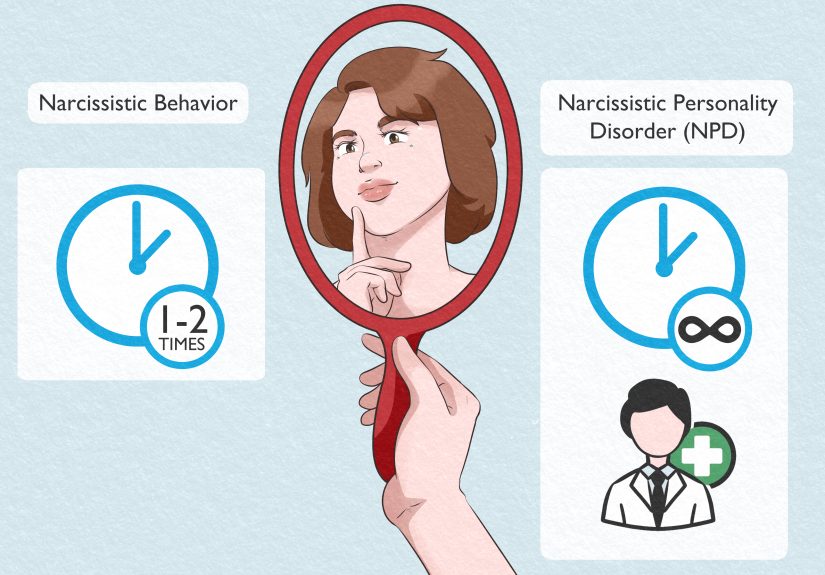
In everyday conversation, people use narcissistic to describe someone arrogant, self-absorbed, manipulative, or desperate for admiration. Clinically, narcissistic personality disorder involves a more serious and persistent pattern: grandiosity, entitlement, lack of empathy, excessive need for admiration, sensitivity to criticism, and difficulty maintaining healthy relationships.
That distinction matters. You can have narcissistic traits without having narcissistic personality disorder. You can also be selfish in a few situations without being a capital-N Narcissist. The point of this article is not to hand you a diagnosis from the internet. It is to help you build habits that make you more grounded, more considerate, and much less exhausting to be around.
Experts also note something that surprises a lot of people: narcissistic behavior is often tied to fragile self-esteem, shame, and emotional insecurity, not just oversized confidence. In other words, the loudest ego in the room is not always the strongest one. Sometimes it is just the most desperate for reinforcement.
How to Not Be a Narcissist: 10 Expert-Backed Habits That Actually Help
1. Stop treating every interaction like a performance review
One of the clearest warning signs of narcissistic behavior is chronic self-focus. You are not just participating in life; you are constantly scanning for status, admiration, validation, and proof that you matter more than everyone else in the room.
Try asking yourself a blunt question: Am I trying to connect here, or am I trying to impress? That single pause can save you from turning a casual conversation into a one-person TED Talk.
Healthy confidence lets you show up as yourself. Narcissistic behavior turns every moment into a branding exercise. If your brain keeps whispering, “How am I being perceived?” redirect it with, “What does this person need from me right now?” That shift moves you from image management to actual human relating.
2. Practice active listening, not just strategic waiting
Experts on communication and empathy repeatedly emphasize active listening because it forces you out of your own head. Active listening means you are not silently rehearsing your comeback, topping the other person’s story, or waiting for your turn to be brilliant. You are paying attention to what is being said, reflecting it back, and asking follow-up questions that show curiosity.
That can sound like:
- “So you felt dismissed when that happened?”
- “What was the hardest part for you?”
- “I want to make sure I understood what you meant.”
This sounds simple, but it is powerful. People feel respected when they feel heard. And if you struggle with narcissistic tendencies, listening well is one of the fastest ways to stop centering yourself in every exchange.
3. Build empathy like it is a skill, because it is
Empathy is not magic fairy dust sprinkled on people with naturally warm personalities. It is a skill that can be practiced. Experts often recommend perspective-taking: deliberately imagining what another person may be feeling, fearing, or needing in a specific moment.
Before reacting, try this mental checklist:
- What might this situation feel like from their side?
- What assumptions am I making about their intentions?
- What would I want if I were in their position?
You do not have to agree with everyone to practice empathy. You just have to recognize that other people have inner worlds as vivid and important as your own. That realization is a direct antidote to narcissistic thinking.
4. Learn to survive criticism without acting like you were attacked by wolves
Experts consistently note that people with strong narcissistic patterns can be highly sensitive to criticism. Even gentle feedback may feel humiliating, threatening, or enraging. That is why small comments sometimes trigger outsized reactions: deflection, blame, sarcasm, rage, or icy withdrawal.
If you want to become less narcissistic, you need a better relationship with feedback. When someone criticizes you, do not rush to defend your entire character like you are arguing a court case. Instead, try this sequence:
- Pause.
- Ask what specifically they meant.
- Look for the part that might be true.
- Respond to the issue, not the shame spiral in your head.
You are not weak for receiving feedback. You are mature. Big difference.
5. Apologize without adding a legal disclaimer
Experts who study relationships and repair are clear on this: a real apology includes acknowledgment, responsibility, and care for the person harmed. It does not include ten minutes of explaining why you were tired, stressed, misunderstood, technically correct, spiritually evolving, and therefore not really at fault.
A solid apology sounds like this: “I was dismissive, and I can see that it hurt you. I am sorry. I want to do better next time.”
A terrible apology sounds like this: “I am sorry you felt that way, but if you had listened more carefully, you would have realized I was actually being helpful.”
If apologizing feels unbearable, that may be a clue that your ego is running the show. Healthy people can tolerate being wrong. Narcissistic defenses cannot.
6. Share credit and own the mess
Narcissistic behavior often shows up in a simple pattern: success is mine, failure is a group project. If things go well, you want applause. If things go badly, suddenly there is a suspiciously long list of other people to blame.
Try reversing that habit. Publicly share credit. Privately and directly own your mistakes. Thank people by name. Acknowledge other people’s effort without turning it into a speech about your leadership qualities. If you hurt someone, say so clearly. If you dropped the ball, say that too.
Accountability is one of the clearest markers of emotional maturity because it proves your identity is strong enough to hold imperfection.
7. Check your sense of entitlement
Entitlement is one of the sneakiest narcissistic habits because it often hides behind sentences that sound almost reasonable. “I deserve better.” “People should know what I need.” “I should not have to wait.” “Rules are for other people with less special destinies.”
Sometimes you really do deserve respect, fairness, or better treatment. But entitlement kicks in when you assume you deserve special treatment more than others, or without mutual responsibility.
A useful replacement mindset is this: I have needs, but so do other people. I matter, but I am not the main character in every room.
That sentence alone could save a lot of group chats.
8. Notice how often you use people for regulation
One expert theme that comes up again and again is that narcissistic behavior often uses other people as tools: for admiration, reassurance, status, control, attention, convenience, or emotional soothing. The relationship becomes less about mutual care and more about what the other person can supply.
Ask yourself:
- Do I mostly reach out when I need validation?
- Do I lose interest when someone stops praising me?
- Do I punish people for not giving me the reaction I want?
Healthy relationships involve reciprocity. That means you are not just looking for an audience, a mirror, or a rescue team. You are showing up for the other person too.
9. Ask for honest feedback from people who are not afraid of you
If you are serious about change, ask two or three trusted people a hard question: “How do I come across when I’m stressed, defensive, or upset?”
Then do the difficult part: listen without arguing. Do not cross-examine them. Do not demand evidence like a courtroom prosecutor. Do not explain why their perception is technically flawed. Just listen.
Patterns you might hear include:
- You interrupt a lot.
- You make everything about yourself.
- You get cold when corrected.
- You struggle to admit fault.
- You seem more focused on being admired than understood.
That feedback may sting, but it is gold. You cannot change what you refuse to see.
10. Consider therapy if the pattern is persistent
Experts are clear that psychotherapy is the main treatment approach for narcissistic personality disorder and narcissistic patterns that seriously affect relationships, work, or emotional stability. Therapy can help you understand your triggers, tolerate shame without collapsing or lashing out, improve empathy, strengthen identity, and build healthier ways of relating to others.
This is especially important if you notice recurring patterns such as explosive reactions to criticism, repeated conflict in close relationships, chronic need for admiration, manipulation, intense envy, or an inability to admit wrongdoing even when the evidence is basically glowing in the dark.
Going to therapy does not mean you are a villain. It means you are finally willing to do maintenance on the emotional machinery instead of making everyone else live with the smoke.
What Not to Do If You Want to Change
Do not fake humility. False modesty is still ego, just in a cardigan.
Do not use “self-love” as an excuse for selfishness. Healthy self-respect includes respect for other people too.
Do not weaponize therapy language. Saying “I’m protecting my peace” while treating people terribly is not growth. It is rebranding.
Do not chase labels more than change. Spending ten hours deciding whether you or your ex or your neighbor’s uncle is a narcissist will not make you a kinder person.
Do not expect overnight transformation. Experts describe personality change as gradual. Progress usually looks less like a dramatic epiphany and more like repeatedly choosing curiosity over defensiveness, accountability over blame, and connection over control.
Real-Life Experiences: What Change Can Actually Look Like
In real life, change rarely begins with someone announcing, “I have reflected deeply and I am now humble.” Usually, it starts with consequences. A partner gets tired. A friend stops calling. A coworker avoids collaboration. Someone says, gently or not so gently, “You make everything about you.” That is often the moment when a person realizes charm is no longer covering the damage.
Consider the common experience of the person who thinks they are just “confident” but slowly notices a pattern: they interrupt stories to top them, dismiss feedback as jealousy, and become moody when they are not the center of attention. At first, they call everyone else too sensitive. Later, after enough awkward silences and strained relationships, they begin to see that the pattern follows them. That is an important turning point. When the problem keeps showing up in every room, eventually you have to consider that you brought it with you.
Another common experience involves criticism. Someone receives a small note from a manager, partner, or friend and reacts as if they were publicly booed off a stage. They get defensive, then angry, then wounded, then somehow become the victim of the conversation. Over time, if they are willing to reflect, they start noticing that the real pain is not the feedback itself. It is the shame underneath it. Once that becomes clear, the work changes. Instead of trying to win every conflict, they start learning how to tolerate discomfort without attacking, withdrawing, or rewriting the story.
There is also the experience of discovering empathy later than expected. Some people genuinely do not realize how rarely they ask follow-up questions, how quickly they redirect conversations, or how often they view other people through a usefulness filter. Then something shifts. Maybe they start practicing active listening on purpose. Maybe they begin repeating back what they heard before offering opinions. Maybe they keep a journal and notice how often their hurt feelings overshadow everybody else’s. Small practices like these can feel almost embarrassingly basic, but they add up. Relationships get warmer. Conversations get deeper. People stop seeming like obstacles and start feeling real again.
And then there is therapy, where many people confront an uncomfortable truth: underneath the grandiosity is often fear. Fear of being ordinary. Fear of not being admired. Fear of not mattering. Fear of being exposed as flawed, needy, or unlovable. For some, that realization is painful but freeing. Once the performance is no longer mistaken for a personality, there is room for something better: steadier self-worth, less defensiveness, more honesty, and relationships that are not built on managing impressions.
That is what genuine progress tends to look like. Not perfection. Not sainthood. Just a person becoming a little less performative, a little more accountable, and a lot more capable of loving people without constantly needing to win.
Conclusion
If you want to know how to not be a narcissist, experts point in the same direction: practice empathy, listen actively, accept feedback, apologize well, share credit, question entitlement, and get professional help when the pattern runs deep. In other words, stop building your identity around being superior and start building it around being honest, responsible, and connected.
The good news is that this work is possible. The less fun news is that it requires effort, humility, and repetition. But if you are asking the question in good faith, you are already doing something narcissism hates: admitting you might need to change.
That is not weakness. That is where maturity begins.