Table of Contents >> Show >> Hide
- Why Dead Skin Builds Up on Feet in the First Place
- Before You Start: A Few Safety Rules
- Method 1: Warm Water Soak and a Soft Washcloth
- Method 2: Use a Pumice Stone or Foot File
- Method 3: Try a Gentle Foot Scrub
- Method 4: Use a Keratolytic Foot Cream
- Method 5: Seal in Moisture Overnight
- Method 6: Use a Foot Peel Mask Carefully
- Method 7: See a Podiatrist or Dermatologist
- How to Prevent Dead Skin From Coming Back
- When to Call a Doctor
- What People Often Experience While Treating Dead Skin on Feet
- Conclusion
Note: This article is for general education and web publishing. Anyone with diabetes, poor circulation, numbness, open cracks, bleeding, infection signs, or severe pain should get medical advice before trying at-home exfoliation.
Your feet do an absurd amount of unpaid labor. They carry you through grocery runs, workdays, workouts, and those “I’ll just stand here for a second” kitchen marathons that somehow last 45 minutes. So when dead skin builds up on your heels, soles, or toes, it is not exactly shocking. It is annoying, though. Dry, thickened skin can feel rough, look flaky, catch on socks, and sometimes crack enough to make every step feel rude.
The good news is that learning how to remove dead skin from feet usually does not require a dramatic spa montage or a toolbox that belongs in a garage. In many cases, the best approach is a mix of gentle exfoliation, strategic moisturizing, and a little patience. The key word is gentle. Your goal is smoother, healthier skin, not sanding your heel down like a coffee table project.
Below, you will find seven practical methods that can help remove dead skin from feet safely, plus tips on what causes the buildup, when to skip DIY treatment, and how to stop rough feet from making a speedy comeback.
Why Dead Skin Builds Up on Feet in the First Place
Dead skin on feet usually shows up because of friction, pressure, dryness, or a combination of all three. Shoes that rub, long hours on your feet, walking barefoot on hard floors, dry weather, aging skin, and certain skin conditions can all make the outer layer of skin thicken. Sometimes that thick skin becomes a simple rough patch. Sometimes it turns into calluses or cracked heels that feel like your feet are auditioning for a desert documentary.
In some cases, rough or peeling feet may also be related to athlete’s foot, eczema, psoriasis, or another skin issue rather than ordinary dryness. That matters because the fix is not always “scrub harder.” In fact, scrubbing harder is often how people make a minor problem angry.
Before You Start: A Few Safety Rules
Before trying any foot exfoliation routine, keep these rules in mind:
Do not cut or shave dead skin at home
That includes razors, blades, scissors, and all “I saw it online” experiments. Removing too much skin can lead to bleeding, pain, and infection.
Be extra careful if you have diabetes or nerve problems
If you have diabetes, neuropathy, poor circulation, or peripheral artery disease, even a small foot injury can become a bigger problem. In that case, foot care should be much more cautious and often guided by a clinician.
Stop if your skin is cracked, bleeding, or infected
If you see redness, swelling, drainage, warmth, or increasing pain, skip the home treatment and get checked. That is not the moment for a heroic scrub.
Know when the rough patch is not just dead skin
Plantar warts, fungal infections, and inflammatory skin conditions can look similar to dry, thick skin. If the area is very painful, one-sided, itchy, spreading, or not improving, it is worth getting a proper diagnosis.
Method 1: Warm Water Soak and a Soft Washcloth
If your feet feel rough but not heavily callused, start simple. A warm water soak softens thick skin, making it easier to loosen surface buildup without going full medieval on your heels.
How to do it
Soak your feet in warm, not hot, water for about 5 to 10 minutes. Afterward, pat them dry and gently rub rough areas with a soft washcloth. Use light pressure. You are trying to lift softened dead skin, not erase your footprints.
Why it works
Water helps soften dry, hardened skin so mild friction can remove loose flakes more easily. This is often enough for people with mild dryness or seasonal roughness.
Best for
Light flaking, mild rough patches, and anyone who wants the gentlest starting point.
What not to do
Do not soak for ages. Long soaks can dry the skin out more afterward. Also, do not scrub aggressively once your skin softens. Softened skin is easier to damage too.
Method 2: Use a Pumice Stone or Foot File
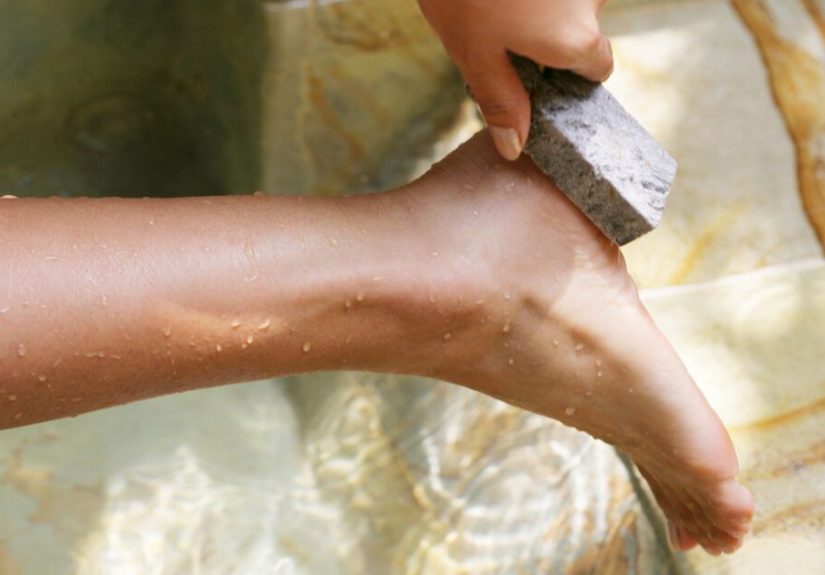
If you are dealing with thicker buildup, a pumice stone or foot file can help remove dead skin from feet more effectively than a washcloth. This is one of the most common at-home methods for callused heels and soles, and when done gently, it can work very well.
How to do it
After a shower, bath, or short foot soak, wet the pumice stone and gently rub it over rough areas using light, small movements. If you are using a foot file, follow the same principle: easy pressure, slow passes, no drama. Rinse, pat dry, and apply moisturizer right away.
Why it works
A pumice stone physically exfoliates thickened skin that has built up from pressure and friction. It is especially useful on heels and the balls of the feet.
Best for
Moderate calluses, rough heels, and dry patches that laugh in the face of a washcloth.
What not to do
Do not over-file. If the skin turns pink, tender, or sore, you have done enough. More is not better. More is how you end up limping around your house in fluffy socks, regretting your choices.
Method 3: Try a Gentle Foot Scrub
A foot scrub can help smooth flaky skin and freshen up the surface of your feet, especially when roughness is mild to moderate. Think of it as the middle ground between “barely exfoliating” and “attack the heel with a stone.”
How to do it
Use a store-bought foot scrub or a gentle exfoliating formula designed for the body. Massage it into damp feet using small circular motions, focusing on dry areas. Rinse well, dry carefully, and follow with a rich cream.
Why it works
Scrubs remove loose surface skin and can improve the texture of the feet. They work best when the dead skin is not too thick.
Best for
Dry, dull, flaky feet that need smoothing but do not have heavy calluses.
What not to do
Skip harsh scrubs with sharp, scratchy particles. The goal is polish, not punishment. And never use a scrub over open cracks or irritated skin.
Method 4: Use a Keratolytic Foot Cream
If you want to know the smartest long-game strategy for dead skin on feet, here it is: use the right moisturizer. Specifically, look for foot creams with ingredients that soften thick skin while hydrating it. These ingredients may include urea, lactic acid, salicylic acid, or other alpha hydroxy acids.
How to do it
Apply the cream once or twice daily, especially after bathing and before bed. Focus on heels, callused spots, and dry patches. If the product contains active exfoliating ingredients, use it exactly as directed and do not layer on five other “miracle” treatments just because your feet are feeling adventurous.
Why it works
These creams do two helpful things at once: they hydrate dry skin and help break down the bonds that keep thickened skin hanging around like an overstaying houseguest.
Best for
Cracked heels, recurring roughness, thick dead skin, and people who want a low-effort routine that does not involve scrubbing every day.
What not to do
Be cautious with strong acid-based creams if your skin is cracked, irritated, or sensitive. And if you have diabetes or reduced sensation in your feet, check with a clinician before using products that can irritate the skin.
Method 5: Seal in Moisture Overnight
Some feet do not need more exfoliation. They need a serious moisture intervention. An overnight moisture-sealing routine is one of the easiest ways to soften dead skin from feet and help heal dry, thick heels over time.
How to do it
Before bed, apply a thick layer of petroleum jelly, heel balm, or a rich foot cream. Then put on clean cotton socks. The socks help keep the product in place and reduce water loss overnight, while also preventing you from sliding across the hallway like a confused penguin.
Why it works
Occlusive products lock moisture into the skin. Over several nights, this can soften hardened areas and reduce the rough, tight feeling that often comes with dead skin buildup.
Best for
Very dry heels, mild heel cracks, and anyone who wakes up with feet that feel like stale toast.
What not to do
Do not apply heavy ointments between the toes if you are prone to fungal infections. Too much trapped moisture in that area can make things worse.
Method 6: Use a Foot Peel Mask Carefully
Foot peel masks are the flashy overachievers of the foot-care world. These products use exfoliating acids to loosen thick dead skin, and several days later, your feet begin peeling in dramatic, snake-like layers. It is effective for many people, but it is not for everyone.
How to do it
Follow the product directions exactly. Usually, you wear the booties for a set amount of time, rinse your feet, and then wait several days for the peeling process to begin. Do not try to force the peeling along by yanking skin off. Let it happen naturally.
Why it works
The acids in the mask help dissolve the outer dead skin layers, which then shed over the next several days.
Best for
Stubborn roughness and thick surface buildup when the skin is intact and otherwise healthy.
What not to do
Avoid foot peels if you have open cracks, eczema flares, irritated skin, diabetes, numbness, or any condition that raises your risk of skin injury. This is also not the week to schedule sandal photos if you mind looking like your feet are molting.
Method 7: See a Podiatrist or Dermatologist
Sometimes the best method is handing the situation to a professional. If you have thick calluses, painful cracks, recurring buildup, or a skin issue that keeps returning no matter what you do, a podiatrist or dermatologist can help you figure out the real cause and treat it safely.
What a professional can do
A clinician may carefully debride thickened skin, recommend better footwear or inserts, evaluate for fungal infection or warts, and suggest targeted treatments if dryness is linked to an underlying skin condition.
Best for
Painful calluses, deep heel fissures, diabetes, poor circulation, suspected infection, or any “I have tried everything and my foot still looks like a geology sample” situation.
How to Prevent Dead Skin From Coming Back
Removing dead skin from feet is helpful, but prevention is what keeps your heels from returning to their previous crunchy era. A few habits make a big difference:
Moisturize daily
Consistency beats intensity. A good foot cream used every day often works better than a once-a-week exfoliation binge.
Wear shoes that fit well
Friction and pressure are major causes of calluses. If a pair of shoes always rubs the same spot, your skin will keep trying to protect itself there.
Use cushioned socks
Socks reduce friction, support the skin barrier, and make your feet a little less angry by the end of the day.
Do not walk barefoot on rough surfaces all the time
Tile, wood, concrete, and outdoor surfaces can all contribute to dryness and thickening over time.
Treat athlete’s foot promptly
If your feet are itchy, peeling between the toes, or cracking in a way that does not improve with moisturizers, consider whether fungus may be involved. That usually needs antifungal treatment, not more scrubbing.
When to Call a Doctor
Home treatment is usually fine for ordinary rough feet, but there are times when medical help is the smarter move. Reach out if:
You have diabetes, numbness, or poor circulation; the skin is bleeding, swollen, warm, or draining; heel cracks are deep and painful; the area is not improving after a couple of weeks; or you are not sure whether it is a callus, wart, infection, or something else.
What People Often Experience While Treating Dead Skin on Feet
One of the most common experiences people describe is surprise. Not because their feet are dry, but because they did not notice how bad the buildup had gotten until it started snagging on socks, catching on the bedsheets, or making that rough scraping sound against the inside of a shoe. Foot skin changes tend to creep up slowly. No one wakes up one morning and thinks, “Amazing, my heel has become a sandstone formation overnight.” It usually happens bit by bit, especially during dry weather, long periods of standing, or sandal season.
Another common experience is overcorrecting. A person sees rough heels, grabs a pumice stone, and decides that more pressure must mean faster results. Then the heel feels raw, tender, and somehow worse. This is probably the biggest lesson people learn with foot exfoliation: slow and steady wins. The skin on your feet is tough, but it is still skin. It responds better to repeated gentle care than one aggressive session that leaves you hobbling to the couch.
Many people also notice that exfoliation alone does not solve the problem. They scrub, rinse, admire the temporary smoothness, and then a few days later the roughness returns like it pays rent. That is because dead skin on feet is often tied to dryness and friction, not just buildup. Once people add a daily moisturizer or an overnight heel balm routine, the difference is usually much more noticeable. In other words, the glamorous secret to nicer feet is often not a fancy gadget. It is consistency. Exciting? No. Effective? Annoyingly, yes.
There is also the foot-peel experience, which deserves its own category. People often expect instant results, but most peel masks work on a delay. For a few days, nothing much happens. Then suddenly, the skin starts shedding in dramatic pieces, and there is a brief moment where a person wonders whether this was a bold beauty choice or a small horror film. The process can be satisfying, but it also teaches patience. Pulling at the peeling skin too early can irritate healthy tissue underneath, so the most successful users are usually the ones who let the product do its job quietly.
For people with cracked heels, the experience is often less about appearance and more about comfort. Deep dryness can make the heel feel tight, tender, and oddly vulnerable. Small cracks may sting in the shower or ache when walking. In those cases, the biggest relief often comes from thick moisturizing products and socks at night rather than from more exfoliation. Many people say the skin feels softer within a few days of regular moisturizing, even before it looks dramatically different.
There is also an emotional side that does not get talked about much. Rough feet can make people self-conscious, especially in warm weather, at the pool, or during sandal season. But the reality is that dry feet are incredibly common. They are not a personal failure. They are usually a normal response to pressure, weather, skin type, or daily habits. Once people understand the cause, the problem tends to feel much more manageable and much less mysterious.
Finally, people often discover that the best routine is the one they will actually do. A ten-step foot care system may look impressive, but a realistic plan works better: a short soak once or twice a week, gentle filing when needed, and daily moisturizer. That is the routine most people can stick with, and sticking with it is what gets the smoothest results. Your feet do not need perfection. They need regular, respectful maintenance and a break from being treated like rugged outdoor equipment.
Conclusion
If you want to remove dead skin from feet safely, the best approach is usually a combination of gentle exfoliation and serious moisturizing. Start with the least aggressive method that matches your level of dryness. For some people, a warm soak and washcloth will do the trick. For others, a pumice stone, keratolytic cream, or overnight heel treatment will make the biggest difference. And if your feet are painful, cracked, or not improving, professional care is not overkill. It is the smart move.
Softer feet are not about attacking every rough patch. They are about understanding what your skin needs, staying consistent, and resisting the urge to turn your bathroom into a foot-sanding workshop. Your heels will thank you. Quietly, because feet are not known for speeches.