Table of Contents >> Show >> Hide
- What Does “Sláinte” Mean, Exactly?
- How to Pronounce “Sláinte” (Without Guessing Wildly)
- How to Use “Sláinte” Like a Normal Human
- Popular Variations You Might Hear (And When to Use Them)
- Why “Health” Is Such a Common Toast (In Ireland and Beyond)
- Mini Irish-Language Lesson: Why It Looks Weird but Sounds Right
- Common Mistakes (And How to Fix Them Fast)
- Quick FAQ About “Sláinte”
- Extra: 5 Real-Life “Sláinte” Moments (Experience-Based, Not Just Theory)
- 1) The “First Time in an Irish Pub” Moment
- 2) The Family Gathering Where Someone’s Actually Irish
- 3) The St. Patrick’s Day Party (Where Everyone Suddenly Becomes a Pronunciation Coach)
- 4) The Non-Alcoholic Toast That Still Feels Festive
- 5) The “I Learned One Irish Word and It Opened a Conversation” Surprise
- Conclusion
There are some words that do a lot of work for such a small package. In Ireland, sláinte is one of them. It’s the tiny, cheerful shout that pops up at pub tables, weddings, holiday dinners, and yesSt. Patrick’s Day parties everywhere from Dublin to downtown Chicago. If you’ve ever heard it and thought, “Wait… is that ‘slanty’?” don’t worry. English spelling rules have absolutely no authority here.
This guide breaks down what sláinte really means, how to pronounce it without starting a minor international incident, and how to use it naturallywhether you’re clinking glasses of sparkling water, soda, tea, or something stronger (for the adults in the room). We’ll also cover common variations, Irish-language pronunciation cues, and a few easy etiquette tips so you can say it with confidence.
What Does “Sláinte” Mean, Exactly?
Sláinte is the Irish word for “health.” When people say it as a toast, it’s essentially shorthand for “to your health,” which is why it lines up so neatly with how English speakers use “cheers.” A lot of cultures toast to health (instead of, say, “may your Wi-Fi never buffer”), and Irish is no exception.
The meaning matters because it tells you what the word is for. It isn’t just a party sound effect. It’s a friendly wish: health, well-being, and good fortune for the people you’re with. That’s also why sláinte shows up in so many Irish-themed greetings, toasts, and travel momentsit’s warm, simple, and instantly social.
Irish, Gaelic, Gaeilge… Are These the Same Thing?
You’ll often hear people say “Irish Gaelic” or just “Gaelic.” In everyday conversation, folks use those terms loosely. But in Ireland, the language is typically called Irish or Gaeilge (pronounced roughly “GWAIL-guh”). “Gaelic” can also refer to Scottish Gaelic, which is related but not identical.
The good news: sláinte exists in both Irish and Scottish Gaelic, so you’ll hear it across Ireland and Scotland. The even better news: you don’t need to write a dissertation on Celtic linguistics before raising your glass.
How to Pronounce “Sláinte” (Without Guessing Wildly)
The most common English-friendly pronunciation is: “SLAWN-cha” (sometimes heard as “SLAWN-cheh” depending on accent and region). If you say “lawn” with an s in front, and then add a soft “cha,” you’re in the right neighborhood.
Pronunciation Breakdown (The Quick Cheat Sheet)
- Slán ≈ “slawn” (rhymes with “lawn”)
- -te ≈ “cha” or “cheh” (a sound that doesn’t map perfectly onto English)
The Accent Mark Matters: That Little Line Over the “á”
The “á” in sláinte has a fada (an accent mark) that signals a longer vowel sound. In plain English: it stretches the “a” so it sounds more like the “aw” in “lawn.” If you write it as “slainte” without the fada, people will still understand you in casual contexts, but using the proper spelling (sláinte) is more accurateand looks cooler. (Also, it prevents your spellcheck from trying to turn it into something unhelpful.)
That “ch” Sound: Think “Loch,” Not “Cheese”
Here’s where English speakers tend to improvise. The “ch” in Irish is often closer to the sound in “loch” (the Scottish word you might know from “Loch Ness”) than the “ch” in “chew.” It’s a breathy, throaty sound made toward the back of the mouth. You don’t need to overdo itthis isn’t a dragon impression. A gentle “kh/ h” style sound will get you closer than a crisp “ch” like “chair.”
Why You’ll Hear Slightly Different Pronunciations
Irish has regional dialects, and English speakers also filter the word through their own accents. That’s why you’ll see approximations like “SLAHN-cha,” “SLAWN-cha,” “SLAWN-cheh,” or even “SLAWN-sha.” Don’t chase perfection. Aim for: long “aw” vowel + a soft back-of-the-throat ending.
How to Use “Sláinte” Like a Normal Human
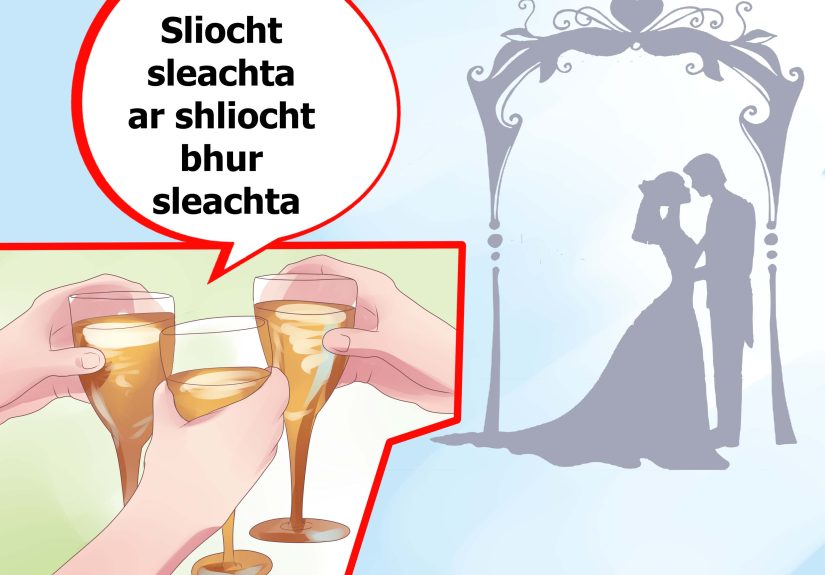
Using sláinte is easy: you say it right before you take a sip during a toast. That’s it. No secret handshake. No membership card. (Although if someone offers you a membership card, it’s probably a tourist shop.)
Step-by-Step: The “Sláinte” Moment
- Raise your glass (or mug, or paper cuplife is real).
- Make eye contact with the people you’re toasting.
- Smile and say “Sláinte!”
- Clink if appropriate (some settings do, some don’tfollow the vibe).
- Take a sip.
If you’re under the legal drinking age where you live, you can still toast. In fact, toasting with sparkling water, soda, or juice is extremely on-brand for the actual meaning of the word: health. Nobody gets to gatekeep a health wish.
How Do You Reply to “Sláinte”?
In many casual moments, people simply reply with “Sláinte!” right back. If you want to be a little more “I definitely did my homework,” there are traditional responses such as “Sláinte agatsa” (roughly, “to your health as well”).
Popular Variations You Might Hear (And When to Use Them)
Sláinte is the go-to. But Irish speakers (and enthusiastic learners) also use a few common variations. Think of these like expansionssame idea, more words.
Sláinte mhaith
Meaning: “Good health.”
When to use: When you want a slightly fuller toastoften in more celebratory or formal moments.
Pronunciation tip: The “mh” in Irish can sound like a soft v or w depending on dialect, so you may hear something like “vah/wah” at the end.
Sláinte chugat / Sláinte chugaibh
Meaning: “Health to you.” (Singular: chugat; plural/group: chugaibh.)
When to use: When you’re directly toasting one personor a whole group and you want to be precise. This is a fun option if you’re giving a toast speech and want to sprinkle in Irish without turning it into a spelling bee.
Sláinte is táinte (or Sláinte agus táinte)
Meaning: “Health and wealth.”
When to use: When you want your toast to sound extra generouslike you’re handing out good vibes in bulk. It’s also a crowd-pleaser because it’s easy to explain and feels festive.
Scottish Gaelic cousin: Slàinte mhath
In Scotland, you’ll often see slàinte with a grave accent (à) instead of the Irish fada (á). The meaning is still “health,” and slàinte mhath mirrors “good health.” If you’re traveling, it’s a nice reminder that Celtic languages are relatedbut not identical twins.
Why “Health” Is Such a Common Toast (In Ireland and Beyond)
Toasting is basically a tiny ritual of connection. Historically, sharing a drink and publicly wishing someone well has been a way to show trust, friendship, and community. Ireland has a strong storytelling culture, and toasts fit perfectly into that: a quick line that says, “We’re together here, and I’m glad you’re part of it.”
That’s also why sláinte shows up in big momentsweddings, family gatherings, holiday mealsas well as small ones, like meeting a friend after work or celebrating someone’s new job. It’s short enough to be casual, meaningful enough to feel sincere.
Mini Irish-Language Lesson: Why It Looks Weird but Sounds Right
If you’ve ever stared at “sláinte” and thought, “There is no way those letters are telling the truth,” here’s the secret: Irish spelling is consistent within Irish rules, not English ones.
The Two Biggest Clues
- Fada (á, é, í, ó, ú): The accent mark changes vowel length and sound. In sláinte, the á is longhence the “aw” sound.
- Letter combinations create new sounds: Irish uses combinations like ch, bh, and mh to create sounds that don’t match English expectations. That’s why learning even a few patterns makes pronunciation feel dramatically less like roulette.
Bonus: If you’ve seen other Irish words like fáilte (“welcome”) or craic (“fun/good times,” often pronounced like “crack”), you’ve already met the same “looks confusing, makes sense in Irish” phenomenon. Once you accept that Irish is playing by its own rules, everything becomes easierand slightly more magical.
Common Mistakes (And How to Fix Them Fast)
Mistake #1: “Slanty”
This is the classic. It’s also the fastest way to reveal you learned the word exclusively from a T-shirt. Fix: Commit to the long vowel“SLAWN”and you’re already improving.
Mistake #2: Ending with a crisp “tee”
Saying “SLAWN-tee” drifts away from the Irish sound. Fix: Aim for a softer ending like “cha/cheh” with that gentle “loch” breathiness.
Mistake #3: Ignoring the fada forever
You don’t need to panic if you can’t type accents quickly. But if you’re writing for a menu, a toast card, or a post, adding the fada is a simple way to be respectful and accurate: sláinte.
Mistake #4: Thinking it only “counts” with alcohol
Nope. The toast is about health, and you can wish health with any drink in your hand. If anything, saying sláinte with water is delightfully literal.
Quick FAQ About “Sláinte”
Is “Sláinte” only for St. Patrick’s Day?
Not at all. It’s used year-round in Ireland and wherever Irish culture is celebrated. St. Patrick’s Day just gives it extra airtime.
Do I have to clink glasses?
Some groups clink, some just raise the glass. In crowded places (or when someone’s holding something fragile), raising the glass and making eye contact is more than enough.
Can I use it in Ireland even if I’m not Irish?
Yeswhen used respectfully. Keep it simple, pronounce it as best you can, and don’t turn the moment into a performance. A sincere toast beats a showy one every time.
Extra: 5 Real-Life “Sláinte” Moments (Experience-Based, Not Just Theory)
Knowing a word is one thing. Feeling comfortable using it in the wild is another. Here are a few realistic situations where sláinte fits naturallyplus what it tends to sound and feel like in the moment.
1) The “First Time in an Irish Pub” Moment
Picture the setting: warm lights, a low hum of conversation, music that makes you want to tap your foot even if you swear you’re not a “toe-tapper.” Whether you’re in Ireland or in a neighborhood Irish pub in the U.S., toasts can happen fast. Someone raises a glass, says a word you recognize, and suddenly it’s your turn. The easiest move is to smile, raise your drink (beer, ginger ale, sparkling waterwhatever you’ve got), and say “Sláinte!” back. In that moment, your pronunciation doesn’t need to be perfect. The point is connection. Most people respond to the effort with a grin, not a grading rubric.
2) The Family Gathering Where Someone’s Actually Irish
This is where sláinte becomes less of a “fun fact” and more of a small gesture of respect. Maybe it’s a wedding reception, a milestone birthday, or a holiday dinner where an Irish grandparent or cousin is present. Someone proposes a toast, and you use sláinte at the end as a warm nod to heritage. These moments often feel surprisingly personalbecause the word is simple, but the message (health to you) is huge. If you want to go one step further, sláinte mhaith (“good health”) works beautifully at the close of a longer toast.
3) The St. Patrick’s Day Party (Where Everyone Suddenly Becomes a Pronunciation Coach)
In the U.S., St. Patrick’s Day can turn “sláinte” into a headline word. It shows up on banners, menus, social captions, and novelty cups. That’s fununtil someone confidently says “slanty” into the room like they’re announcing a flight delay. If you’ve learned the basics, you can be the calm hero who gently says, “It’s more like ‘SLAWN-cha’it means ‘health.’” Keeping it friendly is key. You’re not there to roast anyone (unless you’re roasting potatoes). A quick, kind correction can actually make the party feel more connected to the culture it’s celebrating.
4) The Non-Alcoholic Toast That Still Feels Festive
One underrated experience: using sláinte when the toast isn’t about alcohol at all. Maybe it’s a sports team celebration with energy drinks, a graduation dinner with sparkling cider, or a family table where half the group prefers soda and the other half is sipping tea. Because sláinte means “health,” it fits these moments almost perfectlyand it can shift the tone from “we’re drinking” to “we’re celebrating each other.” It’s a small word that makes the toast feel inclusive.
5) The “I Learned One Irish Word and It Opened a Conversation” Surprise
This is a real phenomenon: you learn one culturally meaningful word, and it becomes a doorway. You say sláinte at the right moment, and suddenly someone tells you about their trip to Galway, their Irish dance class, their favorite blessing, or the time they tried to pronounce céad míle fáilte and got humbled (respectfully). That’s the best part of learning a phrase like this. It’s not just vocabularyit’s social glue. You’re not memorizing to sound impressive. You’re learning something that helps you participate.
Conclusion
Sláinte is one of the easiest, most meaningful Irish words you can learn: it means “health,” it functions like “cheers,” and it’s welcome in almost any celebratory momentwhether you’re holding a pint, a cup of tea, or a sparkling water with extra lime. Aim for “SLAWN-cha,” remember the fada, and use it with a smile and eye contact. That’s the whole magic.