Table of Contents >> Show >> Hide
- Step 1: Start With the Most Common Phrase: “Tu es belle”
- Step 2: Use “Vous êtes belle” for Formal Situations
- Step 3: Use “Beau” When Speaking to a Man
- Step 4: Learn the Plural Forms: “Belles” and “Beaux”
- Step 5: Add Emotion With Words Like “Très,” “Vraiment,” and “Magnifique”
- Step 6: Understand the Difference Between “Belle,” “Jolie,” and “Mignonne”
- Step 7: Say It Naturally, Not Like a Translation Robot Wearing a Beret
- Step 8: Match the Phrase to the Moment
- Common Mistakes to Avoid
- Useful French Compliment Vocabulary
- Experience-Based Tips: What It Feels Like to Learn This Phrase in Real Life
- Conclusion
- SEO Tags
There are a few phrases in French that sound instantly elegant, even if you pronounce them with the confidence of a tourist ordering soup from a train schedule. One of the sweetest is “You are beautiful.” In French, the basic translation is simple: Tu es belle when speaking informally to a woman, or Vous êtes belle when speaking formally to a woman. But because French enjoys adding a tiny grammar obstacle course to every romantic, friendly, or poetic sentence, there are a few details worth learning before you confidently launch your compliment into the air.
This guide explains how to say you are beautiful in French in eight easy steps, with examples, pronunciation tips, gender agreement, polite forms, and natural alternatives. Whether you are writing a card, practicing French conversation, complimenting a friend, or trying not to sound like you copied a phrase from a refrigerator magnet, this article will help you say it correctly and warmly.
Step 1: Start With the Most Common Phrase: “Tu es belle”
The most common way to say “You are beautiful” in French to a woman is:
Tu es belle.
It means “You are beautiful” or “You are pretty.” The word tu is the informal version of “you,” used with friends, family members, classmates, children, close coworkers, or anyone you know well. The word es means “are,” from the verb être, which means “to be.” The word belle means “beautiful” in the feminine singular form.
Pronunciation: too eh bell. Do not over-pronounce the final “e” in belle. It sounds like “bell,” as in the thing that rings when dinner is ready and everyone suddenly develops Olympic-level speed.
Example Sentences
Tu es belle aujourd’hui. You are beautiful today.
Tu es vraiment belle. You are really beautiful.
Tu es très belle. You are very beautiful.
Use this phrase when the tone is friendly, affectionate, or personal. It is direct, natural, and easy to remember.
Step 2: Use “Vous êtes belle” for Formal Situations
If you want to be polite or formal, say:
Vous êtes belle.
This also means “You are beautiful,” but it uses vous, the formal version of “you.” In French, vous is used with strangers, elders, teachers, clients, people in professional settings, or anyone you are addressing respectfully. Think of vous as the linguistic equivalent of wearing clean shoes and using your indoor voice.
Pronunciation: voo zet bell. Because vous ends in “s” and êtes begins with a vowel sound, French links them together. This is called a liaison, so it sounds like “voo-zett.”
When to Use It
Vous êtes belle works well in formal writing, elegant compliments, speeches, or polite conversation. For example:
Madame, vous êtes très belle. Madam, you are very beautiful.
Vous êtes magnifique ce soir. You are magnificent tonight.
Be careful in professional situations. Compliments about appearance can feel too personal depending on the context. When in doubt, compliment something less sensitive, such as style, work, creativity, or presentation.
Step 3: Use “Beau” When Speaking to a Man
French adjectives change depending on gender and number. When speaking to a man, the adjective changes from belle to beau. So the informal phrase is:
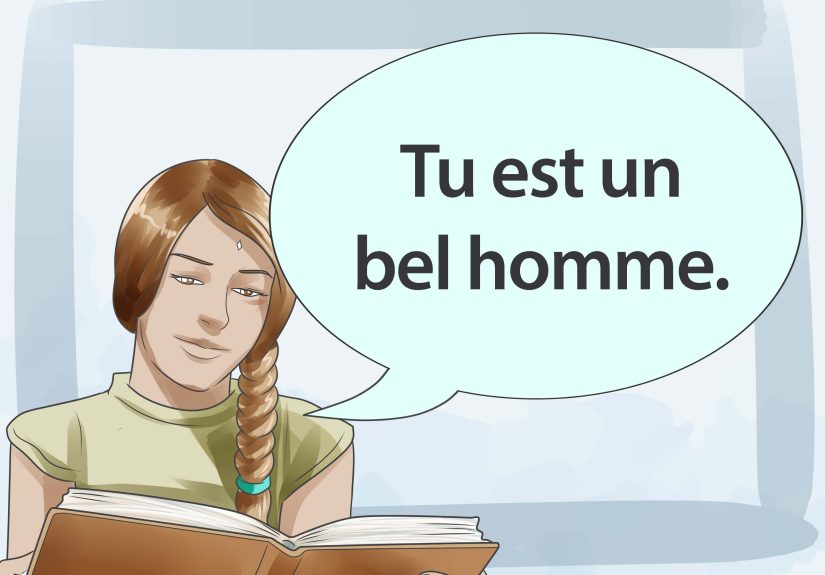
Tu es beau.
This means “You are handsome” or “You are good-looking.” It can also be translated as “You are beautiful,” although in English we usually say “handsome” for men. French uses beau comfortably for masculine beauty, attractiveness, and elegance.
Pronunciation: too eh boh. The word beau sounds like “bo,” not “bee-oh.” The “eau” combination in French often sounds like a clean “oh.” French spelling likes to dress up simple sounds in tuxedos.
Examples
Tu es beau. You are handsome.
Tu es très beau. You are very handsome.
Vous êtes beau. You are handsome. This is formal or polite.
If you are complimenting a man, use beau. If you are complimenting a woman, use belle.
Step 4: Learn the Plural Forms: “Belles” and “Beaux”
What if you are speaking to more than one person? French has plural forms too. If you are speaking to a group of women or girls, say:
Vous êtes belles.
If you are speaking to a group of men, or a mixed group, say:
Vous êtes beaux.
Yes, French uses the masculine plural form for mixed groups. It is one of those grammar rules that learners simply meet, shake hands with, and accept before moving on with their lives.
Quick Plural Guide
One woman: Tu es belle. / Vous êtes belle.
One man: Tu es beau. / Vous êtes beau.
Several women: Vous êtes belles.
Several men or mixed group: Vous êtes beaux.
In spoken French, belle and belles sound the same. Also, beau and beaux sound the same. The difference is mainly visible in writing.
Step 5: Add Emotion With Words Like “Très,” “Vraiment,” and “Magnifique”
Once you know the basic phrase, you can make it more expressive. French has many natural ways to strengthen a compliment without sounding like you swallowed a poetry textbook.
Use “Très” for “Very”
Tu es très belle. You are very beautiful.
Vous êtes très beau. You are very handsome.
Use “Vraiment” for “Really”
Tu es vraiment belle. You are really beautiful.
Tu es vraiment beau. You are really handsome.
Use “Magnifique” for “Magnificent” or “Gorgeous”
Tu es magnifique. You are gorgeous.
Vous êtes magnifique. You are magnificent.
Magnifique is wonderfully convenient because it works for masculine and feminine subjects in this sentence. No adjective gymnastics required. It is more dramatic than belle or beau, so use it when you want the compliment to feel stronger.
Step 6: Understand the Difference Between “Belle,” “Jolie,” and “Mignonne”
French has several words that can translate to “beautiful,” “pretty,” or “cute.” Choosing the right one depends on tone.
Belle or Beau
Belle and beau are classic words for beautiful, handsome, or good-looking. They are elegant and versatile.
Tu es belle. You are beautiful.
Tu es beau. You are handsome.
Jolie or Joli
Jolie means pretty, lovely, or attractive. It can feel lighter and softer than belle.
Tu es jolie. You are pretty.
Tu es joli. You are pretty or good-looking. This masculine form is less commonly used for adult men than beau, but it exists.
Mignonne or Mignon
Mignonne and mignon mean cute. These words are friendly and casual, but context matters. Calling someone “cute” may sound sweet, playful, or slightly childish depending on tone.
Tu es mignonne. You are cute. Feminine.
Tu es mignon. You are cute. Masculine.
For a respectful, polished compliment, Tu es belle or Vous êtes belle is usually safest.
Step 7: Say It Naturally, Not Like a Translation Robot Wearing a Beret
Knowing the words is only half the mission. The other half is saying them naturally. A direct compliment can be lovely, but delivery matters. In French, as in English, tone, relationship, and timing can change everything.
Natural Ways to Compliment Someone
Tu es très élégante. You are very elegant.
Tu as un beau sourire. You have a beautiful smile.
Cette couleur te va très bien. That color suits you very well.
Tu es radieuse. You are radiant.
These options can feel more personal and less intense than simply saying “You are beautiful.” For example, complimenting someone’s smile, style, or energy often feels warmer and more thoughtful.
Helpful Pronunciation Tips
For Tu es belle, say: too eh bell.
For Tu es beau, say: too eh boh.
For Vous êtes belle, say: voo zet bell.
For Tu es magnifique, say: too eh mah-nyee-feek.
Do not rush. French sounds smoother when you let the words breathe. You are not being chased by a grammar textbook. Hopefully.
Step 8: Match the Phrase to the Moment
The best French compliment is not always the most dramatic one. It is the one that fits the situation. Here are a few practical examples.
For a Friend
Tu es belle sur cette photo. You look beautiful in this photo.
Tu es vraiment jolie aujourd’hui. You look really pretty today.
For a Formal Message
Vous êtes très élégante. You are very elegant.
Vous êtes magnifique. You are magnificent.
For a Romantic Card
Tu es belle, à l’intérieur comme à l’extérieur. You are beautiful, inside and out.
Ton sourire est magnifique. Your smile is beautiful.
For a Group
Vous êtes toutes belles. You are all beautiful. Used for a group of women.
Vous êtes tous beaux. You are all handsome or beautiful. Used for a group of men or a mixed group.
Notice how the phrase changes depending on who you are speaking to. French rewards precision. English lets you say “you” to everyone and go home early; French brings forms, agreements, and a tiny clipboard.
Common Mistakes to Avoid
Mistake 1: Using “Belle” for Everyone
Belle is feminine. Use it for a woman, girl, or feminine noun. Use beau for a man, boy, or masculine noun.
Mistake 2: Forgetting Formal “Vous”
If you are speaking to someone you do not know well, vous is safer than tu. French speakers often appreciate the respect built into formal language.
Mistake 3: Translating Word for Word Too Rigidly
“You are beautiful” does not always need to become Tu es belle. Depending on the situation, Tu es magnifique, Tu es élégante, or Tu as un beau sourire may sound more natural.
Mistake 4: Ignoring Context
A compliment should feel welcome. If the setting is formal, professional, or unfamiliar, choose a respectful phrase or avoid appearance-based compliments altogether. Good manners are attractive in every language.
Useful French Compliment Vocabulary
Here are helpful words related to beauty and compliments in French:
Belle beautiful, feminine
Beau beautiful or handsome, masculine
Jolie pretty, feminine
Joli pretty, masculine
Magnifique gorgeous, magnificent
Élégante elegant, feminine
Élégant elegant, masculine
Radieuse radiant, feminine
Radieux radiant, masculine
Sourire smile
Experience-Based Tips: What It Feels Like to Learn This Phrase in Real Life
Learning how to say “You are beautiful” in French seems simple at first. You memorize Tu es belle, smile proudly, and feel like you have unlocked a secret door into French elegance. Then someone asks, “What if it is a man?” Suddenly, the secret door becomes a hallway with grammar signs pointing in four directions.
One of the most useful experiences for French learners is realizing that French compliments are not just about vocabulary. They are about agreement, politeness, and social feeling. When you first learn belle and beau, it may feel strange that the word changes depending on who or what is being described. In English, “beautiful” stays the same. A beautiful painting, a beautiful person, a beautiful day, and a beautiful sandwich all use the same adjective. French, however, wants the adjective to match the noun like a well-tailored jacket.
In practice, the easiest way to remember the difference is to connect the sound to examples. Say une belle femme, a beautiful woman. Say un beau garçon, a handsome boy. Repeat them out loud until they feel natural. Do not simply stare at the words on a screen and hope your brain absorbs them through Wi-Fi. Speaking helps.
Another real-life lesson is that compliments land better when they are specific. Instead of always saying Tu es belle, try Tu as un beau sourire, meaning “You have a beautiful smile.” This sounds thoughtful because it focuses on something warm and personal. Or say Cette robe te va très bien, meaning “That dress suits you very well.” Compliments about style, effort, or expression often feel more comfortable than direct appearance comments.
Pronunciation is another experience every learner must survive with dignity. At first, Tu es belle may come out stiffly, like each word has its own passport inspection. With practice, it becomes smoother: too eh bell. The phrase is short, so you can practice it easily. Say it slowly. Then say it a little faster. Then say it naturally, as if you are not trying to impress a panel of invisible French judges.
One surprisingly helpful habit is listening for compliments in French films, interviews, podcasts, or learning videos. You will notice that French speakers often use more than one expression for beauty. You may hear magnifique, jolie, canon, élégante, or ravissante. Some are formal, some are casual, and some are slang. As a learner, begin with the safe, classic phrases before experimenting with slang. Slang is fun, but it can also age faster than milk left in the sun.
If you are writing the phrase in a note, message, caption, or card, spelling matters. Tu es belle is correct for a woman. Tu es beau is correct for a man. Vous êtes belle is formal for one woman. Vous êtes beau is formal for one man. These small differences make your French look polished and intentional.
The biggest experience-based tip is simple: use French compliments with kindness and awareness. A phrase can be grammatically perfect and still feel awkward if the timing is wrong. On the other hand, a simple, sincere Tu es belle said in the right moment can feel charming, respectful, and memorable. Language is not just a puzzle; it is a way to connect with people. And when your French compliment makes someone smile, even your accent gets a standing ovation.
Conclusion
To say “You are beautiful” in French, use Tu es belle for an informal compliment to a woman and Vous êtes belle for a formal one. Use Tu es beau or Vous êtes beau when speaking to a man. For groups, choose Vous êtes belles for women and Vous êtes beaux for men or mixed groups.
The key is to match the adjective to the person, choose tu or vous correctly, and use tone that feels natural. Add words like très, vraiment, or magnifique when you want extra warmth. And remember: a good compliment is not only correct; it is thoughtful. French grammar may bring the rules, but sincerity brings the sparkle.