Table of Contents >> Show >> Hide
- Why Knock Knock Jokes Still Work
- How to Tell a Knock Knock Joke: 10 Steps
- Step 1: Respect the Rhythm
- Step 2: Choose a Simple Setup Word
- Step 3: Make Sure the Punch Line Sounds Natural
- Step 4: Know Your Audience Before You Knock
- Step 5: Practice Out Loud, Not Just in Your Head
- Step 6: Use the Pause Before the Punch Line
- Step 7: Sell It With Your Voice and Face
- Step 8: Let the Other Person Participate
- Step 9: Commit, Even if It’s Corny
- Step 10: Know When to Stop
- Three Quick Examples That Usually Work
- Common Mistakes That Kill a Knock Knock Joke
- Experience-Based Lessons From Real-Life Joke Moments
- Final Thoughts
- SEO Tags
Some skills make you look effortlessly cool. Parallel parking. Folding a fitted sheet. Pretending you understand your accountant. And then there is the noble art of telling a knock knock joke without sounding like a malfunctioning doorbell.
Knock knock jokes are old, silly, simple, and weirdly powerful. When they work, they create instant participation. Your listener is not just hearing the joke; they are helping build it. That is the magic. A good knock knock joke is part wordplay, part rhythm, part timing, and part confidence. It is basically a tiny comedy duet with a very low budget.
If you have ever delivered “Knock, knock” with the energy of an exhausted GPS, only to get silence and one pity smile, do not worry. This guide breaks the process down into ten practical steps so you can tell a knock knock joke that actually lands. Whether you are entertaining kids, making friends laugh, breaking the ice, or just trying to win family dinner with pure foolishness, these tips will help.
Why Knock Knock Jokes Still Work
Knock knock jokes survive because they are built on one of comedy’s simplest engines: setup and surprise. The listener knows a pattern is coming, but not exactly where the twist will land. That tiny gap between expectation and payoff is where the laugh lives.
They also work because they are interactive. One person starts. The other person responds. Instead of throwing humor at someone like a paper airplane, you invite them into the joke. That makes even a very corny line feel warmer and more memorable.
The Basic Anatomy of a Knock Knock Joke
Every classic knock knock joke has the same skeleton:
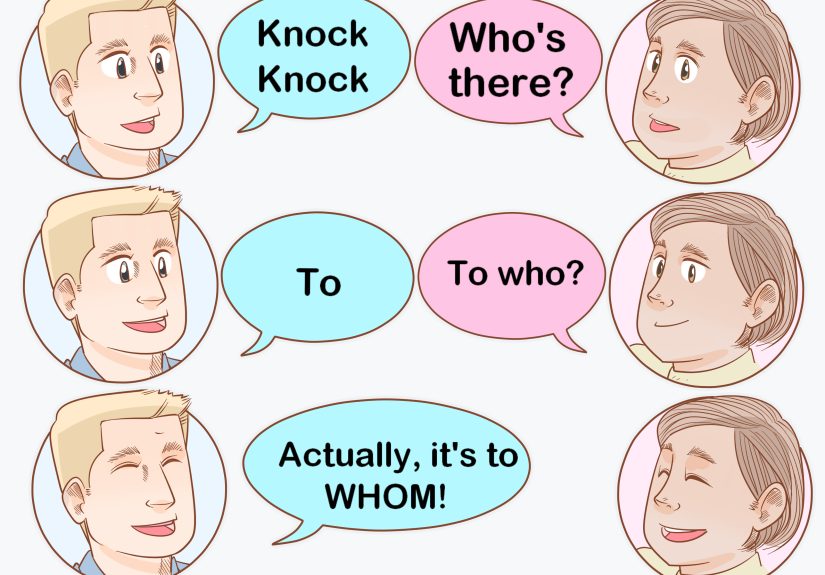
1. “Knock, knock.”
2. “Who’s there?”
3. A word or phrase.
4. “[Word or phrase] who?”
5. The punch line.
That structure matters more than people think. If you rush the pattern, skip a beat, or choose a reply that is too complicated, the joke collapses like a lawn chair at a family reunion.
How to Tell a Knock Knock Joke: 10 Steps
Step 1: Respect the Rhythm
Start with the classic call-and-response rhythm and do not fight it. Knock knock jokes are musical in a goofy little way. The listener expects a certain beat, and that beat helps them follow the wordplay.
Say “Knock, knock” clearly. Let the other person answer. Wait for “Who’s there?” before moving on. This is not speed dating for punch lines. If you bulldoze through the format, the listener never gets a chance to join the joke, and the laugh gets lost before it even clocks in.
Step 2: Choose a Simple Setup Word
The best setup words are short, easy to hear, and easy to repeat. Think “Lettuce,” “Olive,” “Tank,” or “Harry.” These are friendly little comedy building blocks. If your setup word sounds like a prescription medication or a Wi-Fi password, you are probably overthinking it.
A simple setup helps the audience understand the sound you are playing with. Remember, a knock knock joke usually wins through wordplay, not complexity. You are aiming for a grin, not a dissertation.
Step 3: Make Sure the Punch Line Sounds Natural
The punch line should echo a real phrase people actually recognize. That is what makes the wordplay click. “Lettuce in” works because it sounds like “let us in.” “Olive you” works because it sounds like “I love you.” The brain enjoys spotting that switch.
If the punch line needs three footnotes and a pronunciation guide, it is not ready yet. A solid knock knock joke feels obvious after you hear it. That “Ohhh, I get it” moment is part of the fun.
Step 4: Know Your Audience Before You Knock
A joke that slays with third graders may get a polite nod from adults. A joke that works at a casual party may not belong in a classroom, meeting, or family holiday. Good joke tellers think about who is listening before they open the imaginary door.
For kids, keep the language easy and the tone playful. For adults, you can use smarter wordplay, but keep it light unless you know the room well. Avoid jokes that punch down, rely on mean stereotypes, or make one person feel like the target. A joke should create connection, not collateral damage.
Step 5: Practice Out Loud, Not Just in Your Head
Many jokes look fine on paper and then collapse dramatically when spoken. Why? Because humor lives in sound. A word that seems clever when read may be muddy when heard. A phrase that looks smooth may trip over your tongue like it is wearing roller skates on gravel.
Say the joke out loud a few times. Listen for awkward phrasing. Test whether the setup word is easy to repeat. Notice where your voice naturally wants to pause. Even one minute of rehearsal can turn a clunky joke into a clean one.
Step 6: Use the Pause Before the Punch Line
This is the big one. Timing is not decoration in comedy; it is the engine. After the listener says “[word] who?” give the tiniest pause before the final line. Not a dramatic soap-opera pause. Not a full commercial break. Just a beat.
That beat creates anticipation. It tells the listener something funny is coming and gives their brain half a second to lean in. Then you deliver the punch line cleanly. For example:
Knock, knock.
Who’s there?
Orange.
Orange who?
…Orange you glad I didn’t say banana?
That little pause does a surprising amount of work. It shines a spotlight on the reveal.
Step 7: Sell It With Your Voice and Face
Delivery matters. A knock knock joke does not need Broadway-level acting, but it does need a little life. Change your tone. Use a raised eyebrow. Smile like you know something ridiculous is about to happen. Your energy tells the audience whether this is meant to be fun.
Monotone delivery can flatten even a good joke. On the other hand, a playful voice can rescue a very average one. Comedy is not just what you say; it is how you invite people to hear it.
Step 8: Let the Other Person Participate
Do not steal your listener’s lines. Yes, you may know they are about to say “Who’s there?” and “[word] who?” But let them say it. That participation is the whole point.
When people get to play their part, they feel the rhythm of the joke and become invested in the outcome. Even better, the exchange makes the humor feel shared rather than performed at them. A knock knock joke is a mini conversation, not a monologue in a trench coat.
Step 9: Commit, Even if It’s Corny
Here is a secret: knock knock jokes are often intentionally corny. That is not a flaw. That is the genre. If you tell one while acting embarrassed, the audience may feel awkward too. If you tell it with cheerful commitment, people are much more likely to laugh, groan, or do that wonderful thing where they pretend to hate it while obviously loving it.
Confidence helps people relax. And relaxed people laugh more easily. So yes, tell the cheese joke. Tell the banana joke. Tell the one that makes your uncle groan so hard he nearly folds in half. Live your truth.
Step 10: Know When to Stop
One good knock knock joke is delightful. Seven in a row can feel like emotional wallpaper. Do not overstay your welcome. If the first one lands, great. Maybe tell one more. If the room is not responding, pivot. Humor should feel nimble, not hostage-based.
The goal is not to prove you own an endless inventory of door-related comedy. The goal is to create a quick shared laugh and move on while people are still smiling.
Three Quick Examples That Usually Work
1. The Classic
Knock, knock.
Who’s there?
Lettuce.
Lettuce who?
Lettuce in, it’s freezing out here!
2. The Sweet One
Knock, knock.
Who’s there?
Olive.
Olive who?
Olive you and I miss you.
3. The Reliable Groaner
Knock, knock.
Who’s there?
Tank.
Tank who?
You’re welcome.
Notice what all three have in common: short setup words, familiar sounds, and punch lines that are easy to hear instantly. That is the formula doing its beautiful, cheesy work.
Common Mistakes That Kill a Knock Knock Joke
Talking Too Fast
Speed is the enemy of clarity. If people miss the setup word, the whole joke falls apart.
Choosing a Weak Sound Match
If the final phrase does not sound close enough to a real expression, the listener has to do too much mental lifting. This is comedy, not algebra.
Explaining the Joke Too Soon
If you immediately say, “Get it? Because it sounds like…” the magic evaporates. Give people a second. Most of the time, they will catch it.
Using the Wrong Tone
A knock knock joke should feel playful. If you deliver it like a legal threat, something has gone terribly off-script.
Experience-Based Lessons From Real-Life Joke Moments
In real life, telling a knock knock joke is rarely about the joke alone. It is about the moment around it. You see this everywhere. At family dinners, the joke works because people are already warm, distracted, and open to being silly. In that setting, even a very predictable punch line can get a laugh because it becomes part of the group’s rhythm. One person starts it, a kid shouts the response too early, an uncle ruins the timing, everyone groans, and somehow that makes it funnier. The joke becomes a shared event instead of a polished performance.
Classrooms and kids’ parties reveal a different lesson: repetition is not always the enemy. Adults often assume that if a child has heard “Orange you glad I didn’t say banana?” once, it has expired forever. Not true. Kids often enjoy the pattern itself. They like knowing what is coming, and they especially like getting to say their part. In those settings, the participation can matter more than the surprise. The joke is almost a game. That is why a simple, familiar line can outperform a clever one that nobody quite understands.
Then there is the awkward social setting, where the knock knock joke can act like a tiny bridge. Think of long car rides, waiting rooms, after-school pickup lines, or those weird first five minutes before a group activity really begins. A short, harmless joke gives people something easy to do together. It lowers the pressure. It says, “We do not have to be impressive right now. We can just be human and a little ridiculous.” That is a genuine social skill, not just a goofy trick.
Of course, not every attempt is glorious. Sometimes a listener responds too quickly. Sometimes they mishear the setup word. Sometimes they stare at you with the expression of someone trying to assemble furniture without instructions. Those moments teach another important truth: recovery is part of being funny. A good joke teller does not panic when a line wobbles. They smile, repeat the setup, or laugh at the flop. Oddly enough, the rescue can get a bigger laugh than the original joke.
There is also a huge difference between reading a knock knock joke and performing one. On a page, the joke looks tiny. In person, voice, expression, timing, and confidence suddenly matter a lot. A playful pause can improve an ordinary joke. A flat voice can ruin a good one. People remember the delivery almost as much as the line itself. That is why someone in every family somehow becomes “the one who tells the dumb jokes best.” They are not necessarily using better material. They just know how to commit.
Over time, the best experience-based lesson is simple: people usually respond to joy faster than to cleverness. Yes, wordplay matters. Yes, timing matters. But what often makes a knock knock joke memorable is the spirit behind it. If you sound like you are having fun, other people are more willing to join you. And once they join you, the joke has already done its job. The imaginary door opens, the room gets lighter, and for a few seconds, everybody gets to be a little more playful than they were before.
Final Thoughts
If you want to know how to tell a knock knock joke well, the answer is not “be a genius.” It is much simpler than that. Learn the structure. Pick clean wordplay. Match the joke to the audience. Practice it out loud. Use the pause. Commit to the silliness. Then stop before you turn into a one-person doorbell convention.
The best knock knock jokes are short, clear, friendly, and confident. They do not try too hard, and neither should you. Tell them like you mean them. Leave room for the other person. Let the groan be part of the laugh. And always remember: sometimes the corniest joke in the room is also the one people repeat all day.