Table of Contents >> Show >> Hide
- Before You Start: The Honest Truth About Breaking In a Glove
- What You’ll Need
- How to Break in a New Baseball Glove the Right Way
- How to Steam a Baseball Glove at Home
- What Not to Do
- How Long Does It Take to Break In a Baseball Glove?
- How to Tell When Your Glove Is Game-Ready
- Real Experiences: What Breaking In a New Baseball Glove Actually Feels Like
- Final Thoughts
A new baseball glove is one of the most exciting pieces of gear in the game. It smells like fresh leather, looks ridiculously sharp, and feels about as flexible as a brick wrapped in shoelaces. That last part is the problem. A glove that looks great but fights your hand on every catch is not exactly a confidence booster. The good news is that breaking in a glove is not complicated. The bad news is that it does take patience, a little technique, and the self-control to avoid every wild internet hack dreamed up by someone with too much time and not enough leather.
If you want the short version, here it is: the best way to break in a new baseball glove is still old-fashioned use. Play catch. Shape the pocket. Work the hinge points. Add only a tiny amount of glove-safe conditioner if needed. Store it correctly. That is the gold standard. Steaming can help speed things along, but it is not the safest route, and it is definitely not the first move for every glove. Think of steam like hot sauce: useful in the right amount, regrettable when you get carried away.
This guide walks through the safest way to break in a new baseball glove, when steaming at home might make sense, how to do it carefully, and what mistakes can turn a beautiful glove into an expensive pancake.
Before You Start: The Honest Truth About Breaking In a Glove
Not every glove needs the same treatment. A youth model with softer materials may feel playable in a day or two. A premium full-grain leather glove can take weeks of work before it feels truly game-ready. That difference matters, because the stiffer and more expensive the glove, the more cautious you should be.
Here is the part a lot of people skip: breaking in a glove is not about making the entire glove floppy. It is about softening the right zones so the glove closes naturally, opens quickly, and forms a pocket where you want it. In other words, you are not trying to destroy the structure. You are trying to customize it.
What You’ll Need
You do not need a garage full of gadgets. For most gloves, a simple setup works perfectly:
- A baseball
- A glove mallet or an extra baseball wrapped in a sock
- A clean, dry cloth
- A glove-safe conditioner or leather treatment
- Rubber bands, glove wrap, or soft lace for storage shaping
- Optional: a garment steamer if you choose the steam method
What you do not need is an oven, a microwave, petroleum jelly, cooking oil, WD-40, a dashboard in July, or a truck tire. Your glove is sports equipment, not a casserole.
How to Break in a New Baseball Glove the Right Way
1. Figure Out What Kind of Glove You Bought
Start with realistic expectations. Youth gloves and softer game-ready models usually break in faster. Premium gloves made from higher-grade leather take longer, but they also reward patience with better shape retention, durability, and feel. If you bought a top-tier infield glove and expect it to feel like a bedroom slipper in an hour, you are setting yourself up for heartbreak and maybe interpretive yelling.
Also consider your position. Infielders often prefer a shallower, quicker pocket for fast transfers. Outfielders usually want a deeper pocket for security on fly balls. Pitchers care about clean closure and comfort. First basemen and catchers need a completely different feel and break-in pattern. A good break-in process should match the glove’s job.
2. Work the Hinge Points and Heel Pad
The stiffest parts of most new gloves live around the heel and closing points. Put the glove on and repeatedly open and close it. Then grab the thumb side and pinky side and gently flex them inward and outward. Twist and work those hinge points with your hands. This loosens the areas that actually control the glove’s movement.
The goal is simple: when you close the glove, it should start folding the way you want, not the way the factory decided last Tuesday.
3. Form the Pocket Early
Once the glove starts loosening, begin shaping the pocket. Place a baseball where you want the pocket to live and use a glove mallet to pound that area. Do the same along the thumb side, pinky side, and just below the web. If you do not have a mallet, a ball in a sock works surprisingly well. Baseball has always been a little creative that way.
This is also where position matters:
- Infield glove: keep the pocket a bit shallower and wider for quick transfers.
- Outfield glove: build a deeper pocket for securing line drives and fly balls.
- Pitcher’s glove: focus on smooth closure and a comfortable, repeatable shape.
- First base mitt or catcher’s mitt: spend extra time on the hinge points and receiving area.
4. Use a Tiny Amount of Glove-Safe Conditioner
This is where people get dramatic. A little conditioner can help soften leather and make break-in easier. A lot of conditioner can make the glove heavy, greasy, dark, and sad. Use a clean cloth, apply a small amount of glove-safe product, and rub it lightly into the pocket and other rigid zones. Do not dump it directly onto the glove. Do not saturate the leather. And do not assume more equals better. In glove care, more usually equals “well, that was a mistake.”
If you prefer not to use conditioner, some players use a small amount of warm water to relax the leather in the palm. The important word there is small. Warm, not hot. Damp, not drenched. If the glove looks like it just survived a rain delay, you went too far.
5. Play Catch. Then Play More Catch.
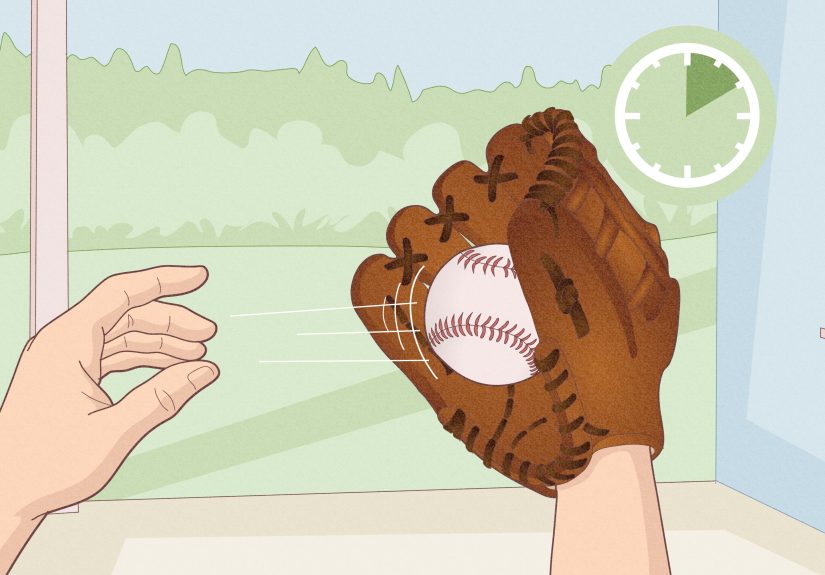
This is still the best part of the process and the most effective one. Playing catch does three things at once: it shapes the pocket with real ball impact, flexes the glove in the right places, and helps the inside lining adapt to your hand. It is also much more fun than staring at your glove and hoping it magically becomes better through positive thinking.
Start with shorter, easier throws and gradually work your way up. Even 15 to 20 minutes at a time makes a difference. If the glove is not ready for full-speed use, do “hand catch” drills at home by tossing a ball into the pocket and closing it repeatedly.
6. Wrap It the Smart Way
After you work the glove, place a baseball in the pocket and wrap the glove in the same way you naturally close it. That detail matters. Do not force a different fold than the one you actually use on the field. Let it rest in a cool, dry room. This helps reinforce the pocket shape without crushing the glove’s structure.
Storage matters long after break-in too. A glove tossed into the bottom of a hot trunk or humid garage is basically being punished for no reason. Keep it in a cool, dry place, ideally with a ball in the pocket when not in use.
How to Steam a Baseball Glove at Home
Now for the spicy topic. Steaming a glove absolutely can soften leather and speed up break-in. That is why some sporting goods stores offer glove steaming services. But several major glove makers warn against it, especially when it is done aggressively. Heat and moisture can dry out laces, weaken leather over time, and shorten the glove’s lifespan.
So here is the honest recommendation: steaming at home should be a last-resort shortcut, not your default plan. If you have enough time to break in the glove with catch play, shaping, and light conditioning, do that instead. If you are in a serious time crunch and your glove is still stubbornly stiff, a very cautious home steaming session may help.
When Steaming Makes Sense
- You have a stiff leather glove and a game or tryout coming up fast.
- You have already worked the hinge points and pocket, but the glove still feels rigid.
- You understand that faster break-in may come with some long-term trade-offs.
When You Should Skip Steaming
- The glove is already soft or youth-friendly.
- The glove is a premium model you want to keep for multiple seasons.
- The laces already look dry or brittle.
- You are thinking about using an oven, microwave, boiling water, or anything that sounds like a bad cooking show.
A Careful At-Home Steam Method
If you are going to steam a glove at home, keep it indirect, brief, and controlled.
- Start with a clean glove. Wipe away dirt and make sure the leather is dry.
- Apply only a light touch of glove-safe conditioner if needed. This is optional, but if you use any product, use very little.
- Use a garment steamer on low or indirect steam from a kettle. Keep the steam moving. Do not hold it in one place like you are trying to pressure-cook the pocket.
- Focus on the pocket, heel, and hinge points. These are the areas that benefit most from extra pliability. Avoid soaking the glove or blasting the laces.
- Stop once the leather feels warm and slightly more flexible. The glove should not be dripping, limp, or swampy. If it looks miserable, you overdid it.
- Immediately work the glove. Put it on, open and close it repeatedly, pound the pocket with a mallet, and shape the thumb and pinky.
- Play light catch after it cools down. Steam alone does not finish the job. Use still matters.
- Let it air dry naturally. Never speed dry it with direct heat. Then store it with a ball in the pocket.
If you try steaming, think of it as a jump-start, not the whole break-in process. You are simply nudging the leather, then letting actual glove work finish the job.
What Not to Do
There are some glove myths that refuse to die. Let us do the baseball world a favor and keep them off your leather.
- Do not soak the glove. Too much water can warp shape and weaken materials.
- Do not boil, bake, microwave, or leave it on a furnace vent. Heat damage is real, and leather does not enjoy being treated like leftovers.
- Do not over-oil it. A heavy glove is not a happy glove.
- Do not use household oils, petroleum jelly, or random garage chemicals. If it belongs in an engine or on a frying pan, it does not belong on your glove.
- Do not flatten it under a mattress or run it over with a car. That is not glove care. That is sports equipment vandalism.
- Do not store it in a hot car. Heat and moisture are a brutal combo for leather and laces.
How Long Does It Take to Break In a Baseball Glove?
There is no universal answer, but there are good estimates. A softer youth glove may feel playable within a couple of days. A mid-range leather glove might take several days to two weeks with regular work. A premium glove can take weeks before it feels fully yours. That is normal. A great glove is not supposed to collapse on command on day one.
If you want the glove ready faster, your best speed combo is this: light conditioner, mallet work, daily catch, proper wrapping, and patience. Steam only if you genuinely need help getting over the first stiffness hump.
How to Tell When Your Glove Is Game-Ready
Your glove is ready when it stops arguing with your hand. More specifically, look for these signs:
- It closes smoothly without forcing it.
- The pocket holds the ball naturally.
- The thumb and pinky move in sync with your hand.
- The glove opens quickly after a catch.
- The leather feels flexible but still structured.
If your glove feels floppy everywhere, that is not “broken in.” That is “broken down.” There is a difference.
Real Experiences: What Breaking In a New Baseball Glove Actually Feels Like
Anyone who has broken in a new baseball glove knows the process is part mechanics, part routine, and part weird little relationship. Day one usually starts with excitement. You slide your hand in, admire the leather, open and close it twice, and immediately realize this thing has the flexibility of a folding chair. The first catches sound great, but the glove feels late, stubborn, and slightly offended that you expect it to cooperate.
That is why the earliest experience matters so much. Most players notice the first real change not when the whole glove softens, but when the hinge points start moving without a fight. Suddenly the glove begins to close around the ball instead of just slapping at it. That small moment is when the glove stops feeling like store inventory and starts feeling like yours.
Infielders often describe the break-in process as chasing quickness. They want that crisp snap, a pocket that is shallow enough for fast transfers but secure enough to handle bad hops. The experience is usually a lot of repetitive work: pocket pounding, thumb and pinky shaping, hand catch in the living room, then more catch outside. It is not glamorous, but the payoff shows up the first time you field a grounder cleanly and the ball comes out of the glove without a wrestling match.
Outfielders tend to experience break-in differently. They are often less obsessed with lightning-fast transfer and more focused on trust. A deeper glove that closes cleanly on the run feels completely different once it is formed correctly. The experience there is about confidence. Before break-in, every hard-hit ball feels like a small negotiation. After break-in, you stop thinking about the glove and just go get the ball.
Parents helping younger players break in a glove usually learn one important lesson fast: young players do not want a lecture on leather care. They want the glove to work by Saturday. That often means a more practical routinelight softening, simple catch sessions, maybe wrapping the glove overnight, and making sure the pocket actually fits the child’s hand strength. The experience is less about perfection and more about turning frustration into fun.
Then there is the steam crowd. Usually this is the player who waited too long, has a game tomorrow, and is staring at a premium glove like it personally ruined the week. A careful steam session can create that satisfying “okay, now we’re getting somewhere” feeling. The glove loosens, the pocket forms faster, and the next round of catch feels dramatically better. But players who go too hard with heat usually remember that experience for the wrong reason: dried laces, a glove that gets soft in strange places, or leather that seems to age five years in five minutes.
The best long-term experience is almost always the same. You use the glove often, shape it intentionally, and let it break in with your actual hand and style of play. A few weeks later, you do not think about break-in anymore. You just reach for the glove because it feels right. That is the real goalnot just a soft glove, but a glove that feels like it has learned your habits.
Final Thoughts
If you want to break in a new baseball glove the right way, keep the process simple: work the hinges, shape the pocket, use a tiny amount of glove-safe conditioner if needed, play catch constantly, and store the glove with care. That approach is slower than the internet’s craziest shortcuts, but it gives you the best combination of performance, feel, and longevity.
As for steaming at home, it can help, but it should be treated like a shortcut with consequences. Use it only when you truly need it, keep it brief and controlled, and follow it immediately with real glove work. The best glove is not the one you broke in the fastest. It is the one that still feels fantastic after a full season of grounders, line drives, pop flies, and the occasional dramatic snag you will absolutely tell people about for years.