Table of Contents >> Show >> Hide
- Why Puffer Jackets Need Special Care
- Before You Wash: Read the Care Label Like It Holds the Secrets of the Universe
- Down vs. Synthetic: Know What You’re Washing
- How to Wash a Puffer Jacket the Right Way
- How to Dry a Puffer Jacket Without Wrecking the Loft
- Can You Hand-Wash a Puffer Jacket?
- Mistakes That Can Ruin a Puffer Jacket
- How Often Should You Wash a Puffer Jacket?
- How to Store a Clean Puffer Jacket
- Quick Recap: The Best Way to Wash a Puffer Jacket
- What Real-Life Puffer Jacket Washing Teaches You
- Conclusion
- SEO Tags
If you have ever stood in front of a washing machine holding a puffer jacket like it was a tiny, expensive bomb, welcome. You are among friends. Puffer jackets look sturdy enough to survive a mountain, a sleet storm, and your commute on a day when the wind has a personal grudge. But once laundry day arrives, they suddenly feel fragile, mysterious, and one bad decision away from becoming a sad, flat tortilla.
The good news is that washing a puffer jacket is not hard. The trick is doing it gently, drying it thoroughly, and resisting the urge to treat it like a regular hoodie. Whether your jacket is filled with down or synthetic insulation, the right method can remove grime, restore loft, and help it stay warm for many winters to come.
This guide breaks down exactly how to wash a puffer jacket the right way, what mistakes to avoid, and how to bring back that cloud-like puffiness without ruining the shell or the insulation inside.
Why Puffer Jackets Need Special Care
A puffer jacket works because the insulation traps air. That trapped air is what helps hold in body heat and keep you warm. When the jacket gets dirty, oily, or soaked and dried the wrong way, the insulation can clump together. When that happens, the jacket loses loft, and when it loses loft, it loses performance. In plain English: less fluff, less warmth.
The outer fabric can also be sensitive to rough agitation, harsh detergent, bleach, and high heat. So while you can wash most puffer jackets at home, you should not just toss one in with jeans, towels, and a soccer uniform that smells like regret.
Before You Wash: Read the Care Label Like It Holds the Secrets of the Universe
Start with the care label inside the jacket. Yes, really. It is not decorative. That label tells you whether the jacket is machine washable, hand washable, or better left to a professional cleaner. It can also tell you whether the jacket has special coatings, faux-fur trim, or construction details that need extra caution.
Pay special attention to these label details:
- Whether the insulation is down or synthetic
- Recommended water temperature
- Whether to use a gentle cycle
- Whether tumble drying is allowed
- Whether bleach, softener, ironing, or dry cleaning are off-limits
If the label says “dry clean only,” believe it. If the jacket has real fur trim, remove it before washing if the design allows. If anything is torn, patch or repair it first so the wash cycle does not turn a tiny hole into a dramatic exit for your insulation.
Down vs. Synthetic: Know What You’re Washing
Not all puffers are built the same. The washing process is similar, but the filling matters.
Down puffer jackets
Down insulation comes from duck or goose plumage. It is warm, lightweight, and very good at trapping heat. It is also the diva of the puffer world. Down needs a mild, down-safe detergent and extra care during drying because it clumps easily when wet.
Synthetic puffer jackets
Synthetic insulation is usually made from polyester fibers. It tends to be a little more forgiving in the wash and often handles damp conditions better than down. Even so, it still benefits from a gentle cycle, mild detergent, and low-heat drying.
If you are unsure which kind you own, the label will usually tell you. Mystery solved.
How to Wash a Puffer Jacket the Right Way
Step 1: Empty the pockets and close everything up
Check every pocket. Remove tissues, lip balm, receipts, mystery crumbs, and anything else that should not go swimming. Zip the main zipper, close pockets, fasten snaps, and secure hook-and-loop tabs. This helps protect the outer fabric and keeps the jacket from twisting into a dramatic laundry pretzel.
Step 2: Brush off dirt and spot-treat stains
If the cuffs, collar, or hem are visibly dirty, spot-clean them before putting the jacket in the washer. A little mild detergent or stain treatment designed for delicate outerwear can help loosen grime. Use a soft cloth or soft brush and blot gently rather than scrubbing like you are sanding a deck.
Common trouble spots include:
- Collars with makeup or skin oils
- Cuffs darkened by city grime
- Hems splashed with slush or mud
- Pockets with snack-related incidents
Step 3: Turn the jacket inside out
Turning a puffer jacket inside out helps reduce friction on the outer shell and can protect coatings, stitching, and hardware. It is a small step, but it helps keep the jacket looking newer for longer.
Step 4: Use the right washing machine
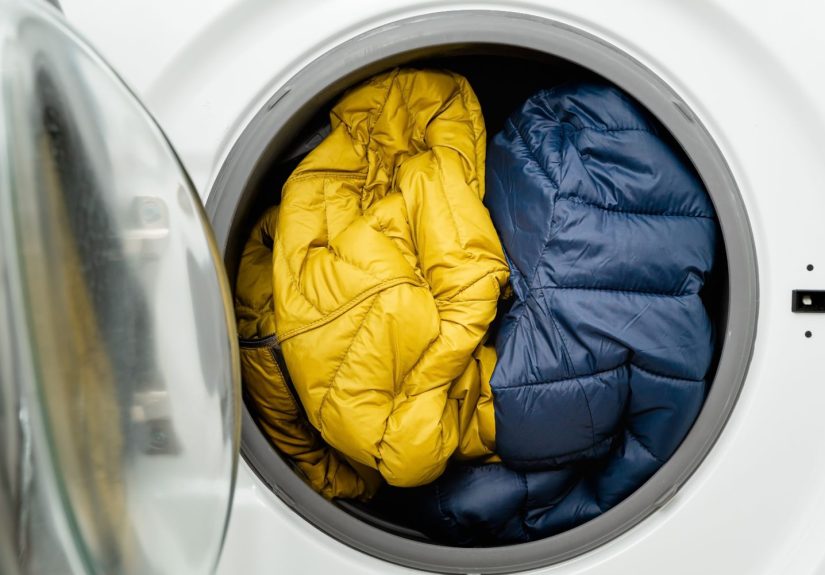
The safest choice is a front-loading washer or a high-efficiency top-loader without a center agitator. Traditional agitators can be rough on insulated garments and may stress seams or shift filling around too aggressively.
If your home washer seems tiny, crowded, or suspiciously violent, consider going to a laundromat and using a larger front-loading machine. Sometimes the most loving thing you can do for your puffer is to let it have some elbow room.
Step 5: Choose a gentle cycle and cool water
Wash the jacket on a gentle or delicate cycle using cold or cool water unless the care label says otherwise. Hot water can be rough on fabrics, coatings, and insulation, while a gentler cycle lowers the risk of damage.
Step 6: Use mild detergent, not half the chemistry lab
This is where many people go wrong. Use a small amount of mild liquid detergent. For down jackets, a down-specific cleaner is the better choice. Avoid bleach, fabric softener, and heavy powdered detergent. Those products can leave residue, damage performance fabrics, and make insulation less effective.
More detergent does not equal more clean. It often equals more rinsing, more residue, and more regret.
Step 7: Rinse thoroughly
If your machine has an extra rinse option, use it. Residual soap trapped in the fabric or insulation can make a jacket feel stiff, weigh it down, or interfere with loft. A thorough rinse is one of the easiest ways to help a puffer come out fresh instead of crunchy.
How to Dry a Puffer Jacket Without Wrecking the Loft
Drying is the part that matters most. A puffer jacket that is washed properly but dried poorly can still end up clumpy, lumpy, and strangely tragic.
Use low heat
Tumble dry on low heat or no heat if the label recommends it. High heat can damage the shell fabric and stress the insulation. Low and steady wins this race.
Add dryer balls or clean tennis balls
Throw in two or three wool dryer balls or clean tennis balls. These help bounce around the jacket and break up wet clumps of insulation so the fill can loft back up. It sounds silly, but it works. Your dryer will sound like a very polite sporting goods store for a while.
Be patient
Puffer jackets, especially down jackets, can take a long time to dry. Much longer than you think. Much longer than you want. Sometimes much longer than your dryer’s default cycle thinks is reasonable. Pause the dryer occasionally, shake the jacket out, and gently massage any clumps with your fingers.
Do not stop drying too early. If the insulation is still damp inside, it can smell musty, clump later, or even develop mildew. The jacket should feel fully dry throughout, not just dry on the surface.
Can You Hand-Wash a Puffer Jacket?
Yes, especially if you do not have access to a gentle machine or your jacket is particularly delicate. Fill a sink, tub, or basin with cool to lukewarm water and add a small amount of mild detergent or down wash. Submerge the jacket and gently move it through the water. Let it soak briefly, then rinse thoroughly until the water runs clear.
Do not wring it out like a beach towel. Instead, press the water out gently. You can roll the jacket in a clean towel to remove excess moisture before drying it on low heat with dryer balls. Hand-washing takes a little more effort, but it can be a smart option when you want maximum control.
Mistakes That Can Ruin a Puffer Jacket
If you want your jacket to stay warm, fluffy, and wearable, avoid these common mistakes:
- Using fabric softener: It can leave residue and interfere with performance.
- Using bleach: It can damage both the shell and the insulation.
- Washing with heavy items: Towels, jeans, and bulky clothing can beat up the jacket.
- Using a harsh cycle: More agitation is not better here.
- Skipping the extra rinse: Soap buildup can reduce loft.
- Air-drying down halfway and calling it done: Hidden dampness is a menace.
- Using high heat: Fast is tempting, but melted or damaged fabric is forever.
- Ignoring the care label: The jacket’s manufacturer knows more about that exact coat than your cousin’s roommate’s laundry hack.
How Often Should You Wash a Puffer Jacket?
Less often than a T-shirt, more often than a decorative pillow. A puffer jacket usually does not need frequent washing. Once or twice a season is often enough unless it is visibly dirty, smells funky, or has been through mud, food spills, or a long stretch of heavy wear.
Between washes, you can extend its life by spot-cleaning stains, airing it out, and hanging it properly after wear. Overwashing can wear down fabrics and finishes, so the goal is clean enough, not “laundered into retirement.”
How to Store a Clean Puffer Jacket
Once the jacket is completely dry, hang it in a cool, dry place. Avoid storing it compressed in a tight bag for long periods, especially if it is a down jacket. Compression can flatten the fill and reduce loft over time. Give it space to breathe so it is ready for the next cold snap instead of emerging from storage looking emotionally exhausted.
Quick Recap: The Best Way to Wash a Puffer Jacket
- Read the care label.
- Empty pockets and close all zippers and tabs.
- Spot-treat stains first.
- Turn the jacket inside out.
- Use a front-loader or washer without an agitator.
- Wash on a gentle cycle with cold or cool water.
- Use a mild or down-specific detergent.
- Skip bleach and fabric softener.
- Rinse thoroughly, ideally with an extra rinse.
- Dry on low with dryer balls or clean tennis balls until fully dry and lofty.
What Real-Life Puffer Jacket Washing Teaches You
Here is the part nobody tells you when they casually say, “Oh, just wash it.” Washing a puffer jacket is simple, but it is also one of those home-care tasks that turns you into a tiny detective, a laundry scientist, and a part-time jacket therapist.
The first real lesson is that most puffer jackets do not actually need washing as often as people think. Many of us see one dirty cuff and assume the entire coat needs a spa day. In reality, a lot of winter grime can be handled with spot-cleaning. That matters because every full wash puts a little wear on the shell fabric, seams, and insulation. The smartest jacket owners are usually the ones who know when not to wash.
The second lesson is that stains are sneaky. The hem gets blasted by slush. The collar collects makeup, sunscreen, and skin oil. The cuffs absorb everything from hand lotion to coffee drips. A puffer rarely looks filthy all over, but it collects little daily evidence of life. Spot-treating those areas before a full wash makes a huge difference, and it often means you do not need a second wash later.
Then comes the wash itself, where patience suddenly becomes a virtue you did not ask for. Puffer jackets can look alarming when wet. A fluffy jacket that normally resembles a warm marshmallow can come out of the washer looking flat, wrinkled, and personally offended. This is the moment many people assume they have ruined it. Usually, they have not. It just needs careful drying and time for the insulation to separate and puff back up.
Drying is where the real emotional journey begins. You add dryer balls or clean tennis balls, start the machine, and listen to the rhythmic thump-thump-thump of hope. Then you open the dryer and discover the jacket is still damp in weird little pockets. So you run it again. And maybe again. This is normal. The people who get the best results are not the people with magical dryers. They are the people who do not quit halfway through.
Another practical insight is that not all clumps mean disaster. After washing, especially with down, a jacket may develop little islands of wet fill. Gently massaging those areas by hand during the drying process can help redistribute the insulation. It feels a bit ridiculous, like giving CPR to outerwear, but it works.
One more lesson: shortcuts usually backfire. Too much detergent leaves residue. High heat risks damage. Washing with heavy items creates extra abrasion. Storing the jacket while even slightly damp can create odor and mildew. Puffer care rewards the boring choices: gentle wash, mild soap, low heat, enough time, full drying, proper hanging.
And finally, there is the satisfying part. When the process is done right, a once-dingy, limp-looking coat comes back looking cleaner, puffier, and warmer. The zipper glides better. The fabric feels lighter. The insulation regains its spring. You hang it up and think, “I have done it. I have restored the cloud.”
That is really the whole philosophy of washing a puffer jacket the right way: less force, more care, and enough patience to let the jacket become itself again.
Conclusion
If you have been avoiding laundry day because you were afraid your puffer jacket would emerge as a thin, sad windbreaker, take a breath. Most puffer jackets can be washed safely at home when you follow the care label, use a gentle cycle, pick a mild detergent, and dry the jacket thoroughly on low heat with dryer balls or clean tennis balls.
The biggest secret is not a secret at all: the drying process matters just as much as the washing process. Treat the insulation gently, avoid harsh products, and give the jacket enough time to fluff back up. Do that, and your favorite winter coat can stay warm, clean, and gloriously puffy for many cold seasons ahead.