Table of Contents >> Show >> Hide
- What Happened In The Viral Story?
- Why The CPS Call Lands With Such A Thud
- The Tattoo Wasn’t The Real Problem. Control Was.
- The Dementia Question: Important, Complicated, And Easy To Misuse
- What This Story Really Says About Family Boundaries
- If You’re Living A Version Of This Story
- Experiences Related To This Topic: The Patterns Families Know Too Well
- Conclusion
There are family disagreements, and then there are family disagreements that launch themselves out of the living room, sprint past common sense, and crash straight into a government agency. This story belongs firmly in the second category.
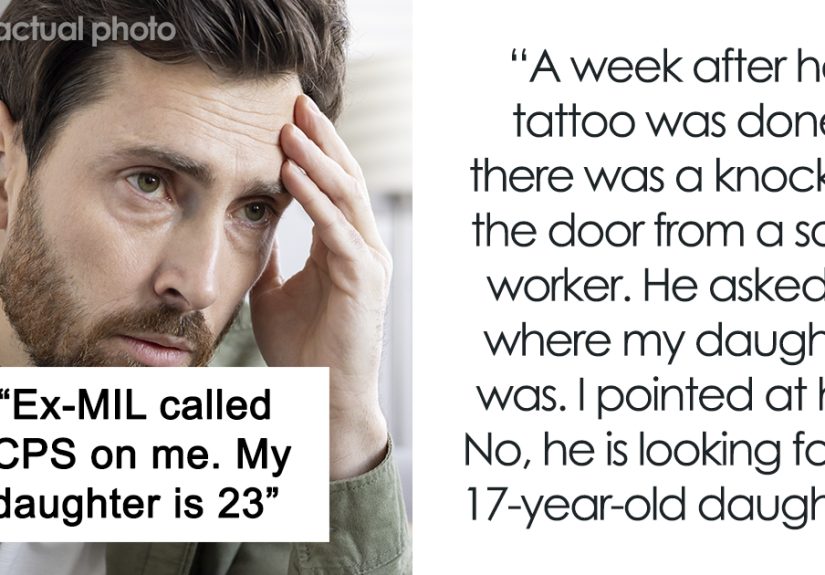
In the viral account that inspired all this chatter, a father described how a social worker showed up expecting to investigate a report about a minor being forced to get a tattoo. Plot twist: the “child” in question was actually his 23-year-old daughter, a full-grown adult who had chosen to get inked on her own. The accusation, according to the story and follow-up update, came from a bitter former mother-in-law who either did not understand the facts, did not care about the facts, or treated facts the way some people treat parking signs: as optional suggestions.
And that is exactly why this story hit a nerve online. On the surface, it is about a tattoo. But underneath the ink, it is really about control, family boundaries, false alarm buttons, and the all-too-modern habit of weaponizing systems that are supposed to protect vulnerable people. It also raises a complicated question families ask more often than they admit: when an older relative starts acting irrationally, manipulative, or intensely hostile, is it a medical issue, a personality issue, or just old-fashioned meanness wearing orthopedic shoes?
This is what makes the story bigger than internet drama. It taps into several real-life tensions at once: generational discomfort with tattoos, parental panic over adult children making independent choices, confusion about what Child Protective Services actually does, and the tendency to casually toss around words like dementia whenever an older family member behaves badly. That last part deserves extra care, because poor judgment and personality changes can happen with dementia, but not every unreasonable person is experiencing cognitive decline. Sometimes a person is not medically impaired. Sometimes they are simply determined to be the main character in everyone else’s life.
What Happened In The Viral Story?
According to the online account later covered by Bored Panda, the father had long-standing conflict with his ex-wife’s side of the family. His daughter, who had already reached adulthood, got a tattoo. That should have been the end of it. Instead, the former mother-in-law reportedly contacted CPS with a claim that he had forced a 17-year-old to get tattooed without the other parent’s permission.
That is the sort of allegation designed to create maximum chaos. It sounds alarming, it frames the father as abusive, and it tries to turn a family disagreement into a child welfare emergency. But when the social worker arrived, reality ruined the performance. The daughter was 23, not 17. She answered the door herself. The supposed victim was old enough to get a tattoo, rent a car, complain about rent prices, and probably lecture everyone else about streaming passwords. The accusation fell apart almost immediately.
Online, readers responded with a mix of disbelief, dark humor, and a very fair question: why are people treating public systems like personal revenge buttons? Because that is the real scandal here. A tattoo is just a tattoo. A false welfare complaint is something else entirely.
Why The CPS Call Lands With Such A Thud
Because a 23-year-old is an adult, not a child
Let’s start with the obvious point wearing a giant neon name tag: 23 is not 17. In the United States, turning 18 marks the legal transition into adulthood. Once someone is 23, they are not a child under the ordinary legal framework that governs child welfare. They are an adult making adult decisions, including decisions that relatives dislike, misunderstand, or dramatically narrate over casserole.
That matters because the entire premise of the complaint collapses once the granddaughter’s real age is known. This was not a question of parental permission. It was not a custody issue. It was not a debate over whether a minor can consent. It was a grown woman getting a tattoo. End scene.
Because CPS exists to protect minors from serious harm
Child Protective Services is not a customer service hotline for family feuds. Its job is to respond to allegations of child abuse and neglect involving minors. The system exists for situations in which a child may face serious physical, emotional, or sexual harm, or serious neglect. That mission matters. It matters a lot. Which is why false or knowingly deceptive reports are so troubling.
Even when a false report goes nowhere, it still burns time, energy, and public resources. A caseworker has to review the complaint. Someone may have to travel. Notes are taken. A household gets rattled. Meanwhile, real children in real danger still need attention. That is why so many states impose penalties for knowingly false reports. The law recognizes what common sense already knows: misusing child welfare systems is not a prank. It is interference.
In other words, the grandmother in this story did not just overreact. She appeared to escalate a private family dispute into a public protection system that was never meant to referee adult body art.
The Tattoo Wasn’t The Real Problem. Control Was.
Tattoos make excellent family conflict magnets because they are visible, permanent, personal, and impossible to ignore once Aunt Linda has noticed them. But tattoos are also deeply ordinary in modern America. Millions of adults have them, and public attitudes have shifted noticeably. Tattoos are now less shocking than they were a generation ago, which means family outrage is often less about the tattoo itself and more about what the tattoo represents: independence.
That is why these fights get so heated. For the person getting the tattoo, it may represent identity, memory, grief, art, humor, survival, or simply the perfectly valid urge to decorate one’s own skin. For the controlling relative, it may symbolize lost authority. They are not mad about the ink. They are mad that nobody asked for permission.
This story captures that dynamic perfectly. The granddaughter’s choice seems to have been interpreted not as an adult decision, but as a rebellion requiring punishment. Once you view another adult’s autonomy as a personal attack, every boundary feels like betrayal. That is how you end up calling CPS over a tattoo instead of admitting the harder truth: your family member has grown up, and you no longer run the show.
There is also an irony here too delicious to ignore. People who object to tattoos often describe them as permanent mistakes. But in stories like this, the most lasting damage rarely comes from the tattoo. It comes from the overreaction. Ink can be explained. Family betrayal tends to linger.
The Dementia Question: Important, Complicated, And Easy To Misuse
The title quote is sharp, dramatic, and a little brutal. But it points to a real family dilemma. When an older relative starts behaving in extreme or bizarre ways, loved ones often wonder whether there is a medical explanation. That is not an absurd question. Dementia can involve changes in judgment, mood, behavior, suspicion, agitation, and personality. Families may notice someone becoming more paranoid, more impulsive, more aggressive, or less socially appropriate than before.
But here is the part many families skip: bad behavior is not, by itself, a diagnosis. Not every controlling, manipulative, or explosive older person has dementia. Some people have always been difficult and become even harder with age, stress, loneliness, grief, or long-standing family resentment. Others may have depression, anxiety, another psychiatric issue, substance-related problems, or no diagnosable condition at all. And sometimes the uncomfortable answer is simply that the person is making rotten choices.
That is why families should resist amateur diagnosis by group text. If behavior changes are truly new, severe, escalating, or paired with confusion, memory problems, language issues, disorientation, or poor judgment, a medical evaluation makes sense. But if the person is coherent, strategic, and only seems “confused” when consequences arrive, relatives are allowed to consider a less clinical explanation. A person can be elderly and manipulative at the same time. Age does not automatically convert malice into medicine.
In this story, the update reportedly suggested that relatives concluded the older woman knew exactly what she was doing. If that is accurate, then the family was not facing a mystery of cognition so much as a crisis of boundaries. And boundaries, unlike tattoos, cannot be outsourced to a caseworker.
What This Story Really Says About Family Boundaries
If there is one lesson glowing brighter than fresh tattoo ointment, it is this: some family members interpret access as authority. They think being older means being obeyed. They think caring means controlling. They think concern gives them the right to intervene in choices that are not theirs to manage.
Healthy families do not work that way. Concern sounds like, “Are you safe?” Control sounds like, “I’m reporting you because you didn’t do what I wanted.” Concern asks questions. Control files paperwork. Concern respects adulthood. Control throws a tantrum in legal language.
That distinction matters for adult children, parents, grandparents, and everyone in between. Boundaries are not cruel. They are not “disrespect.” They are the basic architecture of functional relationships. A grown daughter is allowed to get a tattoo. A parent is allowed to say, “I wouldn’t choose that for myself.” A grandparent is allowed to dislike it. What nobody gets to do is turn personal disapproval into a child welfare allegation.
When a family member repeatedly crosses lines, distance may become the healthiest option. Limited contact, documented communication, or no contact at all can sometimes be less dramatic than continuing the cycle. Contrary to popular guilt campaigns, choosing peace over chaos is not selfish. Sometimes it is the most adult move in the room.
If You’re Living A Version Of This Story
Many people reading this will recognize at least one piece of the pattern, even if their own family drama did not involve a tattoo gun and a CPS complaint. Maybe it was a piercing, a breakup, a new partner, a haircut, a political disagreement, a move across the country, or simply the scandalous act of saying no. The details change. The emotional engine stays the same.
If that is your reality, the most helpful response is often less theatrical than the offense. Document what happened. Keep messages. Stay calm with professionals. Do not overshare. Do not spend six hours trying to persuade a controlling relative that your body belongs to you. They already know. The conflict usually is not about information. It is about power.
It can also help to separate two questions that families often blend together: Is this person unwell? and Is this behavior acceptable? A medical issue may deserve compassion and evaluation. Unacceptable behavior still deserves limits. You can care about someone’s health and still refuse to let them bulldoze your life. Empathy is not the same thing as surrender.
Experiences Related To This Topic: The Patterns Families Know Too Well
Stories like this go viral because they feel ridiculous, but also familiar. Plenty of adults have lived some version of “my relative acted like my life choice was a federal emergency.” Maybe it was not a tattoo. Maybe it was moving in with a partner before marriage, changing a last name, dyeing hair blue, leaving a church, starting therapy, or deciding that Sunday dinner would no longer include a side dish of emotional blackmail. The point is not the exact choice. The point is the reaction.
One common experience looks like this: a young adult gets a tattoo with real meaning behind it, perhaps to honor a parent, mark recovery, remember a loss, or celebrate surviving something hard. Instead of asking about the story behind the design, a relative jumps straight to panic mode. Suddenly the conversation is no longer about art or memory. It is about “What will people think?” and “You ruined your body,” and “Who allowed this?” That last question is especially revealing, because when the person is an adult, nobody needed to allow it. What the upset relative is really asking is, “Why was I not consulted?”
Another familiar pattern is the false escalation move. A controlling family member cannot stop an adult child from making a decision, so they go looking for outside leverage. They threaten police. They threaten lawyers. They threaten grandparents’ rights they do not have. They threaten welfare checks, hotlines, or reports. The goal is not always to win a legal battle. Sometimes the goal is to create fear, embarrassment, and disruption. It is emotional theater with government stationery.
Then there is the health question, which can be the trickiest part of all. Families sometimes see an older relative behaving more erratically and think, This has to be dementia. Sometimes that instinct is compassionate and correct. Sudden confusion, worsening memory, changes in judgment, paranoia, language problems, or getting lost can absolutely signal a medical issue that needs evaluation. But many adult children will quietly tell you another truth: some relatives were controlling at 45, sharp-edged at 60, and explosive at 75. Aging did not invent the personality. It just removed the social polish.
That is a hard reality to face because a medical explanation feels cleaner. It gives everyone a script. It turns chaos into diagnosis. But families often discover that the most accurate explanation is less dramatic and more frustrating: the person understands what they are doing, feels entitled to do it, and assumes the family will keep absorbing the shock wave. Once that becomes clear, boundaries stop looking cruel and start looking overdue.
People who have come through these situations often describe the same turning point. It is the moment they stop defending every decision and start protecting their peace. They realize they do not need a unanimous family vote to be an adult. They do not need to debate their tattoo, their body, their parenting, their marriage, or their home with someone committed to misunderstanding them. And they do not need to confuse loyalty with exposure. Sometimes love means staying in contact. Sometimes wisdom means stepping back before the next “concerned” phone call becomes tomorrow’s paperwork.
That is why this tattoo story resonates so strongly. It is not just about one grandmother who overshot the runway. It is about a pattern many people know by heart: someone in the family mistakes control for care, panic for principle, and intrusion for love. The healthiest response is often simple, even if it is not easy: tell the truth, cooperate with legitimate authorities, get medical help if real symptoms exist, and put firm boundaries where guilt used to live.
Conclusion
The headline may sound like internet melodrama with a side of bad judgment, but the deeper lesson is surprisingly practical. A 23-year-old getting a tattoo is not a child welfare crisis. A false report to CPS is. A difficult older relative may need medical evaluation if there are genuine signs of cognitive change, but families should not use dementia as a catchall explanation for every cruel or controlling act. Sometimes the real issue is exactly what people are trying to avoid naming: power, resentment, and refusal to accept that another adult gets to make their own choices.
In the end, the tattoo is the least shocking part of the story. The shocking part is how quickly family conflict can mutate into institutional chaos when one person cannot handle a boundary. If there is a useful takeaway, it is this: worry less about the ink and more about the behavior surrounding it. Needles fade into memory. Family patterns do not, unless somebody finally decides to break them.