Table of Contents >> Show >> Hide
- Klipsch Wasn’t Trying to Be Just Another Earbud Brand
- What the T5 II Hands-Free Control Earbuds Actually Brought to the Table
- Specs and Features That Helped Sell the Story
- Where the Launch Succeeded
- Where the Launch Ran Into Trouble
- How the T5 II Compared With the Competition
- Why This Launch Still Matters
- Final Verdict
- Extended Experience Section: What Living With the Klipsch T5 II Feels Like
Note: The article below is grounded in Klipsch’s launch details and U.S. product coverage that consistently describe the August 2, 2021 debut, Bragi-powered head-gesture controls, Dirac HD Sound, wireless charging, and a review consen
SoundGuys
+3
Klipsch
+3
ecoustics.com
+3
fe.
Reviewed
+7
Klipsch
+7
ecoustics.com
+7
Wireless earbuds are no longer just tiny speakers that live in your pocket and vanish the moment you need them. In 2021, the category turned into a full-blown tech battleground, with every brand trying to outdo the last one using better sound, stronger noise cancellation, smarter apps, and enough features to make a Swiss Army knife feel underqualified. Into that noisy arena walked Klipsch with the T5 II hands-free control earbuds, a launch that tried to do something genuinely different instead of just yelling “me too” from the back of the room.
The big hook was simple but memorable: these earbuds were designed to let you control certain actions without touching them. Nod your head to answer a call. Shake or turn your head to reject one. That is the kind of feature that sounds either delightfully futuristic or slightly ridiculous until you realize how often your hands are busy, wet, gloved, or full of groceries. Klipsch leaned into that reality and paired it with premium design, active noise cancellation, and a sound profile aimed squarely at listeners who care more about musical detail than buzzword bingo.
So what exactly did Klipsch launch, why did it matter, and did the T5 II hands-free control earbuds live up to their stylish promise? Let’s dig in.
Klipsch Wasn’t Trying to Be Just Another Earbud Brand
Klipsch entered the true wireless race with a little more heritage than most. The company is best known for home audio and speakers, not for tossing out trendy gadgets every other Tuesday. That matters because the T5 II series did not feel like a random side quest. It felt like Klipsch trying to bring its sound-first reputation into a product category dominated by Apple, Sony, Bose, Jabra, and Samsung.
The original T5 earbuds already stood out for their sound and that distinctive metal charging case that looked like a luxury lighter decided to become an audio accessory. The second-generation T5 II line refined that formula with better durability, a slimmer profile, more ear tips, and a more polished everyday experience. Then the ANC version arrived and pushed the concept further by adding noise canceling, AI-driven software, and head gestures.
In other words, Klipsch did not simply slap ANC onto an old pair of buds and call it innovation. It tried to build a premium true wireless model that felt smarter, more mature, and a little more adventurous than the usual tap-and-pray control scheme.
What the T5 II Hands-Free Control Earbuds Actually Brought to the Table
1. Hands-free controls that were more than a gimmick
The headliner feature was the Bragi-powered operating system built into the earbuds. Klipsch used it to enable gesture-based controls, often called Bragi Moves. Instead of poking an earbud like you are trying to reset a tiny spaceship, you could respond to calls with head movements. That sounds flashy, but it also addressed a real annoyance with earbuds: touch controls can be finicky, buttons can jam the buds deeper into your ears, and sometimes your hands are simply occupied.
Klipsch marketed the T5 II as a more frictionless listening experience, and that is not just PR glitter. Gesture control was the feature that gave these earbuds a personality. In a sea of lookalike black buds promising “immersive audio,” the T5 II had an actual trick worth demonstrating to another human.
2. Klipsch’s first true wireless ANC model
The T5 II True Wireless ANC also marked a milestone for the brand because it was Klipsch’s first true wireless earbud model with active noise cancellation. That was a necessary move. By 2021, premium earbuds without ANC were starting to look like sports cars without doors: maybe still cool, but hard to explain at the asking price.
Klipsch used a dual-microphone ANC setup and paired it with a transparency mode for letting outside sound back in when needed. On paper, that put the T5 II in the same conversation as big-name rivals. In practice, reviews often agreed that the ANC worked well enough, but it was not the knockout champion of the class. Sound quality and features were more often the reason people remembered these earbuds.
3. Dirac HD Sound for listeners who actually care about audio
Here is where Klipsch tried to separate itself from the crowd of earbuds obsessed with app graphics and lifestyle branding. The T5 II ANC included Dirac HD Sound, a digital sound optimization technology designed to make playback clearer, richer, and more balanced. That gave the earbuds a more audiophile-friendly pitch than many mainstream competitors.
And yes, that mattered. A consistent thread across reviews was that the T5 II series sounded excellent. Even critics who were less enthusiastic about battery life or ANC usually gave Klipsch credit for delivering detailed, dynamic sound. That is not a small win in this category. Plenty of earbuds are feature-packed but sonically forgettable. Klipsch made sure the T5 II did not commit that particular crime.
4. Premium build and unmistakable style
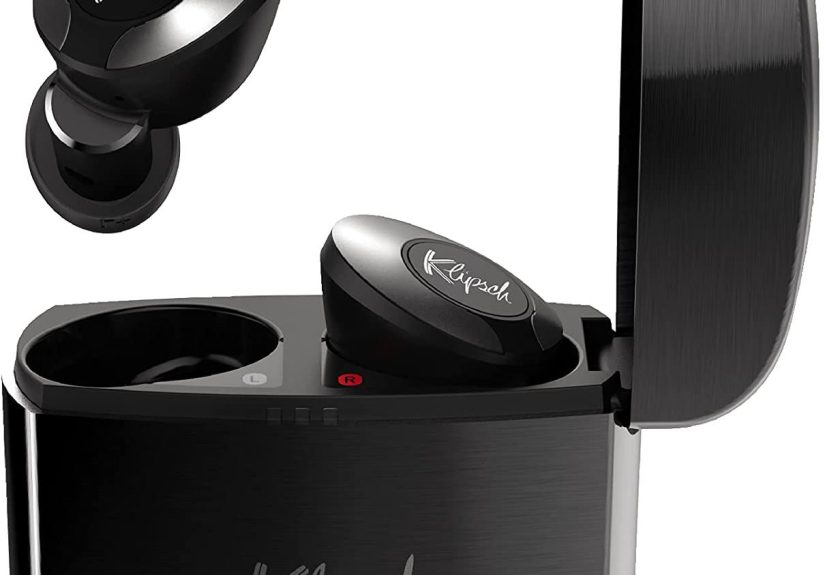
If the average earbud case looks like a dental floss container that got promoted beyond its abilities, the T5 II case took the opposite approach. It was metallic, weighty, pocketable, and intentionally upscale. The buds themselves also looked more refined than the plastic pebbles that dominate store shelves.
This mattered more than people sometimes admit. Earbuds are not just audio tools anymore; they are part of daily carry. Klipsch understood that the product had to feel special when you pulled it out at a coffee shop, on a train, or while pretending to be productive in an airport terminal.
Specs and Features That Helped Sell the Story
The launch package gave buyers a lot to talk about. The earbuds offered wireless charging, USB-C charging, support through the Klipsch Connect app, EQ adjustments, firmware updates, and noise-control management. Battery estimates were solid on paper for the era, though not class-leading once ANC entered the picture. Klipsch also positioned the earbuds as premium from the start, with pricing that signaled confidence rather than bargain-bin ambition.
There was also a McLaren Edition, which added a more dramatic motorsport-inspired design with carbon-fiber touches and papaya-orange accents. That version leaned hard into the “premium gadget as lifestyle object” playbook, and to be fair, it pulled it off better than most brand tie-ins. Instead of looking like a licensing accident, it felt like a deliberate extension of the product’s design language.
For shoppers comparing options, the T5 II launch told a clear story: these were not earbuds built to win on the lowest price or the most aggressive discount banner. They were built to win people over with style, sound, and unusual controls.
Where the Launch Succeeded
The smartest part of the T5 II launch was that Klipsch did not try to beat Apple at being Apple or Sony at being Sony. It carved out its own lane. Instead of leading with ecosystem lock-in, it led with acoustics and craftsmanship. Instead of chasing a stripped-down minimalist aesthetic, it embraced character. And instead of pretending every earbud control had already been perfected, it introduced a different way to interact with the product.
That gave the launch real editorial energy. Reviewers had something to talk about beyond “the case is slightly rounder now.” Hands-free control made the product memorable, while Klipsch’s sound reputation gave it credibility. In marketing terms, that is a healthy combination. In user terms, it meant the earbuds promised both a cool demo and a serious listening experience.
The T5 II also benefited from the broader strengths of the second-generation Klipsch line. Better durability, more secure fit options, improved app support, and overall refinement helped the launch feel like a step forward rather than a flashy detour.
Where the Launch Ran Into Trouble
No earbud launch escapes gravity, and the T5 II had a few very Earth-bound issues. The biggest was that the earbuds entered a brutally competitive market at a premium price. At that level, buyers do not just want good features; they expect category-leading performance. Some reviewers found the ANC merely decent rather than elite. Others pointed out that battery life took a noticeable hit when noise canceling was enabled. Call quality also landed somewhere between acceptable and inconsistent depending on the environment.
Then there was the reality of gesture controls. They were clever, and in the right situation they were genuinely useful. But clever does not always equal habit-forming. Some reviewers appreciated the feature more as a technical flex than as something they naturally reached for every day. That does not make it a failure. It just means Klipsch launched a feature that was interesting enough to remember, even if it was not guaranteed to become second nature for every user.
The fit was another mixed area. Klipsch included multiple ear tip options, which helped, but earbud fit is personal in the most annoying possible way. A pair can feel tailor-made for one person and mildly offensive to another. The T5 II were often praised for comfort and finish, yet some users still had trouble getting the ideal seal.
How the T5 II Compared With the Competition
At launch, the T5 II ANC sat in a space crowded with heavy hitters. Apple’s AirPods Pro were the mainstream benchmark for convenience and transparency mode. Sony was the tech-first favorite for ANC and features. Jabra remained a practical, versatile choice with dependable controls. Bose still had serious noise-canceling credibility. That meant Klipsch had to stand out without outspending everyone in the room.
Its answer was to bet on audio quality, industrial design, and hands-free interaction. That was a smart choice because it turned the product into a personality-driven alternative rather than a direct copy of the leaders. Someone choosing the T5 II was usually not shopping for the safest pick. They were shopping for premium earbuds with a little swagger, better-than-average sound, and a feature set that felt different.
That niche has real value. Not every buyer wants the same earbuds as everyone else at the airport gate. Some want something that sounds richer, looks better, and starts a conversation. Klipsch clearly understood that audience.
Why This Launch Still Matters
The T5 II hands-free control earbuds matter because they captured a moment when true wireless audio stopped being just about shrinking hardware and started being about smarter interaction. Klipsch saw that earbuds were becoming wearable interfaces, not just listening tools. Gesture-based controls, adaptive software behavior, app-driven updates, and hearing-protection features all pointed toward a future where earbuds behave more like tiny computers than dumb speakers.
Did Klipsch perfect that future on the first try? Not quite. But the company did something more interesting than safe. It launched earbuds that sounded premium, looked premium, and dared to behave a little differently. That alone made the T5 II launch more memorable than the average annual earbud refresh.
Final Verdict
Klipsch launching the T5 II hands-free control earbuds was not just another product drop. It was a statement that premium audio still has room for personality. The earbuds brought together active noise cancellation, Bragi-powered head gestures, Dirac-tuned sound, wireless charging, and a design language that refused to blend into the crowd. The result was a product that felt more ambitious than ordinary, even if a few real-world trade-offs kept it from becoming an untouchable category king.
For listeners who prioritize sound, build quality, and feature originality, the T5 II made a compelling case. For those chasing the absolute best ANC or the safest all-around pick, some rivals still had the edge. But that is the charm of this launch: Klipsch was not aiming to be the most generic winner. It was aiming to be the earbud people remembered. And on that front, mission very much accomplished.
Extended Experience Section: What Living With the Klipsch T5 II Feels Like
Using the Klipsch T5 II hands-free control earbuds is a little like driving a luxury car that also has a few quirky buttons hidden near the steering wheel. The first impression is almost always about build quality. The case feels substantial in the hand, and the overall look suggests that Klipsch wanted the product to feel expensive before it even played a note. That tactile quality matters more than spec sheets would suggest. In daily life, the earbuds feel less disposable than many rivals, and that alone changes the ownership experience.
Once the earbuds are in your ears, the next thing you notice is usually the sound. This is where Klipsch earns its keep. Music comes across with energy, detail, and a sense of polish that makes average streaming playlists feel slightly more respectable. Bass has real presence without instantly bulldozing everything else, and vocals tend to sit clearly in the mix. If you are the kind of listener who notices when earbuds turn cymbals into spray paint or flatten a singer’s voice into cardboard, the T5 II are the sort of earbuds that make you stop and think, “Okay, now we’re talking.”
The gesture controls are the wild card in everyday use. At first, nodding to answer a call can feel like you are accidentally volunteering for something. But there are moments when it clicks. If you are washing dishes, carrying bags, walking the dog, or wearing gloves in cold weather, hands-free interaction suddenly stops sounding like marketing theater and starts sounding practical. It is not that every user will rely on it constantly. It is that the feature is surprisingly useful when your hands are occupied and surprisingly fun when you remember it exists.
Commuting is where the earbuds show both their promise and their limits. The ANC can take the edge off the chaos around you, especially for steady background noise, but it does not always create the same hush some top-tier competitors manage. The upside is that the earbuds still sound rich and engaging in noisy environments, which helps compensate. You may not feel like the world has disappeared, but you do feel like your music has a fighting chance. Transparency mode is also handy when you need to hear a train announcement, a barista calling your name, or the friend who insists on talking the moment your favorite chorus starts.
At work or during long listening sessions, the T5 II experience tends to be defined by comfort and controls. The included fit options help, but comfort will depend on your ears. For users who get a good seal, the earbuds can feel secure and surprisingly easy to wear for long stretches. For others, the relationship may be more “it’s complicated.” The physical controls can be reliable, though not always elegant, and the companion app adds enough flexibility to make the buds feel modern without becoming a part-time job.
Overall, the lived experience of the Klipsch T5 II is less about one killer feature and more about a premium vibe that carries through the day. They sound better than many fashion-first rivals, look better than many tech-first rivals, and behave differently enough to remain memorable. Even when the ANC or battery life does not dominate the leaderboard, the earbuds still deliver something many products never manage: a distinct personality. In a market full of earbuds that blur together, that counts for a lot.
“` :