Table of Contents >> Show >> Hide
- What Are Seed Cloud Lights?
- Why Designers Keep Falling for Seed Cloud
- Materials, Finishes, and Construction
- The Main Seed Cloud Variations
- How Seed Cloud Changes a Room
- Is It Worth the Investment?
- How to Style Seed Cloud Lights
- Final Thoughts
- Extended Experience: What It Feels Like to Live with Seed Cloud Lights
Some light fixtures illuminate a room. Others quietly take over the room, steal the conversation, and somehow still look tasteful doing it. Ochre’s Seed Cloud Lights belong firmly in the second camp. They are sculptural, atmospheric, and just a little bit theatrical in the best possible way. If your average chandelier is content to hang there and behave, Seed Cloud prefers to drift, glow, and look like it was dreamed up by someone who stared at winter branches and thought, “Yes, but make it magical.”
Designed by Ochre, the British interiors and lighting company founded in 1996 by Joanna Bibby and Harriet Maxwell Macdonald, later joined by Solenne de la Fouchardière, the Seed Cloud collection reflects the brand’s long-standing interest in understated glamour, natural materials, and expert craftsmanship. The company’s aesthetic has always leaned toward the refined rather than the flashy, and that balance is exactly why Seed Cloud works. It is dramatic, yes, but not in a sequins-at-breakfast kind of way. It is more like poetry with wiring.
What Are Seed Cloud Lights?
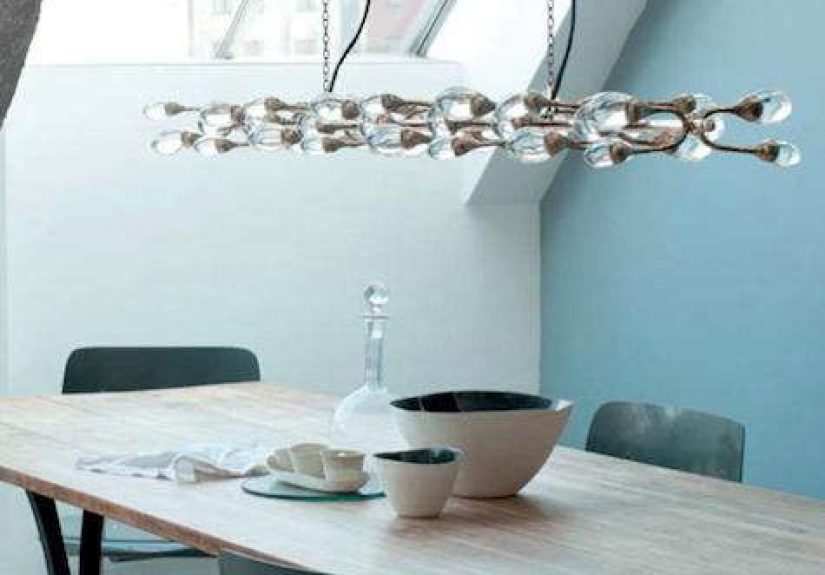
At their core, Seed Cloud Lights are compositions of solid cast bronze buds and glass drops, each illuminated by LED light. The effect is organic and luminous, like dew suspended in midair or seeds caught in a still moment before drifting off on the wind. Ochre offers the design in several formats, including round and rectangular chandeliers, a dramatic curved installation, a curtain-like variation, smaller pendants, and table-mounted versions in portrait and landscape forms.
That range is a big reason the collection has remained relevant. Seed Cloud is not a one-hit wonder with a single Instagram-friendly angle. It is a family of fixtures that can scale from intimate to architectural. A three-bud pendant can add a delicate glow over a bedside table or reading nook, while a large round installation with dozens upon dozens of illuminated drops can become the visual heartbeat of a dining room, stairwell, hotel lobby, or gallery-like residence.
Why Designers Keep Falling for Seed Cloud
It brings nature indoors without going full woodland-theme restaurant
Nature-inspired lighting can go wrong quickly. One minute you are aiming for “ethereal botanical elegance,” and the next minute the fixture looks like a prop from a very expensive fairy tale. Seed Cloud avoids that trap because its forms are abstract enough to stay sophisticated. The bronze buds hint at seedpods, berries, or branches, while the glass drops read like rain, frost, or germination. The reference to the natural world is clear, but never literal.
That makes the piece unusually versatile. In a minimalist interior, it softens straight lines and introduces movement. In a traditional room, it adds a contemporary layer without feeling cold. In a richly decorated space, it still holds its own because it has texture, sparkle, and a quietly complex silhouette. It is one of those rare designs that can feel at home in a serene townhouse, a moody apartment, or a polished hospitality space.
It turns light into atmosphere
There is a difference between brightness and atmosphere, and Seed Cloud clearly understands the assignment. Because the LEDs are distributed through multiple glass drops, the light feels scattered and jewel-like rather than blunt. You are not getting the visual equivalent of a fluorescent pep talk. You are getting layered illumination with shimmer, depth, and a little suspense.
That is why the fixture photographs so beautifully and, more importantly, why it works so well in real life. It creates mood. It catches reflections. It changes character from day to evening. In daylight, it reads as sculpture. At night, it becomes luminous architecture.
Materials, Finishes, and Construction
Part of the appeal lies in the material honesty. Ochre uses cast bronze buds paired with glass drops, and depending on the model, the collection is available in polished bronze, dark patinated bronze, or satin nickel finishes. Those options matter more than they might seem at first glance.
Polished bronze gives the fixture warmth and richness. It plays especially well with walnut, plaster, linen, and other tactile materials. Satin nickel pushes the design in a cooler, more contemporary direction and can work beautifully in interiors that lean toward pale stone, white oak, brushed metals, or restrained palettes. Dark patinated bronze adds gravity and depth, giving the collection a moodier, more sculptural presence.
Ochre’s broader reputation is built on craftsmanship, and Seed Cloud benefits from that pedigree. These are not mass-market fixtures trying to cosplay as artisan pieces. The collection is made to order, highly detailed, and often customizable in scale and overall drop. That custom flexibility is one reason designers continue specifying it for residential and hospitality projects. When a room needs a fixture that feels both personal and architectural, the usual off-the-shelf suspects tend to wave a little white flag.
The Main Seed Cloud Variations
Round installations
The round Seed Cloud is perhaps the most overtly celestial version. In larger sizes, it creates a hovering constellation effect that works particularly well over round dining tables, in stairwells, or in double-height spaces where vertical drama is welcome. Smaller versions, including more compact bud counts, make the design more accessible for everyday residential use.
Rectangular chandeliers
The rectangular format is ideal over long dining tables, kitchen islands, and conference tables. It has the same floating botanical quality as the round version, but with a more linear, architectural rhythm. This is the version that often feels most balanced between statement-making and practical placement. It says, “I have excellent taste,” without shouting it from the rooftop.
Curve and curtain versions
The curved and curtain-like installations take the collection into more theatrical territory. These are the Seed Cloud pieces for spaces that can handle a bit of drama: staircases, lofty foyers, boutique hospitality settings, or homes where the owner is not afraid of a fixture with an opinion. The curtain version, in particular, has a waterfall quality that turns vertical space into part of the design.
Pendants and table installations
Not every room needs a chandelier that looks like it belongs in a design monograph. Ochre wisely extended the Seed Cloud language into smaller pendants and framed table versions. The portrait and landscape table installations preserve the delicate buds and illuminated drops but place them inside a structured frame, making them feel almost like luminous botanical artworks.
How Seed Cloud Changes a Room
The best luxury lighting does more than fill a lighting plan. It changes how a room is perceived. Seed Cloud can make a low-ceilinged room feel more layered, a minimalist room feel less severe, and a generously sized room feel more intimate. Because the fixture is made from many illuminated points instead of one dominant globe or shade, the eye keeps moving through it. That movement gives a room visual energy.
Designers also use Seed Cloud to reinforce storytelling in interiors. In one Architectural Digest-featured San Francisco home with a strong botanical theme, a Seed Cloud fixture was chosen in part because it suggested early germination and plant life. That example captures what the collection does so well: it is decorative, yes, but it is also symbolic. It can support an entire design concept without becoming gimmicky.
And that is no small feat. Plenty of statement lights are memorable for about ten minutes, then exhausting for the next ten years. Seed Cloud feels different because it is rooted in material quality and natural form rather than trend-chasing novelty.
Is It Worth the Investment?
For buyers considering Ochre, the real question is not whether Seed Cloud is beautiful. It clearly is. The better question is whether it earns its place in a room over time. In many cases, the answer is yes, particularly for projects that value sculptural lighting, customization, and craftsmanship.
Seed Cloud is not budget lighting, nor is it trying to be. It sits in the luxury design category, where material quality, hand-finished detail, and visual distinction matter. If the goal is to buy one unforgettable fixture rather than three forgettable ones, this collection makes a persuasive case. It functions as lighting, sculpture, and atmosphere all at once. That kind of multitasking is rare, even in high-end design.
It also helps that the collection is not locked into one design era. It is modern, but not sterile. Organic, but not rustic. Glamorous, but not loud. In design terms, that is the equivalent of being stylish without trying too hard, which, frankly, is everyone’s favorite kind of stylish.
How to Style Seed Cloud Lights
Pair it with restraint
Seed Cloud does not need much competition. Let it breathe. Rooms with quiet surfaces, natural materials, and thoughtful negative space allow the fixture to show off its detail and glow.
Use it to soften hard architecture
If a room has strong lines, stone surfaces, steel-framed windows, or clean modern cabinetry, Seed Cloud adds softness and motion. It can make a crisp interior feel more human.
Repeat the finish elsewhere
Bronze versions look especially cohesive when echoed in hardware, table bases, or picture frames. Nickel versions pair well with cooler metal accents and pale materials. The room does not need to match the fixture exactly, but it should at least look like they know each other.
Think about sightlines
This is a fixture meant to be seen from multiple angles. It shines in spaces where people approach it, pass beneath it, or view it from an adjacent room. Give it a stage, not a corner to sulk in.
Final Thoughts
Ochre’s Seed Cloud Lights endure because they do something difficult: they feel emotional without being sentimental, luxurious without being showy, and organic without becoming predictable. They are rooted in craft, shaped by nature, and refined enough for serious interiors. Whether you are drawn to the small pendant, the framed table installation, or the sweeping chandelier versions, the collection offers a distinct visual language that still feels fresh.
In a market crowded with lights that either disappear entirely or demand applause every five seconds, Seed Cloud finds a smarter middle ground. It glows, hovers, and quietly transforms the room. Not bad for a bunch of bronze buds and glass drops. Sometimes the most memorable design does not scream. It simply hangs there and lets everyone else notice.
Extended Experience: What It Feels Like to Live with Seed Cloud Lights
Living with a Seed Cloud fixture is not quite the same as owning a typical chandelier. A typical chandelier gives you a center point. Seed Cloud gives you a mood, and that difference becomes more noticeable the longer it stays in a room. At first, most people respond to the shape. They notice the branching bronze buds, the delicate glass drops, and the way the piece seems to hover rather than hang. But after the novelty wears off, what remains is the atmosphere it creates every day.
In the morning, the fixture often reads as an object before it reads as a light. Sun catches the glass, the bronze shifts tone depending on the weather, and the whole piece can look almost different from one angle to the next. It has that rare quality luxury buyers hope for and do not always get: it still feels alive when it is turned off. That matters because great lighting should earn its keep at noon, not just after sunset.
By evening, Seed Cloud changes gears. Once illuminated, it stops acting like a decorative object and starts shaping the emotional temperature of the room. The multiple points of light create a glow that feels layered and calm, especially compared with fixtures that cast light in one flat, obvious direction. Dinner feels warmer. Conversations seem to settle in. Even a quiet room looks more intentional. It is the kind of light that makes a takeout salad look suspiciously elegant.
There is also a sensory aspect to the collection that photographs do not fully explain. Because the drops are distributed through space, the fixture has depth rather than a single front-facing look. You notice it in motion. Walking past it, setting the table beneath it, catching it in a hallway mirror, seeing it from the stairs, all of those moments reveal different compositions. It behaves almost like a suspended artwork that keeps rearranging itself as you move.
That experience is especially rewarding in homes where the fixture sits in a room used daily rather than saved for formal occasions. Over a dining table, it can make ordinary evenings feel more composed. In an entry hall, it offers a memorable first impression without becoming flashy. In a bedroom or sitting room, smaller Seed Cloud formats can add a softness that standard decorative lighting often lacks. The collection has presence, but it is not restless. It knows how to be interesting without becoming tiring.
Perhaps that is the real achievement of Seed Cloud. It does not rely on trend, shock, or excess. It relies on form, material, and the emotional effect of gentle light. Over time, that makes it easier to live with and easier to keep loving. The fixture does not just decorate a room. It slowly becomes part of how the room feels to inhabit. And in the world of luxury lighting, that may be the most valuable quality of all.