Table of Contents >> Show >> Hide
- What Is X-Factor in Marvel Comics?
- The Original X-Factor (1986–1991): The Founding X-Men Reunite
- The Government-Sponsored X-Factor (1991–1998)
- X-Factor Investigations (2005–2013): The Detective Agency Era
- All-New X-Factor (2014–2015): The Corporate Super-Team
- Krakoan X-Factor (2020–2021): Investigating Death and Resurrection
- Quick Master List of Major X-Factor Members
- How to Read X-Factor Without Getting Lost in the Roster
- Experiences and Takeaways from Following Every X-Factor Roster
- Final Thoughts: Why X-Factor’s Ever-Changing Roster Matters
If you’ve ever tried to keep track of all the X-Factor members and
felt like you needed a spreadsheet, a corkboard, and maybe a second brain –
welcome, friend. X-Factor is one of Marvel’s most shape-shifting mutant teams,
constantly changing lineups, missions, and vibes. From the original X-Men
pretending to be mutant hunters to corporate-sponsored heroes and
resurrection-era detectives, this team has done it all.
This guide walks through every major incarnation of X-Factor and highlights the
most important members from each era. Think of it as a tour through mutant
history: less like a dry encyclopedia list and more like a fan explaining
who’s who while shoving trade paperbacks into your hands.
What Is X-Factor in Marvel Comics?
X-Factor is a Marvel Comics super-team spun off from the X-Men. Over the
decades, the name has been used for:
- The original five X-Men reunited as a covert mutant-rescue team.
- A government-sponsored mutant strike force working for the U.S. government.
- A private detective agency specializing in mutant cases (hello, X-Factor Investigations).
- A corporate superhero team run by Serval Industries.
- A Krakoan-era investigative unit that verifies mutant deaths for resurrection protocols.
Each volume of the comic keeps the X-Factor brand but refreshes the premise and
the roster, which is why a “List of All X-Factor Members” reads more like a
family tree crossed with a soap opera cast.
The Original X-Factor (1986–1991): The Founding X-Men Reunite
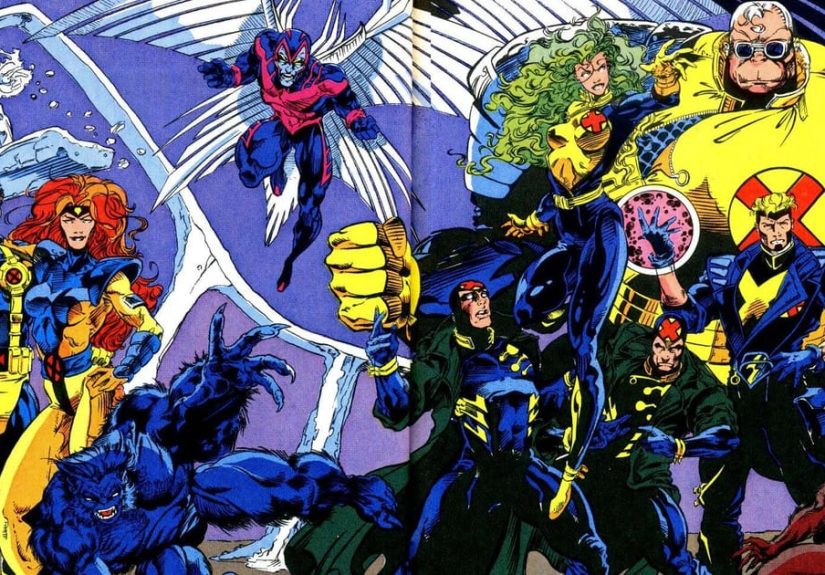
The first X-Factor series launched in 1986. The hook: the original X-Men
reunite under a new name. Publicly, they pose as humans hunting “dangerous
mutants.” Secretly, they’re rescuing and training those same mutants. It’s
very “undercover boss,” if the boss could shoot optic blasts.
Core Team Members
-
Cyclops (Scott Summers) – Field leader, tactical genius,
eyes that double as high-powered laser cannons. The emotional center of the
early book, especially thanks to the whole “marriage, baby, and also Jean
Grey is back” situation. -
Marvel Girl / Jean Grey – Telekinetic and telepathic
powerhouse, recently resurrected and trying to figure out her place in a
world that thinks she’s dead. Basically the heart and conscience of the team. -
Beast (Hank McCoy) – Brilliant scientist with acrobatic
moves and super strength. He’s the guy who can both rewire the ship and
crack a joke while being thrown at a Sentinel. -
Iceman (Bobby Drake) – Cryokinetic class clown, capable
of creating ice slides, shields, and increasingly wild power stunts as the
book goes on. -
Angel / Archangel (Warren Worthington III) – The billionaire
team financier whose feathery wings eventually get replaced with razor-sharp
metal wings when Apocalypse remakes him as Archangel.
Key Recruits and Associates
While the “official” membership centers on the original five, the early run
also features a cluster of younger mutants and allies tied closely to
X-Factor’s mission:
- Caliban – Morlock tracker who briefly joins X-Factor before his own dark evolution.
- Rusty Collins – Young pyrokinetic mutant rescued and mentored by the team.
- Skids (Sally Blevins) – Force field–generating runaway who becomes Rusty’s partner in both crime and redemption.
- Artie Maddicks – Telepathic, speechless child who projects images from his mind.
- Leech – Morlock kid whose power dampens other mutants’ abilities, whether they like it or not.
- Boom-Boom (Tabitha Smith) – Walking attitude in sunglasses who can create explosive energy “time bombs.”
These younger characters are often treated like an unofficial junior
X-Factor, showing up in key storylines like Inferno and
Mutant Massacre.
The Government-Sponsored X-Factor (1991–1998)
After the original five return to the main X-Men, the X-Factor name shifts to
a new group. This time, X-Factor is a U.S. government team operating under
Valerie Cooper. Imagine the X-Men if they had HR, press briefings, and
mountains of paperwork.
Main Government Roster
-
Havok (Alex Summers) – Cyclops’ brother and team leader,
converting cosmic energy into devastating plasma blasts. Also remarkably good
at bad life decisions. -
Polaris (Lorna Dane) – Mistress of magnetism with deep ties
to Magneto and long, complicated history with Havok. A defining X-Factor
mainstay. -
Strong Guy (Guido Carosella) – Absorbs kinetic energy into
his massively overbuilt frame. A wisecracking bruiser with more depth than
his name implies. -
Multiple Man (Jamie Madrox) – Can create duplicates of
himself on impact. Each “dupe” develops its own experiences, turning his
life into a one-man focus group. -
Wolfsbane (Rahne Sinclair) – Scottish shapeshifter who can
become a wolf or a wolf-human hybrid, often torn between faith, loyalty, and
her own desires. -
Quicksilver (Pietro Maximoff) – Magneto’s speedster son,
bringing a huge chip on his shoulder and Olympic-level sarcasm to the team. -
Valerie Cooper – Government liaison, not a mutant but
effectively part of the team. She’s the person who has to explain to the
Senate why the Washington Monument just got punched.
Later Additions and Darker Allies
As the series continues, X-Factor cycles through new members and “frenemies”:
- Forge – Tech genius and inventor who eventually leads the team.
- Random – Gun-armed mercenary with a liquid-metal body and a flexible sense of morality.
- Mystique – Shapeshifting wildcard whose loyalty is best described as “situational.”
- Sabretooth – Yes, the feral killer. For a while, he’s on a leash with an electronic inhibitor. It goes exactly as badly as you’d expect.
- Wild Child – Another feral mutant with sharp claws and even sharper issues.
This era leans into political intrigue and messy morality: can a government
mutant team ever really be trusted, and should the mutants trust the
government right back?
X-Factor Investigations (2005–2013): The Detective Agency Era
In the mid-2000s, X-Factor reinvented itself completely. Instead of a
traditional superhero squad, the book becomes a noir-flavored detective
agency operating in Mutant Town, built around Jamie Madrox’s powers and a
cast of misfits wrestling with trauma, identity, and rent.
Founding Investigations Team
-
Jamie Madrox / Multiple Man – Founder and boss of
X-Factor Investigations. Sends his duplicates out to learn skills, then
reabsorbs them and gains their knowledge (and baggage). -
Strong Guy (Guido Carosella) – Back again as muscle, comic
relief, and frequent emotional gut punch. -
Wolfsbane (Rahne Sinclair) – Returns to the fold with a
complicated, sometimes painful arc about faith, love, and control. -
Rictor (Julio Richter) – Seismic mutant struggling with
depression and the loss of his powers in the aftermath of M-Day. -
Siryn (Theresa Cassidy) – Daughter of Banshee, with
sonic-based powers and one of the series’ most heartbreaking character
journeys.
Expanding the Agency
Over time, the agency’s roster grows into one of the richest ensembles in the
X-line:
- M / Monet St. Croix – Super-strong, super-smart, and super unimpressed with most people.
- Layla Miller – The mysterious girl who “knows stuff,” evolving into a time-twisted strategist.
- Longshot – Probability-warping adventurer and former Mojoworld rebel.
- Shatterstar – Warrior from Mojoworld whose relationship with Rictor becomes a landmark queer story in mainstream superhero comics.
- Darwin – Mutant whose body evolves instantly to survive any threat.
- Pip the Troll and other occasional allies who drift through the office like weird co-workers.
This era makes X-Factor feel like an ensemble TV show: long arcs, messy
relationships, and cases that start as superhero problems and end as
philosophical ones.
All-New X-Factor (2014–2015): The Corporate Super-Team
The All-New X-Factor series relocates the team under Serval
Industries, a tech corporation that licenses the X-Factor name from Jamie
Madrox. If your first thought is “corporate superhero team, what could go
wrong?” – correct.
All-New X-Factor Core Lineup
- Polaris – Team leader, trying to do genuine good while working for a CEO with secret agendas.
- Quicksilver – Back again, this time allegedly on his best behavior. Allegedly.
- Gambit (Remy LeBeau) – Thief, charmer, part-time Avenger, full-time trouble magnet.
- Danger – The sentient embodiment of the X-Men’s Danger Room, now a walking arsenal with attitude.
- Cypher (Doug Ramsey) – Can understand any language, including body language, code, and probably your unreadable group chat.
- Warlock – Technorganic alien who speaks in glitchy slang and hugs people with circuitry.
This incarnation leans into corporate satire, workplace weirdness, and
ethical questions about who controls superheroes when they’re on the payroll.
Krakoan X-Factor (2020–2021): Investigating Death and Resurrection
In the Krakoan era, death isn’t permanent for mutants, thanks to a group
known as the Five who can resurrect fallen mutants. That sounds amazing, but
it raises a big question: how do you know someone is really dead before you
resurrect them?
Enter the newest Krakoan X-Factor team, a specialized
investigative unit tasked with confirming mutant deaths and odd disappearances.
Krakoan X-Factor Roster
- Northstar (Jean-Paul Beaubier) – Team leader, speedster, and professional grump with a deeply soft center.
- Polaris (Lorna Dane) – Returning X-Factor veteran and magnetic powerhouse.
- Prestige / Rachel Summers – Telepath and time-tossed daughter of Cyclops and Phoenix, acting as the team’s psychic and investigator.
- Prodigy (David Alleyne) – Absorbs knowledge from those around him, making him the ultimate walking research library.
- Eye-Boy (Trevor Hawkins) – Covered in eyes with multispectrum vision; surprisingly kind-hearted and invaluable in field work.
- Daken (Akihiro) – Wolverine’s son, bringing claws, pheromone manipulation, and chaos energy.
- Aurora (Jeanne-Marie Beaubier) – Northstar’s twin sister and speedster in her own right, who joins after her resurrection.
This series plays like a mutant procedural: mysterious deaths, political
fallout, weird magic, and a lot of queer, character-driven storytelling.
Quick Master List of Major X-Factor Members
Across all eras, X-Factor’s extended family is huge. Below is a practical
“who’s who” of the most significant members who have served on one or more
core X-Factor rosters.
- Angel / Archangel (Warren Worthington III)
- Beast (Hank McCoy)
- Cyclops (Scott Summers)
- Marvel Girl / Jean Grey
- Iceman (Bobby Drake)
- Caliban
- Rusty Collins
- Skids (Sally Blevins)
- Artie Maddicks
- Leech
- Boom-Boom (Tabitha Smith)
- Havok (Alex Summers)
- Polaris (Lorna Dane)
- Strong Guy (Guido Carosella)
- Multiple Man (Jamie Madrox)
- Wolfsbane (Rahne Sinclair)
- Quicksilver (Pietro Maximoff)
- Valerie Cooper
- Forge
- Random
- Mystique
- Sabretooth
- Wild Child
- Rictor
- Siryn (Theresa Cassidy)
- Monet St. Croix (M)
- Layla Miller
- Longshot
- Shatterstar
- Darwin
- Pip the Troll
- Gambit
- Danger
- Cypher (Doug Ramsey)
- Warlock
- Northstar
- Prestige / Rachel Summers
- Prodigy (David Alleyne)
- Eye-Boy (Trevor Hawkins)
- Daken (Akihiro)
- Aurora (Jeanne-Marie Beaubier)
This isn’t an absolutely exhaustive list of every alternate-universe cameo or
one-page substitute memberthat would be a novelbut it captures the key
X-Factor members readers encounter across the main series.
How to Read X-Factor Without Getting Lost in the Roster
Knowing the list of all X-Factor members is great, but
actually reading their stories is where these characters really click. Here’s
a simple way to experience the team’s different flavors:
-
Start with the original X-Factor (1986) – Especially the
early issues with the core five X-Men and the big events like
Mutant Massacre and Inferno. You’ll understand why
Apocalypse and Archangel become such pillars of mutant lore. -
Jump to the government team era (starting around issue #71) –
This is where Havok, Polaris, Strong Guy, and the rest really define the
X-Factor identity separate from the X-Men. -
Then hit X-Factor Investigations – If you like character
drama, mystery, and long-running emotional arcs, this run will probably
become your favorite. It’s often cited as the best X-Factor era for a
reason. -
Read All-New X-Factor – It’s shorter, witty, and very
modern. Great if you like corporate satire and weird team chemistry. -
Finish with the Krakoan X-Factor (2020) – Perfect if
you’re curious about the newest era of X-books and want a series that sits
at the intersection of mystery, politics, and mutant afterlife logistics.
By the time you’ve done all that, you won’t just know the X-Factor roster –
you’ll feel like you’ve lived in their world, sat on their damaged couches,
and dodged at least three energy blasts.
Experiences and Takeaways from Following Every X-Factor Roster
Spending time with all these different X-Factor lineups is a little like
following a band through every lineup change. Sometimes the sound is
completely different, but there’s always something familiar humming in the
background: misfit mutants trying to find their place in a world that doesn’t
quite know what to do with them.
Reading the original X-Factor feels like revisiting a classic rock album.
It’s a bit ’80s in all the best and worst ways: big hair, huge drama, and
high-stakes crossovers. The core five X-Men are iconic, and watching them
wrestle with guilt, secret identities, and Apocalypse gives you a baseline
for how mutant stories can mix superheroics with soap opera energy.
The government X-Factor era plays like a political thriller with super-powers.
You see characters like Havok and Polaris squeezed between orders from above
and their own conscience. If you’ve ever worked for a company that made
“questionable decisions” while telling you it was for the greater good, this
run might hit a little too close to home. Strong Guy and Multiple Man keep it
funny, but the stories constantly poke at questions about trust, control, and
who gets to decide what “security” looks like.
X-Factor Investigations is where many readers fall in love with the brand.
It feels personal. You watch Jamie Madrox try (and fail, and try again) to be
a good leader while literally confronting different versions of himself.
Relationships like Rictor and Shatterstar, or Siryn and Jamie, show how
superhero comics can explore trauma, recovery, and messy love without
sacrificing plot or humor. If you’ve ever binged a character-driven TV drama,
this run will feel very familiarand very addictive.
All-New X-Factor gives you a different kind of experience: superheroics
wrapped in corporate branding. Seeing Polaris and Quicksilver operate under a
CEO’s watchful eye taps into very modern anxieties about tech companies,
surveillance, and what happens when heroism is just another line item in a
quarterly report. It’s also a great place to appreciate how versatile the
X-Factor concept is: the team can pivot from noir detectives to PR-friendly
corporate heroes without losing its identity.
Finally, the Krakoan X-Factor run delivers one of the most unique experiences
in the franchise. Instead of just punching villains, the team investigates
the rules of life and death in a world where mutants can be resurrected. The
book asks: who decides what proof of death looks like? What happens when the
system fails? And how do you grieve when death is technically reversible?
Reading this era feels like stepping into a sci-fi detective story with
queer, emotionally layered characters at the center.
When you’ve followed X-Factor across all these incarnations, the long list of
members becomes more than trivia. Each name on the roster marks a different
phase in mutant historya new experiment in what a team can be. Whether
you’re here for the original five, the government squad, the detective
agency, the corporate crew, or the Krakoan investigators, the X-Factor
banner promises one thing: mutants dealing with problems that are just a bit
too weird for anyone else.
Final Thoughts: Why X-Factor’s Ever-Changing Roster Matters
The list of all X-Factor members isn’t just a roll call; it’s
a roadmap through decades of Marvel storytelling. Each major lineup explores
a different angle on what it means to be a mutant teampublic heroes, secret
rescuers, government agents, private eyes, corporate assets, or guardians of
the resurrection process.
If you’re building content, planning a reading guide, or just diving into the
mutant corner of Marvel, X-Factor gives you a rich mix of character drama,
moral questions, and genre-bending stories. And if you ever forget who was on
which roster, don’t worrythat’s half the fun of coming back to this wild,
ever-evolving team.