Table of Contents >> Show >> Hide
- What “the Secret Geometry of Life” Actually Means
- From Turing Patterns to Tiger Stripes
- Why Shape Is Not Just Visual, but Functional
- The Discovery of Scutoids: Nature’s Weird Little Packing Trick
- Topology: The Part of Geometry That Cares About Connections
- Bird Beaks, Virus Shells, and Coral Reefs
- Mechanics: The Missing Ingredient in the Story of Form
- So, Have Mathematicians Really “Discovered” It?
- Why This Matters for Medicine, Bioengineering, and the Future
- The Human Experience of Life’s Hidden Geometry
- Experiences That Make the Secret Geometry of Life Feel Real
- Conclusion
- SEO Tags
Life rarely builds in straight lines. It curls, folds, branches, ripples, twists, and somehow turns a single cell into a lung, a leaf, a brain, or a coral reef that looks like it hired a very ambitious architect. That is why the phrase “the secret geometry of life” sounds dramatic, but it is not hype in the silly sense. Across biology, mathematicians and biologists are uncovering a deep truth: living things do not grow into just any shape. They follow hidden geometric rules.
That does not mean nature is secretly doodling sacred triangles in the margins. It means shape is governed by structure, constraints, and feedback. Cells pack in ways that minimize stress. Tissues bend according to curvature and force. Patterns emerge when chemicals spread and react at different rates. Organs branch, fold, and organize because geometry is not decoration. Geometry is part of the instruction manual.
So when people say mathematicians have discovered the secret geometry of life, the real story is even better: they are learning that life’s forms emerge from a shared language of symmetry, topology, mechanics, scaling, and pattern formation. In other words, biology is messy, but it is not making it up as it goes along.
What “the Secret Geometry of Life” Actually Means
For years, many people treated biological shape as the result of genes alone. Genes mattered, obviously, but they seemed like the whole show. Modern research paints a much richer picture. Genes help set the rules, but geometry and physics help decide what those rules can actually build.
Think of it this way: a recipe can tell you to bake bread, but the dough still stretches, traps gas, and browns according to chemistry and mechanics. Living tissues behave similarly. DNA provides instructions, but cells must still move, squeeze, divide, stretch, and pack together inside real three-dimensional space. That is where mathematics enters the chat, wearing sensible shoes and carrying a whiteboard marker.
The “secret geometry” of life includes several big ideas:
- Symmetry: why some structures repeat and balance in regular ways.
- Topology: how connections and holes matter, even when shapes deform.
- Curvature: how bending changes stress, packing, and growth.
- Scaling: how form changes as organisms get larger or smaller.
- Pattern formation: how stripes, spots, folds, and branches emerge from simple rules.
These concepts are turning shape from a poetic mystery into something researchers can measure, model, and in some cases predict.
From Turing Patterns to Tiger Stripes
The first clue: patterns can arise from simple math
One of the most influential ideas in this field goes back to Alan Turing, who is usually introduced as a computing legend but also deserves a standing ovation from developmental biology. Turing proposed that patterns in living systems could emerge when chemicals react with each other while diffusing through tissue at different speeds. This is called a reaction-diffusion system.
At first glance, that sounds like a recipe for soup, not zebras. But the math showed that under the right conditions, a uniform field can become unstable in a productive way. Instead of staying smooth, it breaks into spots, stripes, waves, or repeating structures. Suddenly, leopard spots and plant whorls stop looking like decorative flourishes and start looking like outputs of a pattern-generating engine.
Researchers have spent decades refining, testing, and expanding Turing’s framework. They now see that biological pattern formation is often more robust and more complicated than the earliest models assumed. Even so, the central idea remains powerful: life can build striking visual order from local interactions and relatively simple rules. Nature, it turns out, loves a good algorithm.
Why Shape Is Not Just Visual, but Functional
Geometry in biology is not merely about looking elegant under a microscope. Shape affects function everywhere. A lung branches so gases can be exchanged efficiently. The gut folds to increase surface area. The brain wrinkles so more cortex can fit inside the skull. Blood vessels branch, flowers curl, leaves arrange themselves for light, and viral shells assemble with uncanny regularity.
This means mathematicians are not just asking, “Why does that structure look neat?” They are asking, “What shape allows this system to work, survive, and grow?” That is a much more useful question, especially in medicine and bioengineering.
In tissue morphogenesis, for example, sheets of cells can buckle, fold, and roll into tubes that later become organs. That transformation depends on forces across many cells, not just changes inside one cell. The tissue behaves less like a pile of marbles and more like a coordinated material. Researchers now use mathematical and mechanical models to understand how those folds happen reliably, even when development is noisy and cells are imperfect little overachievers.
The Discovery of Scutoids: Nature’s Weird Little Packing Trick
When bent tissues refuse to behave like stacked boxes
One of the best modern examples of geometry revealing hidden biological logic is the discovery of the scutoid. For a long time, people often imagined epithelial cells as simple prisms, like tiny columns stacked together in a nice orderly tissue. Very tidy. Very satisfying. Also incomplete.
When tissues bend and curve during development, cells cannot always keep the same neighbors from top to bottom. Some switch neighbors along their height. To make that possible, researchers identified a new geometrical solution: the scutoid, a cell shape that helps curved tissues pack efficiently in three dimensions.
This was not just a fun naming opportunity. It mattered because it showed that biology solves spatial problems with shapes that standard intuition missed. Curved organs are not built from perfect little bricks. They are built from dynamic, energy-saving packing strategies that mathematics can reveal long before the naked eye would guess them.
If that sounds wildly specific, it is. It is also a reminder that life is full of engineering hacks. Evolution is basically the longest-running design studio on Earth, except the client is survival and the deadline is always now.
Topology: The Part of Geometry That Cares About Connections
Topology is often introduced with jokes about donuts and coffee mugs, because both can be described as having one hole. Charming, yes. But in biology, topology is not just a classroom party trick. It is a powerful way to describe how tissues and structures are connected.
Recent work on organoids, which are simplified miniature tissues grown in labs, has shown that morphogenesis is not only about size and curvature. It is also about topology. Researchers can now quantify how passages, lobes, and lumen-like structures emerge and reorganize over time. That means biology is being measured not only by what tissue looks like from the outside, but by how its internal connectivity changes as it develops.
This is a big deal because topology captures something genes alone do not neatly express: whether a developing structure remains connected, splits, folds inward, or creates new internal spaces. In practical terms, topology helps researchers describe how a brain-like organoid, airway tissue, or gland transitions from “blob” to “organized architecture.” Yes, “blob” is a technical term only in the hearts of exhausted grad students.
Bird Beaks, Virus Shells, and Coral Reefs
The same mathematical thinking shows up in wildly different forms
One reason this field is so exciting is that similar mathematical ideas keep appearing in very different branches of life.
Bird beaks: Researchers analyzing bird beaks have shown that the huge diversity of shapes is not random. Many variations can be described through a relatively small number of geometric transformations. In plain English, evolution seems to be exploring a structured design space rather than throwing darts in the dark.
Virus shells: Many viruses, especially those with icosahedral symmetry, build protein shells that look almost absurdly geometric. Mathematicians studying symmetry and packing have helped explain how these shells assemble and how genetic material participates in the process. Even pathogens, rude as they are, appear to appreciate good structure.
Coral growth: Quantitative models are also helping researchers understand how coral polyps collectively generate large-scale forms. Coral colonies do not just “happen” to look branched, bumpy, or fan-like. Their shapes emerge from local growth rules interacting with flow, mechanics, and environmental constraints. That means geometry is not simply describing life after the fact. It is part of how life gets built in the first place.
These examples matter because they suggest a unifying insight: life does not use one shape-making trick. It uses a family of related principles that keep reappearing across scales, from microscopic cells to reef-sized structures.
Mechanics: The Missing Ingredient in the Story of Form
For a long time, developmental biology focused heavily on signaling molecules and gene networks. Those are essential, but they are only half the drama. The other half is force.
Cells pull on each other. Membranes stretch. Tissues resist compression. Pressure builds inside cavities. Growth creates stress, and stress redirects growth. In plants, mechanical constraints help generate shape. In animal tissues, force patterns help push, fold, and sculpt organs. The result is that form emerges from a dance between biochemical signals and physical laws.
This has led to a more modern view of morphogenesis: not genes versus geometry, but genes through geometry. A developmental signal may tell cells when to contract, divide, or differentiate. But the resulting shape depends on how those cells are arranged, how forces propagate, and what the surrounding tissue allows.
That is why researchers increasingly talk about mechanochemical patterning. Chemical signals and mechanical forces cooperate. Biology is not just a codebase. It is a codebase running inside a living material.
So, Have Mathematicians Really “Discovered” It?
Yes, but with a helpful asterisk.
There is no single Rosetta Stone labeled “secret geometry of life” sitting in a vault. What mathematicians and their collaborators have discovered is a growing framework for understanding biological form. They are identifying recurring principles, building predictive models, and proving that many life-shaping processes follow understandable geometric and topological rules.
That is still revolutionary. It changes how we think about embryos, disease, regeneration, and even evolution. It suggests that shape is not an accidental byproduct of life. Shape is part of life’s logic.
It also has consequences outside pure theory. If scientists can predict how tissues fold, branch, and organize, they can improve organoid design, tissue engineering, wound healing, and perhaps one day guide the repair of malformed structures. Understanding geometry may help doctors and engineers do more than describe life. It may help them rebuild it.
Why This Matters for Medicine, Bioengineering, and the Future
Geometry is becoming a practical tool
The practical potential here is enormous. In regenerative medicine, one of the hardest problems is not merely getting the right cells, but getting those cells into the right structure. A heart cell in the wrong geometry is not a heart. A neural cell in the wrong topology is not a brain circuit. A tissue that cannot fold, branch, or connect correctly may be alive but not functional.
Mathematical models offer a way to bridge that gap. They can help researchers test which growth rules produce stable shapes, which packing arrangements reduce stress, and which feedback loops generate useful organization. That is especially important in synthetic developmental biology, where scientists are trying to engineer multicellular systems that form predictable patterns.
In cancer research, geometry also matters because tumors do not grow as featureless lumps. Their shape influences nutrient flow, stress distribution, invasion, and mechanical signaling. In neuroscience, understanding why brains fold the way they do could illuminate both healthy development and developmental disorders. In plant science, geometric and topological models can reveal how roots, shoots, and leaves build efficient structures.
In short, geometry is moving from blackboard elegance to biomedical utility.
The Human Experience of Life’s Hidden Geometry
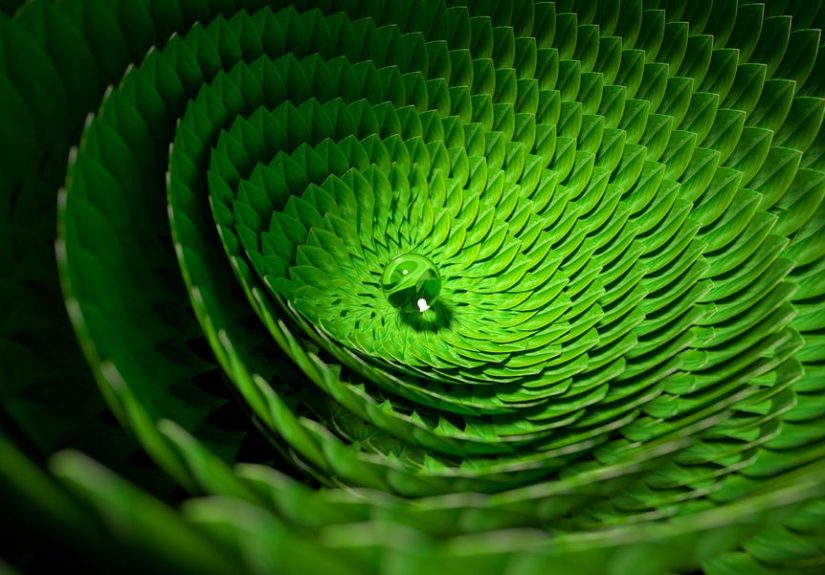
The most fascinating part of this story may be how familiar it feels once you start noticing it. The secret geometry of life is not locked away in a lab. It is in the romanesco broccoli that looks like a fractal joke with excellent posture. It is in the spirals of a sunflower, the branching of your lungs, the folds of the brain, the curve of a petal, and the surprisingly efficient way skin heals after an injury.
What researchers are discovering is not a foreign order imposed on life from outside. It is an order that has been quietly present all along. Mathematics is simply giving us the vocabulary to see it more clearly.
Experiences That Make the Secret Geometry of Life Feel Real
You do not need to be a mathematician to experience the geometry of life. You only need to start looking with a little more patience and a little less assumption. A walk through a garden can become a tour of repeating patterns. The veins in a leaf stop looking decorative and start looking like a transport network solving an engineering problem. A seashell becomes a record of growth, curvature, and scaling. A tree branch is no longer just “tree-shaped.” It is a branching strategy balancing support, exposure, and resource flow.
For students, the first real encounter often happens when biology stops being a vocabulary test and turns into a shapes-and-systems story. Suddenly, a textbook diagram of embryonic development is not just a sequence of stages. It is a map of tissues folding, invaginating, elongating, and reorganizing in space. That shift can be thrilling because it reveals that life is not assembled piece by piece like a toy set. It emerges through coordinated transformations. It is choreography, not furniture assembly.
For researchers in the lab, the experience can be even stranger and more delightful. Imagine growing organoids and watching a structure that looked simple on Monday become folded, lobed, and internally connected by Friday. At first it may seem like chaos. Then a mathematical model shows that the changes follow a pattern shaped by curvature, pressure, and cell mechanics. What felt like biological improvisation starts to look like constrained creativity. Nature is still inventive, but it is not freelancing without a contract.
There is also a medical version of this experience. Surgeons, radiologists, and pathologists work with biological form every day, even if they do not always frame it in geometric language. A healthy airway branches a certain way. A damaged tissue folds differently. A tumor distorts local structure. An aneurysm changes curvature and stress. Once geometry enters the picture, medicine becomes partly a science of altered form. Disease is not only molecular; it is architectural.
Artists and designers often recognize this before scientists say it out loud. They notice that living structures look balanced without seeming rigid, complex without seeming random. That intuition is not mystical fluff. It reflects the fact that biological form often emerges from simple local rules interacting over time. The beauty people sense in coral, feathers, petals, and shells is frequently the visual signature of lawful growth.
Even ordinary life offers constant reminders. Bread rises into patterned cracks because of force and expansion. Soap bubbles meet in efficient partitions. Crowds flow through doorways in ways that resemble active matter. The same mathematical instincts that help explain tissues also help explain many everyday patterns. That is part of what makes this field so satisfying. It narrows the distance between the living world and the mathematical one.
Perhaps the most powerful experience, though, is intellectual humility. The more researchers learn about life’s geometry, the clearer it becomes that shape is not secondary. Form is not what biology does after it finishes the important work. Form is important work. Every fold, branch, lumen, curve, and connection is part of function. When mathematicians uncover the geometric logic behind those forms, they are not draining mystery from life. They are revealing how astonishingly much order life can generate from simple rules, local interactions, and physical constraints. That realization does not make the world less magical. It makes it more legible.
Conclusion
Mathematicians have not found a single hidden symbol that explains every creature on Earth. What they have found is arguably more exciting: a common toolkit of geometry, topology, mechanics, and pattern formation that helps explain how life builds itself. From scutoids in bent tissues to reaction-diffusion patterns, from virus shells to coral reefs, the same truth keeps resurfacing. Biology is not merely chemical. It is geometrical.
And once you see that, the world gets a lot harder to unsee. A flower becomes a growth algorithm. A lung becomes branching mathematics in soft tissue. A developing embryo becomes a masterpiece of coordinated shape change. The secret geometry of life is not a hidden code in the sci-fi sense. It is the quiet set of rules that allows living matter to become organized, resilient, and functional. Mathematicians did not invent that order. They are finally learning how to read it.