Table of Contents >> Show >> Hide
Millennials have a special talent: turning mild panic into a perfectly captioned meme before the coffee finishes brewing. And honestly? That’s not just “internet culture.” It’s a coping mechanism with better font choices. When you’ve lived through a recession-shaped entry into adulthood, watched housing prices do parkour, and learned that “benefits” sometimes means “good luck,” humor becomes a form of budgeting.
This isn’t a pity partyit’s a group chat. The posts and memes Millennials share tend to be funny because they’re specific: the student-loan autopay that hits like a jump scare, the rent increase email that arrives with the warmth of a parking ticket, the “I’m fine” text sent from the bathroom at work while deep-breathing like a yoga app.
Why Memes Hit So Hard for Millennials
Memes are the modern sticky note on the fridge, except the fridge is your phone and the note says, “Reminder: everything costs money, including existing.” They’re shorthand for complicated experiences: financial pressure, workplace burnout, healthcare confusion, and a general sense that adulthood is 40% responsibility and 60% “Why is the printer blinking like that?”
There’s also something quietly comforting about seeing thousands of people react to the same struggle. A meme can say, “You’re not failingthis system is just expensive.” It can turn isolation into solidarity in one scroll. And when the day is heavy, laughing for three seconds is sometimes the first step toward breathing again.
The Real-Life Pressures Behind the Punchlines
1) The Money Math That Never Maths
A big chunk of Millennial humor is basically: “I did everything right and still can’t afford guacamole or a mortgage.” The generation came of age as student loan balances ballooned and wages struggled to keep up with the rising cost of living. Americans owed about $1.6 trillion in student loans as of mid-2024, and the tab still shapes monthly budgets, credit decisions, and long-term plans.
Housing is the other recurring villain. Many renters are “cost-burdened,” meaning they spend 30% or more of their income on housing, and a sizable share are “severely cost-burdened” (50%+). When a rent payment eats the part of your paycheck that used to be for groceries, savings, or “joy,” memes become the cheapest therapy session on earth.
Add in the reality that household debt keeps climbingespecially revolving balances like credit cardsand you get why so many jokes revolve around “checking my bank account” like it’s a horror movie trailer.
2) Work That Leaks Into Life
Millennials popularized hustle culture, then got tired, and now meme about being tiredgrowth! The punchlines often target the “always-on” expectation: Slack pings at dinner, emails after bedtime, and the feeling that your job isn’t just a job; it’s a subscription service that renews every morning at 8 a.m.
Burnout jokes aren’t just vibe-based. Surveys and workplace research have consistently found high stress and frequent burnout among younger workers. Millennials don’t just want work-life balance; they want work to stop sneakily living their life.
3) Healthcare, Insurance, and the Administrative Olympics
If you’ve ever tried to decode a medical bill that reads like ancient runes, you’ve seen the origin story of half the internet’s memes. Healthcare costs remain a top financial worry for many Americans, and lots of insured people still report trouble affording care. That tension“I have coverage” versus “I can’t use coverage without sweating”is meme fuel.
For Millennials, the health conversation also includes mental health: anxiety, stress, and isolation. Posts often use humor to make the topic less scarybecause sometimes you can’t say “I’m not okay” out loud, but you can repost a meme that says it for you in a tiny cartoon font.
4) The “Maybe Later” Milestones
Homeownership, kids, even simple savings goals: Millennials are often portrayed as “delaying adulthood,” but the more accurate headline is “adulthood got pricier.” The cost of childcare and raising children is a common reason people postpone expanding families. That shows up online as jokes about “my plant is my child” and “my dog is my retirement plan.”
5) Climate Anxiety and the Future That Feels Like a Group Project
Many Millennials take climate change seriouslyand they also joke about it in ways that are equal parts funny and bleak. Social media content about climate can trigger anxiety about the future, and that emotional whiplash often turns into memes about reusable straws versus systemic change.
6) Social Life in the Group Chat Era
Millennials can be wildly connected and deeply lonely in the same hour. Memes capture the modern paradox: you’re in five group chats, but you haven’t made plans in weeks because everyone is exhausted, broke, or both. A “fun night out” now requires scheduling, budgeting, and recovery time like it’s a minor surgery.
Millennials Share 45 Posts And Memes That Show the Struggles They Face
Below are 45 meme-and-post style moments Millennials pass around because they feel painfully familiar. No screenshots neededyou’ve probably lived most of these.
- “I’ll start saving next paycheck.” Said every paycheck since 2011, with unwavering optimism.
- The rent increase email. Arrives like: “Congrats! Your home leveled up. You didn’t.”
- Student loan autopay jump scare. The notification hits like a surprise boss battle.
- “I have benefits!” Translation: “I can now afford one (1) doctor visit emotionally.”
- Checking the grocery total. The self-checkout asks if you want to donate, and you whisper, “To me?”
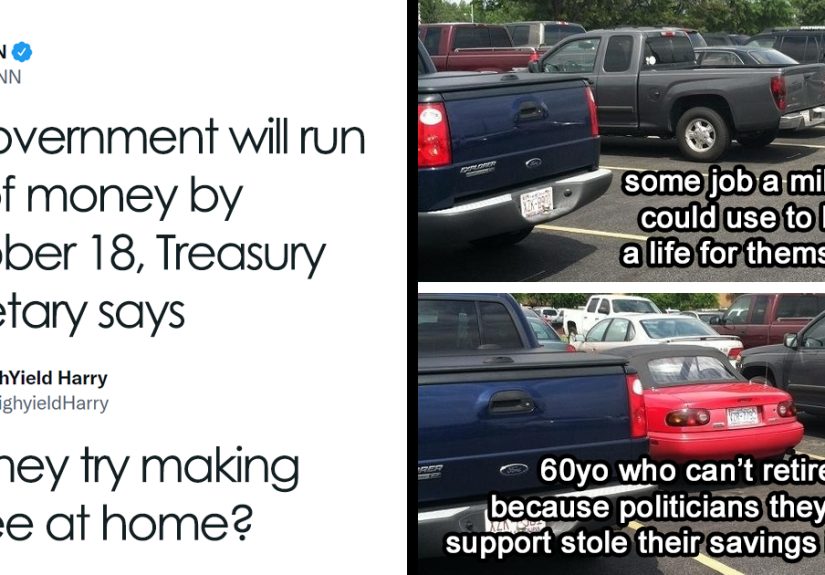
- “Just make coffee at home.” Greatnow explain why housing still costs a dragon’s ransom.
- Avocado toast discourse. Millennials: “We didn’t cancel retirement. Retirement canceled us.”
- Price of eggs. Suddenly you’re comparing cartons like a Wall Street analyst.
- The ‘fun’ budgeting spreadsheet. It’s color-coded depression with conditional formatting.
- Group chat: “Let’s do brunch!” Everyone reacts with heart emojis and never meets again.
- “We should travel more.” Sureafter we pay rent, debt, and the emotional fee.
- Seeing a starter home listing. Caption: “Charming.” Translation: “It’s a shed for $480K.”
- Interest rates. The meme: a rollercoaster; your stomach: also a rollercoaster.
- Side hustle era. “My hobby is monetizing every ounce of joy until it becomes work.”
- Job posting: “Entry-level.” Also job posting: “7 years experience, must be 23.”
- Salary transparency. Realizing you’re underpaid, then laughing so you don’t scream.
- LinkedIn inspiration posts. “I got fired and it was the best thing that ever happened to me.” Congrats?
- Meetings that could be emails. The meme is a coffin; you are the person inside it.
- Calendar notification: “Self-care.” You reschedule it for next month like it’s a dentist appointment.
- Slack after 5 p.m. “Quick question” = three paragraphs and a surprise deadline.
- Burnout bingo. Tired, cynical, caffeinated, and somehow still a “team player.”
- “Work-life balance.” The balance: work. The life: notifications.
- PTO guilt. You request time off and apologize like you asked for a kidney.
- “Unlimited vacation.” Unlimited in theory, forbidden in practice.
- Remote work reality. Pajama bottoms, professional top, existential dread: complete outfit.
- Hybrid scheduling. “Come in for collaboration” = commute to take Zoom calls.
- Healthcare billing. A $14 Band-Aid line item, and you start learning witchcraft.
- Insurance phone calls. Hold music plus the fear you pressed the wrong menu option forever.
- Therapy waitlists. You’re ready to heal. The system says: “In 12–16 weeks.”
- Prescription prices. “With insurance” still feels like a prank ending.
- “Adulting.” Doing three chores and needing a nap like you ran a marathon.
- Car maintenance. One weird noise and you’re budgeting for an entirely new vehicle.
- Home repairs as a renter. You submit a ticket; your landlord replies with silence.
- Home repairs as an owner. You submit a ticket; the house replies by leaking.
- Retirement savings. The meme says “lol.” Your 401(k) says “pls.”
- “Invest early.” Early with what money, Susan?
- Credit score obsession. You protect it like a rare plant in a hurricane.
- Buy Now, Pay Later. “It’s only four payments” becomes “It’s 14 subscriptions.”
- Birthday after 30. You celebrate with ibuprofen and a posture correction.
- Friendship maintenance. Love is texting “proud of you” and meaning it sincerely.
- Dating in the algorithm era. Everyone is “bad at texting” and “loves tacos,” end of biography.
- Wedding costs. The meme: “It’s one day.” The budget: “It’s your life savings.”
- Childcare math. Daycare costs make you consider raising kids via group discount.
- Climate doomscroll. You recycle, then read the news, then stare into the void.
- “We should unplug.” You try. Your phone vibrates with three emergencies and one coupon.
What These Memes Reveal (Besides Our Excellent Taste in Sarcasm)
If you zoom out, the humor points to a consistent set of pressures: high fixed costs (housing, debt, healthcare), unstable or demanding work, and delayed milestones that used to be more attainable on a single income. Many Millennials aren’t “bad with money”they’re living in an era where a normal month can include an unexpected copay, a rent hike, and a car repair that costs the same as a small vacation you won’t take.
Memes also show resilience. Millennials keep adapting: negotiating salaries, job-hopping for better pay, sharing resources, learning personal finance, building community online, and talking more openly about mental health. The jokes are sharp because the people telling them are paying attention.
Bonus: of Millennial Experiences From the Trenches
Ask a Millennial about “the struggle,” and you’ll rarely get one single story. You’ll get a collage. There’s the first job out of school that paid in “experience,” plus a commute that paid in lost sleep. There’s the moment you realize your degree opened doorsbut the doors lead to rooms with unpaid internships and entry-level roles that require five years of experience and a personality that thrives on rejection.
Many Millennials remember watching older generations treat homeownership like a reasonable next step: work, save, buy, repeat. Then Millennials did the “save” part and discovered rent was quietly eating the savings. They scrolled listings labeled “cozy” and learned that “cozy” often means “no closet and the stove is in the hallway.” Some moved back in with parents temporarily and stayed longer than plannednot because of laziness, but because the math didn’t work. That’s a huge difference: Millennials aren’t allergic to responsibility; they’re allergic to pretending numbers aren’t numbers.
Then there’s healthcare. It’s not just the costit’s the uncertainty. You can do the right thing: get insured, go in-network, ask for estimates, double-check coverage, and still end up holding a bill that feels like a pop quiz. So people joke. They post memes about being afraid to open mail. They share screenshots of confusing charges (with the details blurred, because privacy), and everyone in the comments says, “Yup. Same.” The humor isn’t denial; it’s a way to admit the stress without getting swallowed by it.
Workplace culture has its own set of shared experiences. Millennials entered jobs during an era that prized availabilityanswer fast, stay late, show hustle. Many tried it. Many burned out. Now the memes about boundaries aren’t just jokes; they’re tiny reminders that rest is not a moral failing. The funniest posts are often the ones that reveal a truth people used to hide: “I’m doing my best, and my best includes logging off.”
And despite the cynicism, Millennials keep making meaning. They build friendships that feel like family, they choose partners thoughtfully, they delay kids or have fewer children for practical reasons, and they still show up for each other with emotional fluency that earlier generations didn’t always model. The memes about “therapy speak” are funny because they’re true: Millennials learned to name feelings, ask for help, and talk about burnout, anxiety, and grief in public. That openness is a strength. Behind the sarcasm is a generation trying to live well in a world that keeps changing the price tag.