Table of Contents >> Show >> Hide
- Why Field + Supply Still Feels Different
- What “New Exhibitors” Really Means Here
- Why Kingston and Hutton Brickyards Are Such a Good Fit
- What to Expect Beyond the Booths
- How to Shop the New Exhibitors Without Melting Down
- Why the New Exhibitors Are the Real Story
- The Field + Supply Experience: What a Weekend in Kingston Actually Feels Like
If your idea of a perfect weekend includes handmade furniture, excellent ceramics, the occasional stylish tote bag you absolutely did not plan to buy, and a river view that makes your phone camera work overtime, Field + Supply in Kingston, New York, is your kind of scene. Founded by designer Brad Ford, the fair has grown from a smart little craft gathering into one of the Hudson Valley’s most recognizable design events, all while keeping its original charm intact: good makers, good taste, and none of the fluorescent convention-center sadness.
That balance is the whole point. Field + Supply was created as a modern interpretation of the traditional arts-and-crafts fair, but with sharper curation and a broader design vocabulary. Instead of rows of forgettable booths and a folding chair that has seen things, you get a highly considered mix of furniture, lighting, textiles, jewelry, ceramics, pantry goods, fashion, vintage finds, and objects that make you say, “I don’t technically need this hand-forged brass serving piece, but I also don’t technically need self-control.”
And the new exhibitors? They are the secret sauce. Returning favorites may bring the crowd, but it’s the newcomers who keep the fair lively, relevant, and full of surprise. At Field + Supply, “new” rarely means random. It usually means a fresh point of view, a maker with a distinctive material language, or a brand whose work feels handcrafted without slipping into dusty nostalgia. In other words, this is not a market for anyone who thinks beige mass production counts as personality.
Why Field + Supply Still Feels Different
Plenty of markets sell handmade goods. Far fewer create an atmosphere where craft feels elevated without becoming intimidating. That is where Field + Supply stands apart. The event is invitation-driven and tightly curated, which helps explain why the vendor mix feels coherent rather than chaotic. You’re not wandering through a grab bag of unrelated booths; you’re moving through a carefully edited landscape of makers whose work speaks to one another.
The fair’s move to Hutton Brickyards in Kingston gave that vision even more room to breathe. The site, a former industrial brickyard along the Hudson River, adds exactly the kind of backdrop the event thrives on: historic, raw, scenic, and just polished enough to feel cinematic. It is industrial heritage with better shoes. That setting also matches Kingston itself, a city that has become increasingly attractive to artists, designers, small brands, and creative entrepreneurs looking for space, community, and fewer Manhattan-sized headaches.
Today, Field + Supply’s spring and fall markets feature more than 275 vendors and draw thousands of visitors. That scale matters, but the mood matters more. Even as the fair has grown, the goal has remained the same: celebrate craft in a way that feels social, accessible, and rooted in real design values. That is why longtime design lovers show up, but so do families, weekend trippers, curious shoppers, and people who simply want a beautiful day out that comes with snacks.
What “New Exhibitors” Really Means Here
The phrase “new exhibitors” can sound like event-calendar filler, but at Field + Supply it usually signals something more interesting: the fair’s ability to widen its lens without losing its identity. New vendors often fall into a few recognizable groups. Some are emerging makers whose work feels destined for the design conversation. Others are established brands entering the Field + Supply universe for the first time. And some are local or regional talents whose work deepens the fair’s Hudson Valley roots.
That combination is what keeps the market from becoming a greatest-hits album on repeat. You might spot a familiar favorite in one tent, then walk twenty feet and discover a maker whose work sends you into an immediate and slightly dramatic internal monologue about clearing shelf space at home.
Furniture and Home Objects With Actual Point of View
One of the strongest arguments for showing up early is the furniture category, where new exhibitors often make the biggest first impression. Past and recent examples include makers such as Brian Persico, whose Catskills-made furniture carries a distinctly handcrafted presence, and Another Country, known for contemporary craft furniture, lighting, and accessories. Overgaard & Dyrman also brought an international edge to the mix, proving that Field + Supply’s version of Americana is wide enough to welcome beautifully made work from beyond the Hudson Valley.
That is the sweet spot: not rustic cosplay, not sterile minimalism, but pieces with enough texture, material honesty, and design intelligence to feel like future heirlooms. It is easy to see why furniture remains one of the fair’s biggest draws. These are the booths where people lean in, run a hand along a tabletop, ask ten questions about joinery, and suddenly begin speaking like they own a weekend house with a ceramics pantry.
Returning names such as Sawkille have helped define the fair’s woodworking reputation, but newer additions keep that story moving. More recent rosters have also included design-forward brands like Slow Process, Don Howell Joinery, House of Good Mercantile, and K/LLER COLLECTION, showing how the fair continues to blur the line between collectible design and useful domestic object. At its best, Field + Supply makes furniture feel less like inventory and more like character development for your home.
Tabletop, Kitchen, and Small Things That Quietly Ruin Your Budget
Then there are the smaller-scale makers, the ones who lure you in with “I’ll just take a quick look” energy and somehow send you home with a ceramic bowl, a forged serving spoon, and a butter churner you never knew you wanted. This is where exhibitors like East Fork Pottery, Erica Moody, Churncraft, and Custodian make perfect sense. Their work lands in that rare zone where utility and beauty stop pretending to be separate categories.
Field + Supply has always been good at honoring these domestic-scale objects. A hand-thrown mug or well-made broom may not dominate a room the way a sofa does, but they shape everyday life just as powerfully. In that way, the fair reflects a broader truth about design: people don’t only want statement pieces. They want objects that make ordinary rituals feel richer, calmer, and maybe a little more intentional.
That helps explain why the market’s kitchen, tabletop, and apothecary categories keep expanding. On recent rosters, brands such as Palermo Body, Cachet Home Market, Floraco, and Folk Textiles have joined the lineup, reinforcing the fair’s appetite for things that are tactile, giftable, and deeply easy to justify in the moment. “It’s for the house,” you will tell yourself, as though the house hired you as its personal shopper.
Textiles, Apparel, and Wearables That Make the Fair Feel Current
Field + Supply is not just a furniture-and-ceramics party, and that range is part of its appeal. Fashion and textile exhibitors give the event some welcome motion. They soften the harder materials, diversify the price points, and bring in shoppers who may come for a hat or knitwear and leave thinking very seriously about a side table.
Recent vendor rosters show how broad that category has become. Names like Jennifer Hoertz Millinery, NEELAH CASHMERE, Lisa B., Lila Rice Jewelry, NIGHT SPACE, ELEVEN SIX, HELEN PRIOR, and M.PATMOS reflect a market that understands personal style and home style often travel together. Newer debuts such as Loup Charmant and Rudy Jude also suggest the fair is increasingly comfortable living at the intersection of fashion, lifestyle, and craft.
That crossover matters because it keeps the event from feeling overly precious. A great maker fair should not read like a museum gift shop with better lighting. It should feel alive, wearable, and a little unpredictable. Field + Supply gets that. One booth may be all handwoven texture and heirloom softness; the next may offer graphic prints, sculptural jewelry, or clothing with enough quiet confidence to make your existing wardrobe seem suddenly underachieving.
Plant, Print, and Visual Makers Add the Finishing Layer
Another reason the new exhibitors matter is that they enrich the fair’s texture beyond the obvious categories. Recent debut and roster lists include Gray Gardens Plant Studio, Jess Feury, Valerie Straff, The Prospect Press, Beach Hare, Upstate Mary, and Tracey Tanner. Those names widen the emotional range of the market. They bring in plant styling, print work, portraiture, illustration, and decorative detail that help the whole event feel more layered and less predictable.
That layering is important because modern craft is not one thing. It is not only wood, only clay, only linen, only leather. It is an ecosystem of materials and disciplines, and the strongest fairs understand that visitors want the whole conversation. Field + Supply’s newer exhibitors often succeed because they make that conversation feel bigger, livelier, and more generous.
Why Kingston and Hutton Brickyards Are Such a Good Fit
Field + Supply would probably be compelling almost anywhere, but Kingston gives it extra voltage. The city blends history, walkability, waterfront views, and a steadily growing creative economy. It feels lived-in rather than manufactured for tourism, which is precisely why a design market works there. The event benefits from the city’s existing energy instead of trying to invent one from scratch.
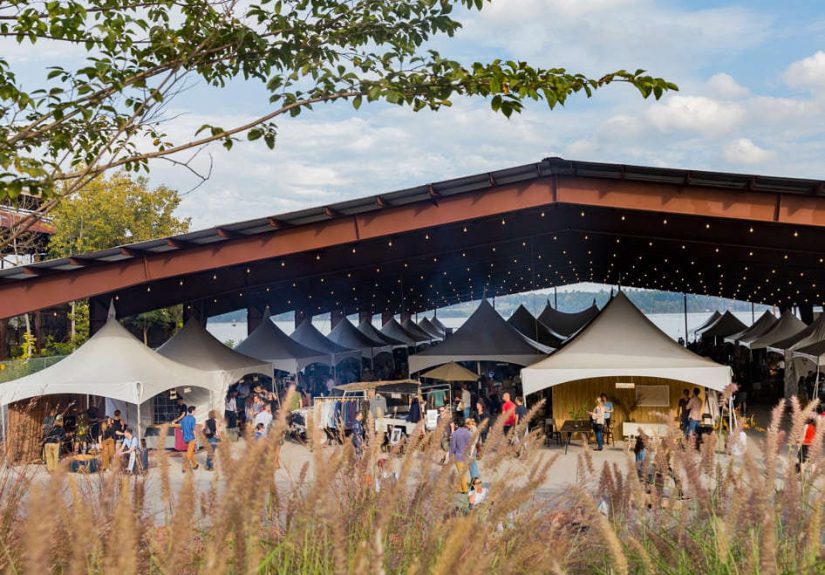
Hutton Brickyards adds the final flourish. The riverfront site has the kind of scale that lets the fair feel expansive without losing intimacy. Tents, pavilions, open sky, industrial remnants, and Hudson views all help create a market that is easy to romanticize and even easier to photograph. Yet it is not just pretty. The space is functional, flexible, and deeply tied to Kingston’s past, which gives the whole weekend more grounding than the average “shopping event.”
That setting also makes the fair more than a retail stop. It becomes a destination weekend. You can browse the market, listen to live music, eat something local, then head out to explore Kingston’s historic districts, shops, restaurants, or waterfront. For visitors coming from New York City or elsewhere in the Northeast, that blend of design, scenery, and local culture is a big part of the draw.
What to Expect Beyond the Booths
A smart Field + Supply article should mention the shopping, but it should not stop there. The market’s programming is one of the reasons people return. Over the years, the event has included live music, artist demonstrations, workshops, children’s activities, book signings, food and drink vendors, lawn games, and special trade experiences. That wider programming helps the fair feel more like a mini-festival than a high-minded retail exercise.
And that matters. Design events can sometimes mistake seriousness for depth. Field + Supply is at its best when it remembers that pleasure is part of the point. You are meant to have fun here. You are meant to wander, talk to people, eat well, discover a maker you did not know, and leave feeling more inspired than overwhelmed. Even the best purchases feel secondary to that larger mood of curiosity and connection.
How to Shop the New Exhibitors Without Melting Down
If you are heading to the fair specifically to see the newest exhibitors, a little strategy helps. First, do one fast lap before buying anything big. This is not because restraint is noble, but because regret is loud. Second, talk to the makers. Field + Supply works best when visitors treat it as a conversation, not a checkout line. Ask about materials, process, durability, lead times, and shipping. You will learn more, and your purchase will probably mean more, too.
Third, mix categories. The fair is more rewarding when you stop thinking only in terms of “statement pieces.” Maybe the new exhibitor that changes your weekend is not the furniture maker at all, but the milliner, the printmaker, the textile brand, or the plant studio. Field + Supply has a funny way of convincing people they came for one thing and leaving with a very different love affair.
Why the New Exhibitors Are the Real Story
The best reason to pay attention to new exhibitors is simple: they reveal where the fair is going. Every fresh name on the roster says something about the market’s taste, its priorities, and its understanding of what modern craft can be. The strongest additions bring material rigor, regional specificity, or a voice that feels personal rather than trend-chasing.
That is why Field + Supply has remained relevant while lesser markets start to feel like copy-and-paste mood boards. It keeps evolving. It welcomes new makers without abandoning its core values. It stays grounded in craftsmanship, but it does not confuse tradition with sameness. And in Kingston, a city already shaped by reinvention, that makes perfect sense.
The Field + Supply Experience: What a Weekend in Kingston Actually Feels Like
You pull into Kingston expecting a market and leave feeling like you accidentally wandered into a very well-dressed argument for slowing down. The road bends toward the river, the brick history of Hutton Brickyards comes into view, and suddenly the whole weekend begins to feel less like an errand and more like a ritual. There are tents in the distance, people carrying coffee, someone in perfect clogs, and a breeze coming off the Hudson that makes even your overstuffed tote bag feel poetic.
Inside the fair, the experience unfolds in layers. First comes the visual hit: rows of carefully staged booths, each one offering its own little universe of texture and intention. Wood grain catches morning light. Brass glows like it knows it is being admired. Ceramics line up with that calm confidence handmade objects seem to have when they are good enough to speak softly. Then the sounds creep in: snippets of conversation, clinking glasses, live music drifting from a stage, the friendly murmur of people trying to decide whether a handwoven throw counts as a necessity. For the record, on this weekend, it absolutely does.
What makes the day memorable is not just what you buy. It is what you notice. You notice how often people stop to ask makers about process. You notice how kids actually have things to do, which means parents are not performing an Olympic-level patience event. You notice that food here is not an afterthought but part of the atmosphere. One minute you are looking at a beautifully turned lamp, the next you are balancing something delicious in one hand while planning a second pass through the textiles section. This is the kind of event where lunch turns into a design strategy session, and nobody seems mad about it.
Then there is Kingston itself, hovering around the edges of the fair like an excellent supporting actor. The city gives the market context. You can feel its creative pulse in the conversations, in the local vendors, in the idea that making things still matters here. After the fair, the day does not have to end. You can keep wandering. Head into town. Poke around shops. Find a table by the water. Compare notes on what you almost bought and what you are still thinking about. Chances are, at least one object will follow you home in spirit, even if your trunk is full.
By the end of the weekend, that is what lingers: not just the shopping, but the sensation of having spent time somewhere that values craft, place, and human skill. Field + Supply is not nostalgic for some imaginary past when everything was handmade and nobody checked email. It feels current, social, and fully alive. It simply makes a strong case that well-made things still deserve attention, and that meeting the people behind them is more satisfying than clicking “add to cart” at midnight while half-watching a show you do not even like. Honestly, that alone is worth the drive.