Table of Contents >> Show >> Hide
- The Brief: A Floating Home That Needed More Light, More Function, and Less Fuss
- Why This Cost-Conscious Houseboat Remodel Works So Well
- Room-by-Room Highlights From the Medium Plenty Houseboat Remodel
- Design Lessons You Can Steal From This California Houseboat Remodel
- What Makes Medium Plenty’s Approach Feel So Modern
- Experiences Inspired by “More Boat for the Buck”
- Final Thoughts
Some remodels scream for attention. This one just floats in, looks effortlessly cool, and quietly makes every square inch work harder. That is the magic of More Boat for the Buck: A Cost-Conscious California Houseboat Remodel by Medium Plenty. Set on a California houseboat with a front-row view of the harbor, this project proves that smart design is not about throwing money around like confetti at a yacht club. It is about knowing what matters, what can be simplified, and what can be transformed with wit, restraint, and a little bit of nerve.
Medium Plenty approached this floating home with a sharp eye and a practical budget mindset. The result is a remodel that feels bright, roomy, playful, and deeply personal without looking cheap or overdesigned. That is a rare trick on land. On water, it is even more impressive. Between the custom built-ins, salvaged fixtures, clean-lined plywood, and carefully edited color palette, this California houseboat remodel offers a master class in getting maximum style for minimum drama.
For homeowners, small-space dwellers, and anyone who has ever stared at a renovation budget and laughed nervously, there is a lot to learn here. This is not just a story about a beautiful houseboat. It is a story about how thoughtful choices can stretch a budget, improve daily life, and turn constraints into character. In other words, it is remodeling with brains, backbone, and just enough swagger.
The Brief: A Floating Home That Needed More Light, More Function, and Less Fuss
The houseboat belonged to a creative client who used the space not only as a home, but also as a photography and filmmaking studio. That detail matters, because the remodel had to do more than look good in photos. It had to live well, work hard, and feel adaptable throughout the day. The original layout was cramped and visually choppy, the kind of space that makes you wonder whether the walls are structural or simply holding a grudge.
Medium Plenty responded with a strategy that focused on openness, flow, and visual continuity. Interior walls were removed to expand the view and make the home feel less boxed in. New glazing helped bring in more daylight. Instead of cluttering the interior with too many competing finishes and fussy gestures, the designers used a restrained material palette that gave the rooms a unified, calm rhythm. That move alone is one of the biggest reasons the remodel feels generous rather than cramped.
The project also stayed committed to value. This was not a luxury-for-luxury’s-sake exercise. The design team looked for ways to achieve impact without premium-brand pricing attached to every knob, faucet, and square foot of surface. That budget-conscious discipline gives the remodel its character. Nothing feels random, and nothing feels like it was chosen just because it was expensive. Refreshing, right?
Why This Cost-Conscious Houseboat Remodel Works So Well
Plywood Does the Heavy Lifting Without Looking Temporary
Plywood can go very wrong. It can read like a dorm-room experiment, a rushed DIY, or the set of an indie film where everyone drinks coffee from chipped mugs and speaks only in metaphors. Here, though, plywood becomes the hero material. Medium Plenty used red oak plywood in ways that feel warm, tactile, and architectural. It is not apologizing for itself. It is setting the tone.
That choice matters for both aesthetics and budget. Plywood helped create continuous lines through the interior, wrapped surfaces with purpose, and supported built-in solutions that make the home feel custom. In a small floating residence, continuity is not just a visual preference. It is spatial strategy. When the same family of materials carries the eye from one zone to the next, the whole home feels larger, calmer, and more coherent.
Built-Ins Replace Bulk With Function
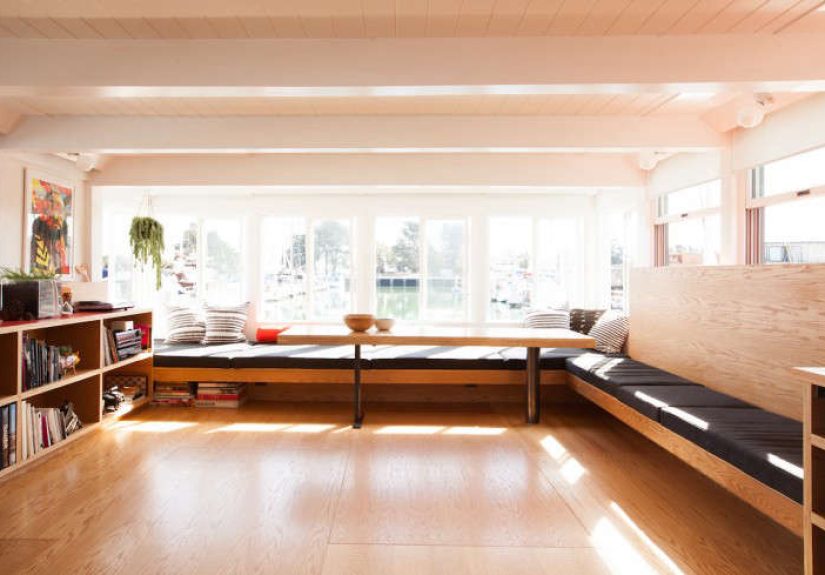
One of the smartest moves in the remodel is the use of built-in seating and integrated storage. The combined living, dining, and kitchen zone includes a U-shaped bench-sofa and a dining banquette, proving once again that banquettes are the overachievers of the design world. They seat more people, waste less space, and make a room feel intentional instead of improvised.
The half-height plywood wall behind the banquette is especially clever. It creates a visual boundary without closing the room off, offers a ledge for plants and art, and discreetly hides electrical outlets. That is the kind of detail that separates a pretty renovation from a livable one. Good design is not just about what you notice. It is also about what you do not have to think about every day.
Vintage Fixtures Bring Soul Without Luxury-Showroom Prices
Budget remodels often get trapped in the land of bland. To avoid that fate, Medium Plenty mixed practical materials with character-rich details, including vintage plumbing fixtures and custom raw brass lighting. This is a brilliant value move. Salvaged or vintage elements can add depth, patina, and personality that mass-market pieces struggle to fake.
In this houseboat, those choices keep the interior from becoming too polished or sterile. The room feels lived in, collected, and a little mischievous in the best way. That balance matters. A budget remodel should save money, yes, but it should also save you from a home that looks like it came flat-packed with emotional indifference.
Room-by-Room Highlights From the Medium Plenty Houseboat Remodel
The Entry Sets the Tone Immediately
Even the entry sequence works harder than expected. A small landing leads upward into the main living space and downward toward the studio, utility area, and guest zone. Rather than treating the stairwell as dead space, the remodel gives it purpose and character. A vintage brass porthole became the front door peephole, and white-painted pegboard helps connect the entry visually to the kitchen while letting light filter through. It is practical, nautical, and just quirky enough to feel memorable.
The Kitchen Is Compact but Not Cramped
The kitchen is one of the best lessons in small-space remodeling. Instead of installing bulky full-size appliances that would dominate the room, Medium Plenty opted for under-counter refrigerators clad in plywood. This keeps the visual line low and preserves the clean horizontal sweep of the interior. Translation: the room breathes.
Cabinets in red oak plywood with exposed edges add warmth and honesty, while the bright orange laminate countertop injects energy without blowing up the budget. It is a fantastic reminder that affordable materials do not need to look timid. When used with confidence, they can create an unforgettable focal point. This kitchen does not whisper. It grins.
The Lounge and Dining Area Feel Bigger Than They Are
White walls and ceilings help amplify the natural light, while the low-profile built-ins keep sightlines open. That combination is a classic small-space tactic for a reason. Bright whites, simple palettes, and unobtrusive furniture visually expand a room. In a houseboat, where every inch matters and the connection to the outdoors is everything, that strategy pays off immediately.
The dark denim cushions on the built-in seating provide contrast and durability, grounding the lighter surfaces so the room does not float away into total whiteness. The overall effect is relaxed and welcoming, more creative retreat than nautical cliché. No rope decor. No captain’s wheel mounted on the wall. Everyone wins.
The Den Adds Humor and Contrast
One of the most delightful parts of the remodel is the den, where the designers allowed the mood to shift. While the main living area stays bright and disciplined, the den leans into color, gloss, and theatricality. Painted flooring in a rich midnight blue and a playful wallpaper choice create a room that feels intentionally different, like the houseboat briefly changes genre and becomes a stylish character actor.
The use of blown-glass portholes to obscure the neighboring view while still bringing in light is especially smart. They solve a privacy issue, preserve brightness, and turn reflected light into part of the atmosphere. That is the sweet spot in any remodel: one move, three benefits.
Design Lessons You Can Steal From This California Houseboat Remodel
Spend on Spatial Improvement, Not Just Surface Glamour
The most valuable upgrades here are not the flashy ones. Opening views, improving light, refining circulation, and creating built-in functionality do more for daily life than fancy finishes ever could. Whether you are remodeling a houseboat, a condo, or a compact bungalow, space planning should get first dibs on the budget.
Use One Strong Material Repeatedly
Repeating a material such as red oak plywood creates visual consistency and can lower decision fatigue during a remodel. It also helps avoid the patchwork effect that often makes smaller homes feel chaotic. A houseboat especially benefits from that kind of disciplined repetition because too many transitions can make the interior feel choppy and crowded.
Let Light Colors Do the Expanding
Bright whites and pale tones reflect light and make tight rooms feel more open. That principle shows up beautifully in this project. White walls, white ceilings, and a restrained palette allow the views, wood tones, and selective pops of color to do the talking. It is proof that light colors are not boring when the architecture and textures are doing their jobs.
Built-In Seating Is a Quiet Budget Superstar
Banquettes and bench seating are ideal in compact homes because they reduce the furniture footprint while increasing flexibility. They can hide storage, define zones, and create a cozy social center. In this remodel, built-ins help the main floor operate as lounge, dining room, workspace, and entertaining zone without feeling like a furniture showroom after a sale gone wrong.
Do Not Ignore Maintenance Reality on the Water
Floating homes bring romance, yes, but they also bring moisture, weather exposure, and practical maintenance needs. Good ventilation, thoughtful material choices, and attention to water-related systems matter. A stationary floating home in California is tied to shore-based utilities and sewage hookups, so remodeling decisions have to work with those real-world conditions. Beauty is lovely. Beauty that can handle humidity is better.
What Makes Medium Plenty’s Approach Feel So Modern
What stands out most about this houseboat remodel is not any single color, fixture, or photo-worthy moment. It is the attitude behind the design. Medium Plenty did not treat budget as a restriction that needed to be hidden. Instead, the firm used budget as a design editor. That mindset leads to better questions. What can be simplified? What should be restored instead of replaced? What deserves custom treatment because it changes the way the space functions?
The answers gave this floating home a fresh, contemporary feel without stripping away personality. There is humor in the den, warmth in the wood, practicality in the kitchen, and generosity in the layout. The houseboat feels curated, not crowded. It feels personal, not precious. Most important, it feels like a place someone would genuinely love living in on a gray morning, not just photographing on a sunny afternoon.
That is what makes this remodel such an effective case study in cost-conscious design. It does not merely save money. It turns financial restraint into design clarity. Plenty of renovations look expensive. Far fewer look intelligent. This one does both the harder thing and the better thing.
Experiences Inspired by “More Boat for the Buck”
What would it actually feel like to live in a remodel like this? Probably a lot less like a novelty and a lot more like a master class in daily comfort. The experience starts with light. On a floating home, daylight behaves differently. It bounces. It shimmers. It sneaks onto ceilings and slides across walls in a way that can make even an ordinary morning feel cinematic. In a well-designed interior like this one, those light effects are not accidental bonuses. They become part of the architecture. White surfaces amplify them. Wood tones soften them. Suddenly breakfast is not just breakfast. It is a front-row seat to moving reflections and changing weather.
Then there is the rhythm of the layout. A cost-conscious remodel can easily become a game of compromise, where every decision feels like a concession. Here, the experience would be the opposite. Built-in seating would make the room feel anchored and social, whether the day involved coffee, editing photos, answering emails, or hosting friends. The kitchen would feel compact but competent, with everything within reach and nothing visually overwhelming. The lower appliance profile would keep the room from feeling top-heavy, which matters even more in a houseboat where every line of sight counts.
The tactile experience would be just as important. Plywood with visible grain and exposed edges offers honesty. It is not trying to impersonate marble or pretend to be hand-carved imported anything. It feels straightforward and warm. Raw brass, vintage plumbing, and denim upholstery add another layer of lived-in comfort. Together, they create the sensation that the home has a point of view but is not performing for applause. It would be stylish enough to impress guests and relaxed enough to survive real life, which is the sweet spot most remodels claim and far fewer achieve.
There is also the emotional experience of living smaller but better. In a thoughtful houseboat remodel, clutter becomes less tolerable, but everyday rituals become more pleasurable. Putting away dishes is easier when storage is designed intelligently. Sitting down with a book feels better when the banquette catches light from the windows. Even circulation through the home improves your mood when it has been edited for clarity rather than left to chance. You stop fighting the space and start trusting it.
And because this is a floating home, the outside is never really outside. Weather, water, and view become roommates. A foggy Bay morning would make the interior feel cocoon-like and calm. A bright afternoon would turn the portholes and windows into active participants in the design. Evening would probably be the biggest show-off moment of all, with the interior lights warming the plywood, the brass gathering a soft glow, and the harbor beyond becoming part of the mood. That is the beauty of a remodel like this: it respects both utility and atmosphere. It is efficient without being cold, expressive without being wasteful, and polished without losing its sense of adventure. More boat for the buck, indeed.
Final Thoughts
More Boat for the Buck: A Cost-Conscious California Houseboat Remodel by Medium Plenty is a reminder that the most impressive renovations are often the ones that think hardest, not the ones that spend hardest. By opening the layout, choosing budget-friendly materials with intention, mixing in salvage, and leaning on built-in functionality, Medium Plenty created a floating home that feels airy, smart, and deeply livable.
For anyone planning a remodel on a budget, this project offers a clear lesson: spend where life improves, simplify where clutter creeps in, and never underestimate the power of a good material used well. Whether your home floats, stands on a hillside, or stubbornly occupies a city lot with zero storage and too many angles, the principle holds. Great design is not about getting more stuff. It is about getting more life out of the space you already have.