Table of Contents >> Show >> Hide
- Why Oyoy Feels Different
- The Real Appeal of Practical Danish Kitchen Cloths
- Standout Oyoy Pieces Worth Admiring
- More from Oyoy: Small Kitchen Details with Big Personality
- How Oyoy Fits into Modern Scandinavian Kitchen Style
- Why Design-Conscious Home Cooks Care About Towels and Cloths
- How to Style Oyoy Kitchen Textiles at Home
- The Everyday Experience of Living with Oyoy-Inspired Kitchen Textiles
- Final Thoughts
Some kitchen upgrades arrive with fireworks. Others show up quietly, fold themselves over the oven handle, and make the whole room look more put together than it has any right to. That is the charm of Oyoy. The Danish brand has built its reputation on functional home goods with playful details, and its kitchen textiles are a perfect example of that balancing act. They are practical enough for real-life spills, wet hands, tea rituals, and weeknight chaos, yet stylish enough to make your kitchen feel less like a battlefield and more like a well-edited Scandinavian daydream.
In a market flooded with forgettable kitchen linens, Oyoy’s kitchen cloths stand out because they do not treat utility like an unfortunate side effect. They embrace it. The result is a lineup of tea towels, dish cloths, napkins, and cozy table pieces that feel grounded in Danish design tradition while still looking fresh, modern, and a little bit cheerful. This is the kind of homeware that suggests you probably know how to make excellent coffee, even if your actual specialty is microwaving leftovers with confidence.
Why Oyoy Feels Different
Oyoy was founded in 2012 by Danish designer Lotte Fynboe, and the brand’s design language has remained wonderfully consistent: classic, functional, long-lasting pieces with unique details and appealing color combinations. That foundation matters because it explains why even the simplest kitchen cloth from Oyoy feels considered. These are not random rectangles pretending to be decor. They are part of a broader philosophy that mixes Danish design heritage, childhood nostalgia, strong graphic lines, and a warm sense of home.
The brand’s broader identity also helps explain the appeal. Oyoy is rooted in Scandinavian design, but it does not lean too hard into sterile minimalism. Instead, it softens clean lines with playful color, tactile materials, and a certain friendliness that keeps everything from feeling overly serious. In other words, it understands an important truth about kitchens: yes, they should work well, but they should also feel alive. Nobody wants a kitchen that looks like it is afraid of tomato sauce.
That mix of order and personality is very Danish. Scandinavian interiors are often celebrated for their clean lines, natural materials, utility, and sense of calm. Yet the best Nordic spaces are not cold. They are textured, light-filled, and welcoming. Oyoy’s kitchen textiles fit beautifully into that tradition by bringing in softness, warmth, and pattern without creating visual chaos.
The Real Appeal of Practical Danish Kitchen Cloths
Kitchen cloths may not sound glamorous, but they do a surprising amount of heavy lifting. They dry hands, polish glasses, catch drips, line bread baskets, wrap warm pastries, protect surfaces, and rescue counters from the aftermath of cooking experiments that were “creative” in theory and messy in practice. A good kitchen cloth is one of those household basics you only notice when it is terrible.
That is why material matters so much. Natural fibers like cotton and linen have long been favored in timeless kitchens because they are durable, breathable, washable, and pleasant to live with. They bring texture without fuss and can move easily between practical and decorative roles. Oyoy leans into that strength by using cotton-rich, design-forward textiles that feel at home in daily routines rather than locked away for special occasions.
There is also a visual reason kitchen cloths matter more than people think. In an orderly Scandinavian-style kitchen, everything visible has a job. Towels and cloths are not just tools; they are part of the room’s rhythm. A thoughtfully chosen cloth hanging near the sink or folded on a counter can add color, soften hard surfaces, and make the space feel intentional. That is a big return on investment for an item whose main career goal is handling water.
Standout Oyoy Pieces Worth Admiring
Gobi Tea Towels
The Gobi tea towels are one of the clearest examples of Oyoy’s talent for making useful things look charming. They feature a classic retro-inspired design, soft fabric, and fringed detailing that gives them a little movement and personality. They come in sets, which is always helpful in a room where one towel is inevitably in use, one is in the wash, and one has somehow vanished into the mysterious dimension where socks and food-storage lids like to hide.
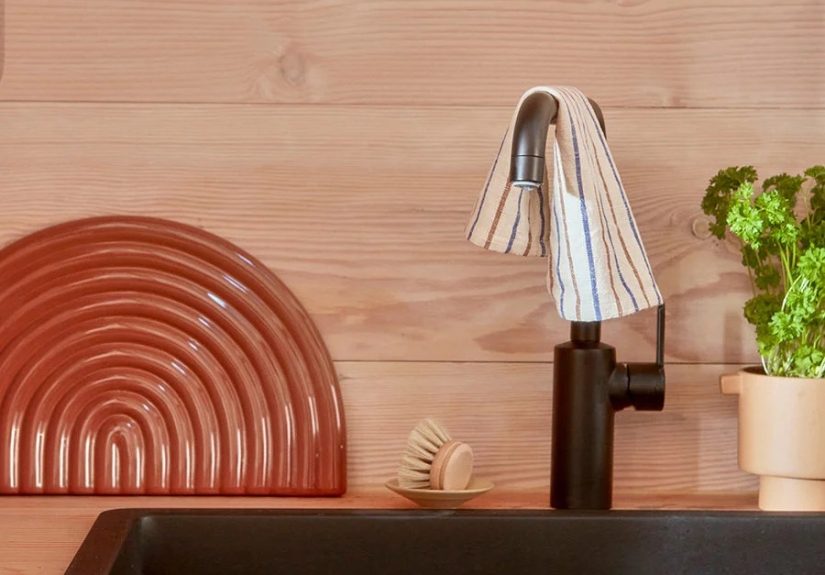
What makes the Gobi design especially appealing is its balance. It is graphic without shouting, nostalgic without feeling dated, and practical without looking purely utilitarian. These are the kinds of tea towels that can live on a hook, over an oven handle, or draped beside a sink without making the room feel cluttered. They contribute to the decor simply by doing their job elegantly.
Niji Dish Cloths
Oyoy’s Niji dish cloths show how much thought the brand puts into even the smallest essentials. The striped, color-blocked look gives these cloths a more elevated feel than the average dish rag, while the soft organic cotton construction keeps them grounded in everyday usability. They are the sort of item that turns a routine chore into something slightly nicer, which is honestly more than most cleaning tools can say for themselves.
Dish cloths are rarely exciting, but they are one of the most visible objects in a working kitchen. A well-designed one helps the space feel coherent even when life is not. When you are wiping up coffee splashes before a meeting or cleaning the counter after making a sandwich that somehow required every knife you own, that little bit of design polish goes a long way.
Bear Tea Towel
Then there is the Bear Tea Towel, which proves Oyoy understands whimsy. With its soft color palette and playful print, it adds a friendly note to the kitchen without tipping into cartoonish excess. This is an especially nice example of how Danish design can be functional and lighthearted at the same time. A kitchen does not need to be humorless to be tasteful. Sometimes it just needs a charming bear and a little confidence.
Striped Napkins and the Stringa Tea Cozy
Oyoy’s appeal goes beyond cloths meant for wiping and drying. The brand’s striped napkins and Stringa tea cozy show how it extends the same design logic to the table. The striped napkins bring graphic detail and a reusable, more sustainable alternative to disposable paper napkins. The Stringa tea cozy, meanwhile, blends practicality and style in a way that feels deeply Scandinavian: keep the tea warm, make it look nice, and do not overcomplicate either mission.
Together, these pieces make a compelling case for thinking of kitchen textiles as a complete ecosystem rather than a random pile of useful fabric. When your tea towels, cloths, napkins, and table accents share a consistent visual language, the kitchen feels calmer and better dressed. It is a little like meal prepping, except for your countertops.
More from Oyoy: Small Kitchen Details with Big Personality
Another reason Oyoy is easy to admire is that the brand does not stop at cloths. Its wider kitchen and dining assortment includes placemats, tableware, bowls, jugs, trays, coasters, bread baskets, and other accessories that support the same cozy-functional mood. This matters because a kitchen rarely changes through one giant makeover. More often, it evolves through small, smart additions that slowly improve how the room looks and works.
That is where Oyoy excels. The pieces are designed to play well together. A striped napkin can echo the graphic mood of a tea towel. A tea cozy can add softness to a shelf of ceramics. A placemat can help tie together wood, stone, and neutral cabinetry. Even if you only add one or two items at a time, you can still build a kitchen that feels curated rather than accidental.
There is also a nice practicality to Oyoy’s broader universe. The brand understands that the kitchen is not just for cooking. It is where people set down groceries, answer texts, pour second cups of coffee, and try to remember whether they already salted the pasta water. Accessories that are useful, beautiful, and easy to live with earn their place quickly.
How Oyoy Fits into Modern Scandinavian Kitchen Style
If you have ever admired a Scandinavian kitchen, you already know the formula looks simple on paper: natural materials, clean lines, hidden storage, light tones, soft texture, and a strong sense of order. But what makes the style feel warm instead of flat is the layering. Wood, cotton, linen, ceramics, woven accents, and a few carefully chosen colors do the emotional work.
Oyoy’s kitchen textiles fit into that layered approach beautifully. Their stripes, grids, soft tones, and tactile finishes can complement white cabinetry, pale oak, darker wood, stone countertops, or even a more colorful “Danish pastel” interpretation of Nordic design. If your kitchen leans classic Scandinavian, Oyoy blends in naturally. If your kitchen is more playful or eclectic, Oyoy can act as the bridge between calm structure and personality.
That flexibility is one of the brand’s biggest strengths. The products are not locked into one rigid trend cycle. They feel current, but they are not trend bait. That is especially important in the kitchen, where constant visual noise gets tiring fast. Good kitchen textiles should make the room feel easier to be in, not like it is trying to go viral.
Why Design-Conscious Home Cooks Care About Towels and Cloths
Ask anyone who spends a lot of time cooking, and they will tell you the same thing: the little things matter. A comfortable spatula, a bowl that stacks properly, a towel that absorbs instead of smearing water around like a tiny chaos flag. These details shape the mood of a kitchen more than flashy appliances ever will.
That is why design-conscious shoppers increasingly care about towels and cloths. They are looking for pieces that work hard but also support a cohesive space. A good kitchen towel is part tool, part textile, part visual punctuation. It has to survive laundry, look decent hanging in plain sight, and be useful enough that you reach for it without thinking. Oyoy’s kitchen cloths meet that brief well because they are grounded in everyday functionality rather than decorative nonsense.
There is even a sustainability angle here. Reusable cotton napkins, long-lasting towels, and quality cloths can help reduce reliance on disposable paper products. No single tea towel is going to save the planet, of course, but choosing durable, reusable textiles is still one of those small household habits that makes practical sense. And unlike some lifestyle upgrades, this one does not require you to suddenly become the sort of person who ferments things in jars.
How to Style Oyoy Kitchen Textiles at Home
Keep the palette simple
If you want the cloths to feel elevated, limit the surrounding visual noise. Let stripes, grids, or soft color-blocking stand out against wood, white, stone, or muted tones. Oyoy pieces shine when they have room to breathe.
Use textiles to soften hard surfaces
Kitchens are full of rigid materials: metal, tile, quartz, glass. Tea towels, napkins, and cozies add necessary softness. Even one neatly hung towel can make a kitchen feel warmer and more welcoming.
Mix practical and decorative use
Do not reserve your nicest textiles for guests. Fold a striped napkin under a small serving bowl, line a bread basket with a tea towel, or keep a cheerful cloth visible near the sink. The beauty of Oyoy is that the pieces are designed to be used, not admired from a safe emotional distance.
Think in small coordinated moments
You do not need an entire matching set. Pair a Gobi tea towel with striped napkins, or combine a dish cloth with a simple tray and ceramic mug. Small repeated details create a sense of harmony without tipping into showroom stiffness.
The Everyday Experience of Living with Oyoy-Inspired Kitchen Textiles
What makes pieces like these memorable is not just how they photograph, but how they shape daily routines. A kitchen cloth is one of the first things you reach for in the morning and one of the last things you use at night. It is there when coffee drips on the counter, when the kettle starts singing, when dinner gets plated, and when the final wipe-down signals that the day is officially done. Because these textiles are so present, their design has an outsized effect on how the room feels.
In a real home, that experience is subtle but powerful. A well-made cotton tea towel feels pleasant in the hand, dries faster than a sad limp cloth from the junk drawer, and hangs with enough structure to look intentional instead of abandoned. A striped dish cloth by the sink makes cleanup feel slightly less like punishment. A cheerful print or warm color can soften the seriousness of a kitchen full of appliances and angles. These are tiny shifts, but they change the emotional temperature of the room.
There is also something deeply satisfying about using items that are beautiful without being precious. You do not need to tiptoe around them. You use them, wash them, fold them, and use them again. That cycle creates the kind of quiet attachment people often have to everyday objects that simply do their jobs well. The best home goods become part of your rhythm. They stop feeling like purchases and start feeling like familiar companions in domestic life.
Another part of the experience is visual calm. Kitchens collect clutter with alarming speed. Mail lands on the counter. Grocery bags multiply. Measuring spoons appear in places no measuring spoon should ever be. In that environment, textiles with thoughtful color and pattern can create small moments of order. They act almost like visual anchors. Even when the kitchen is busy, a few coordinated cloths and table linens can make it feel collected rather than chaotic.
For people who enjoy hosting, these kinds of details matter even more. You notice how a reusable napkin changes the feel of a casual lunch. You notice how a tea cozy makes a pot of tea feel like an event instead of a beverage. You notice how a towel draped over a basket of bread makes the whole table seem more welcoming. None of these gestures are dramatic, but together they build atmosphere. And atmosphere, in a home, is often what guests remember.
There is an emotional side to it, too. Danish-inspired design often draws from comfort, memory, and everyday ritual. Oyoy’s playful colors and graphic patterns tap into that beautifully. They feel lived-in without looking sloppy, and charming without trying too hard. The effect is not loud luxury. It is something better: a sense that the kitchen is cared for, used often, and arranged by someone who understands that beauty should be helpful.
That may be the most compelling thing about practical Danish kitchen cloths in the end. They are not trying to be the star of the kitchen. They are supporting characters, but excellent ones. They make the room softer, smarter, and easier to enjoy. They add a little design pleasure to ordinary tasks, and that is no small achievement. After all, if a tea towel can make wiping the counter feel slightly more civilized, it has already done more for your quality of life than at least half the gadgets in the average kitchen drawer.
Final Thoughts
Oyoy’s kitchen textiles are easy to admire because they solve a very modern problem: how to make practical things feel beautiful without turning them into fussy display pieces. The brand’s Danish roots, playful spirit, and respect for function come through clearly in its tea towels, dish cloths, napkins, and cozy table accents. These are objects designed for real kitchens, real routines, and real people who want their homes to feel both useful and inviting.
If you love Scandinavian design, natural materials, gentle color, and everyday objects that pull their weight aesthetically and practically, Oyoy is worth a closer look. Its kitchen cloths are not trying to reinvent domestic life. They are simply making it nicer, one wipe, one fold, and one unexpectedly charming little detail at a time. And honestly, that is exactly the kind of design win most homes need.