Table of Contents >> Show >> Hide
- Why Organization Works (Even If You’re “Not an Organized Person”)
- The Two Rules That Make Every Other Tip Actually Work
- A Simple Framework: The “Clear, Sort, Reduce, Store” Loop
- Decluttering Tips That Don’t Require a Personality Transplant
- Room-by-Room Home Organization Tips
- Digital Organization Tips (Because Your Desktop Is Also a Room)
- Time Organization: The Missing Piece Most People Ignore
- Small-Space Organization Tips (Because Not Everyone Has a Mudroom)
- Common Organizing Mistakes (And Quick Fixes)
- How to Make Organization Stick
- Experiences With Organization Tips (Real-Life Scenarios & Lessons)
- Experience #1: The “Drop Zone” That Saved Mornings
- Experience #2: The Junk Drawer Makeover That Reduced “Where Is It?!” Stress
- Experience #3: The Pantry Zones That Stopped Duplicate Buying
- Experience #4: Digital Organization That Made Work Feel Lighter
- Experience #5: The 5-Minute Reset That Prevented Weekend Burnout
- Conclusion
Organization gets a bad rap. People hear “get organized” and picture a color-coded pantry, a label maker that’s basically a lifestyle, and a person who irons socks (no judgment… okay, a little judgment). In real life, being organized is simply this: you can find what you need, when you need it, without starting a scavenger hunt. That’s it. No matching hangers required.
This guide covers practical organization tips for your home, your workday, and your digital lifeplus how to maintain it all without turning Sunday night into “The Great Household Reset Olympics.” You’ll get systems, not vibes; examples, not platitudes; and permission to do this in a way that fits your actual life.
Why Organization Works (Even If You’re “Not an Organized Person”)
Clutter creates extra decisions you never asked for
The sneaky cost of clutter isn’t just the messit’s the constant micro-decisions: “Where is my charger?” “Why do we have five spatulas?” “Is this an important paper or a coupon from 2019?” Organization reduces that mental noise by giving your stuff a predictable home and your routines a repeatable rhythm.
Organization is a system problem, not a personality trait
If your organization only works when you have unlimited time, unlimited energy, and the motivation of a movie montage… it’s not a system. Good systems assume you’re tired, busy, and occasionally allergic to putting things away. They still work anyway.
The Two Rules That Make Every Other Tip Actually Work
Rule #1: Organize for your real life, not your “best self” life
If you always drop your keys on the counter, that’s not a moral failingthat’s data. Your home is telling you where it wants a landing zone. The goal is to design your space so the easiest option is also the organized option.
Rule #2: You can’t out-organize too much stuff
Storage bins don’t solve clutter. They just give clutter a cute outfit. Before you buy organizers, reduce the volume. Less stuff means fewer decisions, faster cleaning, and more space to breathe.
A Simple Framework: The “Clear, Sort, Reduce, Store” Loop
Most sustainable organizing methods boil down to the same loop:
- Clear: remove items from the space (or at least clear a working zone).
- Sort: group like with like so you can see what you own.
- Reduce: keep what supports your life now; release the rest.
- Store: put items back in a way that makes retrieval and return effortless.
You can apply this loop to a junk drawer, your email inbox, your closet, or your entire garagejust scale the time and the size of the zone.
Decluttering Tips That Don’t Require a Personality Transplant
Start with “high-friction” clutter
High-friction clutter is the stuff that slows you down daily: the pile blocking your desk, the avalanche closet, the kitchen drawer that eats scissors. Start where you feel the pain most oftenyou’ll get immediate payoff and motivation.
Use the “Keep / Donate / Trash” triage
Three piles. Simple. Fast. Decisive. If you add a fourth pile called “Maybe,” congratulationsyou’ve created a future pile. If you must have “Maybe,” give it a deadline and a container (more on that later).
Try the “20/20 rule” for ‘just in case’ items
A common clutter trap is keeping things “just in case.” A practical way to decide is to ask: Could I replace this in about 20 minutes for about $20 (or your personal equivalent)? If yes, consider letting it goespecially if it’s taking prime real estate in your home.
Do a 10-minute “10 items out” sprint
When you’re overwhelmed, your brain wants you to do nothing. Give it a smaller target: remove 10 items in 10 minutes. This works because it’s concrete, quick, and doesn’t require you to reorganize your entire identity.
Leave “breathing room” with the 80/20 storage guideline
If every drawer is packed to the ceiling, maintenance becomes impossible. Try using only about 80% of your storage space and leaving 20% open. That empty space is not “wasted.” It’s what keeps your system flexible when life happens (and life always happens).
Room-by-Room Home Organization Tips
Create a “drop zone” at the entry
The entryway is where organization goes to live or die. A drop zone is a small, intentional landing area for daily essentials (keys, bag, mail, sunglasses). The best drop zones use:
- Hooks for bags/coats (vertical storage is your friend).
- A tray or small bowl for keys and wallet.
- Shoe control: one basket, one shelf, or a small cabinetlimit what lives there.
- Paper capture: a wall file or tray so mail doesn’t roam free.
The secret ingredient is not the furniture. It’s the rule: everything that arrives here also leaves from here.
Turn the “junk drawer” into a utility drawer
Junk drawers aren’t evilthey’re misunderstood. The goal is to make it a useful drawer, not a mystery box. Keep only household essentials you actually reach for (scissors, tape, batteries, a measuring tape, a small screwdriver, matches/lighter if needed). Use dividers so categories don’t blend into “chaos soup.”
Organize your pantry in zones (and stop buying duplicate paprika)
Pantry organization is easiest when you group by how you cook, not by what looks pretty on social media. Try zones like:
- Breakfast: cereal, oatmeal, nut butter, coffee/tea.
- Weeknight cooking: pasta, rice, sauces, canned basics.
- Baking: flour, sugar, chocolate chips, baking powder.
- Snacks: the stuff that mysteriously disappears.
Clear bins can help contain categories, and labels help other people put things back correctly (which is the true test of any system). Also: check expiration dates and commit to a “use it up” shelf for items near the end of their best-by era.
Closet organization: make it easy to put clothes away
Your closet should support mornings, not sabotage them. Three practical upgrades:
- Group by type (shirts with shirts, pants with pants), then optionally by color if that sparks joy.
- Give your “frequent flyers” prime space (eye-level, easiest-to-reach).
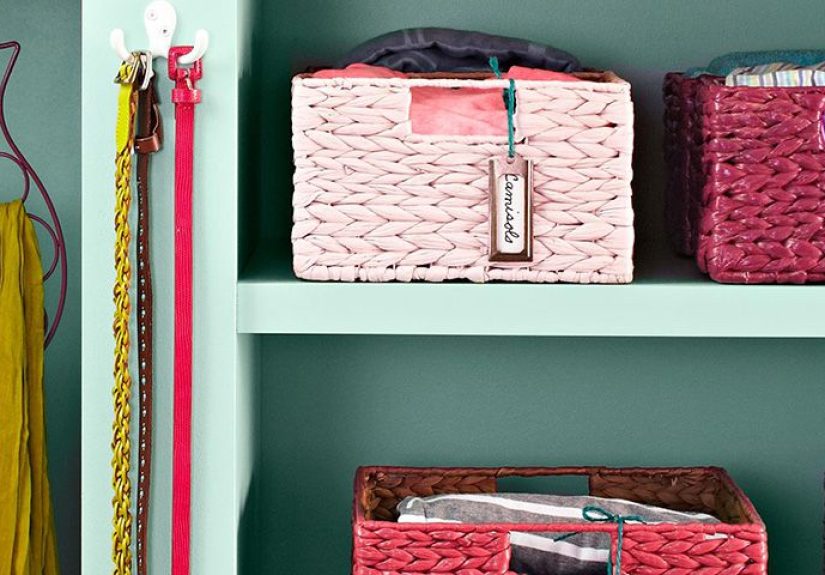
- Contain the small stuff (socks, belts, accessories) with simple bins or drawer dividers.
If folding is your enemy, hang more. If hanging is your enemy, use open bins. Organization should feel like a shortcut, not homework.
Paper clutter: a tiny system beats a heroic purge
Paper piles happen because paper is indecisiveit arrives without asking where it belongs. Fix that with three folders or trays: Action (needs attention), File (keep), Out (to shred/recycle). The key habit: sort mail immediately. If you “set it down for later,” it will grow into a paper-based life form.
For important documents, designate one home (a file box, a drawer, or a cabinet) and label categories you actually use: identity, medical, home, auto, taxes, warranties, school, and “weird but important.”
Digital Organization Tips (Because Your Desktop Is Also a Room)
Use a file naming format your future self can decode
A good rule is: YYYY-MM-DD + project/topic + version. Example: 2026-02-28_Budget_Q1-v3.xlsx. Your future self is busy and deserves clarity.
Build a simple folder structure (then stop redesigning it every month)
Keep top-level folders broad and few. For example: Personal, Work, Finances, Home, School. Inside each, use consistent subfolders. The win isn’t perfectionit’s predictability.
Inbox management: treat email like laundry
You don’t do laundry every time you take off a sock (if you do, please teach a class). Email works the same way: batch it. Set 1–3 times a day to process messages, and aim to handle each email once: respond, file, delegate, schedule, or delete. If you keep rereading the same emails, your inbox becomes a stress museum.
Reduce “information overload” with boundaries
If you’re subscribed to 47 newsletters and 12 group chats, the problem isn’t your willpowerit’s your inputs. Unsubscribe ruthlessly, mute non-urgent threads, and save deep reading for intentional time blocks. Organization isn’t only about storage; it’s also about attention.
Time Organization: The Missing Piece Most People Ignore
Pick one task system and stick with it for 30 days
The best to-do list method is the one you’ll actually use. Common options include:
- Priority list: top 3 must-do tasks per day.
- Eisenhower matrix: urgent vs. important sorting.
- GTD-style capture: collect tasks, clarify next actions, organize by context.
- Time blocking: assign tasks to calendar blocks so they become real.
Try one approach for a full month before switching. System-hopping feels productive but often just rebrands procrastination.
Use a weekly review to keep life from piling up
A 20-minute weekly review can prevent the “how did I end up behind on everything?” feeling. Check your calendar, scan your task list, clear loose papers, and choose your top priorities for the next week. Consistency beats intensity.
Make maintenance tiny: the 5-minute daily reset
The easiest way to stay organized is a daily reset: set a timer for 5 minutes and return obvious items to their homes. Focus on high-visibility areas (kitchen counter, entryway, living room surfaces). Five minutes a day can save you hours of weekend chaos.
Small-Space Organization Tips (Because Not Everyone Has a Mudroom)
Go vertical and use “hidden” surfaces
Small-space storage loves walls, backs of doors, and the space under beds. Hooks, over-the-door organizers, slim shelving, and stackable bins can add capacity without adding clutter.
Choose furniture that stores things (without storing chaos)
Storage ottomans, benches with cubbies, bed frames with drawersgreat. The rule is still the same: store categories, not random items. If the ottoman is filled with “miscellaneous,” you’ve created a soft, upholstered junk drawer.
Common Organizing Mistakes (And Quick Fixes)
- Mistake: Buying containers first.
Fix: Declutter, measure, then buy what fits your categories and space. - Mistake: Making systems too complicated.
Fix: Fewer steps. Fewer categories. Labels that make sense to the whole household. - Mistake: Organizing everything at once.
Fix: Work in zones. One drawer, one shelf, one corner. Finish small areas fully. - Mistake: No plan for incoming stuff.
Fix: Create “homes” for mail, deliveries, school papers, and returns.
How to Make Organization Stick
Write the “rules of the room”
Every organized space has invisible rules. Make them visible: “Only one basket of shoes at the door,” or “Baking supplies live on this shelf,” or “Mail gets sorted immediately.” When rules are clear, decisions get easier.
Schedule micro-declutters
Once a month, choose one zone: bathroom vanity, fridge shelf, sock drawer, or the “doom pile” on your chair (you know the one). Ten minutes keeps clutter from accumulating into a weekend-long event.
Keep donations moving
A donation bag that lives in your closet (or trunk) is a powerful tool. When it’s full, it goes out. If donations linger, they turn into “decluttered clutter,” which is honestly kind of rude.
Experiences With Organization Tips (Real-Life Scenarios & Lessons)
The most helpful organizing advice usually comes from lived reality: busy schedules, shared spaces, small apartments, and the fact that motivation is not a renewable resource you can rely on daily. Below are a few composite experiencesbased on common patterns people report when they adopt simple organization systemsshowing what actually changes when your space starts working with you instead of against you.
Experience #1: The “Drop Zone” That Saved Mornings
One of the most common turning points happens in the first five feet of the home. In this scenario, a household kept losing keys, re-buying chapstick, and starting every morning with frantic searching. They tried “being more responsible” (a strategy with a 0% success rate when you’re already late). What worked wasn’t more disciplineit was designing a drop zone: hooks for bags, a tray for keys, and a single basket for incoming mail. The surprising part? The system stuck once the rules were small: keys only go in the tray; shoes only live in the one basket; mail is sorted into Action/File/Out immediately. After a week, mornings felt calmernot because life got easier, but because the environment stopped adding unnecessary obstacles.
Experience #2: The Junk Drawer Makeover That Reduced “Where Is It?!” Stress
Another classic experience is the junk drawer turning into a utility drawer. The before picture looks like this: three dead batteries, a mystery key, seven takeout menus, and scissors that vanish the moment you need them. The “fix” often starts with buying organizers, but the breakthrough comes from reducing first. In this scenario, the person dumped the drawer, threw away trash, tested batteries, recycled old papers, and limited the drawer to categories that supported daily life: cutting tools, tape, small tools, batteries, and a tiny first-aid kit. Dividers did the rest. The outcome wasn’t perfection; it was speed. Needing a screwdriver no longer triggered a full archaeological dig. The drawer became functional, which is the highest form of organization compliment.
Experience #3: The Pantry Zones That Stopped Duplicate Buying
Pantry clutter often creates “invisible inventory,” where you own three jars of cinnamon but can’t find any of them. In this scenario, the pantry got zoned by cooking behavior: breakfast, weeknight meals, baking, snacks. The person used bins only after sorting, and labels were intentionally plain (“Baking,” “Pasta,” “Snacks”) instead of overly specific. The biggest change wasn’t aestheticit was waste reduction and meal planning clarity. When you can see what you have, you buy less duplicate food, you rotate older items forward, and you’re less likely to order takeout because cooking feels like less of a hassle. The pantry became a tool, not a guilt closet.
Experience #4: Digital Organization That Made Work Feel Lighter
Digital clutter creates a different kind of stress: it’s not visible, but it’s always therelike having 200 tabs open in your brain. In this scenario, someone created a simple folder structure with only a few top-level categories and adopted a consistent file naming format (date + project + version). They also stopped saving everything to the desktop (the digital equivalent of the kitchen counter). The “aha” moment was realizing that organization is mostly about retrieval: if you can find the right document in 10 seconds, you feel competent, calm, and less avoidant. They paired this with basic inbox batchingchecking email at set times rather than constantly. The result wasn’t inbox nirvana; it was fewer context switches, less re-reading, and more focus.
Experience #5: The 5-Minute Reset That Prevented Weekend Burnout
Many people assume staying organized requires marathon cleaning sessions. In this scenario, the person switched to a 5-minute daily reset: setting a timer and putting obvious items back in place each evening. The first few days didn’t look dramatic, but by the end of two weeks, the weekend “catch-up” session was noticeably shorter. The lesson is simple: organization compounds. Tiny maintenance beats occasional heroics, especially for families, roommates, and anyone with a job, a commute, or a pulse. Over time, the home felt more predictableand predictability is the secret ingredient of a peaceful space.
Across these experiences, the pattern is consistent: the best organization tips don’t rely on motivation. They rely on friction reduction (making the organized choice easier), clear categories, and small maintenance habits. The goal isn’t to live in a showroom. It’s to live in a space that supports youon your busiest day, not just your best day.
Conclusion
Organization isn’t about making your home look like a catalog. It’s about making your life run smoother: fewer lost items, fewer last-minute scrambles, less stress from visual noise, and more time for the things you actually care about. Start small, use repeatable systems, and keep your maintenance habits tiny. If you can find your keys, your scissors, and your sanity, you’re doing it right.