Table of Contents >> Show >> Hide
- Before You Paint: The “Should I?” Checklist
- Supplies You’ll Need (No, Not 47 Specialty Brushes)
- Prep Work: Make the Paint Behave
- Mixing Chalk Paint for Fabric: Think “Dye,” Not “Icing”
- Step-by-Step: Paint Fabric Upholstery with Chalk Paint
- Step 1: Mist the fabric (don’t soak it)
- Step 2: Work in small sections
- Step 3: Get into seams and tufting
- Step 4: Let it dry fully (patience is the finish)
- Step 5: Sand lightly to soften
- Step 6: Repeat thin coats (usually 2–4 total)
- Step 7: Final smoothing pass
- Step 8: Protect the finish (so it doesn’t end up on your jeans)
- How Durable Is Painted Upholstery?
- Troubleshooting: Fix the Common “Oops” Moments
- FAQ
- Conclusion
You know that one chair. The “it’s structurally fine but aesthetically… a cry for help” chair.
Reupholstering it costs roughly the same as a small used car, and slipcovers always look like they’re
auditioning for a ghost movie. So today we’re doing the delightfully unhinged DIY alternative:
painting fabric upholstery with chalk paint.
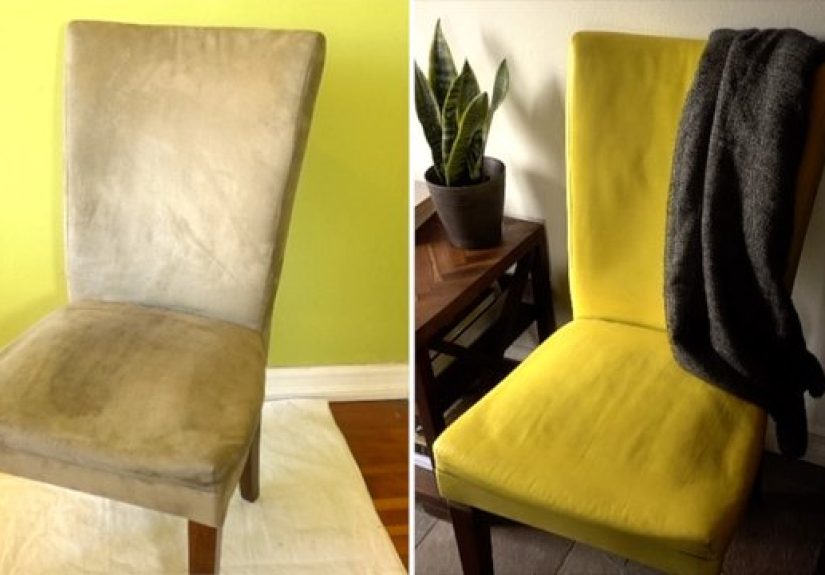
Done right, this technique can turn tired, stained, or loud-patterned fabric into a smooth, modern finish
that feels more like soft suede than “crunchy craft project.” Done wrong… well, let’s just say your
chair may start making tortilla-chip noises when you sit down. This tutorial keeps you firmly in the
soft, durable, sit-on-it-without-regret zone.
Before You Paint: The “Should I?” Checklist
What chalk paint does on fabric
Chalk paint is matte, grippy, and forgivingtraits that make it a favorite for furniture makeovers. On fabric,
you’re not trying to create a thick layer on top. The best results happen when the paint is thinned and worked
into the fibers so it behaves more like a tint than frosting.
The best upholstery candidates
- Tight, smooth weaves (cotton, cotton/poly blends, sturdy canvas-like upholstery)
- Firm seats (dining chairs, accent chairs, benches) where fabric doesn’t constantly flex
- Pieces with good bones (solid frame, decent padding, no weird smells from 2009)
Proceed with caution (or pick a different makeover)
- Very plush or high-pile fabrics (some velvets, chenilles): paint can flatten texture and show brush direction
- Super stretchy fabric: flexing increases the chance of cracking over time
- Heavily soiled upholstery: paint won’t magically “seal in” mystery grimeit’ll highlight it
- High-traffic family couches: possible, but you’ll need patience, protection, and realistic expectations
Quick reality check: painting upholstery is a finish, not factory fabric. It can look amazing, but it’s still
a DIY coating/tint hybrid. If you want “wash it weekly and let toddlers do parkour on it,” consider a slipcover
or reupholstery instead.
Supplies You’ll Need (No, Not 47 Specialty Brushes)
- Chalk paint (or mineral/chalk-style furniture paint)
- Water (distilled is nice, but regular is usually fine)
- Spray bottle for misting
- Brushes: 1 medium flat/oval brush + 1 smaller brush for seams/tufting
- 220-grit sanding sponge (or a medium-fine sanding block)
- Vacuum with upholstery attachment + lint roller
- Drop cloth and painter’s tape (if you’re protecting wood trim)
- Optional but helpful: fabric medium (or textile medium), especially if softness is a top priority
- Protection layer: clear furniture wax, spray wax, or a fabric protector spray
Prep Work: Make the Paint Behave
- Vacuum thoroughlyseams, welting, tufting, everything. If pet hair lives here, evict it.
- Spot clean stains with mild soap and water. Let it dry completely. Painting damp grime is a lifestyle choicejust not a good one.
- Mask off wood legs/trim if you’re not painting them. (If you are painting the frame too, congratulationsyou’re about to fall in love with this chair twice.)
- Test the process on a hidden area or matching cushion/pillow if possible. This is where you learn how your fabric reactsquietly, privately, without an audience.
Mixing Chalk Paint for Fabric: Think “Dye,” Not “Icing”
The secret to non-cracky, non-crunchy painted upholstery is thin coats. Most successful methods start
with a watered-down first coat, then gradually increase paint strength in later coats.
Easy dilution guide (adjust as needed)
- Coat 1: 1:1 paint + water (milk-like consistency)
- Coat 2: ~2:1 paint + water (still thin, better coverage)
- Coat 3: Mostly paint (or just slightly thinned) for final coverage
When to use fabric medium
If you’re painting a seat you’ll actually sit on (and not just stare at lovingly), fabric medium can help
the finish stay flexible and feel softer. Follow the medium’s directions, but a common starting point many DIYers
like is roughly 3 parts paint to 1 part fabric mediumthen thin slightly with water if needed for brushing.
Step-by-Step: Paint Fabric Upholstery with Chalk Paint
Step 1: Mist the fabric (don’t soak it)
Lightly spray the fabric until it’s damp to the touch. You’re opening the fibers so the paint can sink in.
If it’s dripping, you’ve created a tiny indoor rainstorm and your dry time will punish you.
Step 2: Work in small sections
Start on the back or sidesomewhere forgiving. Brush the thinned paint into the fabric using a mix of
short strokes and gentle circular motion, especially on textured weaves. The goal is even absorption.
Step 3: Get into seams and tufting
Use a smaller brush for piping, seams, buttons, and crevices. These areas love hiding the original color like it’s
paying rent.
Step 4: Let it dry fully (patience is the finish)
Dry time varies by humidity, fabric thickness, and how enthusiastic you got with the spray bottle. Plan for
8–24 hours between coats for upholstered pieces. Rushing here is how you get tacky spots and uneven texture.
Step 5: Sand lightly to soften
Once fully dry, use a 220-grit sanding sponge and gently sand the painted fabric. This knocks down raised
fibers and helps the surface feel smoother. Vacuum the dust thoroughly afterward.
Step 6: Repeat thin coats (usually 2–4 total)
Apply your second coat with slightly less water (or your paint + medium mix). Let dry completely, then sand lightly again.
Most projects look their best after 3 coats, sometimes 4 if you’re covering bold patterns or going from dark to light.
Step 7: Final smoothing pass
After the last coat dries, do one more gentle sand-and-vacuum cycle. Run your hand over the fabric:
it should feel even, not gritty or sticky. If you find roughness, sand lightly again rather than adding more paint.
Step 8: Protect the finish (so it doesn’t end up on your jeans)
Upholstery moves, flexes, and gets touched constantlyso protection matters. You have three popular approaches:
- Clear furniture wax: can deepen color slightly and add a buffed, “suede/leather-like” feel when applied thinly and buffed well.
- Spray wax: faster, easier coverage on fabric textures, often used to improve softness and reduce transfer.
- Fabric protector spray: adds stain/spill resistance while keeping the surface flexible.
Whatever you choose, apply lightly and evenly. Give it time to cure before throwing a movie-night blanket party on it.
How Durable Is Painted Upholstery?
Durability depends on three things: fabric type, how thin your coats were, and how well you protected and cured it.
Painted dining chair seats and accent chairs often hold up beautifully. A squishy couch that gets daily use can still work,
but it demands more careful technique and gentle cleaning habits.
Cleaning tips
- Wait for full cure before heavy use (often several days; longer is better).
- Dust and vacuum regularly to prevent grime from embedding.
- Spot clean with a damp cloth; avoid soaking or aggressive scrubbing.
- For minor marks, gentle wipes can worktest first in a hidden area.
Troubleshooting: Fix the Common “Oops” Moments
Problem: It feels stiff or crunchy
- Cause: coats too thick, not enough dilution/medium, paint sitting on top of fibers
- Fix: let fully dry, sand lightly, vacuum; consider a thin wax/spray wax to soften; next time use thinner coats
Problem: Cracking in high-flex areas
- Cause: thick paint layers on a cushion that bends a lot
- Fix: sand back the cracked area, repaint with thinner coats; consider fabric medium for flexibility
Problem: Patchy coverage or streaks
- Cause: inconsistent dilution, uneven absorption, painting too large an area at once
- Fix: mist lightly, apply another thin coat, work in smaller sections, keep your mixture consistent
Problem: Color transfer onto clothing
- Cause: not fully cured, insufficient protection layer
- Fix: allow more cure time; apply a compatible protectant (wax/spray wax/protector) and let it dry fully
FAQ
Can I use regular wall paint instead of chalk paint?
You can paint fabric with certain water-based paints, but chalk-style paints tend to be easier to control for this technique.
If you use other paints, adding a proper fabric medium becomes even more important to keep flexibility.
Will the original pattern show through?
Often, yesespecially if the fabric has texture or a raised weave. Paint changes color more than it erases texture.
If your chair has a bold pattern, plan on extra coats (and embrace a little “textile character”).
Do I have to seal it?
For decorative pieces, some people skip sealing. For anything you’ll sit on, sealing is strongly recommended to reduce
transfer, improve feel, and add durability.
Conclusion
Painting fabric upholstery with chalk paint is the DIY equivalent of giving your furniture a new identity. The keys are simple:
mist, thin coats, dry fully, sand lightly, protect wisely. If you treat the paint like a dye, your chair can end up
looking high-end and feeling surprisingly softwithout a single staple gun injury.
Bonus: Real-World Experiences (The Stuff Tutorials Don’t Always Admit)
Here’s what tends to happen in the real worldwhere pets exist, humidity laughs at your plans, and you suddenly remember
you own exactly zero spare chairs to sit on while your “quick project” dries.
Experience #1: The Over-Spritz Spiral. Many first-timers get nervous and mist the fabric like they’re putting out
a tiny campfire. The paint goes on beautifully… and then the chair stays wet for approximately the length of a prestige TV series.
The fix is simple: mist until damp, not drenched. If you can squeeze water out of the cushion, you’ve crossed into “indoor swimming”
territory, and your paint may migrate into padding instead of staying where you want it.
Experience #2: The First Coat Panic. The first coat can look uneven, streaky, or downright uglyespecially on patterned
upholstery. This is normal. Fabric absorbs paint in weird little micro-zones at first. The people who get the best outcomes are the ones
who treat coat one like primer and keep it light. Thin, slightly translucent coats build a smoother finish than one heavy “make it done”
coat that dries stiff and dares the fabric to crack.
Experience #3: The “Why Is It Fuzzy?” Moment. After a coat dries, some fabrics raise tiny fibers and feel rough.
This is where gentle sanding is your best friend. It’s not aggressive woodworkingmore like giving the chair a spa exfoliation.
Sand lightly, vacuum thoroughly, and suddenly the surface feels less like a craft project and more like intentional upholstery.
Experience #4: Tufting Is a Tiny Boss Battle. Buttons, seams, and piping love to hide the original color.
DIYers who go in with a smaller brush early (and take their time) avoid the “polka-dot chair” effect where the crevices stay stubbornly
original. The good news: once you get the hang of working paint into those spots, it becomes weirdly satisfyinglike coloring inside the lines,
except the lines are upholstery and your reward is a chair that looks expensive.
Experience #5: The Softness Myth (and How to Win Anyway). Painted fabric can feel stiffer than unpainted fabricespecially if you
apply thick coats or skip softening steps. DIYers chasing that “soft suede” finish tend to do three things: they thin the early coats, sand between
coats, and finish with a protection method that doesn’t leave a gummy film. Some choose waxes for a buffed, leather-like vibe; others prefer a fabric
protector spray for an easier, more fabric-like feel. Either way, the winning strategy is the same: build the finish slowly, then protect it once it’s
truly dry.
Experience #6: The “I Painted a Couch” Level-Up. Painting a full sofa is possible, but it’s the marathon version of this DIY.
People who love their results usually worked in sections, allowed generous dry time, and accepted that a couch drinks more paint than a chair.
If you’re attempting a big piece, start with an inconspicuous area (like the back) and do a full test cycle: paint, dry, sand, protect. It’s much
easier to adjust your method early than to discover on day three that your cushions feel like sturdy crackers.
If you take one lesson from all these real-world stories, make it this: slow coats make fast success. The chair will forgive you for
being patient. Your future selfsitting comfortably on something that used to look like a thrift store time capsulewill also forgive you.