Table of Contents >> Show >> Hide
- What Is Pollution Coverage in a Commercial Auto Policy?
- The Pollution Exclusion: Where Coverage Stops
- Auto-Related Pollution vs. Cargo Pollution
- Broadened Pollution Coverage: The CA 99 48 Endorsement
- The MCS-90 Endorsement: Backstop, Not Real Coverage
- When You Need Separate Pollution Liability or TPL Coverage
- Practical Scenarios: Is This Pollution Covered?
- Key Questions to Ask About Your Pollution Coverage
- Compliance, Contracts, and Pollution Gaps
- Real-World Experiences: Lessons from the Road
- Bringing It All Together
If your business owns trucks, vans, or any kind of fleet, you probably already know that a commercial auto policy is non-negotiable. But ask most owners what happens if a vehicle causes a fuel spill or releases other pollutants, and you’ll often get a nervous shrug. Pollution coverage under a commercial auto policy is one of those topics everyone assumes is handleduntil an environmental agency shows up with a clean-up bill that’s larger than the truck itself.
In this guide, we’ll break down how pollution coverage typically works under a standard commercial auto policy, where the gaps are, how endorsements like CA 99 48 and the federal MCS-90 come in, and when you might need separate pollution or transportation pollution liability coverage. We’ll also walk through real-world style scenarios and practical lessons, so you’re not learning this stuff in the middle of a spill on the interstate.
What Is Pollution Coverage in a Commercial Auto Policy?
A standard ISO Business Auto Coverage Form (CA 00 01) is built to cover bodily injury and property damage caused by an accident involving a covered auto. Modern versions of this form also recognize something called a “covered pollution cost or expense” tied to an accident.
In simple terms, pollution coverage in a commercial auto policy usually has two big components:
- Liability for bodily injury and property damage caused by pollutants released because of an auto accident.
- Covered pollution costs or expenses such as government-ordered clean-up or remediation of pollutants resulting from that accident, when the policy conditions are met.
So yes, many commercial auto policies do provide some pollution coveragebut it’s narrow, conditioned, and often misunderstood. And that’s where businesses get surprised.
The Pollution Exclusion: Where Coverage Stops
Here’s the twist: the very same commercial auto policy that offers “covered pollution cost or expense” also has a pollution exclusion that wipes out most general pollution claims.
Typical exclusions remove coverage for:
- Pollution that isn’t directly caused by an eligible auto accident.
- Gradual or long-term pollution (for example, a slow leak from an improperly maintained tank truck over months).
- Pollution from locations or operations that are better handled under separate environmental policies.
In other words, the policy is designed to cover specific, sudden, accidental pollution tied to an auto accidentnot all environmental exposures your business might have.
What Counts as “Covered Pollution Cost or Expense”?
Policy language varies, but “covered pollution cost or expense” usually includes costs required by environmental laws or by government authorities to:
- Test for, monitor, or clean up pollutants released in an accident.
- Contain or neutralize the contamination.
- Prevent further spread of pollutants when ordered or demanded by a regulator.
However, that coverage only applies if the accident already resulted in covered bodily injury or property damage. If you have contamination with no clear third-party damage yet, or no qualifying “accident,” coverage can be very limited or nonexistent.
Auto-Related Pollution vs. Cargo Pollution
A key distinction most owners miss is between pollution that comes from the vehicle itself versus pollution from the cargo being hauled.
Pollution from the Vehicle
Many commercial auto forms carve out a small exception to the pollution exclusion for fluids that are needed to operate or maintain the vehicle, such as:
- Gasoline or diesel fuel from the truck’s own tank
- Motor oil, transmission fluid, coolant
- Other fluids that are part of the vehicle’s systems
When those leak or spill because of a covered accident (for example, a crash rupturing the fuel tank), some clean-up expense may be covered under the “covered pollution cost or expense” clause, subject to all the usual limitations and policy limits.
Pollution from Cargo
Now let’s say your truck is hauling pesticides, industrial chemicals, or fuel for delivery. If a rollover sends thousands of gallons into a river, many standard commercial auto policies treat that as excluded pollutionbecause it’s about the cargo, not the vehicle.
That’s where additional coveragelike a broadened pollution endorsement or a separate transportation pollution liability policybecomes critical.
Broadened Pollution Coverage: The CA 99 48 Endorsement
One significant way to improve pollution protection under a business auto policy is to add the ISO endorsement commonly known as CA 99 48 – Pollution Liability – Broadened Coverage for Covered Autos.
This endorsement can:
- Modify the pollution exclusion to allow coverage for certain cargo-related pollution events caused by an auto accident.
- Expand the definition of covered pollution costs and expenses, including more situations where clean-up is required by law or government demand.
- Respond to third-party claims for bodily injury, property damage, and sometimes environmental restoration, that arise from the pollution incident.
The exact scope still depends on the specific form and carrier, but think of CA 99 48 as “turning up the volume” on pollution coverage connected to your vehicles, especially if you haul materials that could contaminate soil or water.
The MCS-90 Endorsement: Backstop, Not Real Coverage
Motor carriers that transport certain types of goods in interstate commerce are often required by federal law to have the MCS-90 endorsement attached to their motor carrier or commercial auto liability policy.
MCS-90 is often misunderstood. It is not a pollution coverage endorsement in the usual sense. Instead, it’s a kind of financial guarantee that:
- Ensures the motor carrier can pay legally required minimum levels of public liability, including environmental restoration, when operating under federal regulations.
- Applies even if the policy itself would otherwise exclude the lossmeaning the insurer may have to pay the claimant and then seek reimbursement from the insured.
In insurance-nerd terms, MCS-90 acts more like a surety obligation than normal insurance. It protects the public and regulators, not the trucking company’s balance sheet. After the insurer pays, they can pursue the motor carrier to get their money back if the loss wasn’t truly covered under the policy in the first place.
Translation: if you’re relying on MCS-90 to act like your pollution policy, you’re playing a dangerous game.
When You Need Separate Pollution Liability or TPL Coverage
Because commercial auto pollution coverage is so constrained, many businesses layer on separate policies, such as:
- Pollution liability (environmental impairment) insurance to fill gaps in general liability and property coverage.
- Transportation Pollution Liability (TPL) coverage for pollution from goods being transported, including loading and unloading, sometimes on an occurrence basis.
These specialized policies can address:
- Pollution from cargo both on and off the vehicle.
- Gradual pollution or contamination discovered over time (subject to policy terms).
- Broader environmental restoration and clean-up obligations than you’d get from a standard auto form alone.
If your business transports hazardous materials, fuel, chemicals, or even high-risk consumer products (like certain pesticides or solvents), relying solely on the built-in pollution coverage in your commercial auto policy is like driving a tanker truck with bald tiresit might roll for a while, but if something goes wrong, you’ll really wish you upgraded.
Practical Scenarios: Is This Pollution Covered?
Scenario 1: Fuel Tank Rupture on the Highway
Your box truck is involved in a collision. The truck’s own fuel tank ruptures, spilling diesel across the roadway and into a nearby ditch. The state environmental agency orders a clean-up.
What usually happens: Many commercial auto forms treat this as a covered accident involving a covered auto and may treat remediation as a “covered pollution cost or expense,” subject to limits and policy language.
Scenario 2: Chemical Cargo Spill into a Stream
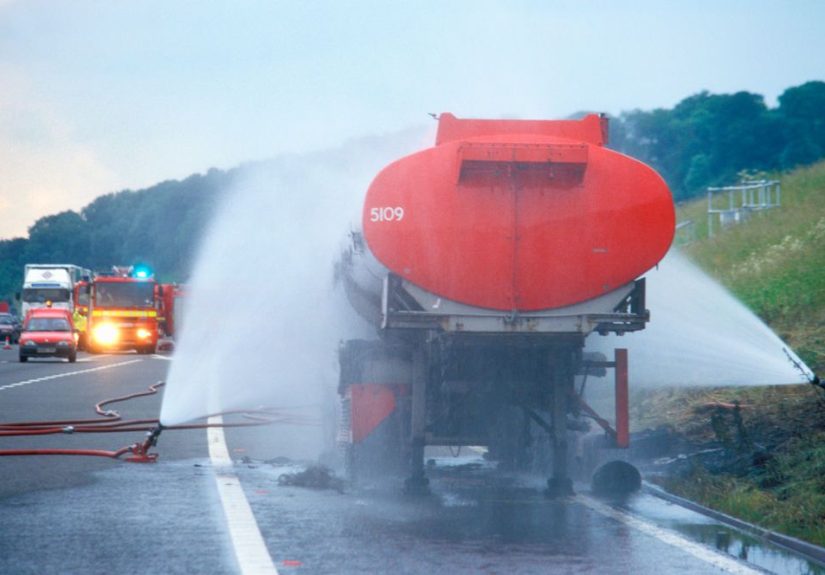
Your tanker is hauling industrial chemicals. It overturns on a bridge, releasing product into a stream. Fish die, water testing fails, and regulators demand an extensive clean-up.
What often happens: The standard auto policy may exclude this because the pollution arises from cargo being transported, not fluids needed for the vehicle’s operation. Coverage might only exist if you’ve added a broadened pollution endorsement like CA 99 48 or purchased a separate TPL policy.
Scenario 3: Gradual Leaks from Parked Truck
A vehicle parked at your yard slowly leaks oil onto the ground for months, eventually contaminating soil and groundwater. The problem is discovered during a property transaction.
What usually happens: This is classic gradual pollution, not caused by a single sudden “accident.” A commercial auto policy is very unlikely to respond. A separate environmental policy might be the only realistic solution.
Key Questions to Ask About Your Pollution Coverage
When you sit down with your insurance professional, use questions like these to stress-test your protection:
- Does my commercial auto policy include a “covered pollution cost or expense” provision, and what conditions trigger it?
- Does my policy treat fuel and operating fluids differently from cargo-related pollution?
- Have we added a broadened pollution endorsement such as CA 99 48? If so, what exactly did it change?
- Am I required to carry MCS-90, and do I understand that it protects the public, not necessarily my business?
- Given the products we transport, should we look at a transportation pollution liability or broader environmental policy?
Those questions can turn a generic “You have auto liability” conversation into a focused discussion about real-world pollution risk.
Compliance, Contracts, and Pollution Gaps
Many shippers, project owners, or public entities now require not only commercial auto liability limits but also proof of pollution or environmental coverageespecially for contractors working with fuel, waste, or chemicals.
It’s common to see contract language that expects:
- Minimum auto liability limits (often $1 million or more).
- Evidence of pollution liability or TPL coverage.
- Additional insured status and primary/non-contributory wording.
If your policy only satisfies the auto liability piece but ignores the pollution requirement, you might technically be out of complianceeven if the certificate looks impressive at first glance. Reviewing contracts alongside your insurance coverage helps avoid ugly surprises when a claim or audit hits.
Real-World Experiences: Lessons from the Road
Pollution coverage can feel abstract until you hear how it plays out in real life. Here are some experience-style scenarios and takeaways that echo what many adjusters, brokers, and risk managers report.
Experience #1: “We Thought Auto Liability Covered Everything”
A regional distributor hauled cleaning chemicals to supermarkets using a small fleet of straight trucks. Their leadership believed that a $1 million commercial auto liability limit was “plenty” and never discussed pollution coverage. After a rollover, several drums cracked open and product flowed into a storm drain. The local authority treated it as a significant pollution event.
The auto carrier paid some bodily injury and property damage claims, but much of the environmental clean-up tied directly to the cargo was excluded under the standard pollution language. With no TPL or separate pollution policy, the company had to negotiate a payment plan for the remaining remediation bill. The lesson: assuming “auto liability = all road-related risk” is a costly oversimplification.
Experience #2: MCS-90 as an Unwanted Surprise
A small motor carrier operating under federal authority believed that having MCS-90 attached to its policy meant “we’re fully covered for environmental incidents.” After a fuel spill impacted a wetland, the insurer paid under the MCS-90 obligation so that regulators and third parties were made whole. Months later, the carrier received a letter demanding reimbursement for amounts the insurer was not actually obligated to pay under the base policy.
From the carrier’s perspective, it felt like “double punishment”a regulatory headache followed by a reimbursement demand. But from a legal standpoint, the MCS-90 had worked exactly as designed: it protected the public, not the insured. That painful invoice drove the company to work with a broker familiar with environmental risks and to add proper pollution and TPL coverage the following renewal.
Experience #3: Broadened Endorsement Saves the Day (Mostly)
A contractor hauling asphalt added a broadened pollution endorsement similar to CA 99 48 at their broker’s recommendation. Later, a trailer detached on a curve, spilling hot asphalt onto a roadside ditch and private property. The state ordered clean-up; the landowner claimed property damage and loss of use.
Because the endorsement modified the pollution exclusion, the carrier recognized more of the clean-up and restoration costs as covered “pollution cost or expense” than a bare-bones form would have. The contractor still had to absorb the deductible and some uncovered ancillary costs, but the endorsement prevented a potentially business-ending loss. Their takeaway: upgraded endorsements aren’t just paperwork; they can literally keep the company solvent.
Experience #4: The Yard Spill That Wasn’t Just a “Maintenance Issue”
A fleet operator treated minor leaks at its yard as routine maintenancethrowing down kitty litter and moving on. Over several years, small spills from parked trucks and equipment stained the soil. When the property owner later tried to refinance, environmental testing revealed contamination that required professional remediation.
The operator discovered that the commercial auto policy was not designed for slow, repeated pollution. Their general liability policy had pollution exclusions that were just as strict. Only a separate environmental policy could have realistically addressed this type of ongoing exposure. The remediation costs triggered a difficult negotiation about who was responsible, how much, and when. The experience reinforced a key lesson: environmental risk isn’t just “out on the highway.” It also lives where vehicles are stored, fueled, and maintained.
Experience #5: Contracts Drive Coverage Upgrades
A growing carrier landed a lucrative contract with a major manufacturerbut the contract required specific evidence of transportation pollution coverage, including liability for loading and unloading. Their existing auto policy did not include broadened pollution endorsements or TPL. At first, they balked at the extra premium, but after walking through potential claim scenarios, leadership realized the contract was effectively forcing them to modernize their risk management.
Once the coverage was in place, they realized it also made them more competitive for future bids, since many sophisticated clients now treat environmental risk as a core screening item. What started as a “contract headache” turned into a strategic advantage.
Bringing It All Together
Pollution coverage under a commercial auto policy is a bit like the fine print on the rental car counterignore it, and you might end up signing up for a risk you never meant to take. A standard commercial auto policy often provides some protection for pollution caused by a covered accident, especially when it involves the vehicle’s own fuel or operating fluids. But it also contains significant exclusions that leave cargo-related spills, gradual leaks, and broader environmental obligations largely uncovered.
By understanding how “covered pollution cost or expense” works, what endorsements like CA 99 48 actually do, and how federal mechanisms like MCS-90 function in practice, you can have a much more productive conversation with your insurance professional. And if your operations involve higher-risk materials or strict contractual requirements, pairing your auto policy with pollution liability or transportation pollution liability coverage may be the difference between a manageable incident and a business-threatening disaster.
As always, review your specific policies with a licensed insurance professional or attorney. This article is meant to help you ask smarter questionsnot to replace legal or insurance advice tailored to your business.