Table of Contents >> Show >> Hide
- What Is the Postalco Notebook (Small)?
- Why People Like It So Much
- Postalco Notebook (Small) Materials and Build Quality
- Sizes: What “Small” Means in Practice
- Current Pricing and Value
- Who the Postalco Notebook (Small) Is Best For
- How It Compares to Other Small Notebooks
- Buying Tips Before You Order
- Final Take
- Experience-Based Section: Real-World Ways People Use a Postalco Notebook (Small)
- SEO Tags
If you’ve ever bought a “nice notebook” and then felt too emotionally attached to actually write in it, the Postalco Notebook (Small) is here to stage an intervention. This is the rare notebook that looks refined, feels beautifully made, and still gives off a strong “please scribble all over me” energy. In other words: stylish, yes. Precious, no. And that’s exactly the point.
Postalco has built a loyal following by designing everyday tools that age well and work hard. The brand began in Brooklyn and is now based in Tokyo, and that blend of practical American utility and Japanese craft sensibility shows up all over its stationery. The small Postalco notebook is especially beloved because it solves a surprisingly specific problem: how do you carry a notebook that feels premium, but not fussy, and is small enough to actually come with you?
This guide breaks down what makes the Postalco Notebook (Small) special, how sizing can vary depending on the retailer and product generation, what the paper is like, and who it’s best for. We’ll also cover how it compares to common A6/A7 notebook expectations, plus some real-world use ideas so it doesn’t end up living a quiet, unfulfilled life in a desk drawer.
What Is the Postalco Notebook (Small)?
The short version: it’s a compact, spiral-bound notebook with a pressed cotton cover, Japanese-made paper, and Postalco’s signature minimalist design language. The long version: it’s one of those “how is this so simple and so satisfying?” stationery pieces that wins people over with details you notice while using ithow it opens, how the paper feels, how the cover wears in, and how the grid supports writing without screaming “graph paper!”
Depending on where you shop, “small” may refer to a few slightly different formats:
- Older / legacy retailer sizing often lists the small notebook around 3.25" x 5" (or approximately 3.5" x 5" on some listings).
- Current Postalco lineup often centers around standard Japanese/ISO sizes like A7 and A6, with A7 functioning as the more pocket-forward option and A6 as the slightly roomier everyday-carry format.
So if you’re shopping for a “Postalco Notebook (Small),” the product title may be old-school while the current listing may say A7 or A6. It’s the same design family, just with different naming habits depending on the shop.
Why People Like It So Much
1) It’s designed to be used, not admired from a distance
Postalco notebooks have a calm, understated look, but the design intent is deeply practical. The spiral-bound construction opens flat, which sounds like a minor feature until you’re standing up on a train, leaning on a counter, or balancing the notebook on one knee while writing a grocery list you absolutely will forget at home anyway.
Some retailers also point out a clever cover detail: the cover extends slightly to support your hand while writing toward the bottom of the page. That kind of ergonomic tweak is very Postalcosubtle, useful, and the sort of thing you don’t appreciate until you use a notebook without it and suddenly feel betrayed.
2) The pressed cotton cover gets better with age
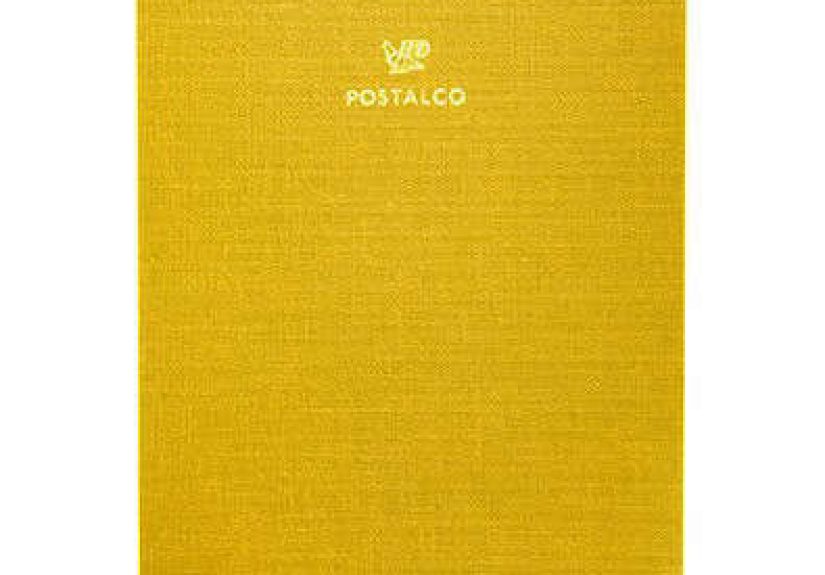
The pressed cotton cover is one of the biggest reasons people search specifically for a Postalco notebook instead of just grabbing any pocket notebook. It has a textile-like feel but more structure than a soft fabric cover. Several retailers describe it as starch-pressed cotton bonded to the cover, and many note that the color lightens with use while the weave becomes more visible over time.
That means the notebook develops character instead of looking beat up. There’s a big difference. One says “I carry this everywhere.” The other says “I dropped this in my car and forgot about it for six months.” Postalco is firmly in the first category.
3) The paper is graph paper for people who think they hate graph paper
Postalco’s signature pages use 1mm Pin-graph paper, a very fine blue grid that’s designed to be visible when you need structure and easy to ignore when you don’t. That makes it ideal for mixed use: notes, lists, sketching, layout planning, quick diagrams, and a little spontaneous overthinking.
The tiny grid is one of the most distinctive features. Postalco has described it as a classic format the brand created years ago, and it’s still a major reason people come back for replacements. If you’ve ever found standard grid paper too loud or dotted paper too vague, this hits a sweet spot.
Postalco Notebook (Small) Materials and Build Quality
Pressed cotton cover
This is the star of the show. It feels durable and tactile without being stiff in a bad way. Depending on the retailer and finish, the cover may be described as water-resistant treated fabric or a pressed cotton textile bonded to the notebook board. It’s practical enough for daily carry but still has that “nice object” feel that makes you want to keep it on your desk.
Pin-graph paper (1mm blue grid)
The paper is one of the biggest strengths of the Postalco notebook line. Postalco and multiple retailers emphasize the same traits:
- Textured writing surface (less slippery than ultra-coated paper)
- Good for writing and drawing
- Page thickness that helps reduce show-through
- Chlorine-free production
If you write with gel pens, pencils, fineliners, or ballpoints, this type of paper usually feels controlled and comfortable. It also plays well with compact handwriting because the 1mm grid acts like a quiet guide. Think of it as lane markers for your thoughts, but tiny and polite.
Spiral binding and usability
Postalco’s ring-bound format is a core part of the product identity. It opens flat, flips easily, and suits quick note-taking. Some retailers highlight the steel spiral and even note that the binding placement helps make the spine label-friendly. Translation: this notebook is as happy in a bag as it is lined up on a shelf like a tiny, handsome archive of your life decisions.
Sizes: What “Small” Means in Practice
Here’s where things can get slightly confusingbut only slightly.
Historically, some U.S. shops listed the Postalco Notebook (Small) at about 3.25" x 5", while others describe the small size as roughly 3.5" x 5". These differences are usually retailer rounding, legacy naming, or measurement conventions.
In current Postalco product language, you’ll more commonly see sizes like:
- A7 (about 2.9" x 4.1") ultra-portable, pocket-leaning
- A6 (about 4.1" x 5.8") compact but roomy enough for real daily notes
- A5 desk-friendly, not really “small” unless your tote bag is enormous
For many buyers searching “small,” the ideal fit is either a legacy small format (around 3.5" x 5") or the modern A6, depending on whether they prioritize true pocketability or writing comfort.
Which size should you choose?
- Choose A7 / older small format if you want a pocket notebook for lists, quick captures, and short notes.
- Choose A6 if you want an everyday carry notebook that still feels compact but gives your handwriting room to breathe.
- Choose A5 if you’re using it more at a desk for journaling, meeting notes, or sketching.
As a general notebook sizing reference, many U.S. stationery resources describe A6 as one of the best all-around sizes for personal journals and daily carry, and that aligns perfectly with how Postalco’s A6 is positioned by retailers and users.
Current Pricing and Value
Postalco’s official notebook collection pricing can vary by model and artwork, but recent official listings have shown examples like:
- Notebook A7 Double Arm around $16
- Notebook A6 around $21
- Notebook A6 Double Arm around $30
- Notebook A5 around $30
Retailer prices may differ (and sometimes older listings or specialty colorways cost more), but this gives a useful baseline. Is it more expensive than a generic memo pad? Definitely. Is it overpriced for the materials, paper, and design quality? Not reallyespecially if you’re the kind of person who uses a notebook every day and appreciates an object that wears in nicely over time.
In the stationery world, “value” often comes down to whether a product makes you use it more. Postalco notebooks tend to score high there because they strike a rare balance: they feel good enough to be enjoyable, but not so fancy that you’re afraid to write a chaotic to-do list that includes “buy batteries” and “rethink entire career.”
Who the Postalco Notebook (Small) Is Best For
Everyday carry note-takers
If you like carrying a notebook daily for ideas, reminders, and random thoughts, this is exactly the lane Postalco was built for. The small size works for portability, while the cover and paper quality make the experience noticeably nicer than a disposable pad.
Designers, writers, and visual thinkers
The 1mm pin-graph paper is excellent for people who bounce between words and visuals. You can write, sketch a layout, make a mini chart, draft a sign, outline a room, or fake being organized in a meeting. The grid is precise without feeling rigid.
People who care about materials
If you’re the type who notices paper texture, binding quality, and how a cover ages, Postalco is very much your thing. This isn’t a “look at me” luxury notebook. It’s a “use me every day and I’ll look better in six months” notebook.
Gift buyers who want something thoughtful
Postalco notebooks make excellent gifts because they feel elevated without being weirdly specific. You don’t need to know someone’s pen preference, planner system, or favorite color family to give them one. It’s a universally useful object with strong design credibility.
How It Compares to Other Small Notebooks
There are plenty of compact notebooks on the market, but Postalco stands out in a few ways:
- Material character: The pressed cotton cover has more personality than standard cardstock or faux leather.
- Grid refinement: The 1mm pin-graph is subtler than typical 5mm grids and more structured than blank pages.
- Aging behavior: The cover is intentionally designed to show wear in a good-looking way.
- Design heritage: Postalco has a long track record and a clear design philosophy built around utility and understated beauty.
If your top priority is page count for the lowest price, there are cheaper options. If your top priority is a notebook you’ll enjoy carrying and using every day, Postalco makes a strong case.
Buying Tips Before You Order
Check the exact size label
Because “small” can refer to older retailer naming or newer A7/A6 formats, confirm the dimensions before buying. If you want a true pocket notebook, look for dimensions around 3" x 4" to 3.5" x 5". If you want more writing space, A6 is usually the better pick.
Check the paper type (pin-graph vs plain)
Some colors and versions are available in pin-graph, while others may be plain. If you want the signature Postalco experience, many people specifically look for the 1mm Pin-graph version.
Watch for retailer-specific descriptions
U.S. stockists often add helpful details about materials, dimensions, and specialty editions. Some shops carry standard notebook colors, while others stock special runs, custom dyed versions, or limited colorways.
Final Take
The Postalco Notebook (Small) is one of those products that makes daily life feel slightly more composed, even if your actual notes are a glorious mess. It’s compact, durable, thoughtfully designed, and genuinely fun to use. The pressed cotton cover gives it personality, the pin-graph paper gives it versatility, and the overall build quality gives it staying power.
If you’re looking for a small notebook that feels special without acting precious, this is a fantastic choice. It’s a tool first, a design object secondand that’s exactly why so many people end up buying another one after they fill the first.
Experience-Based Section: Real-World Ways People Use a Postalco Notebook (Small)
Note: The following examples are composite, real-life-style usage scenarios based on how small Postalco notebooks are commonly used.
1) The “Everywhere Notebook” experience
One of the most common experiences with a Postalco Notebook (Small) is that it quietly becomes your default notebook without you planning for it. It starts as a “nice notebook” for a specific purposemaybe work notes, maybe travel listsand then within a week it’s holding grocery lists, phone numbers, sketch ideas, book recommendations, and a reminder to finally water that plant in the kitchen that has seen things.
This happens because the size removes friction. A notebook that’s too large gets left behind. A notebook that’s too flimsy gets ignored. Postalco’s small formats sit in a sweet spot: easy to carry, durable enough to toss into a bag, and nice enough that you enjoy pulling it out. The spiral binding also helps a lot here. You can flip it open quickly while standing or walking, jot something down, and move on.
2) The “Creative catch-all” experience
Designers, writers, and visual thinkers often describe the best notebooks as the ones that don’t force them into a single use case. That’s where Postalco’s pin-graph paper really shines. The tiny 1mm grid supports neat writing, rough layout sketches, and spontaneous diagrams without making the page feel technical. In practice, this means a single spread can hold a meeting note, a thumbnail sketch, and a to-do listall without looking chaotic.
People who usually dislike graph paper are often surprised by Postalco’s grid because it doesn’t visually dominate the page. It guides your hand when you want structure and disappears when you’re writing freely. For many users, that’s the moment the notebook goes from “beautiful stationery object” to “daily creative tool.”
3) The “Wear-in, not wear-out” experience
A lot of notebooks look worse the more you use them. Postalco tends to do the opposite. The pressed cotton cover softens and develops visible texture over time, and many users end up liking the notebook more after a few weeks than they did on day one. It gains that lived-in look without feeling beat up.
This is a big part of the appeal if you like objects that age with you. A filled Postalco notebook has a nice “artifact of everyday life” quality. It can sit on a desk or shelf and look warm and useful, not like a random office supply. People who keep old notebooks often mention this as a hidden bonus: the finished notebooks look great archived together.
4) The “Small but serious” experience
There’s a common assumption that a small notebook is only for quick notes. But many users find that a Postalco small or A6 notebook can handle much more than that. It works well for short journaling sessions, project planning, travel logs, reading notes, habit tracking, and daily priorities. The page size encourages concise thinking, which can actually be helpful if you tend to overwrite or overplan.
In that sense, the Postalco Notebook (Small) can feel oddly clarifying. It doesn’t give you unlimited space, so you naturally focus on what matters. And because the notebook itself is pleasant to use, you’re more likely to come back to it consistently. That consistency is where the real value shows upnot just in the materials, but in the habit it helps create.