Table of Contents >> Show >> Hide
- When a princess gets sick, public curiosity goes feral
- The pauper part is where the stakes get even more real
- Health privacy is not just etiquette. It is infrastructure.
- Why privacy matters even more in the portal-and-app era
- Privacy protects honesty, and honesty protects care
- Public interest is real. Public entitlement is not.
- What ordinary patients can do to protect their health privacy
- The bottom line
- Experience and perspective: what health privacy feels like in real life
- SEO tags
When a famous person gets sick, the internet suddenly behaves like it has a stethoscope, a press badge, and absolutely no indoor voice. Rumors multiply, timelines get dissected, and strangers start acting as if a diagnosis is community property. But here is the part worth underlining in thick red marker: celebrity does not cancel humanity. A princess is still a patient. And a cashier, teacher, driver, retiree, student, or stay-at-home parent is one too.
That is why health privacy matters so much. It is not a luxury item for the rich, the titled, or the media-trained. It is a basic condition of dignified care. It protects the person in a palace and the person in a studio apartment. It shields someone making a public appearance and someone trying to make it through a Tuesday mammogram without turning it into office gossip.
The title Princess and the pauper works because the principle is wonderfully stubborn: both deserve health privacy. Fame does not erase consent. Poverty does not reduce dignity. And curiosity, however intense, is not the same thing as a right to know.
When a princess gets sick, public curiosity goes feral
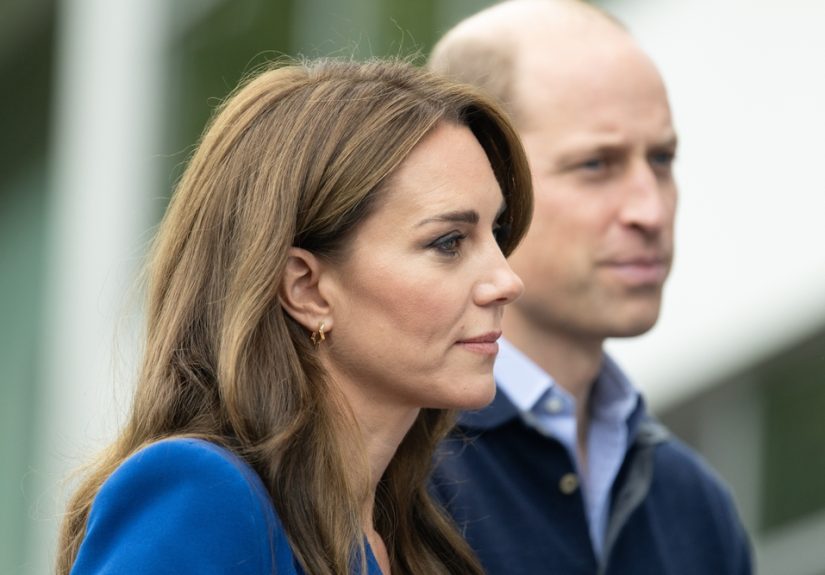
The recent frenzy around Catherine, Princess of Wales, was a master class in how quickly health speculation turns from “concern” into entitlement. At first, the coverage sounded almost polite. Then the whispers became theories, the theories became content, and the content became a digital mob in search of a private chart. It was messy, ghoulish, and very online.
What made the episode so clarifying was not only the scale of the attention, but the moral confusion behind it. Many people seemed to think that because Catherine is public-facing, her body is public-facing too. That is not how health privacy works, and it is not how decency works either. The public may be owed some practical information when a public figure’s illness affects appearances, duties, or timelines. The public is not owed every test result, treatment detail, or whispered prognosis from a hallway.
That distinction matters. A public figure can choose to share a diagnosis, a treatment update, or a message of thanks. Choice is the key word. Voluntary disclosure is not the same as compulsory exposure. When we blur that line, we stop treating people as persons and start treating them as content pipelines wearing human skin.
And the problem does not end with gossip. Once a patient becomes a spectacle, privacy breaches start looking like prizes. That is exactly why the Kate story resonated so widely: it reminded people that medical snooping is not a harmless peek. It is a violation. Even royal status does not make that okay. In fact, it may make the temptation bigger and the responsibility to resist it even more important.
The pauper part is where the stakes get even more real
If the princess example shows how fame can bulldoze privacy, the “pauper” side shows how ordinary life can punish people when privacy fails. An average patient may have fewer cameras pointed at them, but they often have more to lose. Think about the person in a small town who does not want neighbors discussing a cancer scare before they have told their kids. Think about the teenager who needs confidential care for a sensitive issue. Think about the employee terrified that a workplace rumor will turn “I have a medical appointment” into a lunchroom mini-series.
For ordinary people, health privacy is not about managing a headline. It is about protecting jobs, relationships, safety, dignity, and the ability to seek care without fear. It is the right to find out what is wrong with your body before the whole group chat starts offering amateur diagnoses and turmeric tea.
This is especially important for conditions that still attract stigma, misunderstanding, or unsolicited opinions. Mental health treatment. Reproductive care. Substance use treatment. Sexually transmitted infections. Chronic pain. Infertility. Menopause. Adolescent care. No one should have to choose between getting medical help and protecting their reputation, family life, or peace of mind.
Privacy is not secrecy for secrecy’s sake. It is the breathing room that lets people be honest. And honesty in medicine is not some decorative extra. It is the thing that makes diagnosis and treatment work. If patients fear exposure, they may edit, minimize, delay, or avoid care entirely. That is bad for health outcomes, bad for trust, and bad for common sense.
Health privacy is not just etiquette. It is infrastructure.
The legal floor
In the United States, HIPAA is the legal baseline most people have heard of, even if they mostly know it as “that thing everyone mentions incorrectly on social media.” What HIPAA actually does is set national standards for protecting medical records and other individually identifiable health information held by covered entities and certain business associates. It also gives people rights over their information, including the right to access records and request corrections.
That matters because privacy is not merely a polite custom; it is built into the architecture of modern health care. Clinics, hospitals, insurers, and health systems are expected to guard protected health information, limit unauthorized sharing, and put safeguards in place for electronic records. In plain English: your chart is not supposed to be community theater.
The ethical floor
But law is only part of the story. The deeper principle is ethical. Doctors and health professionals are expected to preserve confidentiality because patients need to trust them enough to tell the truth. If a patient thinks private information will leak, travel farther than consent allows, or land in the wrong hands, the patient may not fully disclose what matters.
And that is where privacy becomes a clinical issue, not just a legal one. Trust is the bridge between symptoms and care. Break the bridge, and people stop crossing it.
Why privacy matters even more in the portal-and-app era
Modern health care is faster, more connected, and more digital than ever. That is good news in many ways. Patient portals make records easier to access. Online scheduling is more convenient. Proxy access helps caregivers help aging parents. Electronic sharing can reduce duplicate tests, speed referrals, and make care coordination less like an archaeological dig through faxed paperwork.
But digital convenience comes with a catch: every improvement in access must be matched by an improvement in protection. More logins mean more risk. More data flows mean more places for things to go sideways. More apps mean more confusion about who is actually covered by HIPAA and who is not.
That last point is a big one. Many people assume that if information is “health-related,” it is automatically protected by HIPAA. Not necessarily. Some consumer health apps, wellness platforms, and connected devices sit outside HIPAA’s traditional boundaries. That does not mean they are lawless, but it does mean the rules may be different. Consumers who happily type symptoms, cycle data, mood logs, sleep records, or medication reminders into an app may be sharing deeply personal information into a much blurrier privacy environment than they realize.
In other words, your doctor’s office and your favorite app are not always playing by the same rulebook. One wears a lab coat. The other wears a very friendly onboarding screen and asks to “personalize your experience.” Charming. Also suspicious.
Health systems have their own modern privacy headaches too. Regulators have warned about online tracking technologies, data sharing with vendors, and the risk of impermissible disclosures. Massive breaches have also shown that health privacy is no longer only about discretion at the front desk. It is about cybersecurity, vendor oversight, audit logs, and whether the digital plumbing behind American health care is sturdy enough to carry information this sensitive.
Privacy protects honesty, and honesty protects care
One of the strongest arguments for health privacy is also the simplest: people talk more openly when they feel safe. That is not a theory cooked up in a conference room. Research has repeatedly shown that patients do withhold information from clinicians, including information tied to serious risks, and privacy concerns are part of the reason.
This should alarm anyone who cares about medicine working as medicine. A patient who is embarrassed, afraid of judgment, worried about who can see their record, or uncertain how information will be shared may leave out details that are crucial to diagnosis and treatment. The missing piece might be substance use, suicidal thoughts, abuse, sexual assault, a skipped medication, or symptoms that seem “too personal” to risk documenting.
That means privacy is not only about protecting a person after they speak. It is about making it possible for them to speak in the first place.
The effect can be especially powerful for younger patients. Confidential care has long mattered for adolescents seeking help with sensitive issues. When privacy feels shaky, young people may avoid services, delay questions, or choose less safe alternatives. If we want honest conversations in exam rooms, privacy cannot be optional.
Public interest is real. Public entitlement is not.
Some people push back with a familiar argument: what about transparency? Fair question. Transparency matters in health care. Hospitals should be transparent about policies, breaches, and patient rights. Public officials may need to disclose enough information to explain absences or capacity. Institutions should communicate clearly when services, risks, or public responsibilities are affected.
But transparency is not the same thing as total exposure. “The public should understand what affects governance” is not the same sentence as “everyone gets the pathology report.” “Fans are concerned” is not the same sentence as “fans are entitled.” “People are asking questions” is definitely not the same sentence as “someone open the chart.”
The right standard is this: disclose what is necessary for trust, accountability, and safe care; protect what belongs to the patient. That principle works for a monarch, a mayor, a movie star, and a mechanic.
What ordinary patients can do to protect their health privacy
Ask who can see what
At a clinic or hospital, ask how your information is used, who can access it, and how results are shared. It is not rude. It is adulting with receipts.
Use portals wisely
Patient portals are useful, but they need strong passwords, updated contact information, and careful management of proxy access. Convenience should not become accidental oversharing.
Treat consumer health apps like data collectors, not diary friends
Before typing in intimate details, read privacy terms, check sharing settings, and understand whether the app is connected to a covered health care provider or operating under different rules.
Exercise your rights
You can ask for copies of records, request corrections in appropriate situations, and review privacy practices. Those rights are not decorative legal wallpaper. Use them.
Remember that “voluntary” disclosure is still your call
You can share your diagnosis on social media, tell your boss, text your relatives, or keep the whole matter inside a tight circle. The key is that the decision belongs to you, not to pressure, rumor, or someone else’s appetite for updates.
The bottom line
The phrase Princess and the pauper may sound literary, but the lesson is refreshingly practical. Health privacy is not a perk for the powerful or a technicality for compliance officers. It is a condition of dignified treatment, honest care, and basic human respect. It protects people from snooping, gossip, coercion, stigma, and digital overreach. It helps patients tell the truth. It helps clinicians do their jobs. And it reminds the rest of us that access to a person’s suffering is not something we earn by being curious.
A princess deserves health privacy because she is a person. A pauper deserves health privacy because he is a person. Strip away the titles, the bank balances, the followers, the press coverage, and the palace gates, and that truth becomes wonderfully obvious. The body is personal. Illness is vulnerable. Care requires trust. And privacy is part of the care.
Experience and perspective: what health privacy feels like in real life
To really understand this issue, it helps to leave policy language for a moment and step into the texture of everyday experience. Health privacy is not only about statutes, portals, and compliance checklists. It is about that peculiar, vulnerable feeling people get when life suddenly divides into “before the test result” and “after the test result.” In that moment, most people do not want an audience. They want a little quiet, a little control, and maybe a chair that does not make every waiting room feel like an airport for anxiety.
Imagine an office worker getting a call to come back for additional imaging after a routine screening. She is not ready to explain anything at work because she does not yet know anything herself. She needs one afternoon off, not a panel discussion. If her privacy holds, she gets to decide when to talk, what to share, and how to say it. If it fails, the story outruns the facts. Suddenly she is managing other people’s reactions before she has processed her own fear. That is not support. That is emotional pickpocketing.
Or picture a teenager asking a doctor a question they have rehearsed for weeks. Maybe it is about contraception, depression, substance use, or something that feels too awkward to say out loud at home. If the teen believes the conversation will stay private within the limits of the law and safety, honesty becomes possible. If not, silence wins. Health privacy, in that scenario, is not an abstract principle. It is the difference between care happening and care not happening.
Consider, too, the man in a small town beginning treatment for a condition he knows people will misunderstand. He is not famous, but anonymity can be surprisingly thin when your pharmacist is your cousin’s neighbor and your church knows who missed choir practice. His privacy is not about shame. It is about space. Space to adjust. Space to tell his family first. Space to remain a full person in the eyes of his community instead of becoming “the guy with that thing.”
Even caregivers experience the tension. A daughter managing an aging parent’s appointments may need proxy access to records and portal messages. Done well, that access is a blessing. Done carelessly, it can erase boundaries, expose information the parent wanted handled differently, or create family conflict where trust was already fragile. Health privacy is often not a wall; it is a set of doors that should open for the right people, at the right time, for the right reasons.
These experiences are why the topic lands so personally. Most people are not asking for secrecy because they have something sinister to hide. They are asking for privacy because illness already takes enough. It takes certainty, routine, energy, appetite, confidence, and sleep. It should not also take control over one’s own story.
That is the human core of this debate. Whether someone lives in a palace or lives paycheck to paycheck, being a patient means entering a state of vulnerability. In that state, privacy is not a privilege. It is shelter.