Table of Contents >> Show >> Hide
- Why reading the “Wicked” books first makes the movie better
- The “Wicked” books in order
- Optional books for completionists
- The best reading order before seeing the movie
- How the books change your view of the movie
- What kind of reader will love the “Wicked” books?
- A common mistake fans make before watching the movie
- What the experience feels like when you read the books first
- Final thoughts
If you’re planning to watch Wicked and you think, “I already know the gist green witch, pink witch, flying drama, probably a show tune or twelve,” fair enough. But reading the Wicked books in order before seeing the movie adds a whole extra layer of magic, melancholy, and political bite that the screen version can only hint at. Gregory Maguire didn’t just write a whimsical backstory for the Wicked Witch of the West. He built a more complex Oz: stranger, darker, sharper, and much more interested in power, identity, and how a society decides who gets called “good” and who gets labeled “wicked.”
That’s why fans who want the full experience should absolutely read the Wicked books in order. The novels deepen Elphaba’s story, expand the mythology of Oz, and make the movie feel richer rather than redundant. Instead of walking into the film with only Broadway-level familiarity, you arrive with the emotional baggage, moral questions, and lore-loving satisfaction of someone who knows Oz is doing a lot more than serving emerald aesthetics.
In other words, yes, you can see the movie first. But should you? For devoted fans, book lovers, and anyone who enjoys catching the layers behind the spectacle, reading first is the smarter and more satisfying move.
Why reading the “Wicked” books first makes the movie better
The biggest reason to read the books before seeing the movie is simple: the novels give Oz teeth. The stage musical and film adaptation are emotionally powerful and hugely entertaining, but Maguire’s fiction is broader in scope and more complicated in tone. His version of Oz is not just a fantasy playground where destiny and friendship collide. It is also a place shaped by class, propaganda, prejudice, religion, state control, and public mythmaking.
That matters because Elphaba is much more than a misunderstood girl with impressive vocal stamina. In the books, she becomes a fully textured character whose choices feel rooted in politics, personal pain, ethical conviction, and sometimes messy human contradiction. She is not polished into a neat symbol. She feels gloriously difficult, which is exactly why she lasts in the imagination.
Reading first also helps fans appreciate just how different each version of Wicked really is. The novel, the musical, and the movie are all related, but they are not interchangeable twins wearing matching black hats. The book is darker and more adult. The musical turns the material into an emotionally soaring friendship story. The movie builds on that musical structure while adding cinematic scale. When you know that going in, you stop expecting a page-to-screen copy and start enjoying the adaptation as a conversation between versions.
The “Wicked” books in order
If your goal is to understand the core story before watching the movie, the best path is publication order. That is the cleanest, most rewarding way to read Gregory Maguire’s Oz novels.
1. Wicked: The Life and Times of the Wicked Witch of the West
This is the essential starting point and the one book every fan should read before the movie. It introduces Elphaba not as a cardboard villain, but as a brilliant, alienated, morally serious young woman trying to survive a world that misunderstands her from birth. It also reimagines Glinda, the Wizard, Shiz, and the politics of Oz in ways that feel far more complicated than the pop-culture shorthand most people carry around.
If you read only one book before watching Wicked, make it this one. Everything begins here, and the emotional payoff of seeing how later adaptations soften, reshape, or spotlight different elements is enormous.
2. Son of a Witch
The second book widens the world after Elphaba’s story and explores the aftermath of her legacy. This is where many readers realize Maguire was never interested in creating a one-book gimmick. He was building a larger literary Oz, one where identity is slippery, truth is unstable, and history keeps getting rewritten by whoever has the loudest voice and the fanciest chair.
For movie fans, this sequel is useful because it proves Elphaba’s story is not just about becoming an icon. It is about what happens after an icon gets turned into rumor, memory, and contested history.
3. A Lion Among Men
This novel shifts focus again and explores the Cowardly Lion in a more layered, unexpected way. If that sounds odd, welcome to Maguire’s Oz, where familiar characters rarely stay in their assigned boxes. This book is less about fan service and more about perspective, reinvention, and the tension between public image and private reality.
It is especially rewarding for readers who love world-building, because it shows how Maguire keeps finding emotional and political angles inside figures pop culture often flattens into symbols.
4. Out of Oz
This fourth book brings the original quartet to a powerful close. It ties together legacy, memory, war, family, and the long shadow Elphaba casts over Oz. If you want the fullest version of the Wicked book series in order, this is the final stop in the main saga.
By the time you finish Out of Oz, you don’t just know the story. You understand why Oz keeps generating new retellings in the first place. It becomes a mythic machine one that keeps asking who gets to define truth.
Optional books for completionists
Once you finish the main quartet, you can keep going if you’re the type of fan who hears “expanded universe” and immediately reaches for a tote bag. Optional reading includes Tales Told in Oz, which collects short fiction, plus the later Oz-connected novels that continue exploring the world from different angles. There is also Elphie, a later prequel centered on Elphaba’s childhood.
These books are not required before seeing the movie, but they are excellent for readers who want every extra sliver of Oz lore. Still, for most fans, the must-read list before the film remains the original four-book sequence, beginning with Wicked.
The best reading order before seeing the movie
If you’re short on time, here is the practical answer:
- Minimum must-read: Wicked
- Best fan experience: Wicked, Son of a Witch, A Lion Among Men, Out of Oz
- Completionist route: the main four, then the optional Oz-related books and prequels
That publication order works best because it mirrors how readers originally encountered the world and lets Maguire reveal ideas in the most satisfying progression. Trying to invent a “chronological” reading order may sound clever, but it can actually weaken the surprises and thematic development. Sometimes the straight road is the yellow brick road for a reason.
How the books change your view of the movie
Reading the novels before seeing the movie changes what you notice. Suddenly, scenes that might otherwise play as spectacle start carrying extra meaning. Character choices feel heavier. Lines about goodness, popularity, belonging, and power land with more force. Even the lighter moments gain texture because you understand how much pain and political instability sit underneath the glitter.
The books also prepare you for one of the most important truths about Wicked: it is not really a story about a villain becoming misunderstood. It is a story about how societies manufacture villains in the first place. That idea becomes much more vivid when you have Maguire’s broader narrative framework in your head before the movie starts.
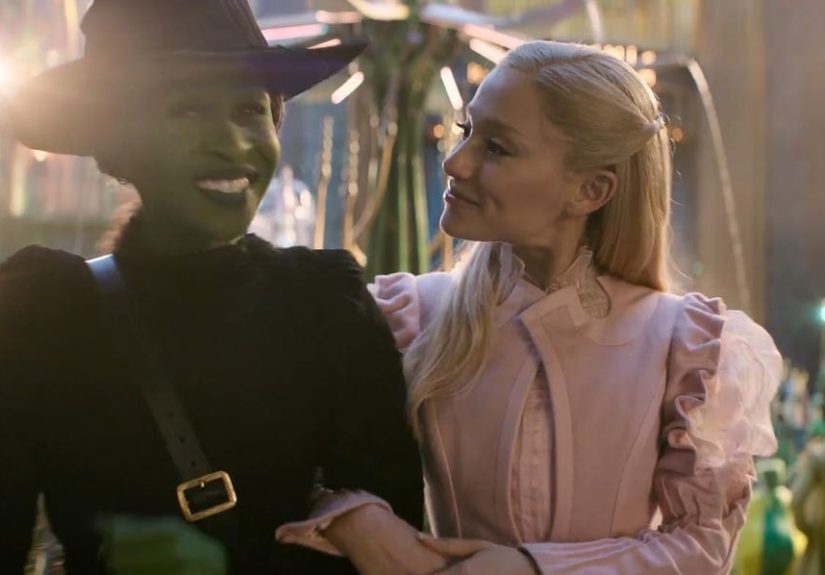
And then there is Glinda. Reading first gives her more dimension too. On the surface, she can seem like comic sparkle in a very organized wardrobe. But in the books and their aftermath, she becomes more complicated: charming, compromised, affectionate, politically shaped, and often caught between performance and conscience. Watching the movie after reading means you’re not choosing Team Elphaba versus Team Glinda. You’re watching two women navigate a culture obsessed with labels.
What kind of reader will love the “Wicked” books?
The Wicked novels are best for readers who enjoy fantasy with ideas in it. If you want a fast, simple retelling that behaves nicely and hands over a moral in a gift bag, these books may surprise you. Maguire’s Oz is stranger than that. It can be satirical, emotionally bleak, philosophical, funny in a dry and sly way, and deliberately uncomfortable.
That said, this is exactly why fans of the movie should read them. The contrast is part of the fun. You get to see how one literary work evolves into a smash stage musical and then into a major film adaptation, each version translating the material into a different emotional language.
So if you love adaptation studies, fandom culture, literary fantasy, Broadway history, or just enjoy saying, “Actually, in the book…” with only a little menace, this series is absolutely for you.
A common mistake fans make before watching the movie
The most common mistake is assuming the book is basically the movie in prose form. It is not. Not even close. The movie and musical keep the emotional spine of Elphaba and Glinda’s relationship, but the novel is more politically charged, more adult, and more willing to wander into moral gray zones. That is not a flaw. It is the point.
So go in expecting an expansion, not a duplicate. Read the books to understand the bones of the world, the darker questions underneath the songs, and the literary DNA of Oz’s most famous green outsider. Then watch the movie ready to enjoy what adaptation does best: transform.
What the experience feels like when you read the books first
There is a special kind of pleasure in walking into the Wicked movie after reading the books in order. It feels a little like arriving early to a party and getting to see how the decorations were hung before the guests show up. You recognize names, symbols, tensions, and emotional landmines before the film even starts. Every familiar detail feels less like information and more like payoff.
First, there is the thrill of recognition. You hear “Elphaba,” “Glinda,” or “Shiz,” and your brain does not simply file them under “oh yes, famous Oz thing.” Instead, those names arrive carrying history. You know there is conflict under the friendship, politics under the fantasy, and pain under the witty banter. That gives the movie a richer emotional hum. Scenes that might seem charming or dramatic to a new viewer become layered and slightly haunted to a reader.
Then there is the emotional weirdness and I mean that as a compliment. Reading first makes the movie feel both bigger and sadder. Bigger because the world clearly stretches beyond the frame. Sadder because you know how much gets simplified whenever a dense, thorny novel becomes a crowd-pleasing screen event. That does not ruin the fun. It actually sharpens it. You can admire the movie’s beauty while quietly appreciating all the shadows lurking behind the sparkle.
Another experience fans often have is a constant, low-level delight at how adaptation works. You start noticing what was kept, what was softened, what was expanded, and what was transformed to fit a more musical and cinematic story. Instead of watching passively, you watch actively. Your brain becomes half audience, half detective. It is a wonderfully nerdy way to enjoy a blockbuster, and frankly, nerdy joy is one of fandom’s greatest renewable resources.
Reading first also changes your relationship to Elphaba in a meaningful way. In the movie, she is compelling immediately. In the books, she is compelling and difficult, principled and isolating, brave and sometimes hard to pin down. So when you watch the screen version, you are not simply rooting for the underdog. You are carrying a fuller understanding of how a person can be heroic without being easy, loving without being soft, and right without being rewarded. That complexity sticks.
And perhaps most of all, reading the Wicked books in order before seeing the movie creates the feeling that Oz is not just a setting but a living argument. It is arguing about power, image, morality, storytelling, and the terrible efficiency of public opinion. Once you feel that undercurrent, the movie becomes more than entertainment. It becomes the latest voice in a much larger conversation. That is the kind of fan experience that lingers after the credits, follows you home, and makes you want to reopen the books just to see what else you missed the first time.
Final thoughts
So, is reading the Wicked books in order before seeing the movie a must for fans? Absolutely. Start with Wicked, continue through the original quartet if you can, and treat the later books as bonus treasure for completionists. The novels offer a deeper, darker, more intellectually satisfying Oz, while the movie gives that material new emotional and visual life.
Together, they make each other better. The books give the movie context. The movie gives the books fresh immediacy. And fans get the best possible deal: more Oz, more Elphaba, more Glinda, and far more to talk about than whether pink and green should ever share a closet.