Table of Contents >> Show >> Hide
- Why You’ll Love This Sautéed Swiss Chard Recipe
- What Is Swiss Chard, Exactly?
- Ingredients for Sautéed Swiss Chard With Slivered Almonds
- Ingredient Notes That Actually Help
- How to Prep Swiss Chard the Right Way
- How to Make Sautéed Swiss Chard With Slivered Almonds
- What This Dish Tastes Like
- Best Tips for Success
- Easy Variations
- What to Serve With Sautéed Swiss Chard With Slivered Almonds
- Storage and Reheating
- Why This Recipe Works for Everyday Cooking
- Conclusion
- Experience Notes: What It’s Like to Keep Making This Dish
- SEO Tags
If your dinner plate has been looking a little too beige lately, this recipe is here to stage an intervention. Sautéed Swiss chard with slivered almonds is bright, savory, quick to make, and just fancy enough to make people think you absolutely planned dinner instead of standing in front of the refrigerator hoping a side dish would magically appear. It delivers tender greens, slightly crisp stems, nutty crunch, and the kind of lemony finish that makes everything taste more awake.
Swiss chard deserves better public relations. It often gets overshadowed by kale, spinach, and whatever leafy green is currently having a social media moment. But chard brings something special to the skillet: silky leaves, colorful stems, a mild earthy flavor, and the ability to go from farmer’s market beauty queen to weeknight side dish in about 15 minutes. Add slivered almonds, garlic, and a touch of acid, and suddenly this humble vegetable becomes the side you keep “accidentally” making again and again.
This recipe keeps things simple and useful for real life. You will learn how to cook the stems and leaves properly, how to avoid watery greens, how to get the almonds golden instead of tragically burned, and how to build layers of flavor without turning a vegetable side into a 19-step kitchen dissertation. Whether you are serving it with roast chicken, salmon, steak, grilled tofu, or a bowl of creamy polenta, this sautéed Swiss chard recipe earns its spot at the table.
Why You’ll Love This Sautéed Swiss Chard Recipe
First, it is fast. This is the kind of side dish you can make while your main course rests, your pasta finishes boiling, or your family asks the very helpful question, “What’s for dinner?” for the fourth time. Second, it is flexible. You can use rainbow chard or green-stemmed Swiss chard, swap lemon for vinegar, add shallots, toss in Parmesan, or spoon it over grains for a light meal.
Third, it tastes like more than the sum of its parts. Swiss chard can be mildly bitter, but that is not a flaw. It is what makes the greens pair so well with rich olive oil, sweet shallots, toasted almonds, and bright citrus. The stems add texture, the leaves wilt into a silky tangle, and the almonds bring enough crunch to keep every bite interesting. This is not one of those vegetable sides you eat because you are “being good.” This is one you make because it is genuinely delicious.
What Is Swiss Chard, Exactly?
Swiss chard is a leafy green related to beets and spinach, with broad leaves and sturdy stalks that can be white, yellow, red, or hot-pink enough to make your cutting board look like it is dressed for a parade. Both the leaves and stems are edible, which is excellent news for your dinner and your grocery budget. Younger leaves can be eaten raw, but older leaves and stems are usually best cooked.
Flavor-wise, Swiss chard lands somewhere between spinach and beet greens. It is earthy, slightly sweet, and pleasantly grassy, with stems that stay a bit firmer than the leaves. That is why smart cooking starts by separating the stems from the leaves. The stems need a head start in the pan, while the leaves only need a few quick minutes to soften.
Ingredients for Sautéed Swiss Chard With Slivered Almonds
- 2 large bunches Swiss chard, about 1 1/2 to 2 pounds
- 3 tablespoons extra-virgin olive oil, divided
- 1/3 cup slivered almonds
- 1 large shallot, thinly sliced
- 3 garlic cloves, thinly sliced or minced
- 1/4 teaspoon crushed red pepper flakes, optional
- 1/2 teaspoon kosher salt, plus more to taste
- 1/4 teaspoon freshly ground black pepper
- 2 teaspoons fresh lemon juice, plus more to taste
- 1 teaspoon lemon zest
- 1 teaspoon apple cider vinegar or white wine vinegar
- 2 tablespoons grated Parmesan, optional
Ingredient Notes That Actually Help
Swiss chard
Look for crisp stems and leaves that are vibrant, not limp, slimy, or giving strong “I was fine three days ago” energy. If the leaves are very large, that is fine. Just know they may need a slightly longer wash and chop session because chard loves to hide grit like it is training for espionage.
Slivered almonds
Slivered almonds toast quickly and distribute crunch evenly throughout the dish. Sliced almonds also work, but they brown faster, so keep a close eye on them. If you only have whole almonds, chop them. This is dinner, not a purity test.
Lemon and vinegar
Using both may sound dramatic, but it works. Lemon adds freshness, while a small splash of vinegar sharpens the overall flavor and balances the slight bitterness of the greens. You do not need much. This is a vegetable side dish, not a salad wearing too much perfume.
How to Prep Swiss Chard the Right Way
Start by washing the chard well. Really well. Fill a large bowl or clean sink with cold water, swish the leaves around, lift them out, and repeat if needed. Dirt tends to cling near the ribs and folds, and nobody wants a beautiful forkful of lemony greens interrupted by a crunch that came from the garden and not the almonds.
Pat the chard dry or spin it in a salad spinner. Then separate the stems from the leaves by slicing along both sides of the thick center rib. Stack the leaves and cut them into wide ribbons. Chop the stems into small bite-size pieces. Keeping them separate is the little move that makes the whole recipe better. The stems soften first, the leaves stay vibrant, and the final texture feels intentional instead of random.
How to Make Sautéed Swiss Chard With Slivered Almonds
Step 1: Toast the almonds
Heat a large skillet over medium heat and add 1 tablespoon of olive oil. Add the slivered almonds and cook, stirring often, for 2 to 3 minutes until fragrant and lightly golden. Transfer them to a plate immediately. Do not leave them in the hot pan thinking everything is under control. Almonds can go from golden to scorched with the confidence of a toddler holding markers near a white wall.
Step 2: Cook the stems
Add the remaining 2 tablespoons olive oil to the skillet. Stir in the shallot and cook for 1 to 2 minutes until softened. Add the chard stems, season with a pinch of salt and pepper, and cook for about 3 minutes. The goal is tender-crisp, not mush. You want them softened enough to be pleasant but still lively enough to bring texture.
Step 3: Add garlic and leaves
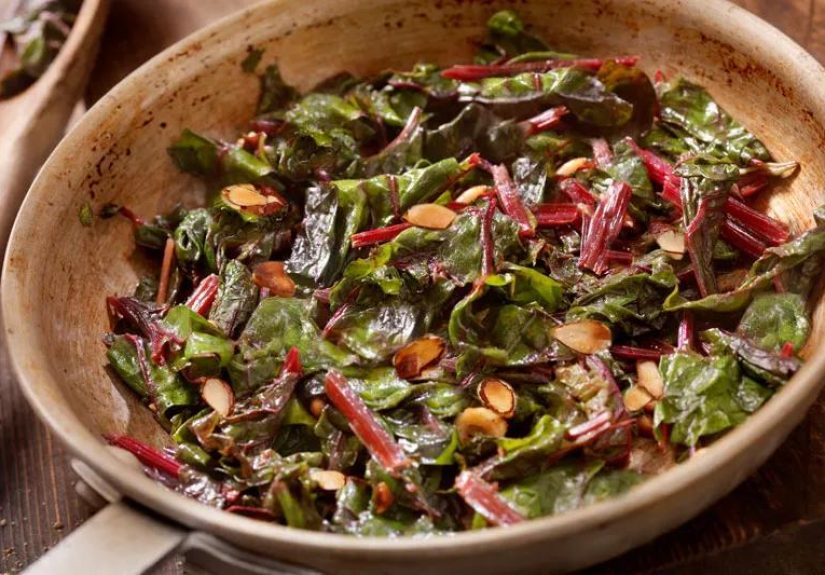
Stir in the garlic and red pepper flakes, if using, and cook for about 30 seconds until fragrant. Add the chopped chard leaves in batches if necessary. At first, it will look like you are trying to fit an entire small garden into one pan. Stay calm. The leaves wilt quickly. Toss the greens with tongs and cook for 2 to 4 minutes until just tender.
Step 4: Finish bright
Turn off the heat and add the lemon juice, lemon zest, and vinegar. Toss well, then taste. Add more salt, pepper, or lemon juice if needed. Fold in most of the toasted almonds, saving a spoonful for the top. Sprinkle with Parmesan if you like, and finish with the remaining almonds just before serving.
What This Dish Tastes Like
This sautéed Swiss chard recipe hits a lot of notes at once. The olive oil makes it savory and silky. The shallot softens into mild sweetness. Garlic adds punch without taking over. Lemon and vinegar brighten the greens, while the slivered almonds bring toastiness and crunch. The result is a side dish that feels clean and fresh but still satisfying.
If you are someone who worries leafy greens will taste too bitter, this is an excellent gateway recipe. The bitterness of Swiss chard is not aggressive when you balance it correctly. That is the real trick: fat, salt, and acid. Get those three right, and the greens become complex instead of harsh.
Best Tips for Success
Do not overcook the leaves
Swiss chard should wilt, not surrender completely. Overcooked chard becomes dull in color and softer than necessary. A quick sauté keeps the texture lively and the flavor fresher.
Toast the almonds separately
Yes, it adds one more tiny step. Yes, it is worth it. If you throw the almonds into the greens at the end without toasting them first, you lose the nutty depth and the crisp contrast that makes this recipe memorable.
Season at the end
Leafy greens shrink a lot, so their flavor concentrates as they cook. Start with a moderate hand on the salt, then finish after the lemon and vinegar go in. That final taste test is where good vegetable sides become great ones.
Easy Variations
Add raisins or chopped dates
A little sweetness plays beautifully with bitter greens and toasted nuts. Add a tablespoon or two for a sweet-savory version that feels a little Mediterranean and a little dinner-party clever.
Make it more substantial
Toss the finished chard with white beans, chickpeas, farro, or quinoa. Spoon it over toast with a poached egg. Fold it into pasta. Suddenly your side dish is one smart lunch.
Use butter with the olive oil
If you want a richer finish, melt a teaspoon of butter into the skillet just before serving. The greens become glossier, the shallot gets sweeter, and the whole thing edges into steakhouse side territory.
Swap the almonds
Pine nuts, chopped walnuts, hazelnuts, or pecans all work well. But slivered almonds are especially good because they are mild, easy to toast, and crisp enough to stand up to tender greens.
What to Serve With Sautéed Swiss Chard With Slivered Almonds
This dish is wonderfully versatile. Serve it next to roast chicken, baked salmon, grilled pork chops, or seared steak. Pair it with risotto, creamy polenta, or mashed potatoes if you want something cozy. For a lighter plate, match it with lentils, white beans, or a simple omelet.
It is also a great holiday or dinner-party side because it feels elegant without requiring elaborate work. Bright green leaves, jewel-toned stems, and toasted almonds on top make it look like you tried very hard, even if the recipe took less time than choosing a streaming show.
Storage and Reheating
Leftovers keep well in an airtight container in the refrigerator for up to 3 days. The almonds will soften slightly over time, so if texture matters to you, reserve a few extra toasted almonds and sprinkle them on after reheating. Warm the greens in a skillet over medium-low heat or microwave gently until heated through. A squeeze of fresh lemon at the end revives the flavor beautifully.
Why This Recipe Works for Everyday Cooking
Some vegetable sides feel like chores. This one feels useful. It is quick enough for weeknights, flexible enough for improvisation, and flavorful enough that even skeptical eaters often come around after one bite. Swiss chard cooks fast, almonds add substance, and the whole recipe leans on pantry basics like olive oil, garlic, and lemon.
It also makes practical sense nutritionally. Swiss chard is known for fiber, vitamins, minerals, and eye-friendly carotenoids, while almonds bring satisfying texture plus healthy unsaturated fats. That does not mean you have to eat it while talking about wellness in a solemn voice. It just means this is the rare side dish that tastes good, looks pretty, and pulls its weight.
Conclusion
Recipe: Sautéed Swiss Chard With Slivered Almonds is proof that a vegetable side dish does not need cream, bacon, or a blanket of cheese to be exciting. It just needs good technique and balanced flavor. Toast the almonds, cook the stems first, wilt the leaves quickly, and finish with lemon and a splash of vinegar. That is the whole magic trick.
Once you make it a couple of times, this recipe becomes less of a strict formula and more of a dependable kitchen habit. It can be weeknight simple, holiday pretty, or lunch-with-an-egg practical. Most importantly, it turns Swiss chard into something people actually want to eat, which is honestly a public service.
Experience Notes: What It’s Like to Keep Making This Dish
The first time many people make sautéed Swiss chard with slivered almonds, there is usually a brief moment of doubt right after the greens hit the pan. The skillet looks absurdly full, the leaves seem far too bulky, and it appears physically impossible that dinner will ever come together. Then the chard starts to wilt. The leaves soften into glossy ribbons, the stems brighten, the garlic blooms, and suddenly the whole kitchen smells like a place where competent adults definitely have their lives together. That transformation is part of the charm.
There is also something oddly satisfying about the rhythm of this recipe. Wash the greens. Strip the stems. Slice the shallot. Toast the almonds. Nothing is difficult, but each step feels purposeful. It is the kind of cooking that settles you down after a noisy day because it asks for just enough attention to keep your brain occupied without becoming stressful. You are not juggling five pans or checking three timers. You are just coaxing a leafy green into being delicious, which is, frankly, a very respectable way to spend 15 minutes.
Over time, this dish teaches you how much flavor small details can create. The almonds need only a minute too long to cross from nutty to scorched. The garlic wants fragrance, not browning. The lemon should brighten, not dominate. The chard stems should still have a little bite. After you make it more than once, you stop following the recipe mechanically and start recognizing cues by smell, sound, and appearance. That is when home cooking gets fun. You are no longer just making a side dish. You are building instincts.
It is also one of those recipes that quietly improves your confidence with vegetables. Swiss chard can look a little intimidating if you are more familiar with spinach or romaine. The stems are thick, the leaves are large, and the whole bunch can seem like it belongs in a painting of an Italian market rather than on a Tuesday dinner plate. But once you cook it successfully, the mystery disappears. You realize it is not fussy at all. It just wants to be handled properly. And after that, other greens become less intimidating too.
Then there is the serving moment, which is better than it has any right to be for such a simple dish. The almonds catch the light, the greens look lush, and the lemony aroma makes the plate feel fresh before anyone even takes a bite. People who usually ignore vegetables suddenly ask what is in it. People who claim not to like greens somehow finish their portion. And the cook gets the deeply rewarding experience of saying, “Oh, it’s just Swiss chard,” while pretending this small triumph was no big deal at all.
That is why this recipe sticks. It is not trendy or flashy. It is reliable, attractive, and secretly a little luxurious in the way only well-cooked vegetables can be. The more often you make it, the more it becomes one of those dishes that lives in your hands instead of on a printed page. And that is usually the sign of a recipe worth keeping.