Table of Contents >> Show >> Hide
- What “Fast” Actually Means (Hint: It’s Not Just Speed)
- Why Timed Puzzles Feel Weirdly Addictive
- The Speed Stack: A Simple System That Works for Almost Any Puzzle
- Type-Specific Strategies That Shave Real Time
- How to Time Yourself (Without Turning It Into a Drama)
- Mini Challenge: Try These Puzzles and Time Yourself
- Are Puzzles “Good for Your Brain”? The Realistic Take
- How to Practice for Speed Without Burning Out
- Common Speed Traps (and the Quick Fixes)
- Experiences With Puzzle Speed: What It Feels Like (and Why That Matters)
- Conclusion: Your Next Best Time Starts With One Small Change
There are two kinds of people in the puzzling world: the “I’m doing this to relax” crowd, and the “start the timer, I fear nothing” crowd.
If you’re here, you’re at least puzzle-curious about speed. Maybe you want to beat your own record. Maybe you want to humble a friend who
keeps saying “That one was easy.” Maybe you just love the tiny rush of finishing a grid and feeling like your brain just did a celebratory cartwheel.
This guide is about solving faster without turning puzzles into a stressful second job. You’ll learn what “fast” really means,
how to measure your progress, and which strategies actually shave time off. You’ll also get a few mini-challenges to try right inside this article.
(No spoilers unless you open thembecause we’re civilized.)
What “Fast” Actually Means (Hint: It’s Not Just Speed)
Puzzle speed is a three-legged stool: time, accuracy, and difficulty.
If you finish in 2 minutes but you guessed half the answers like a confident raccoon, that’s not speedthat’s chaos with punctuation.
- Time: How long you took from first look to final solution.
- Accuracy: Correct solution with minimal checking, erasing, or “creative interpretation.”
- Difficulty: Your time only means something relative to how hard the puzzle is.
A useful way to compare attempts is to track your own baseline: your average time on a similar type of puzzle (same size, same difficulty range),
then aim for small improvements. In speed terms, “10% faster” is huge. Even “30 seconds faster” can be a big deal on a short puzzle.
Why Timed Puzzles Feel Weirdly Addictive
Timed puzzles have a built-in game loop: challenge, focus, feedback, reward. When you’re dialed in, you may notice time feels distortedminutes
can disappear, or seconds can feel loud. Psychologists call this kind of deep absorption “flow,” and research on flow often notes a shifted sense
of time and attention when people are fully engaged in a task.
Add the “almost solved” effect (that itchy feeling when you’re one clue away), and you’ve got a perfect recipe for “just one more puzzle.”
The key is to use the timer as a tool, not a judge. You want motivation, not a stopwatch-shaped villain.
The Speed Stack: A Simple System That Works for Almost Any Puzzle
Most fast solverswhether they know it or notuse the same framework. Here it is in plain English:
- Scan: Get quick wins first. Identify the easiest entries and build momentum.
- Anchor: Lock in “high-confidence” answers that create lots of crossing information.
- Loop: Cycle back through the puzzle in passes, each time using new information to unlock harder parts.
The biggest speed trap is staring at one stubborn spot like it personally insulted your family. Fast solvers don’t “fight” a clue for long;
they harvest what’s available, then return when the puzzle has more to give.
Type-Specific Strategies That Shave Real Time
Crosswords: Win With Crossings, Not Brute Force
Crosswords reward a particular kind of speed: knowing when to move. Start with clues you can answer instantlyshort entries, obvious fill, anything
that feels like free points. Then let the crossings do the heavy lifting.
- Start with “gimmes”: The fastest clue is the one you already know.
- Use the theme/title: If there’s a theme, it’s basically the puzzle whispering, “Psst… here’s how I work.”
- Think in patterns: Common crossword abbreviations, wordplay signals, and letter combos speed you up over time.
- Skip low-payoff work: Don’t spend forever filling one blank letter when you can solve a longer entry that gives multiple crossings.
If you solve digitally, try a “two-pass rule”: first pass for immediate answers only; second pass for “I can get this with crossings.”
This prevents the classic time sink: negotiating with a clue that refuses to cooperate.
Sudoku (and Number Puzzles): Scan Like a Robot, Decide Like a Human
Sudoku speed isn’t about guessing fasterit’s about seeing structure sooner. The fastest improvement usually comes from scanning habits:
- Singles first: Fill cells with only one possible number.
- Go unit by unit: Scan rows, columns, and boxes in a consistent order to reduce missed opportunities.
- Use notes strategically: Notes help, but over-noting can slow you down. Prioritize areas where notes unlock progress.
- Avoid panic guesses: Guessing creates error-chasing, and error-chasing is the mortal enemy of speed.
A good rule: if you can’t explain why a number belongs in a cell, it’s not a moveit’s a wish.
Jigsaw Puzzles: Reduce Choices, Then Fly
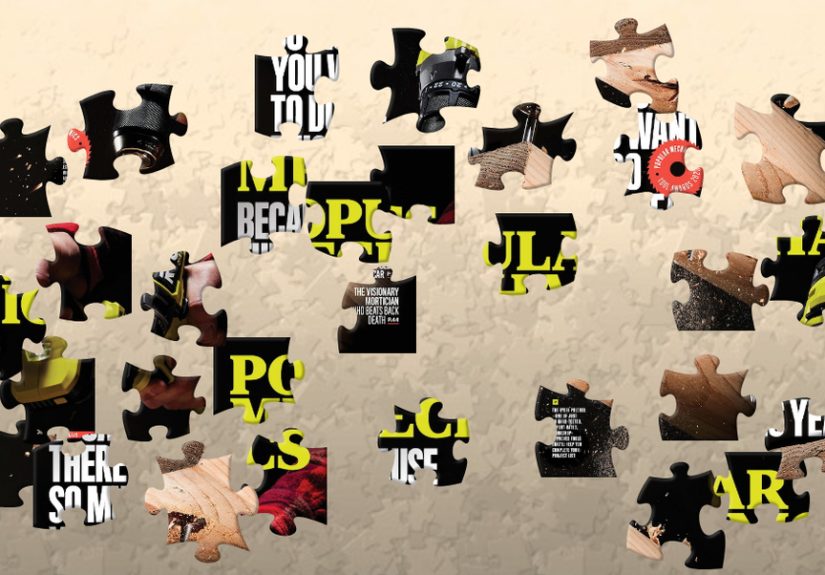
Jigsaw speed is all about decision load. The fewer pieces you have to consider at any moment, the faster you place the right one.
Research on jigsaw puzzling often describes how it engages multiple cognitive skills (visual perception, memory, mental rotation),
which is a fancy way of saying “your brain is doing a lotso make its job easier.”
- Sort first: Edges, then colors/textures, then distinct objects/patterns.
- Build borders early: A frame reduces the search area and stops pieces from drifting into the void.
- Work in zones: Complete a section, then move outward. Random placement is slower than purposeful clustering.
- Use “test-and-slide”: Try a piece quickly; if it’s wrong, move ondon’t wrestle it into place.
Word Games, Anagrams, and Word Searches: Hunt for Anchors
Word puzzles often have “anchor features”rare letters, obvious prefixes/suffixes, or standout patterns.
- Spot uncommon letters: J, Q, X, Z often narrow possibilities fast.
- Use common chunks: -ING, -TION, -MENT, PRE-, UN-, RE- can speed recognition.
- Don’t read every option: Scan for shape and pattern first, then confirm.
Logic Puzzles: Draw the Map Before You Start Running
For logic grids, riddles, and deduction puzzles, speed comes from externalizing the rules. In other words: write things down.
Your brain is powerful, but it’s also running about 37 background tabs.
- Translate clues into constraints: “A is not B” becomes a quick mark you don’t have to remember.
- Look for forced moves: A single constraint that eliminates many options is a speed jackpot.
- Work cleanly: Messy notes create rework. Rework creates sadness.
How to Time Yourself (Without Turning It Into a Drama)
Timing is simple, but consistent timing is where progress lives. Use the same rules each time:
- Start: When you first read the puzzle (not after you’ve “just peeked” at one clue).
- Stop: When the solution is complete and correct.
- Track: Puzzle type + difficulty + time + one note about what slowed you down.
If you want a fun upgrade, track splits: note the time when you complete the first third, second third, and final third.
Many solvers discover the same pattern: they start fast, hit a wall, then crawl to the finish. Splits help you target the wall.
Mini Challenge: Try These Puzzles and Time Yourself
Ready for a quick benchmark? Pick one, set a timer, and go. (No stress. This is play.)
Challenge 1: The “One-Look” Riddle
Riddle: What has keys but can’t open locks?
Show answer
A piano (or a keyboard).
Challenge 2: The Tiny Logic Snap
Prompt: A bat and a ball cost $1.10 total. The bat costs $1.00 more than the ball. How much does the ball cost?
Show answer
The ball costs $0.05. (Then the bat is $1.05.)
Challenge 3: The Micro Word Puzzle
Prompt: Unscramble: TEHRA (5 letters). Hint: something you need to solve puzzles.
Show answer
HEART.
Your time matters less than your process. If you froze, note why. If you solved instantly, note what made it obvious.
That’s how speed is built: observation, not ego.
Are Puzzles “Good for Your Brain”? The Realistic Take
Puzzles are widely recommended as cognitively stimulating activities, and many health organizations emphasize the value of staying mentally active
across the lifespan. That said, it’s important to keep expectations grounded: puzzles aren’t a magical shield that guarantees brain health.
Evidence and expert guidance often point toward a broader approachvaried mental challenge, physical activity, social engagement, good sleep,
and other healthy habits.
What puzzles can do reliably is train puzzle-relevant skills: pattern recognition, attention, memory retrieval, and flexible thinking.
And because different puzzles use different skills, switching puzzle types is like “cross-training” for your mind.
How to Practice for Speed Without Burning Out
The fastest way to get faster is to practice small, not heroic. Try this:
- 10-minute sprints: Short practice builds repetition without fatigue.
- One skill per session: Today is “crossings first.” Tomorrow is “theme hunting.”
- Review one mistake: Not a postmortem dissertationjust one thing you’ll do differently next time.
Also: give yourself permission to enjoy it. The point of a puzzle is still a puzzle. If the timer starts ruining the fun,
switch it off and solve like a cozy detective in a sweater.
Common Speed Traps (and the Quick Fixes)
- Trap: Fixating on one clue. Fix: Move on after 20–30 seconds and return later.
- Trap: Over-checking. Fix: Commit only when confident; use crossings to verify.
- Trap: Messy notes. Fix: Write cleaner, smaller, and with consistent symbols.
- Trap: Same puzzle type forever. Fix: Rotate puzzle styles to build flexible skills.
- Trap: “I’m slow, so I’m bad.” Fix: You’re not slowyou’re learning the puzzle’s language.
Experiences With Puzzle Speed: What It Feels Like (and Why That Matters)
Talk to enough puzzle people and you’ll hear a pattern: speed doesn’t arrive like a lightning bolt. It shows up quietly, wearing comfortable shoes.
One day you realize you didn’t have to “think hard” about the easy parts. Your hands just moved. Your eyes jumped to the clue that mattered.
You stopped rereading the same sentence like it was written in ancient prophecy.
Early on, timed puzzles can feel like trying to jog while carrying groceries. You’re balancing the actual puzzle with the awareness of the timer,
plus a third voice that pops in uninvited to say, “Wow, you’re really taking your time, huh?” That voice is not helpful. The best solvers learn
to treat the timer like background music: present, but not the main event.
Then comes the first “flow moment.” It might happen in a crossword when the theme suddenly clicks and three long answers fall into place like dominoes.
Or in a jigsaw when you realize the sky pieces aren’t one big problemthey’re three shades of sky, and you can sort them. Or in Sudoku when you
catch yourself scanning automatically, finding singles without effort. It feels less like grinding and more like seeing.
Competitive-style speedwhether you’re racing friends or just racing yesterday’s youadds a social flavor. People develop tiny rituals:
a certain pen, a certain playlist, a cup of coffee that’s “only for puzzles.” Some solvers swear they’re faster on weekdays because their brain
is already warmed up from work; others swear weekends are best because their mind isn’t stuffed with errands. What’s consistent is how personal
speed becomes. It’s not just a number; it’s a snapshot of your attention that day.
And yes, sometimes speed feels ridiculous. You’ll have a day where you absolutely flyeverything lands, every clue behaves, every piece fitsand you
feel like a genius with a cape. Then the next day you’ll get stuck on a four-letter word you’ve seen a thousand times and suddenly forget that
vowels exist. That’s normal. Puzzle speed isn’t a straight line; it’s more like a doodle made by a caffeinated squirrel.
The most satisfying experience, though, is when speed becomes a side effect of skill. You’re not rushing; you’re navigating cleanly. You’re not
guessing; you’re choosing. The puzzle feels less like a wall and more like a trail with markers. You still slow down at the tricky parts,
but you don’t panic there. You treat the hard sections like a short conversation: “Okay, I don’t know you yet, but I will.”
If you want one takeaway from real-world solving, it’s this: speed comes from better decisions, not faster thinking.
Better decisions look like moving on sooner, writing things down, sorting pieces before building, and letting the puzzle help you.
When you practice that, you’ll finish fasteroften without even feeling like you tried to be fast. And that’s the sweetest kind of progress:
the kind that feels like play.
Conclusion: Your Next Best Time Starts With One Small Change
If you want to complete puzzles faster, don’t start by demanding speed. Start by improving your process: scan for quick wins, anchor high-value
information, and loop back with better context. Time yourself consistently, practice in small bursts, and treat mistakes as datanot drama.
Whether you’re a crossword climber, a Sudoku scanner, or a jigsaw sorter, your best “fast” is the one that’s accurate, repeatable, and still fun.