Table of Contents >> Show >> Hide
- Why Rotisserie Prime Rib Is Worth the Hype
- Ingredients for the Best Rotisserie Prime Rib Roast Recipe
- Equipment You Will Want Nearby
- How to Prep the Roast
- How to Set Up the Grill for Rotisserie Prime Rib
- Step-by-Step Rotisserie Prime Rib Roast Recipe
- Doneness Guide
- How to Carve Rotisserie Prime Rib Like You Know Exactly What You’re Doing
- What to Serve with Rotisserie Prime Rib Roast
- Common Mistakes to Avoid
- Leftovers: The Best Problem to Have
- Conclusion
- Kitchen Notes and Real-World Rotisserie Prime Rib Experiences
If there is a more dramatic way to cook a prime rib than spinning it slowly over live fire, I have not met it yet. A rotisserie prime rib roast recipe delivers three things every holiday host secretly wants: a deeply browned crust, juicy slices with real beefy swagger, and the kind of entrance that makes people wander toward the grill like moths to a buttery, rosemary-scented flame. It is dinner and theater in one glorious act.
The good news is that rotisserie prime rib is not difficult. The slightly annoying news is that it rewards patience, a thermometer, and the willingness to let the roast do its thing without poking it every seven minutes like an overprotected houseplant. Once you understand the basics, this is one of the most reliable “special occasion” meals you can make.
In this guide, you will get a full rotisserie prime rib roast recipe, timing strategy, doneness tips, carving advice, and real-world lessons that help you avoid the classic mistakes: under-seasoning, overcooking, uneven balance on the spit, and slicing too soon because everyone is hovering with plates.
Why Rotisserie Prime Rib Is Worth the Hype
Prime rib already starts with a built-in advantage: generous marbling, rich flavor, and a natural tenderness that does not need much fuss. Rotisserie cooking adds another layer of magic. Because the roast turns continuously, the surface bastes in its own rendered fat while the heat circulates more evenly around the meat. The result is a beautifully bronzed exterior and a juicy interior that feels luxurious without being fussy.
It also solves a common roast problem. In a traditional oven roast, one side can become “presentation side” while the rest quietly hopes for equal treatment. On a rotisserie, every side gets its moment. It is the culinary version of fair lighting.
What Cut Should You Buy?
Ask for a bone-in rib roast, standing rib roast, or prime rib roast. A three-rib roast usually feeds about 6 people generously, while a four- to five-rib roast works well for a larger holiday table. Bone-in roasts look dramatic, stay juicy, and make the whole operation feel appropriately grand. If the butcher removes the bones and ties them back on, that is perfectly fine too. It makes carving easier later.
USDA Prime is excellent, but USDA Choice is also fantastic for rotisserie prime rib, especially when it has good marbling. Do not get hung up on the word “prime” in the dish name and assume only the most expensive roast on earth will do. This is dinner, not a mortgage application.
Ingredients for the Best Rotisserie Prime Rib Roast Recipe
- 1 bone-in prime rib roast, about 8 to 10 pounds
- 3 tablespoons kosher salt
- 2 tablespoons freshly ground black pepper
- 1 tablespoon granulated garlic
- 1 tablespoon chopped fresh rosemary
- 1 tablespoon chopped fresh thyme
- 2 tablespoons neutral oil or softened butter
- 1 teaspoon onion powder
- Optional: 1 teaspoon smoked paprika for a subtle color boost
Optional Horseradish Cream for Serving
- 1/2 cup sour cream
- 2 to 3 tablespoons prepared horseradish
- 1 teaspoon Dijon mustard
- 1 teaspoon lemon juice
- Pinch of salt and pepper
Equipment You Will Want Nearby
- Rotisserie attachment and motor
- Butcher’s twine
- Instant-read thermometer
- Leave-in probe thermometer if you have one
- Drip pan
- Heat-resistant gloves
- Sharp carving knife
If you skip the thermometer, you are not “cooking by instinct.” You are gambling with expensive beef. Prime rib deserves better.
How to Prep the Roast
1. Dry-Brine for Better Flavor
If you can plan ahead, season the roast with kosher salt 24 to 48 hours before cooking. Place it on a rack over a sheet pan and refrigerate it uncovered. This dry-brining step improves seasoning, helps the surface dry out for better browning, and gives the final crust a serious upgrade. If you have less time, even an overnight rest helps.
2. Trim and Tie
Pat the roast dry. If there is a thick exterior fat cap, trim it lightly so it is not excessively thick. You want richness, not a wool coat. Tie the roast with butcher’s twine every 1 1/2 to 2 inches so it forms a compact, even cylinder. This helps it rotate smoothly and cook more evenly.
3. Season Generously
Mix the salt, pepper, garlic, rosemary, thyme, onion powder, and optional smoked paprika. Rub the roast lightly with oil or softened butter, then coat it all over with the seasoning. Prime rib is a large roast, so timid seasoning disappears quickly. Be confident.
How to Set Up the Grill for Rotisserie Prime Rib
Prepare your grill for indirect heat. For most gas or charcoal grills, you want the heat source on the sides with a drip pan underneath the center. The roast should spin over indirect heat, not sit directly above a blast furnace. Target a cooking temperature in the 275°F to 325°F range. That gives you enough heat for browning while still protecting the interior from racing past medium-rare.
Mount the roast securely on the spit, tightening the forks well. Make sure the roast is centered. A badly balanced roast will wobble, strain the motor, and generally behave like it has had too much holiday punch. If your setup allows balancing, use it.
Step-by-Step Rotisserie Prime Rib Roast Recipe
- Remove the roast from the refrigerator 60 to 90 minutes before cooking. This takes some of the chill off and promotes more even cooking.
- Preheat the grill. Stabilize it at 275°F to 325°F with the rotisserie installed and a drip pan underneath.
- Secure the roast on the spit. Tighten the forks well and test the motor briefly to be sure the roast rotates smoothly.
- Start cooking over indirect heat. Close the lid and let the rotisserie do the work. Resist the urge to open the grill every five minutes. The roast is spinning, not escaping.
- Monitor the internal temperature. Begin checking after about 2 hours for smaller roasts, or around 2 1/2 to 3 hours for larger roasts.
- Pull based on your target doneness. For a rosy medium-rare center, remove the roast when the coolest part reaches about 120°F to 125°F. For medium, aim for 130°F to 135°F.
- Rest the roast. Transfer it to a board, tent loosely with foil, and rest for 20 to 30 minutes. The temperature will continue to rise as the roast rests.
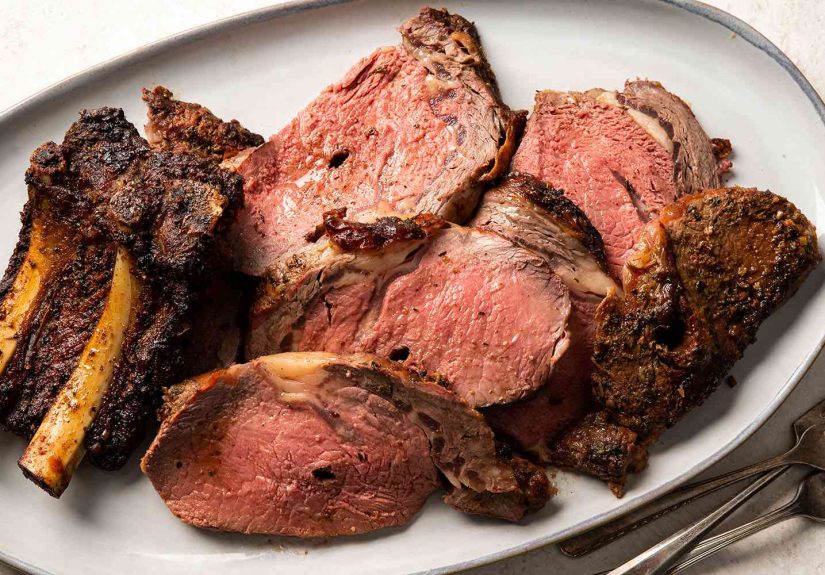
- Carve and serve. Remove the spit, cut away the twine, separate the bones if needed, then slice across the grain into thick, beautiful slabs.
For an 8- to 10-pound roast, total cook time is often around 3 to 4 1/2 hours, but the thermometer matters far more than the clock. Weather, grill design, roast shape, and exact temperature all change the timeline.
Doneness Guide
Prime rib is one of those dishes where carryover cooking matters a lot. The roast keeps climbing after it leaves the grill, so pulling at the final target temperature is how people accidentally end up serving “medium-well holiday sadness.”
- Rare: Pull at 110°F to 115°F
- Medium-rare: Pull at 120°F to 125°F
- Medium: Pull at 130°F to 135°F
If you want to follow the official food-safety benchmark for whole beef roasts, cook to 145°F and allow a 3-minute rest. For many home cooks chasing classic steakhouse-style medium-rare texture, the culinary target is lower than that, which is why using a thermometer and choosing your preferred doneness intentionally matters so much.
How to Carve Rotisserie Prime Rib Like You Know Exactly What You’re Doing
First, remove the spit and any twine. If the roast is bone-in, run your knife along the curve of the bones to separate the meat in one large piece. Then slice the meat crosswise to your desired thickness. Thick slices feel more luxurious and stay warmer longer, which is helpful when people suddenly decide they need photos before dinner.
Serve with a spoonful of pan juices, horseradish cream, or a simple au jus. Rotisserie prime rib does not need a complicated sauce, but it does appreciate a good supporting cast.
What to Serve with Rotisserie Prime Rib Roast
- Mashed potatoes or duchess potatoes
- Yorkshire pudding
- Creamed spinach
- Roasted carrots or Brussels sprouts
- A crisp green salad with a bright vinaigrette
- Horseradish sauce, au jus, or both if you like options
Prime rib is rich, so pairing it with at least one bright or bitter side keeps the plate from feeling too heavy. It also makes you seem very balanced and wise.
Common Mistakes to Avoid
Not Seasoning Early Enough
Prime rib is thick. Surface seasoning applied right before cooking can still taste good, but early salting produces a deeper, more polished flavor.
Cooking by Time Alone
A roast is done when the internal temperature says it is done, not when a timer starts looking judgmental.
Skipping the Rest
Resting is not optional. Cut too soon and the juices run out onto the board instead of staying in the meat where they belong.
Poor Rotisserie Balance
If the roast is mounted off-center, it may cook unevenly and stress the motor. Take the extra minute to secure it properly.
Using Direct Heat
Rotisserie prime rib should cook over indirect heat. Direct heat can scorch the outside before the center reaches a beautiful, sliceable doneness.
Leftovers: The Best Problem to Have
Slice leftover prime rib thin for sandwiches, warm it gently with a little broth, or serve it with eggs the next morning and pretend you live in a luxury lodge. Store leftovers promptly, wrap well, and reheat gently so the meat stays tender. Prime rib punishes aggressive reheating with the emotional energy of a very disappointed maître d’.
Conclusion
A great rotisserie prime rib roast recipe is not about showing off complicated technique. It is about using a superb cut of beef wisely: season early, cook over controlled indirect heat, trust the thermometer, and rest before carving. The rotisserie adds even cooking, self-basting movement, and a crust that feels like it came straight from a steakhouse with much better lighting than your backyard.
Whether you make this for Christmas dinner, a birthday feast, or a weekend when you simply decide subtlety is overrated, rotisserie prime rib is one of those dishes that delivers real payoff. It looks impressive, tastes even better, and turns dinner into an occasion. And really, that is what a great roast is supposed to do.
Kitchen Notes and Real-World Rotisserie Prime Rib Experiences
One of the most common experiences people have with rotisserie prime rib is realizing that the grill feels strangely quiet once the roast starts turning. There is no frantic flipping, no dramatic pressing, no complicated last-minute maneuvering. It just spins steadily, browning itself while everyone nearby starts offering “helpful” advice they absolutely did not prepare in advance. The cook’s job becomes less about constant action and more about patience, observation, and thermometer discipline. That shift alone makes the process feel different from most grilling.
Another real-world lesson is how much the weather matters. On a calm day, the roast can cruise along beautifully and hit its target temperature on schedule. On a cold or windy evening, the grill may lose heat faster than expected, stretching the cook and testing your confidence. Many home cooks learn this exactly once, then become deeply loyal to leaving extra time in the schedule. Prime rib is a terrible dish to rush and an excellent dish to start early.
There is also the balancing act, literally. The first time someone mounts a large roast on a spit, there is often a brief moment of uncertainty: “Is this secure, or am I about to invent a new holiday disaster?” Once it is centered properly, though, the turning motion becomes mesmerizing. You can actually see why rotisserie cooking works so well. Fat renders slowly, the exterior develops color evenly, and the meat takes on that polished, almost restaurant-like finish that makes guests assume you know more than you are willing to admit.
Then comes the aroma. This is not a subtle recipe. Rosemary, garlic, pepper, and beef fat drifting through the yard have a way of gathering people long before dinner is served. Someone always wanders out “just to check,” which is usually code for “I smelled that from inside and now I need visual confirmation that glorious things are happening.” Rotisserie prime rib has a social gravity to it. It turns the grill into the center of the evening.
Perhaps the most valuable experience cooks report is learning not to panic when the roast seems to stall. Large roasts often linger in a temperature range that feels suspiciously permanent. This is normal. It does not mean the grill is broken or the cow is defying science. It means big cuts take time. Once you accept that, the process becomes calmer and far more enjoyable.
And finally, there is the carving moment. After all the waiting, resting, and resisting the urge to cut early, the first slice tells the story. If the center is rosy, the crust is well browned, and the juices stay mostly in the meat instead of flooding the board, that is the reward. People notice. They take bigger bites. Conversation gets quieter for a minute, which is about the highest compliment dinner can receive. That is why this recipe earns a permanent place in so many holiday rotations: it feels celebratory, tastes luxurious, and gives the cook a very satisfying moment of “Yes, I absolutely meant to do that.”