Table of Contents >> Show >> Hide
- What Are Salivary Glands, and Where Does Cancer Start?
- Salivary Gland Cancer Symptoms: What to Watch For
- Causes and Risk Factors: Why Does It Happen?
- How Salivary Gland Cancer Is Diagnosed
- Staging and Grading: Why the Details Matter
- Treatment Options: Surgery, Radiation, and Beyond
- Surgery (often the cornerstone)
- Radiation therapy (common after surgery, sometimes instead of it)
- Chemotherapy (more selective than you might expect)
- Targeted therapy (when the tumor has a “bullseye”)
- Immunotherapy (training the immune system to recognize cancer)
- Clinical trials (today’s plan B can become tomorrow’s plan A)
- Side Effects and Supportive Care (Because Treatment Affects Real Life)
- Life After Treatment: Follow-Up, Recurrence, and Moving Forward
- Questions to Ask Your Care Team
- Experiences: What the Salivary Gland Cancer Journey Can Feel Like (Real-World Perspectives)
- Conclusion
If you’ve ever had cottonmouth and thought, “Wow, saliva is underrated,” you’re not wrong. Saliva helps you chew, swallow, taste, talk, and keeps your teeth from turning into a science experiment. So when something’s off in the salivary glands, it can get your attentionsometimes with a quiet lump, sometimes with symptoms that feel annoyingly vague.
Salivary gland cancer is a rare type of head and neck cancer. The good news (yes, we’re starting with good news): most salivary gland tumorsespecially in the parotid glandare not cancer. The important part is knowing what signs to take seriously, how diagnosis actually works, and what treatment usually looks like when cancer is confirmed.
What Are Salivary Glands, and Where Does Cancer Start?
You have three pairs of major salivary glands plus lots of tiny “minor” glands:
- Parotid glands: in front of and just below the ears (the biggest ones).
- Submandibular glands: under the jaw.
- Sublingual glands: under the tongue.
- Minor salivary glands: sprinkled throughout the mouth and throat lining.
Salivary gland cancers can develop in any of these glands. The parotid gland is the most common place for salivary gland tumors overall. That “tumor” word is doing a lot of work here: it can mean benign (non-cancer) or malignant (cancer).
Salivary Gland Cancer Symptoms: What to Watch For
Many salivary gland cancers show up as a painless lumpoften near the jaw, cheek, or neck. But symptoms depend on the gland involved, the tumor type, and whether nearby nerves are irritated or affected.
Common symptoms
- Lump or swelling in the mouth, cheek, jaw, or neck
- Pain in the mouth, cheek, jaw, ear, or neck that doesn’t go away
- Numbness in part of the face
- Weakness of facial muscles on one side (facial droop)
- Trouble opening the mouth widely
- Trouble swallowing
- Facial asymmetry (one side looks different in shape/size)
Symptoms that deserve faster evaluation
Not every lump is cancer, but certain “red flags” push doctors to investigate more urgently:
- Rapid growth of a lump (weeks to a few months)
- Facial nerve weakness (new drooping, trouble closing an eye, uneven smile)
- Firm, fixed mass (doesn’t move much when you touch it)
- Swollen neck lymph nodes
One key reason facial symptoms matter: important nerves run through or near the salivary glandsespecially around the parotid glandso a tumor can affect nerve function.
Causes and Risk Factors: Why Does It Happen?
Here’s the honest truth: most salivary gland cancers don’t have one clear cause. But research has identified risk factors that may increase the odds.
Better-established risk factors
- Older age: risk increases as people get older.
- Radiation exposure: especially prior radiation therapy to the head and neck.
- Workplace exposure: certain radioactive substances, and possibly some industrial exposures (evidence varies).
Possible or cancer-type-specific factors
- Viral associations: certain rare subtypes may be linked with viruses (for example, Epstein-Barr virus in a very rare lymphoepithelial cancer; HPV has been found in some mucoepidermoid cancers, but the relationship isn’t fully settled).
- Immune system factors: people with HIV may have higher risk (research is ongoing).
- Smoking: smoking is linked to some benign salivary gland tumors (like Warthin tumor). For salivary gland cancers, smoking’s role is less direct and can vary by tumor type.
What you can actually do (without spiraling)
- If you smoke, quitting helps overall health and reduces risk for many head and neck cancers.
- Use workplace protective measures if you’re around dusts/chemicals/radiation sourcesthis isn’t just about cancer; it’s about lungs, skin, and everything else you’d like to keep functioning.
- Get persistent lumps checked early. Early evaluation often means simpler treatment.
How Salivary Gland Cancer Is Diagnosed
Diagnosis usually happens in layers: exam, imaging, biopsy, and then more tests to stage the cancer if it’s confirmed.
1) Medical history and physical exam
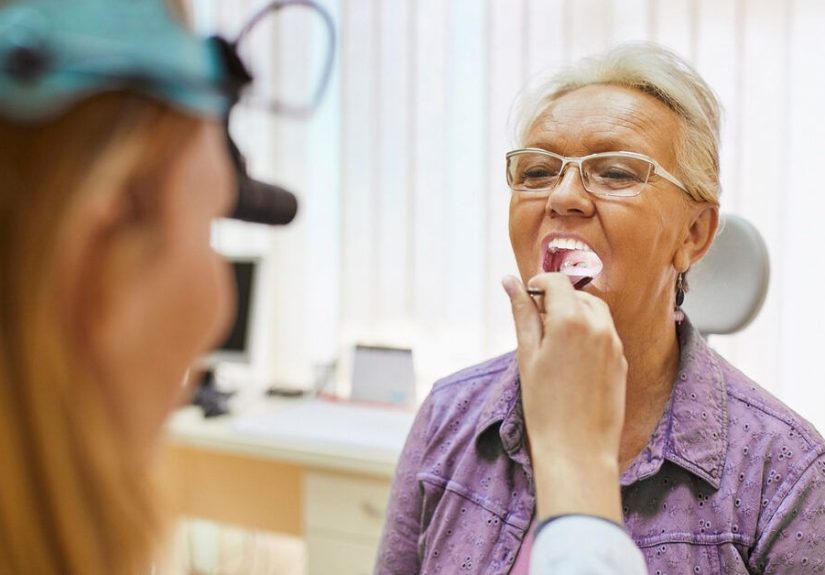
A clinician examines the mouth, jaw, face, and neck, checks lymph nodes, and evaluates facial nerve function. If cancer is suspected, you’re typically referred to a head and neck specialist (ENT/otolaryngologist or head and neck surgeon).
2) Imaging tests (the “map” before the “mission”)
Imaging helps locate the tumor, see its relationship to nearby structures, and look for spread.
- Ultrasound: often used for major salivary glands and can guide biopsy.
- CT scan: helpful for size, location, lymph nodes, and possible spread (like lungs).
- MRI: excellent for soft tissue detail and nerves.
- PET/CT: sometimes used to evaluate spread or recurrence, especially in higher-risk situations.
3) Biopsy (the part that confirms what it is)
Imaging can suggest cancer, but a biopsy confirms it. Common biopsy approaches include:
- Fine needle aspiration (FNA): often the first step; a thin needle collects cells and fluid.
- Core needle biopsy: removes a small tissue sample (sometimes used when more detail is needed).
- Surgery: if needle biopsy isn’t definitive and suspicion remains high, removing the mass can both diagnose and treat.
Because salivary gland cancers can be complex and include many subtypes, it’s reasonable to ask whether the pathology will be reviewed by someone experienced in salivary gland tumors.
4) Lab and molecular testing (the “how do we outsmart it?” phase)
Beyond confirming cancer, labs may test for markers that can guide treatmentespecially in advanced or recurrent disease. Examples include:
- HER2 (a growth-related protein that can be targeted in some tumors)
- Androgen receptor (AR) (some tumors respond to hormone-blocking approaches)
- NTRK fusion genes (rare, but highly actionable with certain targeted drugs)
- High tumor mutational burden (TMB-H) (may influence immunotherapy options)
Staging and Grading: Why the Details Matter
“Stage” describes how far cancer has spread. “Grade” describes how aggressive the cancer cells look under the microscope. Together, they help doctors pick the best treatment plan.
Staging basics
- T (Tumor): size and local invasion
- N (Nodes): whether lymph nodes are involved
- M (Metastasis): whether it has spread to distant organs
Broadly speaking, early-stage cancers are limited to the gland (and sometimes nearby tissue), while advanced stages may involve lymph nodes, nerves, bone, or distant spread. Minor salivary gland cancers are staged based on the site where they arise (like oral cavity or sinuses).
Treatment Options: Surgery, Radiation, and Beyond
Treatment depends on the gland involved, stage, grade, tumor subtype, and what matters most to you (function, appearance, long-term side effects, and yesyour life schedule and sanity).
Surgery (often the cornerstone)
For many patients, surgery is the main treatment. The goal is to remove the tumor with a margin of healthy tissue when possible.
- Parotidectomy: removal of part or all of the parotid gland. Surgeons work carefully around the facial nerve.
- Submandibular or sublingual gland removal: depends on tumor location and spread.
- Neck dissection: removal of lymph nodes if cancer has spread or risk is high.
- Reconstruction/rehab: may include reconstructive procedures, dental care, and therapy for speech/swallow function.
Radiation therapy (common after surgery, sometimes instead of it)
Radiation is often used:
- After surgery to reduce the chance of recurrenceespecially with high-grade tumors, close/positive margins, or perineural invasion.
- As primary treatment when surgery isn’t possible or would cause major functional/cosmetic harm.
- For recurrence, depending on prior radiation exposure and location.
Modern techniques like IMRT (intensity-modulated radiation therapy) aim to target the tumor while limiting dose to healthy tissue. Some centers may use specialized forms (such as proton therapy) in select situations. For certain unresectable or recurrent malignant tumors, specialized radiation approaches (including fast neutron therapy at select centers) have been reported as options.
Chemotherapy (more selective than you might expect)
Chemotherapy isn’t always a central player in salivary gland cancerespecially for early-stage disease. It may be used:
- With radiation in certain high-risk or advanced situations (often in clinical-trial settings)
- For metastatic or recurrent disease when other options are limited
- To manage symptoms and slow progression in cancers that have spread
Targeted therapy (when the tumor has a “bullseye”)
Targeted therapy uses drugs aimed at specific proteins or gene changes driving tumor growth. This is where molecular testing matters. Examples of “targetable” findings can include:
- HER2-positive tumors (may respond to HER2-directed drugs)
- AR-positive tumors (may respond to hormone-blocking approaches)
- NTRK fusion-positive tumors (may respond to TRK inhibitors)
Immunotherapy (training the immune system to recognize cancer)
Immunotherapy may be considered in some advanced cases, including situations where tumor testing suggests it could help (for example, certain marker patterns such as high tumor mutational burden). It’s not “one-size-fits-all,” but it can be a meaningful option for the right scenario.
Clinical trials (today’s plan B can become tomorrow’s plan A)
Because salivary gland cancers are rare and diverse, clinical trials are a major way doctors refine treatmentespecially for advanced, recurrent, or molecularly targeted approaches. If you’re eligible, trials may offer access to therapies not widely available yet.
Side Effects and Supportive Care (Because Treatment Affects Real Life)
Salivary gland cancer treatment can affect chewing, speech, swallowing, facial movement, and dental healthso supportive care is not “extra.” It’s part of treatment.
Possible surgery-related effects
- Temporary or persistent facial weakness (depending on nerve involvement)
- Changes in sensation around the ear/jaw
- Scarring and tightness
- Swallowing or speech changes (often improved with therapy)
Possible radiation-related effects
- Dry mouth (xerostomia) and thicker saliva
- Changes in taste and appetite
- Mouth sores and irritation
- Higher risk of cavities (dry mouth reduces the mouth’s natural protection)
A practical (and underrated) step: get dental guidance early. Dry mouth during head and neck radiation can increase infection risk and tooth decay risk, and pre-treatment dental care can help prevent complications.
Life After Treatment: Follow-Up, Recurrence, and Moving Forward
Follow-up care usually includes regular head and neck exams and imaging when appropriateespecially in the first few years. Your team watches for recurrence, manages side effects (like dry mouth), and supports rehabilitation.
Prognosis depends on multiple factors, including stage, grade, tumor subtype, nerve involvement, lymph node spread, and overall health. Some low-grade, localized tumors can be cured with surgery alone, while higher-grade or advanced tumors often need a combination approach.
Questions to Ask Your Care Team
- What type of salivary gland tumor do I have, and what grade is it?
- What stage is it, and what does that mean for my treatment?
- Will my pathology be reviewed by a specialist experienced in salivary gland tumors?
- Do I need molecular testing (HER2, AR, NTRK, TMB), and how would results change treatment?
- Is surgery recommended, and what are the risks to facial nerve function?
- Do I need radiation after surgery? What technique will be used (like IMRT), and why?
- How will you help prevent dental complications and manage dry mouth?
- Should I consider a clinical trial now or later?
Experiences: What the Salivary Gland Cancer Journey Can Feel Like (Real-World Perspectives)
Medical facts matterbut so does the lived experience of getting through diagnosis and treatment. People often describe the beginning as strangely ordinary: a small lump near the jawline, a “maybe it’s a swollen gland” moment, or a puffiness that shows up in selfies before it shows up on anyone’s worry radar. Because the lump is frequently painless, it’s easy to procrastinate. Many patients later say the hardest part was not the biopsy or the scansit was the waiting and the uncertainty in between appointments.
The diagnostic process can feel like a crash course in new vocabulary: ultrasound, CT, MRI, FNA, pathology, staging. An FNA biopsy may sound intimidating, but people often report it’s quicker than expectedmore “awkward pressure” than “movie-level drama.” What can be emotionally intense is hearing, “We need more tissue,” or, “This is a rare tumor type.” Rare can feel isolating, even when you’re surrounded by competent experts.
If surgery is part of treatment, experiences vary widely depending on the tumor’s location and whether nerves are involved. Some patients bounce back with a surprisingly normal-looking incision and minimal long-term changes. Others deal with temporary facial weakness, numbness, or stiffness and describe the early recovery as a mix of relief (“It’s out”) and frustration (“Why does smiling feel like a group project?”). Many people find it helps to ask early about rehabspeech therapy, swallowing support, jaw-stretch exercisesbecause small daily routines can make a big difference over time.
For those who receive radiation, the experience is often described as manageable but cumulative. The first week can feel deceptively easythen dry mouth, taste changes, and fatigue build gradually. People frequently talk about learning “hydration strategy” like it’s an Olympic event: water bottles everywhere, bedtime humidifiers, sugar-free lozenges, and a new appreciation for sauces and soups. Dental care becomes a practical priority, not a cosmetic one. Patients also mention the emotional ups and downs of daily appointments: the routine can be grounding, but it can also be exhausting.
In survivorship, many describe a shift from “treating cancer” to “rebuilding normal.” Follow-up visits can trigger anxiety, even when things are going well. At the same time, people often find unexpected wins: clearer priorities, stronger support networks, and a deep respect for their own resilience. If there’s a common thread, it’s this: having a team that treats the whole personfunction, comfort, confidence, and long-term quality of lifecan be just as important as the treatment itself.
Conclusion
Salivary gland cancer is rare, but it’s not a mystery box. Persistent lumps, facial weakness, numbness, or swallowing issues deserve evaluationespecially when symptoms don’t resolve. Diagnosis usually combines a careful head and neck exam, imaging, and biopsy, and treatment often centers on surgery with radiation added when risk factors call for it. For advanced cases, targeted therapy and immunotherapy may be options when tumor testing reveals actionable markers. With the right specialist team and supportive care, many patients move from “What is happening?” to “Here’s the plan,” and that plan can make all the difference.