Table of Contents >> Show >> Hide
- Mariska Hargitay’s Message: Olivia Benson Still Has More Road Ahead
- Season 28 Is Confirmed, and Season 30 Is the Big Target
- Why Olivia Benson Remains the Heart of SVU
- The Benson-Stabler Question Is Back in the Spotlight
- Season 27 Proves the Show Is Still Reinventing Itself
- Why SVU Still Works in 2026
- Mariska Hargitay’s Real-Life Advocacy Adds to the Show’s Legacy
- Could SVU Continue Without Mariska Hargitay?
- What Fans Should Expect Next
- Experience Section: Watching SVU Grow Up With Its Audience
- Conclusion: The Future of SVU Looks Strong
Note: This original article is based on current public reporting available as of Aprirtainment Weekly, Variety, and other U.S. entertainment sources.
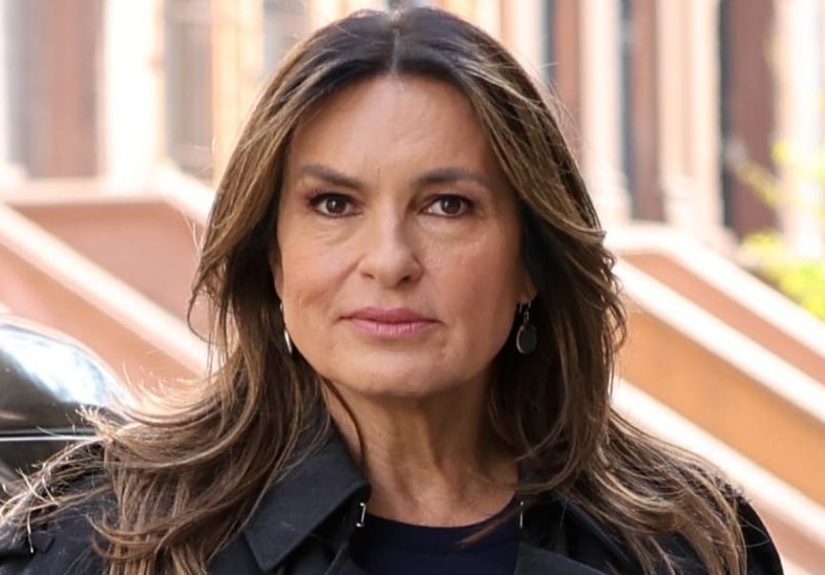
If television had a Hall of Fame for characters who seem less like fictional people and more like members of the family, Captain Olivia Benson would have her own wing, probably with excellent lighting and a firm-but-compassionate security policy. For more than two decades, Mariska Hargitay has carried Law & Order: Special Victims Unit with the kind of emotional authority that makes viewers sit up straighter when Benson enters a room. So naturally, whenever Hargitay says anything about the future of SVU, fans lean in like they just heard the opening “dun-dun.”
The good news for viewers is simple: Mariska Hargitay does not sound ready to leave SVU behind. Recent coverage of her comments at an NBCUniversal Emmy event made it clear that she still sees life in the long-running NBC drama. The series has already secured its next chapter with Season 28, and Hargitay has publicly suggested that Season 30 is not just a dream scribbled in a producer’s notebook but a real possibility. In other words, Olivia Benson may need to order more blazers.
Mariska Hargitay’s Message: Olivia Benson Still Has More Road Ahead
The biggest takeaway from Hargitay’s recent comments is that she remains deeply invested in Law & Order: SVU. That matters because, for many fans, the show and Hargitay are inseparable. Yes, SVU is part of Dick Wolf’s larger Law & Order universe. Yes, the procedural format is famously durable. But the emotional center has always been Benson: first a detective, then a leader, now a captain whose presence gives the series its moral gravity.
According to recent reporting, Hargitay said she loves the show, the cast, the showrunner, the writers, the producers, and the challenge the work still gives her. That is not the language of someone quietly backing toward the exit sign. It sounds more like an actor who understands the rare position she is in: playing one character for a historic length of time while still finding new layers to explore.
For SEO searchers wondering “Is Mariska Hargitay leaving SVU?” the current answer appears to be: not right now. In fact, the opposite. Hargitay has framed the future of SVU as active, ambitious, and creatively alive. She is not promising the show will run foreverno show can, unless it is secretly powered by coffee, syndication, and Dick Wolf’s calendarbut she is clearly not speaking like someone ready to close the Benson file.
Season 28 Is Confirmed, and Season 30 Is the Big Target
Law & Order: SVU has already made television history as one of the most durable dramas in American primetime. The show premiered in 1999, which means it has survived Y2K anxiety, flip phones, low-rise jeans, streaming wars, and roughly 4,000 “TV is dead” think pieces. Its continued renewal is not just nostalgia; it reflects a brand that still works for NBC and still pulls in loyal viewers across broadcast and streaming platforms.
The most important recent development is that SVU has been renewed for Season 28. That puts the show on track to continue through the 2026–27 television season, extending a record-breaking run that few scripted dramas can even pretend to chase. Hargitay’s comments about reaching Season 30 give fans a new milestone to watch. Season 30 would not simply be another number; it would be a cultural landmark for a primetime drama built around a female lead character who has grown with her audience.
What makes the Season 30 idea believable is not only the renewal math. It is Hargitay’s tone. She has talked about the show’s current creative energy with pride, including strong praise for the Season 27 finale. When an actor who has played the same role since 1999 still calls the work challenging, that is worth paying attention to. Most people get tired of the same lunch order after three Tuesdays. Hargitay is still finding meaning in Olivia Benson after more than 25 years.
Why Olivia Benson Remains the Heart of SVU
There are long-running TV characters, and then there is Olivia Benson. The difference is emotional trust. Viewers do not return to SVU only to see the case structure. They return because Benson represents steadiness in a world where justice is often complicated, delayed, or imperfect. She listens. She pushes. She makes mistakes. She learns. She leads with empathy without becoming soft, which is a difficult balance to write and an even harder one to perform.
Hargitay’s performance has helped shape the show’s identity from the beginning. Early Benson was a sharp detective with a strong instinct for victims and survivors. Over time, she became a mentor, mother figure, commanding officer, and symbol of institutional memory. That evolution is one reason the series can still function after many cast changes. New detectives can enter the squad room, but Benson gives the show continuity.
That continuity is especially valuable in modern television. Many dramas reboot, spin off, vanish, return, and vanish again before viewers can remember everyone’s name. SVU has stayed recognizable while adapting its cast, tone, and storytelling. Hargitay’s presence keeps the emotional contract intact: audiences know they are entering a world where the subject matter is serious, the cases are difficult, and Benson will try to meet pain with humanity.
The Benson-Stabler Question Is Back in the Spotlight
No discussion of SVU’s future is complete without mentioning Elliot Stabler, played by Christopher Meloni. The Benson-Stabler partnership is one of the defining relationships in the Law & Order franchise. Whether viewers see it as friendship, partnership, unresolved romance, emotional chaos in sensible shoes, or all of the above, the connection still inspires debate years after Meloni’s original SVU departure.
The conversation became louder after Law & Order: Organized Crime was canceled after five seasons. Hargitay reacted emotionally to Meloni’s farewell to that chapter and has signaled openness to seeing Benson and Stabler share the screen again. She has also acknowledged the practical reality: Meloni is in demand, and schedules have to align. Translation: the door is open, but television production still owns a calendar, and the calendar is usually the villain.
A Stabler return would make sense for SVU if handled carefully. The show does not need to turn into a greatest-hits reunion tour. What it needs, if Stabler reappears, is emotional purpose. Benson and Stabler work best when their history complicates the present. Their scenes carry years of loyalty, grief, disagreement, and unfinished conversation. Used sparingly, that dynamic could add real weight to a future season.
Season 27 Proves the Show Is Still Reinventing Itself
One reason Hargitay’s optimism feels credible is that SVU has not been frozen in 1999 amber. Season 27 brought notable cast movement and creative changes. Kelli Giddish returned as Amanda Rollins in a more regular capacity, giving the series back one of its strongest character relationships. Rollins and Benson have a lived-in dynamic that brings warmth, tension, and shorthand to the squad room.
The season also continued reshaping the team around Benson, with cast members such as Ice-T, Peter Scanavino, Kevin Kane, Aimé Donna Kelly, and others contributing to the current ensemble. Change is necessary for a show this old. A long-running procedural cannot survive by pretending nothing has changed. It must refresh the squad while preserving the identity that made viewers care in the first place.
That balance is tricky. Too much change and fans feel unmoored. Too little change and the show starts feeling like a rerun of itself. SVU has often lived in that tension, sometimes gracefully and sometimes with the messiness of a squad room printer on deadline. But Hargitay’s enthusiasm suggests that the people making the show believe the current version still has spark.
Why SVU Still Works in 2026
The obvious answer is brand recognition, but that is only part of the story. Plenty of recognizable TV brands fade when audiences stop caring. SVU continues because it offers a rare combination: familiar structure, emotional stakes, and a lead character who has become a cultural touchstone. Viewers know the rhythm, but they also know Benson’s reactions will make the episode feel human rather than mechanical.
Another reason is flexibility. SVU can tell courtroom stories, squad investigations, character-driven episodes, crossover events, and topical dramas. It can bring back familiar faces or introduce new investigators. It can build episodes around Benson’s leadership, Fin’s experience, Rollins’ return, Carisi’s legal perspective, or the moral pressure of difficult cases. That variety gives the writers room to keep the formula from going stale.
The show also benefits from a loyal multi-generational audience. Some viewers started watching when Benson and Stabler were young detectives. Others discovered the series through streaming, reruns, clips, or family members who treat Thursday-night Law & Order like a household tradition. That gives SVU something many current shows struggle to build: deep viewer habit.
Mariska Hargitay’s Real-Life Advocacy Adds to the Show’s Legacy
Hargitay’s connection to SVU extends beyond acting. Her work with the Joyful Heart Foundation, which she founded in 2004, has made her a prominent advocate for survivors of sexual assault, domestic violence, and child abuse. That real-world commitment has shaped the way many viewers understand her relationship to Olivia Benson. She is not simply playing a compassionate character; she has used the platform of the show to support broader conversations about healing and justice.
This is part of why speculation about Hargitay leaving SVU carries more emotional weight than typical casting gossip. For many viewers, Benson is not just a TV captain. She represents someone who listens when others do not. That symbolism can become heavy, but Hargitay has carried it with unusual seriousness. Her advocacy has helped turn a television role into a public-facing mission.
That does not mean SVU is a documentary or a substitute for real-world support systems. It is still a scripted drama, complete with dramatic timing, convenient clues, and the occasional interrogation scene where everyone’s cheekbones are suspiciously well lit. But Hargitay’s off-screen work gives the series an added layer of credibility and purpose.
Could SVU Continue Without Mariska Hargitay?
Technically, almost any TV show can continue after a lead exits. Creatively, SVU without Hargitay would be a far more difficult question. Olivia Benson is not just a major character; she is the spine of the series. Removing her would force the show to redefine itself in a way that might feel less like evolution and more like replacing the Statue of Liberty with a very confident traffic cone.
That is why Hargitay’s continued commitment is so important. NBC can renew the show, writers can plan arcs, and producers can shape the ensemble, but audience confidence depends heavily on Benson remaining part of the story. Hargitay’s recent comments reassure fans that, at least for now, the show’s most essential element is still in place.
Could the series eventually build toward a Benson transition? Possibly. A show with this much history will one day need an ending, or at least a major reinvention. But based on Hargitay’s latest remarks, that moment does not appear imminent. The current conversation is not “How does SVU say goodbye?” It is “How far can SVU still go?”
What Fans Should Expect Next
Fans should expect more of what has kept SVU alive: Benson-led storytelling, evolving squad dynamics, high-pressure cases, and the possibility of meaningful returns from familiar characters. Season 28 gives the writers room to extend current arcs and possibly set up the road to Season 30. If Hargitay’s excitement is any clue, the show is not coasting toward a quiet finish.
The Stabler question will remain one of the biggest fan magnets. Even if Christopher Meloni does not return immediately, the cancellation of Organized Crime makes future appearances easier to imagine. A carefully timed Benson-Stabler reunion could become a major television event, especially if tied to a milestone season or emotional episode.
Still, the real future of SVU should not depend only on nostalgia. The show will need strong new cases, character growth, and fresh conflicts for Benson as a leader. Hargitay’s belief in the current creative direction suggests that the team understands this. Fans may love the past, but they tune in for the present.
Experience Section: Watching SVU Grow Up With Its Audience
One of the most interesting experiences related to SVU is how differently the show lands depending on when a viewer discovers it. Someone who watched from the beginning remembers a sharper, younger Benson working beside Stabler in a very different television era. Someone who joins through streaming sees the whole transformation at once: detective to sergeant, sergeant to lieutenant, lieutenant to captain, and finally to the emotional anchor of a franchise that refuses to age quietly.
That long arc gives SVU a rare feeling. It is not just a show people watch; it is a show many people have lived alongside. College students watched it in dorm rooms. Parents watched reruns while folding laundry. Night-shift workers caught episodes at odd hours. Some viewers found comfort in Benson’s steadiness during difficult personal seasons. Others simply enjoyed the procedural rhythm: case, conflict, courtroom pressure, resolution, and that familiar closing feeling that justice, while imperfect, was at least pursued.
Writing about Hargitay revealing the show’s future also means recognizing how unusual her career achievement is. Most actors dream of one signature role. Hargitay has built an entire cultural identity around Olivia Benson while still allowing the character to mature. Benson has not remained frozen as the same detective from 1999. She has become more measured, more burdened, more authoritative, and more aware of the cost of leadership. That kind of long-form character development is nearly impossible in modern television, where many shows end after eight episodes and a cliffhanger.
There is also a shared fan experience around the Benson-Stabler relationship. Viewers debate it with the intensity usually reserved for sports playoffs and Thanksgiving seating charts. Should they become romantic? Should they remain bonded partners? Should the show leave the tension unresolved forever, like a museum exhibit titled “Two People Who Clearly Need One Honest Conversation”? The fact that fans still care so much proves how powerful the pairing remains.
At the same time, SVU has grown beyond that original partnership. Rollins, Fin, Carisi, Bruno, Curry, and other characters have helped the series move forward. That is part of the viewing experience too: learning to accept new squad members, missing old ones, and realizing that the squad room is supposed to change. Benson’s presence makes those changes easier because she functions as the bridge between eras.
For longtime viewers, Hargitay’s confidence in the future feels like permission to keep investing. Nobody wants to love a show that seems exhausted. Her comments suggest the opposite: a star who still finds the work meaningful, a series still chasing milestones, and a character still capable of carrying new stories. That is why the future of SVU feels less like a final chapter and more like another thick case file landing on Benson’s desk.
Conclusion: The Future of SVU Looks Strong
Mariska Hargitay’s latest comments give Law & Order: SVU fans plenty of reason to breathe easier. Season 28 is already on the way, Season 30 is being discussed as a realistic milestone, and Hargitay sounds energized rather than exhausted. For a show that has been on television since 1999, that is remarkable.
The future of SVU will likely depend on three things: Hargitay’s continued passion, the writers’ ability to keep Benson’s world evolving, and the show’s willingness to honor its history without becoming trapped by it. A Benson-Stabler reunion would certainly add electricity, but the larger story is Olivia Benson herself. As long as Hargitay wants to keep walking into that squad room, SVU still has a powerful reason to continue.