Table of Contents >> Show >> Hide
- Can You Really Wash a Down Jacket by Hand?
- What You Need Before Washing
- Simple Ways to Wash a Down Jacket by Hand: 9 Steps
- Step 1: Read the Care Label First
- Step 2: Empty Pockets and Close Everything
- Step 3: Spot Clean Stains Before Soaking
- Step 4: Fill a Clean Tub With Cool or Lukewarm Water
- Step 5: Submerge the Jacket Gently
- Step 6: Let It Soak Briefly
- Step 7: Rinse Until the Water Runs Clear
- Step 8: Press Out Water With Towels
- Step 9: Dry It Completely and Restore the Loft
- How Often Should You Wash a Down Jacket?
- Common Mistakes That Ruin Down Jackets
- How to Keep a Down Jacket Clean Longer
- Troubleshooting: What If Your Down Jacket Looks Flat After Washing?
- Extra Experience: Lessons From Washing a Down Jacket by Hand
- Conclusion
A down jacket is basically a wearable cloud: light, warm, cozy, and slightly dramatic when it gets dirty. One splash of coffee, one muddy dog hug, or one mysterious sleeve stain from “who knows what,” and suddenly your beloved puffer looks less like mountain-ready outerwear and more like it lost a wrestling match with soup.
The good news? You can wash a down jacket by hand at home without ruining its loft, flattening the feathers, or turning it into a sad, lumpy pancake. The trick is to treat it gently, use the right cleaner, rinse it well, and dry it with patience. Down insulation works because tiny feather clusters trap warm air. Harsh detergent, twisting, high heat, and leftover soap can all interfere with that fluffy structure. But with the right process, your jacket can come out fresh, clean, and ready for another season of heroic zipper struggles.
This guide walks you through how to wash a down jacket by hand in 9 simple steps, including what supplies to use, what mistakes to avoid, and how to bring back that satisfying puff. Whether you own a lightweight down sweater, a winter parka, a puffer jacket, or a packable hiking coat, these tips will help you clean it safely and confidently.
Can You Really Wash a Down Jacket by Hand?
Yes, in many cases, you can hand wash a down jacket. In fact, hand washing can be a gentle option if you do not want to use a washing machine or if your jacket feels too delicate for machine agitation. However, the care label always gets the final vote. Some jackets have special shell fabrics, waterproof coatings, leather trim, fur trim, or construction details that require professional cleaning.
For most washable down jackets, hand washing is safe when you use cool or lukewarm water, a down-specific cleaner, and a careful drying method. The most important part is not the washing itself. It is the drying. Down must be fully dry before you wear or store the jacket. Damp down can clump, smell musty, and lose insulating power. Nobody wants a jacket that smells like a wet attic with sleeves.
What You Need Before Washing
Gather everything before you start. A wet down jacket is surprisingly heavy, and once your hands are in a tub full of soapy water, you will not want to go hunting for towels.
Supplies
- A clean bathtub, large sink, or plastic basin
- Down wash or down-specific detergent
- Soft sponge or clean microfiber cloth
- Several clean towels
- Drying rack or clean flat surface
- Optional: dryer balls or clean tennis balls if the care label allows tumble drying
What to Avoid
- Regular heavy-duty detergent
- Bleach
- Fabric softener
- Dryer sheets
- Wringing or twisting the jacket
- High heat
Down-specific cleaner is worth using because it is designed to clean feathers without stripping too much of their natural oils. Regular detergent may leave residue or make the insulation less lofty. Think of down as fancy hair: it needs cleansing, not emotional damage.
Simple Ways to Wash a Down Jacket by Hand: 9 Steps
Step 1: Read the Care Label First
Before you do anything heroic, check the care label inside the jacket. Look for instructions about water temperature, drying, ironing, bleaching, and dry cleaning. If the label says “dry clean only,” do not gamble unless you are comfortable risking the jacket. If it says the jacket is washable, continue with confidence.
Also check whether the jacket can be tumble dried. Some down jackets can go in the dryer on low or no heat, while others should air dry only. This matters because drying is the stage where most down jacket disasters happen. The wash is the easy part; the dry is the marathon.
Step 2: Empty Pockets and Close Everything
Empty every pocket. This is your chance to find old receipts, lip balm, trail mix crumbs, parking tickets, and possibly the missing key you blamed on the universe. Zip all zippers, close snaps, fasten hook-and-loop tabs, and secure any drawcords.
Closing the jacket protects the fabric and hardware during washing. It also helps the jacket hold its shape. If your jacket has removable faux fur trim, a detachable hood, or a belt, remove those pieces if the label recommends it.
Step 3: Spot Clean Stains Before Soaking
Do not toss the jacket straight into water and hope stains vanish out of respect. Treat visible stains first. Add a small amount of down wash to a damp cloth or sponge, then gently dab dirty areas such as cuffs, collar, pocket edges, and the front zipper flap. These areas collect body oil, sunscreen, makeup, food splatters, and general life evidence.
Avoid scrubbing aggressively. Down jackets often use lightweight shell fabric, and rough scrubbing can damage the finish or create shiny worn spots. Use gentle circular motions, then let the cleaner sit for a few minutes while you prepare the wash water.
Step 4: Fill a Clean Tub With Cool or Lukewarm Water
Clean the bathtub or basin first so no leftover soap, shampoo, or bathroom cleaner touches the jacket. Fill it with cool or lukewarm water. Hot water is not your friend here. It can stress fabrics, affect coatings, and make certain trims or colors unhappy.
Add a small amount of down wash according to the product instructions. More soap does not mean more clean. It usually means more rinsing, more time, and more muttering under your breath. Down is highly absorbent, so excess detergent can hide inside the baffles and make rinsing a slow-motion drama.
Step 5: Submerge the Jacket Gently
Place the jacket in the water and press it down slowly. At first, it may float like a stubborn marshmallow. Give it time to absorb water. Once it is fully wet, gently press the soapy water through the jacket with your hands.
Do not twist, wring, knead, or mash the jacket like bread dough. Down clusters are delicate when wet, and the stitching or baffles can be stressed by rough handling. Instead, use slow pressing motions. Push the jacket down, release, and repeat. You want the cleaner to move through the insulation without beating it up.
Step 6: Let It Soak Briefly
Allow the jacket to soak for about 15 to 30 minutes, unless the care label or detergent instructions say otherwise. This gives the cleaner time to loosen dirt, sweat, and oils. During the soak, gently press the jacket a few times to move water through the down.
If the water becomes very dirty, drain it and refill the tub with a fresh detergent solution. This is especially useful for jackets that have survived camping trips, muddy commutes, or the mysterious grime that appears after a winter in storage.
Step 7: Rinse Until the Water Runs Clear
Drain the soapy water. Press the jacket gently against the side or bottom of the tub to remove excess water, but do not wring it. Refill the tub with clean cool water and press the jacket repeatedly to release detergent. Drain and repeat as needed.
This step is extremely important. Soap residue can weigh down the feathers, reduce loft, and leave the fabric feeling stiff. Rinse until the water looks clear and you no longer see suds. Depending on how much cleaner you used, this may take several rounds. Put on music, accept your destiny, and keep rinsing.
Step 8: Press Out Water With Towels
Once the jacket is rinsed, press out as much water as possible without twisting. Lift the jacket carefully from underneath because wet down is heavy. Supporting the whole garment helps protect the seams and baffles.
Lay the jacket flat on a clean towel. Roll the towel and jacket together like a sleeping bag, then press gently to absorb water. Repeat with another dry towel if needed. This towel-rolling method removes moisture without crushing or stretching the jacket. It is also oddly satisfying, like making a very expensive burrito.
Step 9: Dry It Completely and Restore the Loft
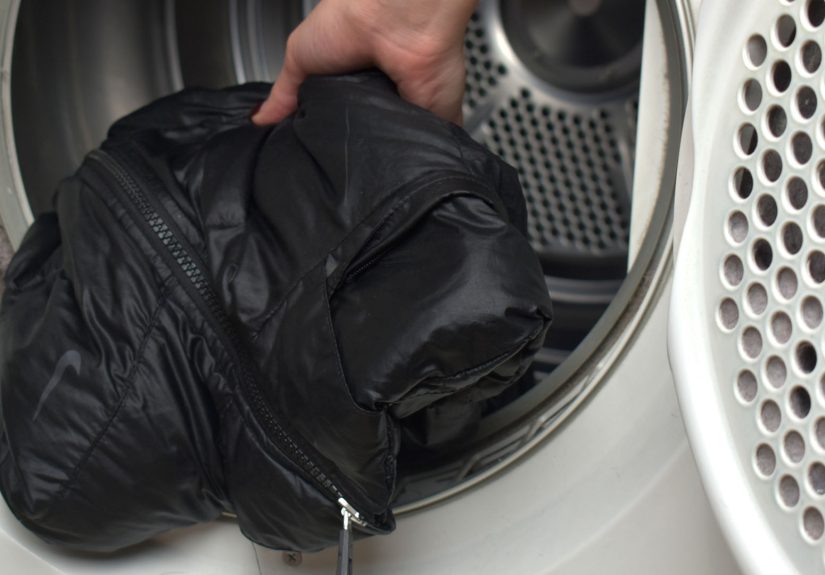
Drying a down jacket takes time. If the care label allows tumble drying, place the jacket in the dryer on low heat or no heat with a few clean dryer balls or tennis balls. Stop the dryer every 20 to 30 minutes to shake the jacket gently and break up clumps with your fingers. The balls help separate the down and restore puffiness.
If air drying, lay the jacket flat on a drying rack or clean towel in a well-ventilated area. Turn it regularly, shake it gently, and separate clumps as it dries. Avoid hanging a soaking wet down jacket on a hanger because the weight can pull the insulation downward and distort the shape.
Do not rush this stage. A down jacket can feel dry on the outside while the inside is still damp. Keep drying until the jacket feels light, fluffy, and evenly puffed. If any areas feel cold, dense, or lumpy, they may still contain moisture. Keep going. Your future warm self will thank you.
How Often Should You Wash a Down Jacket?
You do not need to wash a down jacket after every wear. In fact, washing too often can shorten its lifespan. For normal use, cleaning once or twice per season is usually enough. If you wear it heavily for hiking, skiing, travel, or daily winter commuting, wash it when it smells, looks visibly dirty, or loses loft because of body oils and grime.
Spot cleaning between full washes is a smart habit. The collar, cuffs, and pocket areas usually get dirty first. A quick wipe with down wash and water can freshen the jacket without putting the entire garment through a full bath.
Common Mistakes That Ruin Down Jackets
Using Too Much Detergent
Too much soap is one of the biggest mistakes. It creates residue that can flatten down and make the jacket harder to rinse. Use the recommended amount of down wash, and when in doubt, use less rather than more.
Wringing the Jacket
Never twist a wet down jacket. Wringing can damage baffles, stress seams, and clump feathers. Press water out gently instead.
Drying on High Heat
High heat can damage synthetic shell fabrics, melt trims, or affect water-repellent finishes. Use low heat, no heat, or air drying based on the care label.
Storing It Before It Is Fully Dry
Putting away a damp down jacket is an invitation for odor, mildew, and sadness. Make sure it is completely dry before storing it.
Skipping the Final Fluff
After drying, shake the jacket and massage any remaining clumps. The goal is even insulation throughout the baffles, not one giant feather meatball in the left sleeve.
How to Keep a Down Jacket Clean Longer
Wear a scarf or neck gaiter to reduce body oil buildup around the collar. Keep makeup, sunscreen, and hair products away from the neckline when possible. Store the jacket in a breathable space instead of compressing it tightly for months. Compression is fine for short trips, but long-term storage should allow the down to stay relaxed and lofty.
If your jacket has a durable water repellent finish and water no longer beads on the surface, washing may help remove grime that blocks performance. Some jackets may also need a separate reproofing treatment, but only use products suitable for down garments and follow the instructions carefully.
Troubleshooting: What If Your Down Jacket Looks Flat After Washing?
Do not panic. A down jacket often looks terrible while wet. It may appear thin, clumpy, wrinkled, and emotionally defeated. This is normal. The loft usually returns during thorough drying.
If the jacket is still flat after drying, it may not be fully dry inside. Continue drying on low or no heat if allowed, adding dryer balls to help break up clumps. If air drying, shake the jacket regularly and use your fingers to gently separate dense areas. Give it more time than you think it needs.
If the jacket still has soap residue, it may feel heavy or stiff. In that case, you may need to rinse it again and dry it properly. Yes, this is annoying. No, you are not the first person to learn that “just a little extra detergent” was not a personality trait the jacket appreciated.
Extra Experience: Lessons From Washing a Down Jacket by Hand
Hand washing a down jacket teaches you one thing very quickly: patience is not optional. The first time many people wash a down jacket by hand, they expect it to behave like a sweatshirt. It does not. A sweatshirt gets wet, gets clean, and dries without making a fuss. A down jacket, on the other hand, has stages. First it floats. Then it absorbs water and becomes surprisingly heavy. Then it looks completely ruined. Then, after careful drying, it slowly returns to its fluffy self like a magic trick performed by laundry.
One useful experience is to start with the dirtiest areas before soaking the whole jacket. Collars and cuffs often need more attention than the body. If you skip spot cleaning, those areas may still look dull after the full wash. A soft sponge and a tiny amount of down wash can make a big difference. The key is not to attack the stain like you are sanding furniture. Gentle pressure works better and protects the shell fabric.
Another practical lesson is that the rinse phase usually takes longer than expected. Down jackets hold water and detergent inside the baffles, so one quick rinse is rarely enough. When the water still feels slippery or shows bubbles, keep rinsing. This is the step that separates a fresh, fluffy jacket from one that dries stiff and tired-looking. If you are washing in a bathtub, draining and refilling several times is normal.
Drying is where most beginners get nervous. A wet down jacket can look flat enough to make you question every decision that led you to that moment. But the flat look does not mean the jacket is ruined. Down clusters collapse when wet. As they dry, they need movement and air to separate again. If the label allows a dryer, low heat with dryer balls is usually the easiest way to restore loft. If you air dry, choose a breezy room, turn the jacket often, and gently break up clumps with your fingers.
One important habit is checking hidden damp spots. Thick areas near the zipper, hood, shoulders, and pockets can stay moist longer than the outer fabric suggests. If the jacket feels cool in one area, it may still be damp inside. Keep drying until it feels evenly light and puffy. Storing it too soon can create a musty smell that is much harder to fix than ordinary dirt.
It also helps to wash your down jacket on a day when you do not need to wear it immediately. This is not a “wash at 7 p.m., wear at 8 p.m.” situation. Give yourself plenty of drying time. A rushed job can leave the down clumped, while a slow and careful process helps the jacket recover its warmth and shape.
Finally, remember that washing a down jacket by hand is not something you need to do constantly. Most jackets benefit from occasional washing, not weekly spa treatments. Spot clean when needed, air it out after sweaty use, and save full hand washing for when the jacket is visibly dirty, smells less than charming, or has lost some of its loft. Done correctly, hand washing can make your jacket look cleaner, smell fresher, and perform better without shortening its useful life.
Conclusion
Learning how to wash a down jacket by hand is less complicated than it seems. The formula is simple: read the care label, use the right cleaner, handle the jacket gently, rinse thoroughly, and dry it completely. The process takes time, but it is far better than letting dirt, sweat, and body oils slowly flatten your favorite winter layer.
A clean down jacket is warmer, fresher, and more comfortable to wear. It also looks better, which matters when your coat is basically your public personality for three months of winter. Treat it kindly, avoid shortcuts, and your puffer will reward you with cozy loft instead of lumpy regret.