Table of Contents >> Show >> Hide
- Why This Pocket Rotary Cellphone Captured So Much Attention
- The Real Appeal: A Phone That Knows Its Job
- How the Rotary Cellphone Fits Into Today’s Dumbphone Trend
- What Makes This Rotary Cellphone More Than a Gimmick
- The Benefits of Living With a Pocket Rotary Cellphone
- The Downsides You Shouldn’t Ignore
- Who Should Actually Consider a Phone Like This?
- What a Pocket Rotary Cellphone Says About the Future of Tech
- Experiences: What Life Feels Like With a Pocket Rotary Cellphone
- Conclusion
There comes a moment in modern life when your phone buzzes, lights up, chirps, pings, and basically behaves like a tiny casino in your pocket. You pick it up to check one message and somehow end up watching a video about a raccoon stealing cat food, reading half a group chat, and forgetting why you touched the phone in the first place. That is exactly why the idea of a pocket rotary cellphone feels so weirdly refreshing.
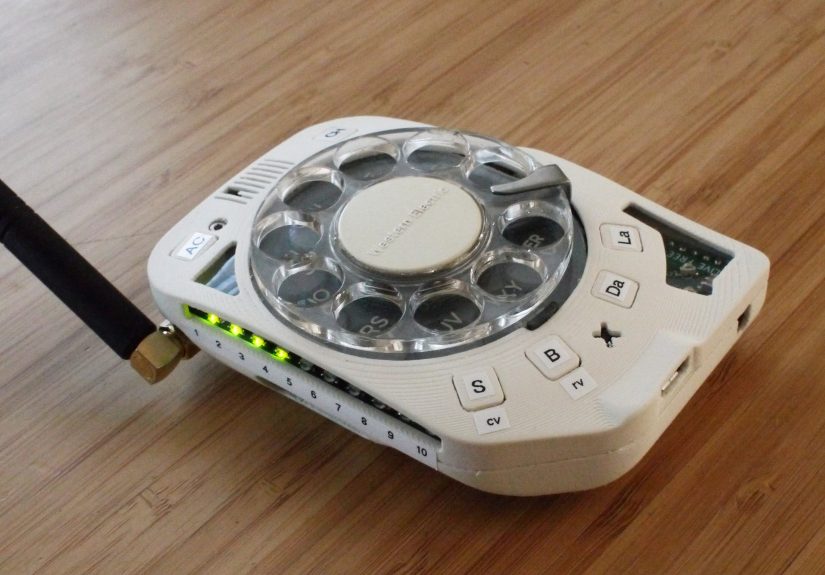
Part retro novelty, part rebellion against digital overload, the rotary cellphone created by engineer Justine Haupt became famous because it dared to ask a wonderfully inconvenient question: what if a cell phone just helped you make calls and then politely stopped trying to run your entire life? No endless app notifications. No algorithmic bait. No accidental doomscrolling while standing in line for coffee. Just a device with tactile controls, a distinctive dial, and a personality so bold it practically wears suspenders.
But this isn’t just a quirky design story. The appeal of a rotary-style minimalist phone taps into something bigger: people are tired. Tired of the pressure to always respond, always refresh, always be reachable, always be “on.” That helps explain why simpler phones, dumbphones, and digital detox tools keep attracting attention. The pocket rotary cellphone is not merely cute. It represents a serious desire for calmer technology.
Why This Pocket Rotary Cellphone Captured So Much Attention
The reason this device stood out is simple: it looks like yesterday and tomorrow collided in a garage and somehow produced excellent design. Haupt’s original open-source build used a real rotary mechanism, a 3D-printed body, and hardware chosen for one core purpose: making a phone that stripped mobile communication down to essentials.
In a world where most devices are black rectangles trying to look slightly more rectangular every year, this thing had actual character. It wasn’t trying to be sleek in the usual sense. It was trying to be intentional. There is a difference.
The genius of the rotary concept is not nostalgia for nostalgia’s sake. It is the way the interface changes your behavior. A touchscreen begs to be tapped, swiped, opened, refreshed, and endlessly explored. A rotary dial says, “Please make one choice at a time.” That may sound slow, but for many people, slow is exactly the point.
The Real Appeal: A Phone That Knows Its Job
The pocket rotary cellphone fits into the growing conversation around digital minimalism. People are increasingly interested in devices that reduce distraction instead of manufacturing more of it. And honestly, that makes sense. For years, tech design rewarded stickiness. The more time you spent glued to a screen, the more “successful” the system was. Great for engagement metrics. Less great for your attention span.
A rotary-style phone flips that logic on its head. It is a communication tool first, a lifestyle statement second, and a temptation machine never. That can feel downright luxurious.
It prioritizes calls over clutter
Most smartphones are Swiss Army knives that somehow became leaf blowers. They can do everything, loudly, all the time. A pocket rotary cellphone does far less, and that limitation is exactly why it can be appealing. Calls become easier to prioritize because there are fewer competing demands on the device.
It restores tactile satisfaction
There is something deeply satisfying about physical controls. Buttons click. Switches mean yes or no. A rotary dial gives your fingers a job and your brain a clearer sense of action. You do not wonder whether you tapped the right invisible spot on a slab of glass. You know what happened because you physically did it.
It makes distraction less convenient
This may be the pocket rotary cellphone’s greatest superpower. It doesn’t just remove apps. It changes the rhythm of use. A device like this is not built for “just checking one thing,” which is fortunate because “just checking one thing” is how people lose 37 minutes and emerge confused, slightly annoyed, and somehow holding three unrelated tabs open.
How the Rotary Cellphone Fits Into Today’s Dumbphone Trend
The rotary cellphone may be the most charming member of the dumbphone trend, but it is not alone. Simpler phones have been gaining renewed interest among people who want less screen time, fewer notifications, and more control over their own attention. Some are switching full-time. Others keep a simpler phone for weekends, travel, focused workdays, or family time.
That wider movement matters because it shows this device is not just a one-off novelty project. It speaks to a cultural mood. Plenty of people are rethinking what they actually need from a phone. For some, the answer is maps, music, email, banking, messaging, and a dozen productivity apps. For others, the answer is much shorter: call, text, maybe store contacts, and please do not ruin dinner.
The pocket rotary cellphone sits on the far end of that spectrum. It is almost philosophical in its simplicity. It asks whether convenience has quietly become dependency, and whether a little friction might actually improve daily life.
What Makes This Rotary Cellphone More Than a Gimmick
At first glance, it is easy to dismiss a rotary cell phone as a stylish stunt. But the design has substance behind it. Haupt’s work was not a plastic cosplay prop pretending to be useful. It was a real engineering project, created to function as a real phone. That seriousness matters.
Even more interesting, the later Rotary Un-Smartphone concept evolved beyond the original viral build. It added practical features associated with a real modern device, including LTE support, physical switches, dual displays, support for basic SMS features, contact storage, and a stronger emphasis on being a refined voice-first phone rather than just an art object with excellent manners.
That evolution reveals the heart of the idea: the goal was never to cosplay 1957 in your jacket pocket. The goal was to build a modern phone around older values such as clarity, control, durability of purpose, and deliberate use.
It respects the user
A lot of modern hardware assumes the system is smarter than you. Long-press this. Swipe there. Tap that icon buried in a menu. Confirm again. Maybe it worked. Maybe it did not. Good luck. A rotary phone-inspired design takes a more respectful approach. An on switch is on. A mute switch is mute. A mic cutoff is a real cutoff. That kind of transparency is oddly comforting.
It is naturally anti-addictive
You do not need a lecture to use less technology when the technology itself is not begging for your attention every four seconds. A simpler phone design can act like built-in behavior design in reverse. Instead of nudging you toward more engagement, it nudges you toward finishing the task and putting the device away.
The Benefits of Living With a Pocket Rotary Cellphone
If you switched to a device like this, what would actually improve? Quite a bit, depending on how you use technology now.
1. Better focus
Without a pocket-sized carnival of alerts, your attention has fewer chances to splinter. Work can feel more linear. Conversations feel less interrupted. Even boring moments become more useful, because boredom often turns into thinking, noticing, remembering, or planning.
2. More intentional communication
A call becomes a call. A text becomes a deliberate choice rather than one more item in a flood of notifications. People often discover they communicate more clearly when the phone itself doesn’t encourage frantic, fragmented interaction.
3. Reduced screen fatigue
Staring at glowing rectangles all day can leave you mentally fried. A minimalist device cuts down on the casual, compulsive checking that adds up across the day. Less checking often means less fatigue.
4. A stronger sense of presence
When your phone stops trying to entertain you during every pause, you start noticing what is actually around you. That might sound poetic, but it is also practical. You notice street names. You finish thoughts. You make eye contact with actual human beings. Shocking, I know.
The Downsides You Shouldn’t Ignore
Now for the grown-up part: a rotary cell phone is not for everyone.
First, it is slower. That is the feature and the bug. If your life depends on quick app access, constant coordination, mobile tickets, rideshares, two-factor authentication, and instant messaging, a rotary-style phone will feel charming for about six minutes and then mildly terrifying.
Second, the original viral version was an experimental, open-source build, not a mainstream carrier-store product. Even the more refined follow-up concept still leaned toward the enthusiast and kit-building crowd rather than the average person who wants something easy right out of the box.
Third, minimalism can become romanticized. A simpler phone won’t automatically solve burnout, anxiety, poor boundaries, or bad habits if the rest of your digital life stays chaotic. It helps, but it is not magic. It is a tool, not a monk.
Who Should Actually Consider a Phone Like This?
A pocket rotary cellphone makes the most sense for specific kinds of users:
People burned out by smartphone overload
If every ping feels like someone tapping your forehead with a spoon, this kind of device will sound less absurd and more like self-defense.
Fans of analog design and maker culture
If you appreciate mechanical keyboards, film cameras, radios with actual dials, and machines that let you understand what they are doing, you will probably adore the rotary phone concept.
Anyone experimenting with digital boundaries
You do not have to marry the idea forever. Some people benefit from using a simpler phone part-time: weekends, vacations, family nights, study blocks, or work sprints.
People who want a conversation starter
Let’s be honest. Pulling out a pocket rotary cellphone in public is not subtle. It is the kind of object that invites curiosity, laughter, and at least one stranger asking, “Wait… does that actually work?”
What a Pocket Rotary Cellphone Says About the Future of Tech
Ironically, the pocket rotary cellphone may point toward a smarter future by rejecting the assumption that more features always equal better design. The best technology is not necessarily the technology that does the most. Sometimes it is the technology that removes friction from the one or two things you actually care about and refuses to waste your time everywhere else.
That idea is starting to matter more. As people become savvier about distraction, addictive app design, and attention loss, they are asking tougher questions about what devices are doing to them, not just for them. The pocket rotary cellphone lands in that conversation with a wink and a click-click-click of the dial.
It suggests a future where technology can be personal without being invasive, stylish without being manipulative, and useful without becoming an all-day demand engine. That is not anti-tech. That is better tech philosophy.
Experiences: What Life Feels Like With a Pocket Rotary Cellphone
Imagine carrying a phone that does not act like a needy coworker. That is the first emotional shift. You reach into your pocket and feel a device with shape, weight, and purpose. It is not humming with invisible social pressure. It is just there, ready when needed, silent when not. That alone can feel strangely calming.
The first few days would probably be awkward. Your thumb would go looking for an app that doesn’t exist. You would catch yourself expecting a screen full of icons, or trying to solve a moment of boredom by reflexively unlocking something. Instead, there is a dial. A real one. And that forces a pause. Oddly enough, the pause is the point.
Calls start to feel more intentional. You stop treating communication like a constant drizzle of tiny interruptions and start treating it like an actual exchange. If you call someone, you mean it. If they call you, it feels like a person is reaching out rather than a platform dragging you back in. That changes the mood of communication more than most people expect.
There is also a tactile pleasure that is hard to explain until you use physical controls again. Spinning a dial, flipping a real switch, and hearing or feeling mechanical feedback can make the device feel trustworthy. Modern phones are smooth and capable, but they often feel abstract. A rotary phone-style device feels honest. It tells you what it is doing.
Daily routines can shift in subtle ways. Waiting in line becomes waiting in line, not an excuse to vanish into a feed. A walk becomes a walk. Coffee with a friend becomes, radical concept ahead, coffee with a friend. You may notice details you usually blur past: a song overhead, a weird sign in a shop window, the fact that your neighborhood has more birds than you realized. Your world gets slightly less filtered.
Of course, there are frustrating moments. You may miss the convenience of maps, rideshare apps, camera access, or quick messaging threads. There will be times when the rotary dream collides with modern logistics and loses on points. But that tension is revealing. It shows how much of daily life has been quietly built around smartphone assumptions.
For some people, that realization would send them running back to their iPhone before lunch. For others, it would feel liberating. They would discover that not every convenience is worth the mental rent it charges. They might keep a smartphone at home for specific tasks and use the simpler phone in everyday life. Or they might simply borrow the lesson: make communication easier and distraction harder.
That is the real experience at the center of the pocket rotary cellphone story. It is not about pretending the past was perfect. It is about noticing how good it feels when a device stops competing for your attention and starts respecting it. In that sense, the click of a rotary dial can sound a lot like relief.
Conclusion
The pocket rotary cellphone is funny, stylish, impractical in spots, and surprisingly profound. It takes a familiar object from the past and turns it into a critique of the present. More importantly, it offers a compelling reminder that convenience without boundaries can become chaos wearing nice branding.
If your goal is to simplify your life, a rotary-style cellphone may not be the universal answer. But it asks exactly the right question: what if your phone did less, and your life got better because of it? For a lot of people, that question is not silly at all. It is overdue.