Table of Contents >> Show >> Hide
- Why This Smashed Potatoes Recipe Works
- The Best Potatoes for Smashed Potatoes
- Ingredients for the Best Smashed Potatoes Recipe
- How to Make Smashed Potatoes
- Tips for Crispy Smashed Potatoes Every Time
- Flavor Variations to Try
- What to Serve with Smashed Potatoes
- Common Mistakes to Avoid
- How to Store and Reheat Leftovers
- Why Everyone Loves a Great Smashed Potatoes Recipe
- Smashed Potatoes Recipe: A Longer Look at the Real-Life Experience
- Conclusion
If mashed potatoes and French fries had a golden, crispy, ridiculously lovable child, it would be smashed potatoes. They have the fluffy comfort of mashed potatoes, the crunchy edges of roasted potatoes, and the kind of personality that makes people “accidentally” take four more from the serving tray. A good smashed potatoes recipe is one of those kitchen victories that looks fancy, tastes glorious, and still doesn’t require a culinary degree or a dramatic soundtrack.
The beauty of smashed potatoes is that they’re simple at heart: boil, smash, season, roast. That’s it. But the magic lives in the details. Which potatoes work best? How do you get those craggy, crispy edges? Should you use butter, olive oil, garlic, Parmesan, herbs, or all of the above like a reasonable person? This guide walks through everything you need to know, from ingredients and technique to troubleshooting, serving ideas, storage, and real-life lessons from making these crispy little legends again and again.
Whether you’re planning a holiday dinner, a weeknight meal, or a snack that mysteriously becomes your dinner, this smashed potatoes recipe deserves a permanent spot in your cooking rotation.
Why This Smashed Potatoes Recipe Works
There are a lot of potato recipes in the world, and frankly, potatoes have never really missed. But smashed potatoes hit a uniquely satisfying sweet spot. Boiling first makes the interiors creamy and tender. Smashing creates more surface area, which means more opportunity for crisping in the oven. A hot baking sheet, a generous coating of oil or butter, and a little patience turn each potato into a crunchy-edged masterpiece.
Another reason this recipe works so well is that it’s flexible. You can keep it classic with salt, pepper, garlic, and parsley, or push it into full main-character mode with Parmesan, rosemary, chili flakes, sour cream, bacon bits, or chives. Smashed potatoes are basically the blank hoodie of side dishes: comfortable, reliable, and weirdly easy to dress up.
The Best Potatoes for Smashed Potatoes
The best choice for a crispy smashed potatoes recipe is small, thin-skinned potatoes. Baby Yukon Golds and baby red potatoes are top-tier options because they hold their shape after boiling, smash beautifully, and roast into a creamy-inside, crispy-outside dream. They also look good on a platter, which matters more than we pretend.
Russets can work, but they are more likely to fall apart because they’re starchier and less naturally structured for this method. If you want neat, picture-perfect smashed potatoes, go with smaller waxy or all-purpose potatoes. If you want rustic chaos with excellent flavor, russets may still be invited to the party.
What to Look For
- Small potatoes, about 1 1/2 to 2 inches wide
- Thin skins for better texture
- Similar size for even cooking
- Firm potatoes without sprouts or soft spots
Ingredients for the Best Smashed Potatoes Recipe
This version keeps things classic and crowd-pleasing while leaving room for you to riff later.
- 2 pounds baby Yukon Gold or baby red potatoes
- Kosher salt, for the boiling water plus seasoning
- 3 tablespoons olive oil
- 2 tablespoons melted unsalted butter
- 3 cloves garlic, finely minced
- 1/2 teaspoon black pepper
- 1 teaspoon garlic powder
- 2 tablespoons chopped fresh parsley
- 1/3 cup finely grated Parmesan cheese, optional but highly encouraged
- Fresh chives, sour cream, or flaky sea salt for serving, optional
The olive oil helps with browning, the butter adds rich flavor, and the garlic makes the kitchen smell like someone in the house actually has their life together.
How to Make Smashed Potatoes
1. Boil the Potatoes Until Tender
Place the potatoes in a large pot and cover them with cold water by about an inch. Salt the water generously. This is your first chance to season the potatoes from the inside out, so don’t be shy. Bring the pot to a boil, then reduce to a steady simmer and cook until the potatoes are fork-tender, about 15 to 20 minutes depending on size.
You want them fully cooked but not disintegrating. A fork should slide in easily, but the potatoes should still hold together when lifted. If they crumble before you even smash them, they’ve crossed the line from “tender” to “emotional support mash.”
2. Drain and Let Them Dry Slightly
Drain the potatoes well and let them sit for 5 to 10 minutes. This brief rest helps excess moisture evaporate, which is important because moisture is the sworn enemy of crispness. If you want especially crispy smashed potatoes, spread them out on a tray and let them steam off a little longer.
3. Preheat the Oven and Prepare the Pan
Heat your oven to 425°F. Line a sheet pan with parchment paper for easier cleanup, or lightly grease the pan if you prefer more direct browning. A hot oven is important here. Smashed potatoes need real heat, not a polite suggestion.
4. Smash the Potatoes
Arrange the potatoes on the prepared baking sheet with a little space between them. Use the bottom of a sturdy glass, measuring cup, jar, or potato masher to gently press each potato until it’s about 1/2 inch thick. Don’t obliterate them. You’re aiming for flattened, not emotionally devastated.
The craggy edges are where the best texture happens, so a few splits and rough bits are actually excellent news.
5. Season Generously
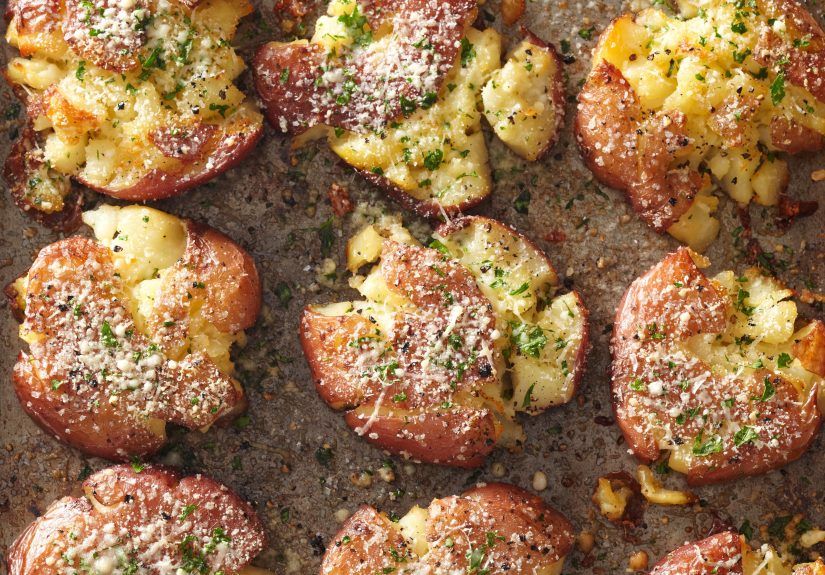
In a small bowl, combine the olive oil, melted butter, garlic, black pepper, and garlic powder. Brush or spoon the mixture over each smashed potato. Sprinkle with salt and Parmesan if using. Make sure some of the oil pools around the edges because that helps create those crisp, golden bottoms everyone fights over.
6. Roast Until Crispy
Roast the potatoes for 25 to 35 minutes, or until the edges are deep golden brown and crisp. If your oven runs cool or you want extra color, give them a few minutes under the broiler at the end. Watch carefully, because the line between “beautifully browned” and “I got distracted and now we have charcoal coins” is thinner than you think.
7. Finish and Serve
Remove from the oven and shower with parsley, chives, flaky salt, or another dusting of Parmesan. Serve hot, ideally while everyone is still pretending they’ll only have one or two.
Tips for Crispy Smashed Potatoes Every Time
Use Enough Salt in the Water
This step is easy to overlook, but it makes a real difference. Salting the boiling water seasons the potatoes all the way through, not just on the surface.
Let the Potatoes Dry Before Roasting
If the potatoes are still very wet after boiling, they’ll steam more than roast. A few extra minutes of drying can improve the final texture dramatically.
Don’t Crowd the Pan
Potatoes need space for hot air to circulate. If they’re packed together, they’ll get softer instead of crispier. No one wants steamed group-project potatoes.
Use a Mix of Fat and Heat
Olive oil brings roasting power, while butter adds flavor. Together, they create a richer and more balanced result than either one alone.
Rough Edges Are Good
The rougher the surface, the crispier the outcome. Smooth potatoes are fine. Jagged potatoes are unforgettable.
Flavor Variations to Try
Garlic Parmesan Smashed Potatoes
Add extra Parmesan before roasting and finish with more after baking. This creates a lacy, savory crust that makes the edges even more irresistible.
Rosemary and Thyme Smashed Potatoes
Mix chopped fresh rosemary and thyme into the oil-butter blend for an herby version that pairs beautifully with roast chicken, steak, or holiday dinners.
Loaded Smashed Potatoes
Top the finished potatoes with sour cream, crumbled bacon, cheddar, and chives. It’s the baked potato’s extroverted cousin.
Spicy Smashed Potatoes
Sprinkle with chili flakes, smoked paprika, or Cajun seasoning before roasting. Add a cooling dip on the side for balance.
Lemon Herb Smashed Potatoes
Finish with lemon zest, parsley, and black pepper for a brighter, fresher version that works especially well in spring and summer.
What to Serve with Smashed Potatoes
One of the best things about a smashed potatoes recipe is how easily it works with other foods. These potatoes can lean elegant, cozy, casual, or snack-table dramatic depending on what you put beside them.
- Roast chicken or turkey
- Grilled steak or pork chops
- Salmon or crispy fish
- Burgers or sandwiches
- Fried or poached eggs for brunch
- Big salads when you want “healthy” with a wink
- Dips like sour cream and chive, garlic aioli, ranch, or whipped feta
They also make an excellent party appetizer. Put out a tray with dipping sauces and watch them disappear faster than your faith in leftovers.
Common Mistakes to Avoid
Undercooking the Potatoes
If they’re not tender all the way through, they won’t smash properly. You’ll press down and they’ll resist like tiny potato bodybuilders.
Overcooking the Potatoes
If they become too soft in the boiling stage, they may fall apart before they hit the oven. You want tender, not collapsing.
Using Too Little Oil
A light drizzle is nice for salad. Smashed potatoes need enough fat to roast and crisp properly. This is not the moment for fear.
Skipping the Resting Time
That little pause after boiling helps dry the surface and improves browning later. It may seem minor, but it matters.
Serving Them Late
Smashed potatoes are best hot from the oven when the contrast between crispy exterior and fluffy interior is strongest. They’re still good later, but at peak freshness they are outrageously good.
How to Store and Reheat Leftovers
If you somehow end up with leftovers, let the potatoes cool slightly, then refrigerate them promptly in an airtight container. They keep well for 3 to 4 days. Reheat in a 400°F oven or air fryer until hot and crisp again. The microwave works in emergencies, but it softens the exterior, which is not illegal, just disappointing.
For make-ahead prep, you can boil and smash the potatoes ahead of time, then refrigerate them on a tray. Roast just before serving for the best texture. This is a very useful trick when you’re hosting and would prefer not to perform 19 tasks at once while pretending everything is effortless.
Why Everyone Loves a Great Smashed Potatoes Recipe
Smashed potatoes sit at the intersection of comfort food and clever technique. They feel homemade and generous, but they also bring texture, visual appeal, and enough crispiness to keep things exciting. They’re kid-friendly, adult-approved, holiday-worthy, and weeknight-practical. They play well with all kinds of seasonings, and they somehow manage to look rustic and impressive at the same time.
Most importantly, they taste like the kind of food people remember. Not because they’re complicated, but because they’re simple in exactly the right way. Crispy edges. Soft centers. Salt, garlic, butter, herbs. It’s a combination that does not need a marketing team.
Smashed Potatoes Recipe: A Longer Look at the Real-Life Experience
Anyone who makes smashed potatoes more than once learns pretty quickly that they are less of a strict recipe and more of a very rewarding relationship. The first time, most people are just excited by the concept. Boil potatoes, flatten them, roast them, eat them. Wonderful. The second or third time, though, you start noticing the little things that transform “pretty good” into “why did I make only one pan?”
For example, size matters more than you expect. When the potatoes are roughly the same size, the whole tray cooks evenly and feels calm and orderly. When they vary wildly, half the pan is ready while the other half is still trying to become dinner. Then there’s the smashing tool. A glass works beautifully, but so does a measuring cup, a mason jar, or even the flat bottom of a mug. Every home cook eventually develops a favorite smashing object, which is not a sentence you expect to say in life, yet here we are.
Another experience many cooks share is discovering how much the drying step matters. It feels skippable at first. You drain the potatoes and think, “They look fine. Into the oven they go.” But when you take a few extra minutes to let steam escape, the texture improves in a way that feels unfair. The edges crisp better. The bottoms brown more evenly. The whole potato tastes more focused, like it has a mission.
Seasoning is another area where experience teaches confidence. The first batch is often cautious: a little oil, a little salt, maybe some pepper if you’re feeling reckless. But smashed potatoes reward generosity. A stronger hand with salt, a brush of garlic butter, a flutter of Parmesan, a shower of herbs at the end, and suddenly the tray goes from “pleasant side dish” to “main topic of conversation.”
Then there’s the social experience, which may be the best part. Smashed potatoes are one of those foods people visibly react to. You set them down, and someone says, “Oh wow.” Someone else asks how you made them. Another person keeps hovering near the pan as if they are helping with cleanup when in fact they are strategically securing the crispiest pieces. They are deeply shareable, but they also inspire slightly selfish behavior. That’s how you know a recipe is doing its job.
Over time, cooks also realize how adaptable the recipe is to the mood of the day. Need a cozy Sunday side dish? Go with butter, garlic, and parsley. Want something party-ready? Add cheddar, bacon, and chives. Looking for something a little brighter? Finish with lemon zest and herbs. Smashed potatoes can lean comfort food, dinner-party side, game-day snack, or brunch hero without ever losing what makes them special.
And perhaps the most relatable experience of all is this: every person who makes smashed potatoes eventually regrets not doubling the batch. It happens because they look humble. Innocent, even. Just a tray of little potatoes. But once they come out of the oven all bronzed and crisp-edged, they disappear at a speed that feels almost personal. So if experience teaches anything, it’s this: trust the potatoes, use enough seasoning, give them space on the pan, and always make more than seems reasonable. Reasonable people rarely end up with enough smashed potatoes.
Conclusion
A truly great smashed potatoes recipe doesn’t ask for much: good potatoes, a hot oven, proper seasoning, and enough patience to let crispiness happen. In return, it gives you a side dish that’s crunchy, fluffy, comforting, and wildly versatile. Whether you keep them simple or load them up like a baked potato that got a glow-up, smashed potatoes deliver the kind of texture and flavor that make dinner feel more exciting. And for a recipe built from boiling and pressing potatoes, that’s honestly a pretty impressive résumé.