Table of Contents >> Show >> Hide
- Why the “Cartman Is Resistance” Framing Sparked a Fan Meltdown
- What the New Season Actually Did
- Cartman as “Resistance” Is Funny Because It Is Wrong
- Why Fans Distrust Anyone Claiming South Park for One Political Team
- The NYT Headline Was Clickable, but Fans Read It as Claiming Ownership
- Season 27 Turned South Park Into a Media Event Again
- What This Says About Political Satire in 2025
- The Smarter Take: Cartman Is Not the Resistance, but He Can Reveal Why Resistance Feels Weird
- Fan Experience: Watching the Internet Turn Cartman Into a Rorschach Test
- Conclusion
Only in America can a foul-mouthed fourth grader in a red jacket become the center of a media literacy debate. The latest online uproar around South Park began when The New York Times ran a headline framing Eric Cartman, of all fictional gremlins, as part of “the resistance.” For many longtime viewers, that phrase landed with the grace of Mr. Garrison explaining diplomacy: loudly, awkwardly, and with immediate consequences.
The reaction was fast, sarcastic, and extremely South Park. Fans roasted the headline because Cartman is not exactly a freedom fighter. He is a character whose moral compass has spent nearly three decades spinning like a broken ceiling fan. He has occasionally stumbled into doing the right thing, but usually for selfish reasons, by accident, or because the wrong thing stopped being profitable. So when a prestige newspaper appeared to place him anywhere near heroic anti-authoritarian symbolism, fans responded with the digital equivalent of: “Respectfully, have you watched the show?”
But the joke is bigger than one headline. The backlash reveals a deeper argument about South Park, political satire, media framing, and why audiences get nervous when legacy institutions try to claim a chaotic comedy as being “on their side.” Cartman may be reacting to the cultural moment, but calling him resistance material is like calling Randy Marsh a model of emotional regulation. Technically, you can say it. Spiritually, the internet will not let you live.
Why the “Cartman Is Resistance” Framing Sparked a Fan Meltdown
The core issue was not simply that fans disagreed with the New York Times. It was that the headline seemed to flatten South Park into a clean political symbol. That is dangerous territory for a show built on refusing clean symbols. Since 1997, Trey Parker and Matt Stone have used South Park to mock politicians, celebrities, moral crusaders, corporations, activists, media panics, school boards, streaming wars, and whatever Randy is pretending to be good at this week.
Cartman, meanwhile, has long been the show’s little engine of selfishness. He is not a reliable spokesman for justice. He is a satirical device: a walking alarm bell for hypocrisy, prejudice, manipulation, entitlement, and cultural opportunism. If Cartman says something that sounds politically useful for one side, experienced viewers instinctively wait for the trapdoor.
That is why fans pushed back so hard. To them, the headline sounded like a serious newspaper trying to recruit a cartoon villain into a respectable political narrative. The result felt less like cultural criticism and more like watching someone put a “Live, Laugh, Love” sign in Cartman’s bedroom.
What the New Season Actually Did
The controversy landed during a period when South Park was making unusually direct attacks on Donald Trump, Paramount, media self-censorship, and the broader political climate. Season 27 opened with “Sermon on the ’Mount,” an episode that brought Jesus back into the town’s public-school chaos and portrayed Trump in a deliberately outrageous storyline involving lawsuits, religious imagery, Satan, and a fake public-service announcement.
The episode also arrived in the shadow of major real-world media drama. Parker and Stone had secured a massive new Paramount streaming deal, while Paramount had recently settled Trump’s lawsuit over a 60 Minutes interview. That combination made the episode feel sharper than a routine celebrity roast. It was not just “Trump joke goes brrr.” It was South Park poking the very corporate machinery that broadcasts it.
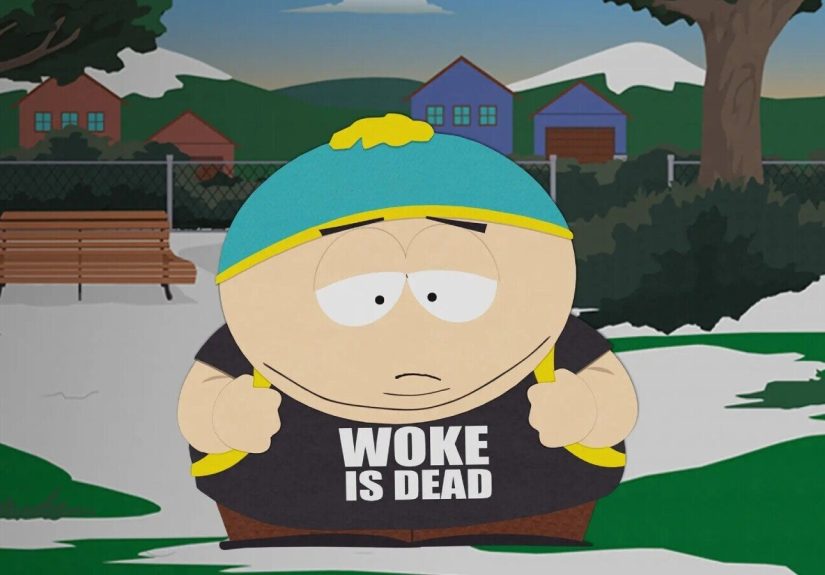
Cartman’s role in this atmosphere was especially funny because he was not transformed into a noble rebel. In the premiere, he panics over the idea that “woke is dead,” because his identity as an anti-woke antagonist suddenly feels less special. That is classic Cartman: not defending democracy, not discovering empathy, not becoming Captain America with cholesterol issues. He is upset because the cultural game changed and he no longer knows how to win it.
Cartman as “Resistance” Is Funny Because It Is Wrong
The phrase “Cartman is part of the resistance” works best if read with a mountain of irony. Cartman does not resist power because power is unjust. Cartman resists whatever prevents Cartman from being Cartman. If authoritarianism inconveniences him, he may complain. If freedom benefits him, he may endorse it. If tomorrow brings a better grift, he will sell T-shirts before breakfast.
This is why the fan roast had such energy. Longtime viewers understand that Cartman’s politics are not principles. They are tactics. He can sound conservative, reactionary, rebellious, libertarian, childish, or strangely insightful depending on the episode, but his deepest ideology is self-interest with snacks.
The Cartman Pattern Fans Recognize
Fans have watched Cartman weaponize victimhood, manipulate institutions, exploit moral panics, and turn petty revenge into full-scale psychological warfare. When he appears to be on the “right” side, the obvious question is not “Has Cartman evolved?” It is “What is he getting out of this?”
That is why many viewers saw the headline as unintentionally hilarious. A character can be useful to a satirical point without becoming virtuous. Cartman can reveal something true about a cultural moment while remaining, in technical literary terms, a tiny monster.
Why Fans Distrust Anyone Claiming South Park for One Political Team
South Park has always been slippery. It has mocked conservatives, liberals, celebrities, corporations, internet mobs, anti-woke opportunists, social justice excesses, religious hypocrisy, political cowardice, and everyday stupidity. That does not mean every joke is equally strong or every target is treated equally. It does mean the show’s brand depends on independence.
For many viewers, the moment a major newspaper suggests South Park has joined “the resistance,” alarm bells go off. The phrase sounds like a team jersey. South Park fans are used to the show setting jerseys on fire and asking why everyone is yelling about laundry.
This does not mean the show is apolitical. That is one of the internet’s lazier takes. South Park has always been political; it simply tends to be allergic to piety. Its politics often emerge through mockery of certainty. People who are too sure of themselves are placed on a comedy treadmill until they fall off.
The NYT Headline Was Clickable, but Fans Read It as Claiming Ownership
The full argument behind the headline was more nuanced than the roast suggested. The point was not necessarily that Cartman had become a sincere activist. The larger idea was that South Park, because of its long history of cynicism and independence, could criticize Trump in a way that lands differently from ordinary partisan commentary.
That is a legitimate cultural argument. A show known for roasting everyone may carry unusual weight when it suddenly seems focused on one powerful target. But headlines travel faster than nuance. Online, the phrase “Cartman” plus “resistance” did not invite careful literary interpretation. It invited memes, dunking, and at least one thousand variations of “Cartman would sell out the resistance for Cheesy Poofs.”
This is the modern media problem in miniature. A headline designed to provoke thought can also provoke the exact audience most prepared to punish awkward framing. Fans did not need the whole article to react. The headline alone was enough bait to summon the comment section cavalry.
Season 27 Turned South Park Into a Media Event Again
Part of why the headline mattered is that South Park was already having a major cultural moment. The Season 27 premiere became a lightning rod because it hit Trump, Paramount, CBS, religious messaging, lawsuits, and corporate fear all at once. The show was suddenly not just making jokes about politics; it was making jokes about the conditions under which political jokes are allowed to exist.
That is a very South Park move. The series has always thrived when its own production context becomes part of the joke. When the parent company is in the news, the show does not politely look away. It pulls out a marker, draws a mustache on the corporate logo, and asks Standards and Practices to hold its beer.
The White House response, which dismissed the show as irrelevant, only intensified the irony. Few things prove a comedy is irrelevant like issuing an official response to it. Fans noticed. The online reaction turned into a second joke layered on top of the first: if South Park is so washed, why is everyone yelling?
What This Says About Political Satire in 2025
The argument over Cartman and “the resistance” reveals how difficult political satire has become. Audiences increasingly want to know which side a joke belongs to before deciding whether to laugh. But the best satire often refuses that comfort. It makes the viewer laugh, then immediately asks why they were laughing.
South Park is especially built for that discomfort. It can make a point that liberals cheer, then turn around and mock liberal smugness. It can make conservatives laugh at political correctness, then mock conservative grievance culture. It can ridicule corporate cowardice while cashing one of the richest deals in television. That contradiction is not a bug. It is the engine.
So when fans roast the idea of Cartman as resistance, they are defending something specific: the show’s refusal to be domesticated. They do not want South Park turned into a neat moral instrument. They want it dangerous, rude, inconsistent, and occasionally brilliant in ways that make everyone uncomfortable.
The Smarter Take: Cartman Is Not the Resistance, but He Can Reveal Why Resistance Feels Weird
The funniest and most accurate interpretation is this: Cartman is not part of the resistance. Cartman is proof that the cultural battlefield has become so absurd that even Cartman can accidentally stand near a correct point without becoming correct himself.
That distinction matters. Satire often uses terrible characters to expose terrible systems. A villain can identify hypocrisy. A selfish person can point toward a real problem. A child who behaves like a tiny cable-news host can accidentally reveal how politics has become entertainment.
In that sense, the NYT headline may have been intentionally provocative. But the fan backlash shows how sensitive audiences are when elite media tries to translate chaotic comedy into respectable civic language. South Park is not a civics lesson with fart jokes. It is a fart joke that occasionally turns into a civics lesson and then denies having done so.
Fan Experience: Watching the Internet Turn Cartman Into a Rorschach Test
Following this controversy felt like watching three audiences argue over three different shows. One group saw South Park as a fearless anti-Trump satire finally saying what other media companies were too nervous to say. Another saw the same episodes and worried that the show had become too political, too topical, or too stuck in the Trump orbit. A third group mostly seemed delighted that a headline had given them permission to make fun of both the New York Times and Cartman in the same sentence.
The most interesting experience was seeing how quickly people projected their own relationship with the show onto the headline. Longtime fans often reacted with protective annoyance. They treated the article as a misunderstanding of South Park lore, especially Cartman’s role as a selfish chaos machine. To them, calling Cartman resistance-coded felt like calling Kenny a public-speaking coach. It misunderstood the assignment so badly that the assignment began filing a complaint.
Casual observers had a different reaction. Some thought the headline was funny because it captured the absurdity of the moment: politics had become so strange that even Cartman could be framed as a cultural warning siren. Others saw it as another example of prestige media trying too hard to turn pop culture into a grand theory of democracy. Both reactions make sense, which is exactly why the topic traveled.
Personally, the funniest part of the debate is that it proves South Park still has the power to make people argue about meaning while pretending they are only arguing about jokes. That has always been the show’s secret sauce. Underneath the crude animation and deliberately stupid punch lines is a surprisingly durable machine for exposing audience insecurity. People do not merely ask, “Was that funny?” They ask, “Was that joke on them, on me, or on the people I dislike?”
The Cartman headline also shows how fast media framing can outrun intent. A critic can write a nuanced argument, but the headline becomes the artifact everyone debates. Fans share the headline, detach it from context, and turn it into a meme. Within hours, the public conversation is no longer about the essay’s full analysis. It is about whether a newspaper got “owned” by people who remember Cartman’s worst behavior better than they remember their own passwords.
There is also a lesson here for entertainment writers. When covering a show like South Park, precision matters. The fan base is full of people who can identify a Season 8 callback from three pixels and a cough. If a headline sounds too earnest, too partisan, or too eager to claim the show as an ally, fans will pounce. They may not always be fair, but they will be fast, funny, and merciless.
At the same time, fans are not always innocent guardians of nuance. Some reacted to the headline without engaging the larger argument. That is also very internet. We live in a culture where people will defend complexity by refusing to read past twelve words. The irony is delicious enough to require a napkin.
The best way to understand the whole mess is to accept the contradiction. The NYT framing was provocative enough to annoy fans, but not entirely empty. The fans were right that Cartman is not a hero, but some were too quick to assume the article literally knighted him. South Park was attacking Trump hard, but that does not mean it joined a party. Cartman can function as a symptom of the moment without becoming the cure.
And that, really, is why the controversy worked. It was not just about one headline. It was about who gets to define satire after it leaves the screen. Critics try to interpret it. Fans try to defend it. Politicians try to dismiss it. Corporations try to profit from it without being burned by it. Meanwhile, Cartman stands in the middle, probably selling merch to all sides and demanding respect for his bravery.
Conclusion
The uproar over South Park fans roasting the New York Times for saying Cartman is part of the resistance is funny because it is also revealing. It shows how fiercely fans protect the show’s chaotic identity, how quickly headlines become cultural objects, and how uncomfortable audiences become when satire refuses to stay in one political lane.
Cartman is not the resistance. He is not a moral leader, a freedom fighter, or a misunderstood revolutionary. He is Cartman: selfish, opportunistic, offensive, occasionally perceptive, and almost always dangerous to anyone standing nearby. But in a political and media environment this strange, even Cartman can become a mirror. The joke is not that he joined the resistance. The joke is that people argued about it seriously enough for him to charge admission.
Note: This article is based on publicly reported information, official episode details, creator commentary, entertainment coverage, and visible fan discussion surrounding South Park, Season 27, Eric Cartman, and the New York Times headline controversy.