Table of Contents >> Show >> Hide
- What Happened in the May 2020 Starship Explosion?
- Why SN4 Mattered More Than a Typical Test Vehicle
- What Probably Caused the Explosion?
- Why SpaceX Was Testing So Aggressively in 2020
- From Starhopper to SN5: The Explosion in Context
- Did the Explosion Hurt SpaceX’s Bigger Goals?
- What the SN4 Explosion Taught the Industry
- Why the Explosion Became Such a Memorable Internet Moment
- Experiences Related to the Topic: What Following the SN4 Explosion Felt Like
- Final Thoughts
In the grand tradition of rocket development, May 2020 gave space fans another reminder that progress does not always arrive with elegant countdown music and a perfect landing. Sometimes it arrives as a stainless-steel prototype, a brief static-fire test, a suspicious cloud of vapor, and then a fireball large enough to make the internet collectively yell, “Well… that seems less than ideal.” That was the story of SpaceX Starship SN4, the prototype that exploded in Boca Chica, Texas, on May 29, 2020.
But calling it only an explosion misses the bigger story. The SpaceX Starship explosion in May 2020 was not just a spectacular failure clip for social media. It was a major moment in the early development of Starship, the company’s fully reusable deep-space system intended for missions to Earth orbit, the Moon, and Mars. SN4 did not make a test hop, did not soar heroically into the Texas sky, and definitely did not stick the landing. Still, it helped prove that SpaceX’s rapid, build-test-break-repeat approach was more than a slogan. It was the operating system.
What Happened in the May 2020 Starship Explosion?
The vehicle involved was Starship SN4, a full-size prototype being tested at SpaceX’s Boca Chica site near Brownsville, Texas. On May 29, 2020, SN4 completed a static-fire test, which means its Raptor engine was ignited while the vehicle stayed anchored to the ground. Static fires are basically the rocket world’s version of revving the engine in the driveway before a road trip. Loud, dramatic, and ideally not followed by catastrophe.
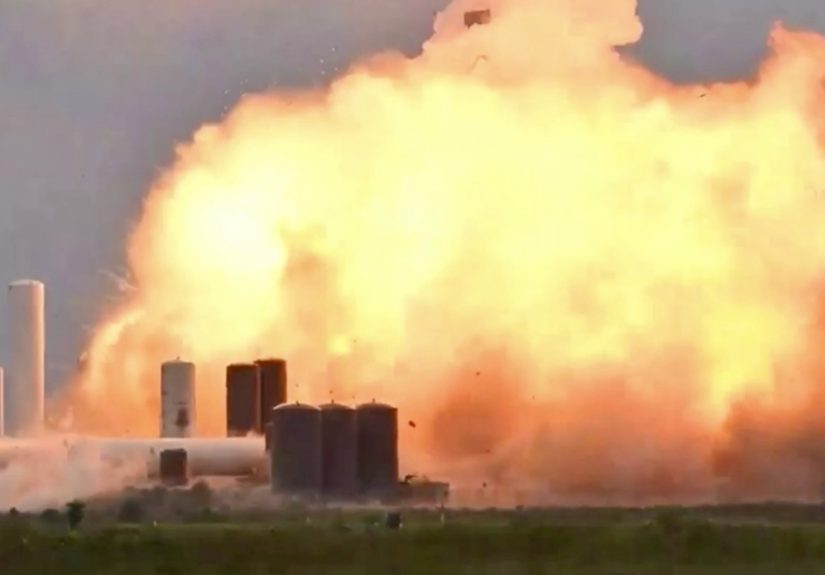
For a moment, the test appeared normal. Then a cloud of vapor formed around the lower part of the vehicle. Shortly afterward, SN4 exploded in a massive fireball. Reports at the time said the blast happened roughly one to two minutes after the engine firing, destroying the prototype and damaging the test stand. No injuries were immediately reported, which was crucial, and the area had been cleared for safety before the hotfire.
SN4 Was Not an In-Flight Failure
This detail matters because the phrase “Starship explosion” can make people imagine a rocket blowing up during launch. That is not what happened here. The May 2020 Starship explosion happened on the test stand after a ground test, not during a flight. SN4 was actually getting close to a short hop attempt, which made the loss especially frustrating. SpaceX had been working toward a roughly 150-meter test flight, and SN4 looked like the prototype most likely to get there.
Why SN4 Drew So Much Attention
Timing was everything. The explosion happened just before SpaceX’s historic Crew Dragon Demo-2 launch, the mission that would carry NASA astronauts from U.S. soil for the first time since the shuttle era. Because both events involved SpaceX and happened within a day of each other, headlines naturally collided. Still, the systems were unrelated. Starship SN4 used different technology and was part of a separate development program from the Falcon 9 and Crew Dragon stack heading to orbit.
Why SN4 Mattered More Than a Typical Test Vehicle
SN4 was not just another metal cylinder waiting its turn. In early 2020, SpaceX had already lost earlier Starship test articles during cryogenic pressure testing. SN1 burst apart. SN3 collapsed. The program was moving fast, but it also looked like the prototype graveyard was getting crowded. Then SN4 broke that pattern by surviving important milestones that its predecessors had not.
Before the explosion, SN4 had passed a key cryogenic proof test and gone through multiple engine tests. In fact, it became the longest-lived and most-tested Starship prototype up to that point. It completed five static fires, which made it the first prototype in the series that genuinely seemed to be inching toward controlled flight rather than starring in another expensive physics lesson.
That is why the explosion felt like both a setback and a weird kind of milestone. SN4 showed that SpaceX was improving the durability of the vehicle, even if the campaign still ended in a spectacular loss. In other words, progress was happening, but it was wearing steel and occasionally exploding.
What Probably Caused the Explosion?
Immediate reporting after the incident treated the cause as unclear, which was fair. Early video showed vapor building around the base of the vehicle after the static fire, suggesting a leak or problem in the propellant handling process. Later discussion around the incident pointed toward ground support equipment rather than a simple “the rocket engine failed” explanation. Coverage following Elon Musk’s public remarks suggested a likely issue involving a quick-disconnect system tied to fueling operations.
That distinction is important because it changes how the incident is understood. The Starship SN4 explosion did not necessarily prove the core vehicle concept was broken. Instead, it highlighted how rocket testing depends on far more than engines and tanks. A modern launch vehicle is married to plumbing, valves, software, sensors, venting systems, propellant lines, and ground hardware that all have to work together flawlessly. Rockets are not just flying machines. They are also giant, temperamental industrial chemistry projects with delusions of grandeur.
The Quiet Villain: Ground Systems
For casual readers, ground systems sound boring. They should not. Ground systems are often where reality taps engineering ambition on the shoulder and says, “Cute plan. Now deal with cryogenic methane.” If there was a leak or disconnect issue after the static fire, that would explain why the final seconds looked less like a normal shutdown and more like a warning label becoming self-aware.
Why SpaceX Was Testing So Aggressively in 2020
To understand the May 2020 blast, it helps to understand how SpaceX develops hardware. Traditional aerospace programs often spend long periods refining designs before flight testing. SpaceX, especially with Starship, chose a more aggressive path: build hardware quickly, test often, accept failures, fold the lessons into the next version, and keep moving.
That approach can look chaotic from the outside. It can also look deeply effective when the iterations begin stacking up. The Starship program in 2020 was still in its rough-and-ready prototype era. Boca Chica was less polished space center and more experimental workshop with a coastline. Stainless steel structures were assembled rapidly, modified openly, and pushed to failure conditions on purpose or something close to it.
Failure Was Not the Opposite of Progress
This is one of the biggest lessons from the SpaceX Starship explosion in May 2020. In SpaceX’s testing culture, an explosion was not automatically treated as proof of defeat. It was data. Painfully loud data, sure, but data. That mindset explains why the company moved quickly to SN5 after losing SN4. Instead of pausing for years of hand-wringing, SpaceX kept iterating.
From Starhopper to SN5: The Explosion in Context
SN4 belongs to a broader development chain. In 2019, SpaceX flew the smaller Starhopper test article at Boca Chica, demonstrating the basic idea of low-altitude hops using a Raptor engine. That vehicle looked like a water tower that had suddenly developed ambitions, but it did the job. It gave SpaceX early confidence in propulsion and vertical takeoff-and-landing operations.
The next full-size prototypes were more ambitious and more fragile. Some failed during pressure tests before they ever got close to flight. SN4 was the one that seemed ready to bridge the gap between ground testing and real low-altitude hops. When it exploded, that bridge was delayed, not destroyed.
The best evidence of that came a few months later. In August 2020, Starship SN5 completed a successful short hop, reaching about 150 meters and landing safely. That test did not erase the SN4 explosion, but it proved the program could recover quickly and translate failure into operational improvements.
Did the Explosion Hurt SpaceX’s Bigger Goals?
In the short term, yes. Any test article loss costs time, hardware, and momentum. It can also damage public confidence, especially when the footage is dramatic enough to loop endlessly online. But in the larger strategic sense, the explosion did not derail the company’s ambitions for Starship.
SpaceX’s long-term goal for Starship has always been enormous: a fully reusable transportation system for satellite deployment, human spaceflight, lunar missions, and eventually Mars operations. Around the same period, NASA also selected SpaceX as one of the companies to work on early Human Landing System concepts for Artemis. That context matters because it shows Starship was already seen as more than a flashy side project. It was becoming central to both commercial and government plans for deep-space transportation.
Why NASA Still Watched Closely
NASA does not award lunar-related work because something looks cool in slow motion. The agency was interested in scalable capability: payload mass, reusability, engine performance, and long-term mission potential. Even with explosions in the prototype campaign, Starship remained attractive because of its theoretical capacity and the speed of SpaceX’s development cycle.
The May 2020 incident, then, was not the end of confidence in Starship. It was another reminder that confidence in aerospace is rarely built on clean streaks. It is built on whether a company learns faster than it fails.
What the SN4 Explosion Taught the Industry
1. Prototypes Need Survivability, Not Just Ambition
SN4 proved that SpaceX was getting closer to building Starship hardware that could endure repeated testing. Surviving multiple static fires was a real accomplishment, even if the final test campaign ended badly.
2. Ground Operations Are Mission-Critical
Rocket headlines usually focus on engines, aerodynamics, or launch spectacle. But the SN4 explosion underscored that fueling interfaces, venting behavior, and ground-side connections can be just as critical as what happens in the air.
3. Public Testing Changes the Narrative
Boca Chica testing happened in full public view, with livestreams, photographers, drone footage, and minute-by-minute social media reactions. That transparency made every failure more visible, but it also let the public watch engineering progress almost in real time. Spaceflight stopped being a polished press release and started feeling like a live workshop.
Why the Explosion Became Such a Memorable Internet Moment
Let’s be honest: part of the reason people still search for SpaceX Starship Explosion May 2020 is because the footage was spectacular. Stainless steel rockets already look like science fiction props. Add Texas sunlight, a dramatic vapor cloud, and a towering fireball, and you have instant viral content. It was the kind of clip that made engineers wince, space fans gasp, and algorithms absolutely feast.
Yet the video survived because it captured something deeper than destruction. It showed the messy middle of innovation. Not the glossy render. Not the final product. The awkward, combustible, highly educational middle.
Experiences Related to the Topic: What Following the SN4 Explosion Felt Like
Watching the May 2020 Starship explosion unfold in real time was a strange mix of suspense, confusion, and reluctant admiration. For many people following Boca Chica tests, the routine had become familiar: road closures, tanking operations, venting, static fire, waiting, more venting, and a steady stream of online commentary from viewers who had somehow become amateur launch conductors. You learned to read the little signs. A certain puff of vapor meant one thing. A hold meant another. The camera stayed fixed, the steel vehicle stood there looking equal parts futuristic and homemade, and everyone waited for the moment something would happen.
Then something definitely happened.
The odd part was that the blast did not come during the engine firing itself. That is one reason the moment felt so jarring. The test appeared to have ended. People who were watching likely shifted from “Will the engine light?” to “Okay, maybe this one was clean.” And then the vapor cloud thickened at the base of SN4, creating that split second of viewer instinct where your brain says, “I do not like that cloud,” right before the fireball confirms your diagnosis with unreasonable enthusiasm.
For longtime space followers, the emotional reaction was not simple disappointment. It was more complicated than that. There was frustration because SN4 had finally looked promising. Earlier Starship prototypes had failed before reaching this stage, so SN4 carried a sense of hard-won momentum. It had passed key tests. It had fired its engine multiple times. It seemed like the hardware that might finally make the hop. When it exploded, it felt less like a random prototype loss and more like a plot twist arriving one scene before the payoff.
At the same time, there was almost immediate curiosity. People replayed the footage, slowed it down, pointed to the vapor behavior, argued about plumbing, venting, methane, oxygen, and ground support hardware, and tried to decode the event frame by frame. Boca Chica culture had already trained the online audience to think like investigators. The explosion was dramatic, but the aftermath was analytical. Fans were disappointed for about twelve seconds before becoming volunteer review boards with Wi-Fi.
There was also something unmistakably modern about the experience. A rocket prototype exploded in South Texas, and within minutes the footage had become global material for memes, engineering threads, headlines, and speculative diagrams. The public did not learn about the event days later through a carefully edited press conference. They watched it live, rewound it, clipped it, debated it, and folded it into the broader Starship story almost instantly. Failure was no longer hidden in a technical report. It was part of the public narrative.
In that sense, the experience of following SN4 was a preview of how the Starship era would feel: open, iterative, chaotic, entertaining, and occasionally combustible. It reminded people that ambitious aerospace programs are not built in a straight line. They lurch forward, stumble loudly, and then come back with another vehicle. That is exactly what happened after SN4. The explosion became part of the mythology, but it did not freeze the program. It simply marked one more chapter in the long, noisy education of a rocket system trying to become something much bigger than a prototype on a pad.
Final Thoughts
The SpaceX Starship explosion of May 2020 was dramatic, expensive, and very public. It was also important. SN4 represented a meaningful step forward in prototype durability, even though it ended in failure. The incident highlighted the risks of rapid development, the importance of ground systems, and the unusual way SpaceX treats failure as part of the engineering path rather than a reason to stop walking.
Looking back, the explosion matters because it sits at the hinge point between rough early testing and later, more capable Starship demonstrations. SN4 did not fly, but it helped clear the path to vehicles that did. In rocket development, that still counts. Not every machine changes history by reaching the sky. Some do it by exploding on the way there and teaching the next machine how not to.