Table of Contents >> Show >> Hide
Some dining rooms are pretty. Some are practical. And then there are the rare overachievers that do both while looking like they casually woke up fabulous. The Georgetown dining room in this “Steal This Look” is exactly that kind of space: modern, elegant, unfussy, and ready for a long dinner that somehow turns into midnight dessert and one more bottle of wine.
The inspiration comes from a beautifully reworked historic Georgetown home, where the design team created a clean, uninterrupted flow from living room to dining room to kitchen. That one decision does a lot of the heavy lifting. The room feels airy and refined, but it also feels lived in, social, and flexiblethe kind of place where a weekday pasta dinner and a holiday gathering can happen without moving half the furniture.
In this guide, I’ll break down what makes the look work, how to recreate it in a real home (not just a magazine fantasy), and how to keep the vibe modern and elegant without turning your dining room into a no-touch museum. We’ll cover layout, paint, lighting, materials, furniture silhouettes, styling, and the small details that make the room feel expensive even when your budget says, “Let’s be strategic.”
Why This Georgetown Dining Room Looks So Good (and Still Feels Human)
Georgetown brings built-in character to the party. The neighborhood is known for quiet, tree-lined residential streets and historic homes, which gives any interior a strong architectural starting point. In the featured home, that sense of history is preserved, but the dining room is updated in a crisp, contemporary way that avoids looking stiff.
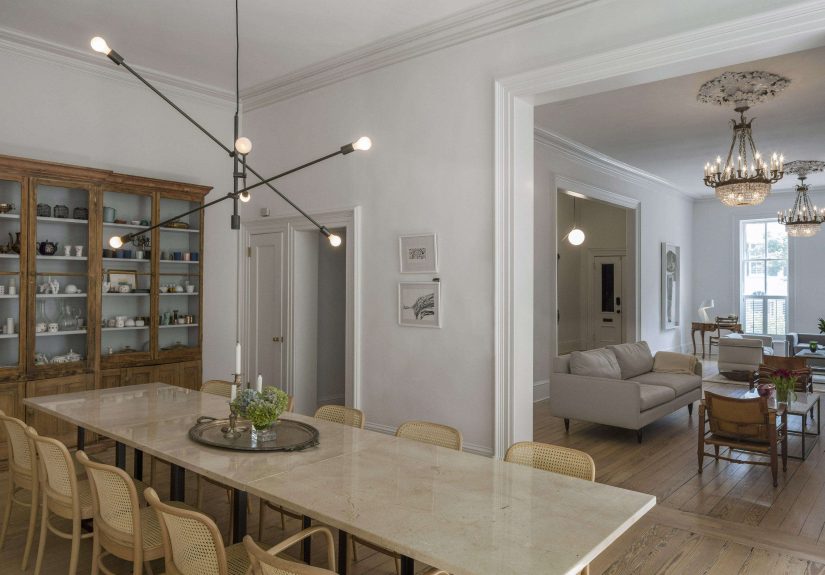
The magic is in the balance: old bones, modern lines. Instead of piling on decorative extras, the design leans into proportion, circulation, and a restrained palette. The dining area is visually connected to the adjacent rooms, painted in a bright white, and furnished with pieces that feel sculptural but practicala large table for entertaining, caned chairs for texture, and a mobile chandelier that adds movement overhead.
This is the key lesson: elegance is not about more stuff. It’s about better decisions. In this room, the choices are clear and intentionalwider opening between rooms, consistent wall color, a fixture with clean lines, and furniture that looks light enough to breathe. The result is polished, but not precious.
The Design Formula You Can Steal
1) Start with Sightlines, Not Shopping
Before you buy a table, chairs, or that dramatic chandelier you bookmarked at 1:14 a.m., look at the room’s sightlines. One of the smartest moves in the Georgetown inspiration space was prioritizing a clean visual axis from the living room through the dining room and into the kitchen. That creates instant spaciousness, even if the room isn’t huge.
Translation for real homes: declutter the path, avoid oversized pieces that block transitions, and make sure your furniture arrangement supports movement. A dining room should feel inviting, not like a maze built by an overconfident sideboard.
2) Use a Crisp White That Still Has Personality
The room uses Benjamin Moore’s Decorator’s White, and that’s a big part of why the space feels modern instead of heavy. It’s not a creamy farmhouse white. It has a cooler, sleeker edge, which works beautifully with historic architecture when you want a fresh contrast.
White walls also help the room act like a gallery for furniture, art, and tabletop styling. If you’re recreating the look, this is where a lot of people overcomplicate things. You do not need twelve paint samples and a spreadsheet (unless that brings you joy). You need one white that works with your light, your floors, and your adjacent rooms. Cool-leaning whites tend to emphasize a modern, tailored feel. Warm whites soften the look. Both can workbut for this Georgetown-inspired aesthetic, crisp wins.
3) Choose a Chandelier That Looks Light on Its Feet
The chandelier in the inspiration room is a modern mobile-style fixture from West Elm, and it’s a perfect example of “statement lighting” done right. It’s visually interesting, but it doesn’t dominate the room. It adds shape and movement without shouting for attention like a reality TV contestant.
Look for features like adjustable arms, adjustable hanging height, and dimmer compatibility. These details matter because elegant dining rooms do more than one thing: brunch, homework, dinner party, birthday cake, work laptop, repeat. A dimmable fixture lets the room shift mood without changing its style.
Proportions matter, too. A common guideline is to size a chandelier at roughly one-third the width of the table, though many designers and lighting guides also support larger fixtures depending on the silhouette. For hanging height, aim for roughly 30 to 36 inches above the table as a reliable starting point.
4) Add Texture with Cane, Wood, and Stone
One reason the Georgetown dining room feels elegant instead of stark is material contrast. The palette is restrained, but the textures do the talking: caned dining chairs, a stone-topped table, painted walls, and warm wood tones in adjacent spaces.
If you want the look, skip bulky upholstered chairs on every side. Cane-backed or bentwood-style chairs bring visual lightness and subtle pattern. They also nod to classic European café furniture, which pairs beautifully with historic architecture and modern edits. The Hoffmann dining chair style is a great reference point because it combines a clean bentwood frame with handwoven cane and a timeless silhouette.
For the table, a stone or quartz top on a wood base is a strong move. It feels tailored and substantial, but still modern. Room & Board’s Linden line is a useful example of this pairing done well: durable stone surface, solid wood base, and a design that reads formal enough for entertaining but relaxed enough for everyday use.
5) Build in Flexibility for Entertaining
The inspiration room includes a long, flexible dining setup designed to accommodate both small and large gatherings. That’s a huge reason the room feels “old-school elegant” in the best wayit is designed around hospitality.
In your own space, you don’t need a table that seats 22 (unless you are secretly running a supper club). But you should think about flexibility:
- Use an extendable table or add leaves seasonally.
- Choose chairs that are light enough to move easily.
- Keep a nearby cabinet or console for serving pieces and candles.
- Use a tray to corral barware or after-dinner coffee service.
This is where the room becomes elegant in real lifenot just in photos. When a space is easy to use, people stay longer. That lingering, layered, “one more story before we leave” feeling is the whole point.
6) Style It Like a Curated Room, Not a Furniture Showroom
The Georgetown room avoids the most common dining-room mistake: over-styling. There’s breathing room. You can actually see the architecture. The décor is selective, not cluttered.
A few pieces go a long way:
- A glass-front cabinet for display and storage (a modern cabinet with oak framing and glass doors creates the same effect).
- A simple organic vase for sculptural softness (egg-shaped porcelain vases are especially good here).
- A pewter or metal tray to add shine and make tabletop styling look intentional.
- Classic taper candles for instant atmosphere and zero renovation required.
These pieces create a layered look without visual noise. Think “edited elegance,” not “I bought every object on the shelf because they matched.”
How to Recreate the Georgetown Look in Your Own Dining Room
Step 1: Get the Layout Right
Layout is the unsung hero of every great dining room. If the room feels cramped, no amount of pretty chairs will save it. Start by leaving at least 36 inches of clearance around the table where possible. That gives enough room to pull chairs out and walk comfortably.
If you want a rug, size it for the chairsnot just the table. A good rule is to add about 24 inches on all sides so chairs stay on the rug when pulled out. This one detail instantly makes the room look more professional and keeps guests from doing that awkward chair-leg wobble.
Step 2: Pick the Palette (White + Warm Naturals + One Accent)
Use a crisp white on walls as the base. Then layer in warm materials: cane, oak, walnut, linen, stone, and pewter. This prevents the room from feeling cold. Add one accent color through art, a vintage rug, or tabletop ceramics. You don’t need much.
A great formula is:
- 70% neutral base (white, oak, stone)
- 20% soft texture (linen, cane, matte ceramics)
- 10% character (art, dark metal, colored glass, antique piece)
That ratio keeps the room modern and elegant without becoming flat.
Step 3: Use Lighting to Create Mood, Not Just Brightness
A chandelier over the table is the star, but the best dining rooms use layered lighting. Put the chandelier on a dimmer. Add a nearby lamp, sconces, or even soft lighting from an adjacent room. Better Homes & Gardens and HGTV both emphasize practical tricks here, including using a ceiling hook or swag when the electrical box isn’t perfectly centered over the table.
In other words: don’t let imperfect ceiling placement ruin your design plan. There’s usually a workaround, and a good one can look intentional.
Step 4: Mix “Refined” and “Relaxed” Pieces
The Georgetown look works because it mixes polish with comfort. A sleek chandelier meets caned chairs. A formal-feeling table lives in a bright, open room. A historic home gets modern edits. Do the same in your space:
- Pair a clean-lined table with vintage or woven chairs.
- Use a formal tray with casual ceramics.
- Add one antique or inherited piece to avoid a catalog look.
- Keep window treatments simple or minimal if the room has great light.
Architectural Digest design roundups consistently show this mix-and-match approach in strong dining spaces: statement lighting, art, and furniture silhouettes working together, not all competing for first place.
Step 5: Build a “Hosting Kit” into the Room
If you want your dining room to feel elegant, make it easy to host. Keep a few essentials nearby:
- A stack of cloth napkins
- Unscented taper candles
- A tray for drinks or dessert plates
- A vase that works with branches, flowers, or nothing at all
- Extra seats that can be pulled in from another room
Suddenly your dining room isn’t just nice to look atit’s ready for life.
Common Mistakes That Kill This Look
- Fixture too small: A tiny chandelier over a large table makes the room feel unfinished.
- Too much matching furniture: Dining set + matching hutch + matching mirror can feel heavy fast.
- No dimmer: Bright overhead lighting at dinner is a crime against ambiance.
- Rug too small: It visually shrinks the room and makes chairs catch at the edge.
- Overdecorated table: If guests have to move six objects to put down a plate, you’ve gone too far.
- Ignoring circulation: Beautiful rooms still need to function when people are actually in them.
Experience Section: What This Georgetown-Inspired Dining Room Feels Like in Real Life
Here’s the part glossy photos never fully capture: the experience of being in a room like this. A Georgetown-inspired dining room doesn’t just look elegantit changes how the evening unfolds.
Imagine you’re hosting a small dinner on a Thursday. Nothing dramatic. Pasta, roasted vegetables, maybe a simple salad you promise is “casual” even though you absolutely arranged the shaved Parmesan like a stylist. The room is bright while you prep, because the white walls bounce light around and the space feels open all the way through to the kitchen. You can move easily, talk to people while cooking, and still keep an eye on the table.
Then the mood shifts. You dim the chandelier. The metal arms catch a little glow. The caned chairs suddenly look softer. The room gets quieter without anyone saying, “Okay, dinner starts now.” That’s what good lighting does: it gently tells everyone to slow down.
Guests sit down and the room feels comfortable immediately because the chairs are light but supportive and there’s enough clearance around the table that nobody has to perform a strange side-step to get seated. The rug (if you used one) stays in place, the candles don’t compete with the food, and the table has enough surface area to actually serve dinner family-style without stacking dishes like a diner counter.
And because the room isn’t overcrowded with décor, the conversation becomes the focal point. The vase in the center is sculptural but low enough to see over. A tray near the cabinet catches wine glasses and a small plate of olives. Someone notices the old cabinet. Someone else asks about the chairs. You tell them you were “inspired by a Georgetown house” and try to sound mysterious, like you have a secret design team.
What’s especially nice about this style is that it still looks good after the meal. The table doesn’t need to be perfectly reset to feel elegant. A few plates, a candle burned down halfway, a linen napkin tossed over a chairit all works. The room feels better, not worse, with signs of life in it. That’s the difference between a staged room and a successful one.
Over time, this kind of dining room becomes a backdrop for routines and memories: birthday candles, takeout nights, school projects, coffee with one friend, holiday dinners with ten. The design is modern enough to feel fresh, but quiet enough to let real life happen in it. You’re not constantly “maintaining the look.” The look supports the life.
And honestly, that may be the most elegant thing about it. Not the chandelier. Not the paint. Not even the perfect chair silhouette. It’s the fact that the room invites people in, keeps them comfortable, and makes ordinary nights feel a little more special. That is the Georgetown magic worth stealing.
Conclusion
If you want to recreate a modern and elegant dining room in the Georgetown spirit, focus on the fundamentals: clean sightlines, a crisp white envelope, a sculptural chandelier, material contrast, and furniture that supports real entertaining. This look is sophisticated, but it isn’t fussy. It feels intentional, bright, and timelessexactly what a dining room should be.
Start with layout, then layer in lighting, texture, and a few curated pieces. Keep the styling edited. Make it easy to host. And remember: the best dining rooms are the ones people want to stay in long after the plates are cleared.