Table of Contents >> Show >> Hide
- What Is the Ceremony Set?
- Why Stockholm and Kyoto Make Such a Good Pair
- The Stockholm Side: Fika, Function, and Everyday Beauty
- The Kyoto Side: Ritual Without Imitation
- Materials That Do the Talking
- How to Style the Ceremony Set at Home
- Why the Ceremony Set Still Feels Current
- Buying or Re-Creating the Spirit of the Ceremony Set
- Experience: Living With the Idea of “Stockholm Meets Kyoto”
- Conclusion: A Small Set With a Large Philosophy
Some objects announce themselves with neon, glitter, and the subtlety of a marching band. The Ceremony Set does the opposite. It sits quietly, almost monk-like, with a porcelain pitcher, a wooden lid, and reversible trays in warm metal and maple. Then, without raising its voice, it asks a very dangerous question: what if your everyday coffee or tea break deserved the same attention as a formal ritual?
Stockholm Meets Kyoto: The Ceremony Set is more than a pretty tabletop accessory. It is a small design story about Scandinavian restraint, Japanese ceremony, Canadian craftsmanship, and the human need to pause before the day runs away with our calendar, our inbox, and possibly our will to fold laundry. Originally created by Swedish architecture and design studio Claesson Koivisto Rune for Toronto-based design gallery Mjölk, the Ceremony Set translates the spirit of the Japanese tea ceremony into a Scandinavian coffee-and-tea moment.
The result is not a replica of a Kyoto tearoom. It is not trying to turn your kitchen counter into a museum display. Instead, it takes the idea behind ceremonyattention, care, sequence, and beautyand applies it to something beautifully ordinary: serving milk, sugar, coffee, tea, and perhaps a slice of cake that absolutely counts as self-care.
What Is the Ceremony Set?
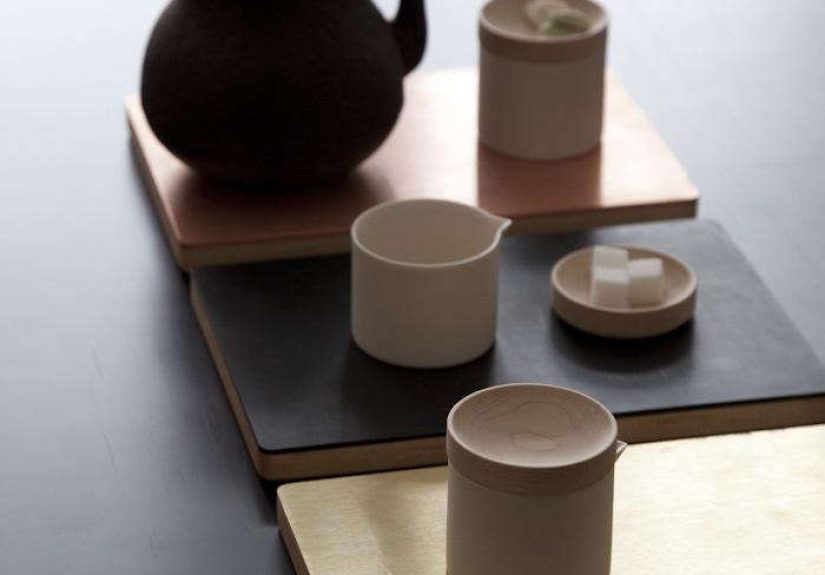
The Ceremony Set is a minimalist milk-and-sugar service designed around a few carefully chosen parts: a small white porcelain pitcher, a wooden lid that can double as a sugar bowl or dish, and reversible trays made with Canadian hard maple on one side and metal on the other. The metal finishes have included pure brass, copper, and blackened steel, giving each version a different mood. Brass feels warm and golden, copper feels earthy and alive, and blackened steel gives the whole arrangement the calm confidence of someone who owns exactly three perfect shirts and never spills anything on them.
Function is the quiet hero here. The tray is not just a tray. Flip it, and it becomes a serving or cutting surface. The lid is not just a lid. It becomes a small dish. The pitcher is not just a vessel. It is the visual anchor of the set, the white pause between wood grain and metal. Every part earns its place, which is exactly why the piece feels so Scandinavian: nothing is decorative simply for the sake of looking busy.
Yet the emotional structure of the set points toward Japan. Traditional Japanese tea ceremony, often called chanoyu or chadō, is built around preparation, presentation, utensils, host, guest, and the meaningful use of time. The Ceremony Set borrows that reverence, but it shifts the drink from ceremonial matcha to the Swedish and North American world of coffee, tea, milk, sugar, and shared conversation.
Why Stockholm and Kyoto Make Such a Good Pair
At first glance, Stockholm and Kyoto may seem like distant cousins who meet once at a wedding and discover they both hate clutter. But design-wise, the connection makes immediate sense. Scandinavian design is known for simplicity, functionality, natural materials, and objects made for everyday life. Japanese design, especially the aesthetic traditions associated with tea culture, values restraint, seasonality, imperfection, and the poetic weight of ordinary gestures.
Put those two ideas together, and you get a design language often described today as Japandi: a fusion of Japanese minimalism and Scandinavian warmth. Japandi interiors usually favor natural wood, ceramics, neutral tones, clean silhouettes, handcrafted details, and open breathing room. The Ceremony Set fits into that world perfectly, though it predates the current internet obsession with Japandi bedrooms, low platform beds, paper lamps, and aggressively calm beige living rooms.
The magic is balance. Scandinavian design can sometimes become too pale, too perfect, too “please remove your personality before entering.” Japanese-inspired minimalism can sometimes be misunderstood as emptiness. The Ceremony Set avoids both traps. The maple adds warmth. The metal adds contrast. The porcelain adds softness. The ritual adds meaning. It is minimal, but not cold; refined, but not stiff.
The Stockholm Side: Fika, Function, and Everyday Beauty
To understand the Ceremony Set, you have to understand fika. In Sweden, fika is more than a coffee break. It is a pause, a social reset, a reason to sit down with coffee and something sweet while pretending that cinnamon buns are a legitimate productivity tool. It can happen at work, at home, in a café, or outdoors. The important part is not the caffeine alone; it is the act of stopping.
That makes fika surprisingly close to ceremony. It may be casual, but it has rhythm: gather, pour, serve, eat, talk, breathe. The Ceremony Set gives that rhythm a physical stage. Milk is not left in a carton with a cap that has mysteriously vanished. Sugar is not dumped from a crinkled paper bag. The tray gathers everything into one deliberate composition, which makes the moment feel hosted, even if the guest is just you in socks answering emails.
Swedish design often succeeds when it makes daily life feel slightly more thoughtful without becoming precious. The Ceremony Set does exactly that. It does not demand a special occasion. It creates one. Morning coffee becomes a small table scene. Afternoon tea becomes a reset button. Dessert becomes less “standing over the sink with a fork” and more “civilized person with excellent taste.”
The Kyoto Side: Ritual Without Imitation
The Japanese tea ceremony is one of the world’s most refined expressions of hospitality. It centers on preparing and receiving tea with grace, respect, harmony, purity, and tranquility. Utensils are chosen carefully. Movements are studied. The setting matters. The guest’s attention matters. Even silence has a role to play.
The Ceremony Set does not copy that tradition, and that is important. Good cross-cultural design is not a costume party. Instead, the set translates a principle: everyday objects can become meaningful when used with intention. The Japanese influence appears not in literal decoration, but in the respect given to the act of serving.
This is where the piece becomes interesting. It suggests that ceremony is not about complexity. It is about attention. You do not need a formal tearoom to treat a guest kindly. You do not need centuries of training to place a pitcher, a bowl, and a tray with care. You only need to stop rushing long enough for the moment to become visible.
Materials That Do the Talking
The Ceremony Set is a strong example of material honesty. The maple looks like maple. The metals are allowed to show their character. The porcelain is quiet and tactile. Nothing is hidden under loud color or fake luxury. This is especially important in a small object, because tabletop pieces live at close range. You touch them. You lift them. You notice the weight of the tray, the grain of the wood, the coolness of the pitcher.
Brass and copper are especially fitting because they change over time. They can develop patina, which adds depth and a sense of use. In a world obsessed with keeping everything looking factory-fresh, patina is refreshingly honest. It says, “Yes, life happened here.” That idea connects beautifully with wabi-sabi, the Japanese appreciation of age, irregularity, and imperfect beauty.
The Canadian hard maple brings another layer to the story. It makes the set warmer and more practical, while also grounding the project in local craft. The set may be imagined between Stockholm and Kyoto, but it is realized through Toronto makers and materials. That international triangle gives the design its personality: Swedish clarity, Japanese spirit, Canadian handwork.
How to Style the Ceremony Set at Home
1. Keep the Surface Quiet
The Ceremony Set works best when it has room to breathe. Place it on a clean dining table, kitchen island, sideboard, or low coffee table. Avoid crowding it with twelve candles, three vases, a stack of mail, and that one mystery charger nobody recognizes. Negative space is part of the composition.
2. Pair It With Natural Textures
Linen napkins, handmade ceramic cups, a wooden spoon, stoneware plates, or a small branch in a simple vase can strengthen the Stockholm-meets-Kyoto mood. The goal is not to build a theme park called “Minimalism Land.” The goal is to create a quiet relationship between materials.
3. Use It for Coffee, Tea, or Dessert
Although the set references ceremony, it is practical enough for daily use. Serve coffee with milk and sugar. Use it for tea with honey and lemon. Bring out a small cake, cookies, mochi, cardamom buns, or dark chocolate. The reversible tray makes the piece flexible, while the pitcher and lid keep the arrangement feeling polished.
4. Let Imperfection In
A Ceremony Set should not make your home feel like a showroom guarded by a nervous curator. Use it. Let the wood deepen. Let the metal age. Let the pitcher sit beside real cups, real crumbs, and real conversation. The beauty of this design is that it becomes better when it participates in life.
Why the Ceremony Set Still Feels Current
The reason the Ceremony Set still feels relevant is simple: modern life keeps getting faster, and good design keeps asking us to slow down. We live with smart devices, instant messages, delivery apps, calendar alerts, and the strange modern pressure to optimize even our hobbies. Against that noise, a small serving set can feel almost rebellious.
It also fits the growing desire for fewer, better things. Many people no longer want cabinets stuffed with objects that looked cute online but feel flimsy in real life. The Ceremony Set represents the opposite approach: small-batch thinking, strong materials, multiple functions, and a design story worth remembering. It is not disposable décor. It is an object with a point of view.
For interior design lovers, it also offers an easy way to bring Japandi style into a room without renovating the entire house or suddenly pretending you have always understood bonsai care. One beautifully made tray, a ceramic cup, a linen cloth, and a calm serving ritual can shift the mood of a space instantly.
Buying or Re-Creating the Spirit of the Ceremony Set
Original design pieces like the Ceremony Set may not always be widely available, especially when they are made through limited collaborations or small-batch production. But the design lessons are easy to apply. Look for pieces that combine function and feeling: a reversible wooden tray, a handmade porcelain creamer, a small lidded bowl, or a metal serving board with a warm finish.
Avoid buying a pile of matching accessories just because they have the word “Japandi” in the product title. The Ceremony Set works because it is edited. Every piece has a job. When building a similar tea or coffee ritual at home, choose fewer objects and make each one count. A good rule: if it does not serve, hold, pour, present, or delight, it probably does not need to be on the tray.
You can also adapt the idea seasonally. In winter, pair the set with dark coffee, spiced buns, wool textiles, and candlelight. In spring, use green tea, pale ceramics, and a small flowering branch. In summer, serve iced tea or cold brew with a linen cloth and fruit. In fall, bring in copper tones, roasted tea, and something involving cinnamon, because autumn has a legal obligation to smell cozy.
Experience: Living With the Idea of “Stockholm Meets Kyoto”
The most memorable experience related to the Ceremony Set is not simply looking at it. It is using the idea behind it. Imagine a late afternoon at home when the light has started to soften. The day has been loud. The laptop is still open. Your phone is doing that tiny buzzing thing that somehow sounds judgmental. Instead of making coffee on autopilot and drinking it while standing, you decide to prepare a small ceremony.
First, you clear the table. Not dramatically. No one needs a gong. You just move the receipts, the keys, the half-read book, and the pen that has not worked since February. Then you place a tray in the center. On it goes a small pitcher of milk, a bowl of sugar or honey, two cups, and something sweet. Maybe it is a cardamom bun in honor of Stockholm. Maybe it is a matcha cookie as a wink to Kyoto. Maybe it is a store-bought shortbread cookie, because enlightenment does not require homemade pastry.
The moment changes as soon as the objects are arranged. That is the surprising part. Nothing expensive has to happen. No one has to speak in a whisper. But the table now has intention. The tray frames the experience. The pitcher asks to be poured rather than grabbed. The cups ask to be held. The snack asks to be shared instead of inhaled while scrolling through headlines.
When guests are present, this small ritual becomes even more powerful. People notice when something has been prepared for them. A simple coffee service can say, “I expected you. I made space for you.” That message matters. In Japanese tea culture, hospitality is expressed through careful preparation. In Swedish fika, connection is expressed through pausing together. The Ceremony Set sits beautifully between those two ideas. It reminds us that hosting is not about impressing people with complicated performance. It is about giving attention.
Even alone, the ritual has value. Preparing tea or coffee with care can become a reset between work and evening, between errands and rest, between being useful and being human. The Ceremony Set is a design object, yes, but its deeper lesson is behavioral. It teaches that ordinary actions can be upgraded by presence. Pour slowly. Sit down. Notice the warmth of the cup. Notice the material under your hand. Notice that the world does not collapse when you take ten quiet minutes.
This is why the phrase “Stockholm Meets Kyoto” feels so satisfying. Stockholm brings practicality, warmth, and the social ease of fika. Kyoto brings ritual, grace, and the beauty of mindful gestures. Together, they create an experience that feels modern without being rushed, elegant without being fussy, and calm without being boring. It is design with manners. Design with a heartbeat. Design that politely confiscates your phone and hands you a cup instead.
Conclusion: A Small Set With a Large Philosophy
The Ceremony Set proves that great design does not always need to be large, loud, or technologically impressive. Sometimes it is a pitcher, a lid, and a tray arranged with intelligence. Sometimes it is the decision to make coffee feel less like fuel and more like a moment. By blending Scandinavian functionality with Japanese ceremonial awareness, the set turns daily serving into an act of care.
In a culture that often treats speed as success, the Ceremony Set offers a quieter luxury: attention. It invites us to choose better materials, fewer objects, warmer rituals, and more meaningful pauses. Whether you own the original piece or simply borrow its philosophy, the lesson remains the same. Beauty does not have to shout from across the room. Sometimes it waits patiently on the table, holding the milk.
Note: This article synthesizes real design, tea culture, Swedish fika, and Japandi interior principles into original editorial content for web publication.