Table of Contents >> Show >> Hide
If you had to pick one photograph to represent the idea of one person versus the system, chances are
you’d land on the same image millions of people think of: a lone man in a white shirt, grocery bags in hand,
blocking a column of tanks in Beijing in 1989. Today we call him “Tank Man,” “the Unknown Rebel,” or simply
“that guy who stood in front of the tanks.” His name, fate, and backstory are still a mystery, but his
silhouette is one of the most recognizable in modern history.
In this article, we’ll walk through a kind of informal “Tank Man rankings” not ranking him as a
person, but ranking the major ways people interpret that moment, how historians and activists talk about it,
and which debates keep coming back whenever the photo reappears on timelines and front pages. Along the way,
we’ll unpack key facts about the Tiananmen Square protests, explore differing opinions, and reflect on what
this single act of defiance still means for the world today.
Setting the Stage: What Happened Before the Tanks
To understand the many opinions around Tank Man, you need a quick recap of the events that led up to that
morning on June 5, 1989.
In the spring of 1989, students and citizens in Beijing gathered in and around Tiananmen Square to call for
political reforms, freer speech, and an end to corruption. What started as mourning for reform-minded
leader Hu Yaobang grew into weeks of peaceful demonstrations, hunger strikes, and mass marches involving
hundreds of thousands of people.
As the protests spread to cities across China, leadership in Beijing split between those who wanted dialogue
and those who wanted a hard crackdown. Martial law was declared in May, and by the night of June 3–4,
troops and tanks moved into central Beijing. Gunfire, clashes, and chaos followed. The exact number of
people killed has never been officially confirmed; estimates range from several hundred to several thousand,
with thousands more injured.
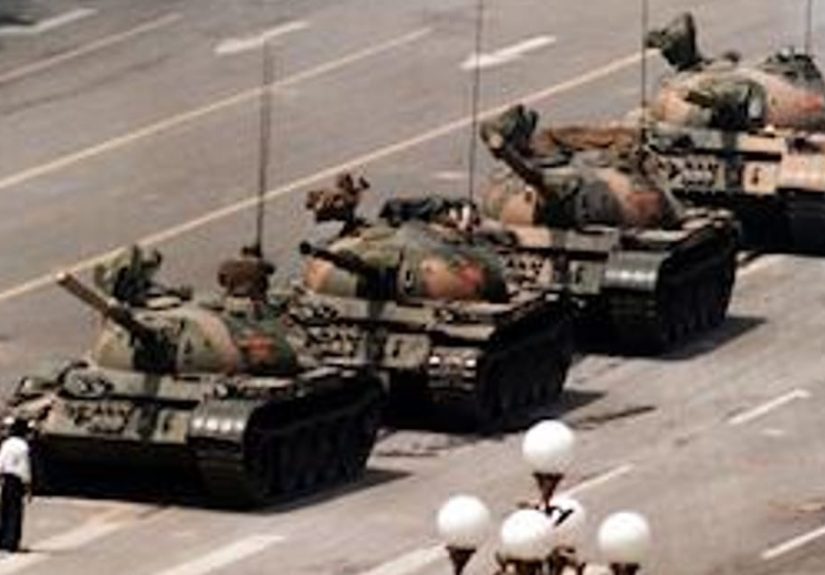
The next morning, as a long line of Type 59 tanks rolled down Chang’an Avenue, one man stepped out into the
street. He was wearing black pants and a plain white shirt. He carried two shopping bags. And for a few
breathtaking minutes, the entire world watched him bring a tank column to a halt.
Tank Man Rankings: The Top Ways People Interpret That Moment
Because we don’t know Tank Man’s name or what happened to him, people have poured their own meanings,
hopes, and fears into that image. Here are some of the most commonly discussed “ranked” interpretations
not scientific, but based on how often they show up in books, documentaries, and debates.
1. #1 Symbol of Individual Courage
At the top of any Tank Man rankings list is the most intuitive interpretation: this is a raw, unfiltered
image of individual courage. One unarmed man, facing down military hardware designed to roll through enemy
lines, not grocery runs.
Eyewitness accounts and footage show him not only standing in front of the lead tank but also shifting
left and right as the driver tried to maneuver around him essentially playing a deadly version of “you
shall not pass.” At one point he even climbs on top of the tank, reportedly speaking to the soldiers inside
before stepping back down.
For many people around the world, this scene instantly became the ultimate “ordinary hero” story.
The man isn’t dressed as a soldier or a leader; he looks like someone who just bought noodles and cooking
oil and then decided, at that exact moment, that he’d had enough. Whether that’s literally true or not, the
visual power of that narrative is why so much commentary calls him an icon of bravery.
2. A Global Icon of Nonviolent Resistance
From a wider historical lens, Tank Man is also ranked among the great images of nonviolent protest
often mentioned alongside Gandhi’s marches, Martin Luther King Jr. in Birmingham, and the Prague Spring
confrontations with tanks in 1968.
In that sense, Tank Man is not just a symbol of courage but a case study in how nonviolence can expose
the moral tension in a confrontation. The tanks, which represent state power, are technically “stronger,”
but they are also trapped: running over a lone man would reveal the full brutality of the system to cameras
already aimed at them. Pausing, hesitating, trying to go around him all those tiny movements captured in
the film and photos show the system struggling with the optics of its own power.
Activists and educators often use the Tank Man photo when teaching about civil disobedience and the
political power of images. Even without context, most viewers instinctively understand the imbalance
of power and the protester’s moral leverage.
3. A Case Study in Censorship and Collective Memory
Here’s where the rankings get more complicated. Outside China, Tank Man is everywhere in textbooks,
documentaries, museum exhibits, and online galleries. Inside mainland China, the picture and the broader
events of June 1989 are heavily censored. Search terms related to Tiananmen Square, June 4, and even some
creative workarounds are frequently blocked or filtered.
As a result, many younger people in China may never have seen the image unless they encountered it while
studying abroad or using tools to bypass internet controls. By contrast, in the U.S. and much of Europe,
Tank Man is often ranked near the very top of lists like “most important photos of the 20th century.”
This split creates a fascinating and troubling example of how a single historical moment can live in
completely different memory worlds. For Western audiences, Tank Man is shorthand for “authoritarianism and
human rights abuses.” For the authorities who censor discussion, it is treated as dangerous symbolism, a
potential rallying point that must be “unseen.”
4. The Ultimate Photojournalism Moment
Another popular way of ranking Tank Man is as a pinnacle of photojournalism the sort of shot news
photographers dream of capturing once in a lifetime. Multiple photographers and camera crews recorded the
standoff from different hotel balconies, including Jeff Widener of the Associated Press and Stuart Franklin
of Magnum.
The backstory reads like a thriller: film smuggled out of Beijing, rushed to newsrooms, broadcast worldwide.
Some of those images went on to win major awards and appear in exhibitions and auctions. In rankings of
“photos that changed the world,” Tank Man regularly sits alongside the D-Day landings, the “Napalm Girl”
from Vietnam, and the fall of the Berlin Wall.
In this interpretation, the hero isn’t only the man in front of the tanks but also the people behind the
cameras who made sure the world saw him.
5. A Mystery That Refuses to Be Solved
Then there’s the enduring mystery: who was he, and what happened afterward?
Early foreign reports suggested a name Wang Weilin and speculated that he was a 19-year-old student who
was later arrested and executed. Later investigations, including references in internal Chinese Communist
Party documents cited by human rights groups, have cast serious doubt on that story. Officials reportedly
told journalists they couldn’t match that name to anyone among the dead or imprisoned.
Over the decades, rumors have ranged from:
- He was executed soon after the incident.
- He’s living quietly somewhere in China under a different identity.
- He never survived the events of that week at all.
None of these claims have been definitively proven. Journalists who have tried to track him down have
always hit dead ends. In opinion pieces and documentaries, this unresolved status sometimes ranks higher
than the act itself: Tank Man becomes less a biography and more a permanent question mark about what
happens to people who defy powerful systems.
6. A Rorschach Test for Political Opinions
Finally, many writers rank Tank Man as a kind of political Rorschach test. What you see in the photo often
says as much about you as it does about the man on the street.
Some viewers see pure heroism and are inspired to support dissidents and human rights causes everywhere.
Others focus on the tragedy of a system that feels threatened by one unarmed citizen. Some argue that the
image is used as Western propaganda to simplify a complex country into a single symbol of repression.
In short: Tank Man is no longer just a person; he’s a mirror that reflects different narratives about
power, protest, and the costs of political change.
Big Opinions and Ongoing Debates About Tank Man
When people sit down to debate Tank Man in classrooms, comment sections, or opinion columns a few key
questions always come up. Here’s how those arguments typically play out.
Did His Act Change Anything?
One common opinion is that, in immediate political terms, Tank Man didn’t change policy. The Chinese
government maintained its course, tightened control on political dissent, and has never publicly
re-examined the 1989 crackdown.
But on a symbolic level, his impact has been enormous. The image is used:
- In human rights campaigns marking the anniversary of the crackdown.
- In courses on media, ethics, and political science.
- As inspiration for later acts of civil disobedience in different countries.
Opinion-wise, Tank Man often ranks at the top of examples people give when asked, “Can one person really
make a difference?” Even if the system didn’t change overnight, the global conversation about it did.
Was It Spontaneous or Planned?
Another debate centers on whether Tank Man’s act was carefully planned or a spur-of-the-moment decision.
Because we don’t have his own testimony, we’re stuck with speculation.
Some analysts argue that the shopping bags suggest he was just an ordinary citizen caught up in an
extraordinary moment, possibly outraged by the violence he’d seen the night before. Others think anyone
willing to step in front of tanks probably had time to think about what they were doing even if “planning”
was just a few minutes of firm resolve.
Either way, public opinion tends to rank the act itself higher than the logistics behind it. Whether
rehearsed or sudden, it still required staggering personal risk.
Is the Photo Overused as a Political Shortcut?
Critics sometimes argue that Tank Man is overused as a shorthand for “China equals repression,” flattening
decades of economic growth, social change, and internal debate into a single narrative.
Supporters counter that remembering Tank Man isn’t about stereotyping an entire country; it’s about honoring
those who were killed or silenced and insisting that the events of 1989 not be erased.
In other words, opinions split between:
- “The image keeps human rights abuses from being forgotten.”
- “The image is used too simplistically in geopolitical arguments.”
Both things can be true: a photo can be essential and also oversimplified at the same time. That tension is
part of what keeps discussion alive decades later.
How Tank Man Is Remembered Today
Each year around early June, Tank Man returns to global headlines. News outlets, human rights organizations,
and academic conferences revisit the footage and reports. In recent years, anniversaries have been marked by
renewed calls for transparency about the death toll, support for families of victims, and discussions of how
digital censorship shapes historical memory.
Exhibitions of the photos continue to travel through galleries and museums. Prints of the image have been
sold at major auction houses, and the photographers who captured the moment are frequently interviewed about
what it took to document the crackdown.
Online, creators constantly remix and reference Tank Man sometimes in serious artwork, sometimes in
political cartoons or memes. Those remixes spark their own debates: Are they keeping the memory alive, or
risking trivializing a deadly crackdown? Opinions split, but the sheer frequency of these references proves
one thing: the image still resonates.
Experiences and Reflections Around “Tank Man Rankings And Opinions”
Beyond headlines and history books, Tank Man lives in countless personal experiences moments when people
encounter the image for the first time, wrestle with what it means, or compare it to events in their own
countries.
Many people first meet Tank Man in a high school or college classroom. A teacher dims the lights, throws
the photo up on a screen, and asks a simple question: “What do you see?” At first, students often give
straightforward answers a man, some tanks, a big road. Then someone points out the grocery bags. Another
notices that the tanks’ guns are slightly turned. Slowly the class realizes how absurd, and how fragile,
the balance of power is in that frame. Years later, former students remember this as one of the most
unsettling and inspiring images they studied.
Journalists and photographers often describe their own “Tank Man moment” not because they were literally
in front of tanks, but because they had to decide whether to keep filming or put the camera down and help.
When they talk about courage, they rank Tank Man high not only because of his bravery but also because of
what it took for camera operators to keep rolling while chaos unfolded around them. Some have spoken about
how the image set the bar for what it means to witness injustice and still do your job documenting it.
Travelers sometimes describe a quieter, more personal experience. They might be in Hong Kong (when
commemorations were still permitted), Taipei, or an overseas museum when they stumble on a Tank Man
exhibit. They notice visitors standing silently in front of the photo longer than in front of others
long enough for the room to feel heavy. Even without sharing a language, people exchange small looks that
say, “We both know this is about more than one man and four tanks.”
For activists, Tank Man can be both inspiring and sobering. On one hand, he ranks as a powerful reminder
that even an unknown individual can force the world to pay attention. On the other, his unresolved fate is
a reminder of the risks people take when they challenge powerful institutions. Some organizers use the
image to spark discussions about safety, solidarity, and how to support those who put themselves on the
line in any movement.
Even people with no direct connection to China often connect the image to their own lives in subtle ways.
Maybe it pops into their mind when they witness bullying, abuse of power, or corruption on a much smaller
scale a boss yelling at a worker, a public official dodging accountability, a local injustice that “no
one wants to talk about.” In those moments, Tank Man becomes less a distant historical figure and more a
question we quietly ask ourselves: “If I were there, bags in hand, would I step into the street?”
In that sense, the most important ranking isn’t about courage versus censorship versus symbolism. It’s
about how we choose to respond to the image personally. Do we treat it as a dramatic picture from the past,
or as an ongoing challenge to reflect on our own thresholds for speaking up?
Conclusion: Why Tank Man Still Matters
“Tank Man Rankings And Opinions” may sound like a playful headline, but the subject is anything but light.
When we rank the different ways people see Tank Man as a symbol of courage, a case study in nonviolent
resistance, a flashpoint for censorship, a masterpiece of photojournalism, or a mystery we still can’t
solve we’re really ranking the values we care about most: truth, bravery, memory, and accountability.
Decades after a lone man stepped out in front of a line of tanks, we still don’t know his name. But we do
know this: his brief stand continues to shape how the world talks about power and protest. The photo
refuses to fade, because the questions it raises are still unresolved not only for one country, but for
all of us.
And that may be the most important opinion of all: Tank Man is less a closed chapter in a history book and
more an ongoing conversation about who we are, what we’re willing to accept, and what might happen if,
one day, we decide to step into the street.