Table of Contents >> Show >> Hide
- Quick Timeline: Nintendo’s Biggest Video Game Milestones
- Before the Pixels: A Company Built on Reinvention
- 1977–1982: Color TV-Game, Game & Watch, and the Portable Spark
- 1981: Donkey Kong and the Birth of Nintendo’s Character-Driven Era
- 1983–1986: The Video Game Crash and the NES Comeback Story
- 1989: Game BoyHandheld Gaming Becomes a Lifestyle
- 1991–1995: Super NES and the Art of the 16-Bit “Golden Age”
- 1996–2001: Nintendo 64, 3D Gaming, and the Controller That Taught Thumbs New Tricks
- 2001–2005: GameCube, Nintendo DS, and Nintendo’s “Two-Track” Strategy
- 2006–2012: Wii and the Moment Nintendo Made Everyone a “Gamer”
- 2017–2026: Nintendo Switch (and Switch 2) and the Hybrid Era
- What Nintendo’s History Teaches (and Why It Still Works)
- Conclusion
- Player Experiences: Why Nintendo’s History Feels Personal (500+ Words)
Nintendo is the rare company that can make a mustached plumber, a green-capped hero, and a pink puffball feel like extended family. But the “Nintendo magic”
didn’t begin with power-ups and boss fightsit started long before anyone argued about frame rates on the internet. Nintendo has been reinventing “play” for well
over a century, and its video game era is basically a masterclass in how to survive every industry curveball… while still shipping games that make you grin like an
eight-year-old who just found a secret warp pipe.
This is the history of Nintendo video gamesfrom the company’s earliest leaps into electronic entertainment to the consoles and franchises that shaped modern gaming.
We’ll hit the big moments (NES revival, Game Boy dominance, Wii phenomenon, Switch takeover), the strategic choices behind them, and why Nintendo’s approach still
feels different from everyone else’s.
Quick Timeline: Nintendo’s Biggest Video Game Milestones
If you want the “greatest hits” version of Nintendo’s consoles timeline, here’s the fast scroll. (Don’t worrythere’s plenty of story afterward.)
- 1889: Nintendo begins as a hanafuda playing card company in Kyoto.
- 1977: Color TV-Game consoles launch (Nintendo’s early home console experiments).
- 1980: Game & Watch handhelds beginportable play, before portable was cool.
- 1981: Donkey Kong hits arcades, introducing a certain future superstar: Mario.
- 1985: NES launches in America and helps reboot the U.S. console market.
- 1989: Game Boy launches (often bundled with Tetris). Handheld gaming goes mainstream.
- 1991: Super NES arrives in the U.S. and cements Nintendo’s 16-bit era.
- 1996: Nintendo 64 launches in the U.S. with Super Mario 643D changes forever.
- 2004: Nintendo DS launches: dual screens + touch = new kinds of play.
- 2006: Wii launches and turns living rooms into bowling alleys (and accidental lamp-break zones).
- 2017: Nintendo Switch launches and makes “home console vs handheld” feel like an outdated argument.
- 2025: Switch 2 launches, extending the hybrid era.
Before the Pixels: A Company Built on Reinvention
Nintendo’s video game success makes more sense when you realize it didn’t arrive as a tech company. It arrived as a “play” company. Nintendo started in 1889
making hanafuda playing cards in Kyoto, Japan, and spent decades learning what people do for fun, what they buy for fun, and what they share for fun.
That background matters because Nintendo’s best eras often come from a deceptively simple idea: technology is a tool, not the point. When competitors chase
raw horsepower, Nintendo tends to chase momentssurprise, laughter, challenge, togetherness. Sometimes that choice makes Nintendo look behind the curve on paper.
Then someone’s grandma beats you at Wii Bowling, and suddenly the “paper” doesn’t feel like it understands reality.
By the late 1970s, Nintendo had moved through toys and entertainment experiments and began stepping into electronic games. This wasn’t a straight line; it was
Nintendo doing what Nintendo does: trying things, keeping what works, and pivoting before the world gets bored.
1977–1982: Color TV-Game, Game & Watch, and the Portable Spark
Color TV-Game: Nintendo’s “Let’s Try a Home Console” Phase
Nintendo’s earliest home console efforts came through the Color TV-Game line, a series of dedicated systems (largely Pong-style variations) made in partnership with
Mitsubishi and sold in Japan. The point wasn’t “cinematic storytelling.” The point was: “What if the TV became a toy?”
These systems are a reminder that Nintendo didn’t suddenly appear in 1985 with the NES fully formed. It had already been prototyping what it meant to bring games
into the homesimple rules, quick fun, and hardware designed around the experience rather than the spec sheet.
Game & Watch: The Pocket-Sized Proof of Concept
Then came Game & Watch in 1980: small LCD handhelds that paired a game with a clock. In hindsight, they’re like Nintendo’s thesis statement on portable
entertainmentquick sessions, clever design, easy to understand, hard to put down. Game & Watch also hinted at Nintendo’s future superpower: creating hardware
that invites play anywhere, not just where a TV is parked.
The handheld path would become one of Nintendo’s biggest competitive advantages. When consoles rise and fall with trends, a great handheld can become an everyday
objectsomething that rides in backpacks, lives in glove compartments, and turns “waiting” into “playing.”
1981: Donkey Kong and the Birth of Nintendo’s Character-Driven Era
In 1981, Donkey Kong wasn’t just a hit arcade gameit was a turning point. Nintendo developed and distributed Donkey Kong as a coin-operated game, and it quickly
became one of the hottest-selling arcade machines of its time. More importantly, it introduced a character originally known as “Jumpman,” who would evolve into
Mariothe face of Nintendo and one of the most recognizable figures in entertainment.
Nintendo’s long-term advantage wasn’t merely making games; it was building worlds. Donkey Kong showed Nintendo could create characters with personality and
stories simple enough to grasp instantly. That character-first approach became Nintendo’s signature: you don’t just buy a platformeryou buy a place you want to
visit again.
This is also where Nintendo’s cross-media strength begins: a character that can star in platformers, racing games, party games, RPGs, cartoons, movies, and still
feel “right.” Nintendo’s franchises became evergreen because the characters were elasticcapable of changing genres without losing identity.
1983–1986: The Video Game Crash and the NES Comeback Story
The Crash: Too Many Consoles, Too Many Bad Games
In 1983, the North American video game market crashed. Causes included an oversaturated console marketplace, a flood of low-quality or rushed games, and growing
competition from home computers. Retailers and consumers got burned; confidence collapsed; the industry looked, to many observers, like a fad that had burned out.
1985: NES Launches in the U.S. and Rebuilds Trust
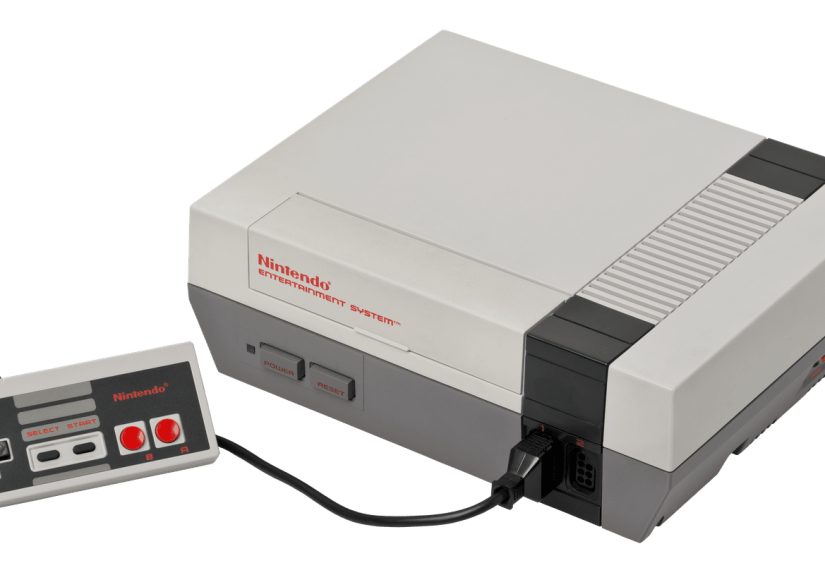
The Nintendo Entertainment System (NES) launched in the United States in 1985 and soon dominated the marketbut “success” wasn’t automatic. Nintendo learned that
in a post-crash America, the public didn’t just need a new console. They needed a reason to believe console gaming could be reliable.
Nintendo’s strategy was part branding, part engineering, part gatekeeping (the constructive kind). The NES was positioned as an “entertainment system” rather than
another “video game console,” designed to sit alongside VCRs and stereo gear. Nintendo also pushed quality control and used a lockout chip system to prevent
unlicensed cartridges, forcing developers to obtain approvalhelping avoid a repeat of the anything-goes chaos that helped trigger the crash.
This era also shows Nintendo’s core business insight: the console is only as strong as its games. Nintendo’s first-party titles created demand, then the company
built rules for third-party developers so the library could grow without turning into a junk drawer. The result wasn’t just a hit console; it was a restored market.
1989: Game BoyHandheld Gaming Becomes a Lifestyle
If the NES rebuilt the living-room console business, the Game Boy made gaming portable in a way that felt normal. Released in 1989, Game Boy delivered
interchangeable cartridges, solid battery life, and the kind of “just one more try” simplicity that fits a commute or a backseat.
Nintendo also made a brilliant packaging decision: Game Boy was famously bundled with Tetris, an instantly understandable puzzle game that didn’t care about age,
language, or gamer identity. The message was clear: this isn’t a niche toyit’s a device for anyone who likes fun.
The impact was enormous. Handheld gaming stopped being a novelty and became part of daily life. And strategically, it gave Nintendo a second major platform that
didn’t rely on always “winning” the living-room console war. Even when home console cycles got messy, Nintendo’s handheld legacy kept its ecosystem alive and its
characters in people’s hands.
1991–1995: Super NES and the Art of the 16-Bit “Golden Age”
The Super Nintendo Entertainment System (SNES) arrived in the U.S. in 1991 and helped define what many fans think of as the classic console era: colorful worlds,
iconic soundtracks, and games that aged surprisingly well.
The SNES era sharpened Nintendo’s identity: it wasn’t trying to be everything to everyone. It wanted to be the best at a particular kind of qualitytight controls,
readable visuals, playful creativity, and an emphasis on experiences that felt good to master. This is where Nintendo’s “polish” became a brand promise.
Importantly, Nintendo was also learning how to navigate third-party relationships, licensing, and platform standards. The same idea that helped the NES succeedcurated
qualitycontinued, even as competition grew fiercer and audiences expanded.
1996–2001: Nintendo 64, 3D Gaming, and the Controller That Taught Thumbs New Tricks
The Nintendo 64 launched in the U.S. on September 29, 1996, alongside Super Mario 64, and it’s hard to overstate what that combo did for 3D game design.
The move to 3D wasn’t just “more dimensions.” It required new camera logic, new movement vocabulary, and new player intuition. Nintendo helped write that grammar.
The N64 era is also when Nintendo doubled down on controllers as part of the experience. When you change how people hold a game, you change what kinds of games can
exist. The N64’s design encouraged analog movement and precision in a way that matched the 3D transition.
While the industry increasingly leaned toward discs and cinematic presentation, Nintendo’s focus stayed rooted in responsiveness and playfeel. Even when business
decisions were debated, the design philosophy remained consistent: make the act of playing itself satisfying.
2001–2005: GameCube, Nintendo DS, and Nintendo’s “Two-Track” Strategy
GameCube: Compact Hardware, Big Design Personality
In 2001, Nintendo launched the GameCube (and also the Game Boy Advance). The GameCube was Nintendo’s first system to use optical discs instead of cartridges for its
gamesan example of Nintendo adapting where it mattered while still prioritizing its own design identity.
The GameCube period is sometimes described as an era of experimentation and transition. Nintendo’s first-party catalog stayed strong, but competition intensified.
What matters historically is what Nintendo did next: it didn’t simply try to out-muscle rivals in a horsepower arms race. It changed the question.
Nintendo DS: Dual Screens, Touch, and a New Audience
The Nintendo DS launched in 2004 with an unusual hook: two screens, one of them touch-enabled. That one choice unlocked entirely new types of gameplay, from
handwriting-style input to interface-driven puzzle design. It also broadened the audience by making interaction feel more naturaltap, drag, scribble, flip.
The DS era validated a major Nintendo belief: innovation isn’t only about graphics. Sometimes it’s about changing how you play, not just what you see.
2006–2012: Wii and the Moment Nintendo Made Everyone a “Gamer”
Nintendo introduced the Wii in 2006, bringing motion-sensitive controllers, built-in Wi-Fi, and a pitch that sounded almost too simple: move your body to play.
The result was a cultural event. Wii became one of those rare tech products that escaped its category and turned into a household word.
The Wii’s success wasn’t magic; it was design. Motion controls lowered the intimidation barrier. You didn’t need to memorize button combos to have fun. You could
hand a controller to a guest and be playing in 30 seconds. That “instant onboarding” is an underrated part of Nintendo’s historyagain and again, Nintendo wins by
making play approachable without making it shallow.
Nintendo’s own history notes that Wii became the first system purchased by more than 10 million Americans in a single year. That’s not just a sales flex; it’s a
signal that Nintendo expanded the market rather than only fighting over the same crowd.
The Wii U followed in 2012 with the GamePad and off-TV play. Historically, it’s often treated as a stumblepartly because its concept was hard to explain quickly,
and partly because the name didn’t clearly communicate “this is a new generation.” But even the Wii U matters: it incubated ideas (asymmetric play, second-screen
interaction, seamless switching) that would later feel more natural in the Switch era.
2017–2026: Nintendo Switch (and Switch 2) and the Hybrid Era
The Switch: One Device, Two Lives
The Nintendo Switch launched in 2017 and turned an old debate into a shrug: why choose between handheld and home console when you can have both? The hybrid
design wasn’t a gimmick; it was a strategic unifier. Nintendo had long run a two-track approach (a home console line and a handheld line). Switch merged those
tracks into one ecosystemone store, one audience, one software pipeline, one identity.
Nintendo launched Switch alongside hits including The Legend of Zelda: Breath of the Wild and Super Mario Odyssey, and the console’s library grew into a deep mix
of first-party showcases and third-party support. The Switch also proved something important: Nintendo’s best hardware ideas often look “obvious” only after they
succeed.
Switch Becomes Nintendo’s Best-Selling Console
By the end of 2025, Nintendo reported Switch lifetime sales at 155.37 million units (as of December 31, 2025), making it Nintendo’s best-selling console of all
time. That milestone matters historically because it shows Nintendo’s hybrid strategy didn’t merely stabilize the companyit became the center of its modern era.
Switch 2: The Next Chapter
Switch 2 launched on June 5, 2025, and Nintendo said it sold more than 3.5 million units in its first four daysits fastest-selling gaming device launch. Whether
you measure success by games, hardware, or cultural footprint, the hybrid approach has become Nintendo’s defining “now.”
From a history-of-Nintendo perspective, Switch 2 isn’t a hard pivot; it’s a continuation: keep the hybrid identity, upgrade performance, and keep the library and
play patterns familiar enough that the audience doesn’t feel like it has to “start over.”
What Nintendo’s History Teaches (and Why It Still Works)
Nintendo’s long-run success in video games isn’t about winning every generation on specs. It’s about repeating a few principles with surprising consistency:
- Hardware and software are one story: Nintendo designs systems around how games should feel, not around chasing a checklist of features.
-
Characters are infrastructure: Mario, Zelda, Pokémon, and friends aren’t “just IP.” They’re a foundation that lets Nintendo experiment with new
genres while keeping familiarity. -
Quality control protects trust: Post-crash NES policies (and the broader emphasis on polish) made “Nintendo quality” into a real consumer
expectation. - New players matter: From Game Boy to Wii to Switch, Nintendo repeatedly expands who feels invited to playwithout abandoning longtime fans.
The history of Nintendo video games is, in a way, the history of Nintendo repeatedly betting on joy as a competitive advantage. It sounds cheesy until you realize
“joy” is actually hard engineering: it’s interface design, onboarding, pacing, feedback, animation, music, readability, and the thousand tiny decisions that make
a game feel welcoming rather than exhausting.
Conclusion
Nintendo’s journeyfrom early electronic experiments to the NES revival, Game Boy’s portable takeover, and the Switch’s hybrid dominanceshows a company that
survives by refusing to become boring. Sometimes Nintendo is ahead of its time; sometimes it looks weird for a minute. But it keeps returning to the same core
question: Is this fun for real humans in real homes?
And that’s why Nintendo’s history isn’t just a timeline of consoles. It’s a timeline of design decisions that taught the industry how to make games more
approachable, more memorable, and more shareableone smile (and occasionally one accidental Wii Remote throw) at a time.
Player Experiences: Why Nintendo’s History Feels Personal (500+ Words)
Nintendo’s history is full of corporate milestoneslaunch dates, unit sales, new hardware featuresbut the reason people care is simpler: Nintendo eras are
often remembered as life eras. A Nintendo console isn’t just a box under the TV; it’s a soundtrack to weekends, a social glue for friends, and sometimes
the quiet comfort of a handheld screen when the world feels too loud.
For a lot of players, “Nintendo memories” start with the first time a game felt readable without a manual. You don’t need a tutorial to understand that
jumping over a Goomba is a good idea. You don’t need a strategy guide to realize that the shiny rupee is worth chasing. Nintendo has always been unusually good at
teaching through playmaking learning feel like discovery instead of homework. That design approach creates a specific kind of experience: you feel smart quickly,
then you feel challenged later, and somehow it’s still fun even when you fail (because the game clearly believes you’ll get it).
The Game Boy era is remembered not just for games, but for where it happened. Backseats. Waiting rooms. School bus rides. Family gatherings where the
adults talked and kids built their own little worlds. The Game Boy (and later handhelds) made gaming less like an “activity you plan” and more like an “activity
that fits.” It’s hard to explain to someone who never lived it, but portability changes your relationship with play: the game becomes a companion, not a destination.
Then there’s the Wii momentarguably one of the most socially recognizable eras in gaming. Even people who didn’t consider themselves gamers understood Wii Sports.
That experience wasn’t about mastery; it was about participation. The controller invited you to move like you already knew what to do, and suddenly the living room
became a stage. Wii nights weren’t “gaming nights” in the traditional sense; they were party nights with a scoreboard. And the best part? Skill gaps mattered less
at the start, so everyone had a reason to laugh instead of a reason to quit.
The Switch era has its own emotional texture: flexibility. The ability to play on the couch, then undock and keep going in handheld mode makes gaming feel like it
respects your schedule instead of demanding one. It’s the console you can sharehand a Joy-Con to a friend for a quick matchor keep to yourself for a late-night
quest. That kind of “pick up and continue” flow is a modern version of what Nintendo has chased since Game & Watch: play that fits into real life.
And across every generation, Nintendo’s biggest “experience” might be its sense of place. Nintendo worlds often feel like you can step into them for five minutes
or five hours and leave happier. That doesn’t mean every game is easy or childishNintendo can be punishing when it wants to bebut there’s usually a layer of
warmth, clarity, and charm that makes you want to try again. It’s the difference between a game that says “prove you belong here” and a game that says “come on in,
we saved you a seat.”
That’s why the history of Nintendo video games is more than nostalgia bait. It’s a record of how thoughtful design can shape culturehow a controller can bring
family members together, how a handheld can make waiting feel shorter, and how a fictional mushroom kingdom can become a shared reference point across generations.
Nintendo isn’t just selling hardware. It’s selling the feeling that play still matters, even when you’re busy, grown up, and pretending you don’t have time for fun.
Sources consulted (not for on-page display): Nintendo.com (About Nintendo), Smithsonian Institution (NES object), History.com (video game crash context),
WNYC Studios (On the Media segment on Nintendo’s U.S. revival strategy), GameSpot (Color TV-Game and console timeline),
The Henry Ford (Game Boy / NES artifacts), Britannica (Nintendo company overview), The Verge + Reuters (recent Switch / Switch 2 milestones).