Table of Contents >> Show >> Hide
- Wait, Was It 39 Ships or 24 Ships?
- Why the Navy Wanted the Cuts
- Why Critics Pushed Back Hard
- The Ships at the Center of the Storm
- What Congress Did About It
- What This Fight Really Revealed
- So, Was the Navy Right?
- Experiences Behind the Headline: What This Kind of Fleet Fight Feels Like in Real Life
- Conclusion
- SEO Tags
For years, the U.S. Navy has talked like a gym coach with a fresh whistle: get bigger, move faster, build the fleet, think long term, outpace China, and bring more firepower to the fight. Then came the kind of headline that makes defense hawks spill their coffee: the Navy wanted to remove 39 ships in one year.
That is not a typo. It is also not as simple as it sounds, because Navy math has a special talent for making ordinary humans squint. The most attention-grabbing number was 39 ships slated for inactivation in fiscal year 2023. But the formal budget request asked Congress to approve the decommissioning of 24 ships, while the broader inactivation plan included additional support and sealift vessels. So yes, the story was real. And yes, the details mattered a lot.
The bigger issue was not just the number of hulls leaving the stage. It was the contradiction. How does a Navy that keeps promising a larger, more lethal fleet also pitch one of the sharpest one-year reductions in recent memory? That question turned a budget debate into a strategy debate, and a strategy debate into a political brawl with Congress, the Marine Corps, shipbuilders, and anyone else with a pulse and an opinion on sea power.
In plain English, this was a classic Washington argument wrapped in salt spray: should the Navy keep spending money on old, unreliable, or mismatched ships just to preserve fleet numbers, or should it cut them loose now and pour those dollars into newer weapons, submarines, future surface combatants, and long-range strike programs? The Navy called that “divest to invest.” Critics called it “shrinking the fleet while pretending not to.” Both sides had a point. That is what made the fight so loud.
Wait, Was It 39 Ships or 24 Ships?
Let’s clear up the first confusion, because this topic attracts number soup. The budget request unveiled in March 2022 sought to decommission 24 ships. Navy budget officials said those 24 included nine littoral combat ships, five cruisers, two submarines, two oilers, two expeditionary transfer docks, and four dock landing ships. The Navy said the move would save about $3.6 billion across the Future Years Defense Program.
Later, a Navy inactivation schedule released in August 2022 listed 39 ships for fiscal year 2023. That broader list included the 24 ships tied directly to the budget fight, but it also covered other support and sealift vessels that were leaving service. In other words, the “39 ships” headline was accurate, but it described the full inactivation picture, not just the battle force ships at the heart of the congressional showdown.
That distinction matters because fleet-size arguments usually focus on battle force ships: carriers, submarines, surface combatants, amphibious ships, logistics ships, and some support vessels. When lawmakers and analysts argued about whether the Navy was hollowing itself out, they were not usually agonizing over every support hull equally. They were asking whether the sea service could afford to get smaller in visible combat power while the Indo-Pacific was getting more dangerous.
Why the Navy Wanted the Cuts
1. Some ships were simply old enough to qualify for nostalgia tours
Part of the retirement list was not particularly shocking. The Navy wanted to move on from aging Ticonderoga-class cruisers and older amphibious ships that were expensive to maintain and harder to modernize. These vessels were built for earlier eras and, in some cases, were soaking up money like a rusty dock soaks up rainwater. Keeping them alive required more maintenance, more parts, more labor, and more patience than the Navy believed it could justify.
Even when older ships still looked respectable on paper, readiness was another story. A ship that exists in inventory but spends too much time in maintenance is a little like a classic car that lives on jack stands in the garage. It technically belongs to you. It just does not take you anywhere.
2. The Littoral Combat Ship became the budget equivalent of a side-eye emoji
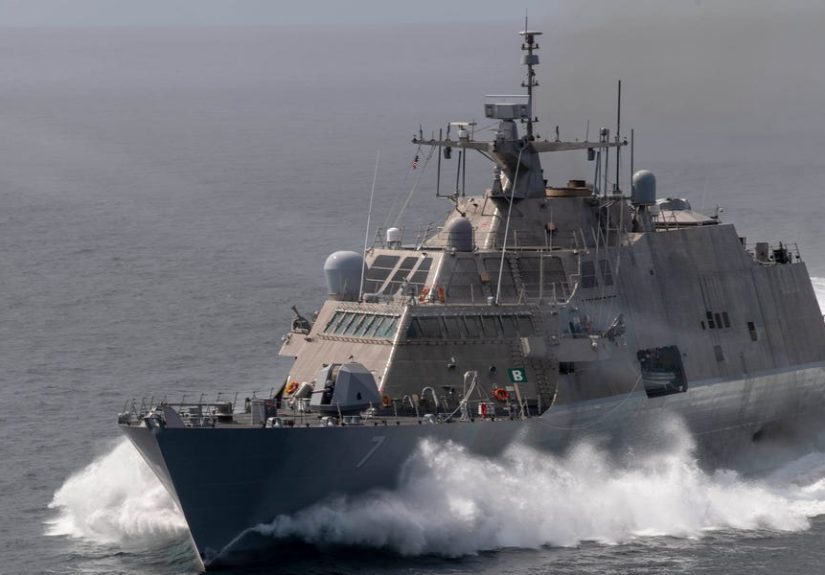
The real drama centered on the Littoral Combat Ship, especially the Freedom-variant vessels the Navy wanted to retire early. These ships were originally sold as agile, modular, near-shore warships that could swap mission packages and do a little bit of everything near contested coastlines. In practice, the class ran into operational and sustainment problems, including mission shortfalls, maintenance headaches, and propulsion issues. GAO reports were blunt: the fleet had not demonstrated the full operational capability it was supposed to deliver.
That is why the Navy argued the ships were no longer worth the ongoing bill. According to reporting at the time, retiring some LCS hulls could free roughly $50 million per ship annually. From the Navy’s perspective, that was not sabotage. That was triage.
3. The service wanted to move money into future punch, not past promises
The Navy’s FY2023 budget leaned heavily into long-range fires, hypersonic work, maritime strike capability, next-generation platforms, and readiness priorities. It requested substantial funding for Conventional Prompt Strike, Standard Missile-6 Block 1B development, and Maritime Strike Tomahawk efforts. The message was clear: if the Navy had to choose between preserving problematic hulls and buying better reach, better survivability, and better lethality, it preferred the latter.
This was the strategic logic behind “divest to invest.” The Navy was basically saying, “We cannot buy tomorrow’s fleet if we spend too much babysitting yesterday’s fleet.” That argument is not crazy. It is also not comforting when your rivals are building ships faster than you are.
Why Critics Pushed Back Hard
A shrinking fleet is still a shrinking fleet
Critics were not buying the comforting language. They saw a Navy that talked endlessly about deterrence, distributed lethality, and the need to compete with China, while also proposing to get smaller in the near term. Analysts noted that under the Navy’s 2023 shipbuilding plan, the battle force fleet would dip before it rose, reaching a low point later in the decade. That fed a growing sense that the Navy was stuck in a strategic traffic circle: announcing big ambitions, but budgeting for smaller numbers.
It did not help that the service requested funding for nine new battle force ships while simultaneously seeking to retire 24 ships in the budget request. That is a tough sales pitch. It sounds a bit like bragging about upgrading your house while removing the roof first.
China was the uninvited guest at every budget meeting
No conversation about Navy force structure happens in a vacuum, and certainly not in one shaped like the Pacific Ocean. Critics repeatedly pointed out that China’s navy had already surpassed the U.S. Navy in raw ship numbers. So even if the American Navy believed some of its proposed retirements were prudent, the optics were brutal. Cutting hulls while the main pacing threat was growing its fleet was always going to trigger congressional suspicion.
To be fair, raw numbers are not the whole story. U.S. naval power still carries advantages in nuclear submarines, carrier aviation, global logistics, training, and alliance networks. But politics loves an easy scoreboard, and “they have more ships than we do” is a score that fits neatly on a bumper sticker.
The Marine Corps had its own amphibious panic attack
The amphibious side of this debate made everything messier. The Navy wanted to retire dock landing ships at a time when the Marine Corps was arguing it needed a minimum of 31 traditional amphibious warships. Congress increasingly sided with the Marines on this point. Lawmakers worried that cutting amphibs would weaken crisis response, Marine Expeditionary Unit deployments, and overall naval integration.
So the debate was not only about outdated cruisers or troubled LCS hulls. It was also about whether the Navy and Marine Corps were even reading from the same map anymore. When the sea service and the Marines disagree about how many amphibs are necessary, Congress tends to hear one thing very clearly: somebody’s planning assumptions are wobbling.
The Ships at the Center of the Storm
The list was broad, but several categories drew the brightest spotlight:
- Littoral Combat Ships: especially Freedom-variant ships facing reliability and cost concerns.
- Ticonderoga-class cruisers: aging large surface combatants that were increasingly expensive to modernize and sustain.
- Dock landing ships: vital to amphibious lift and Marine operations, making them politically difficult to retire.
- Attack submarines and oilers: smaller in number on the list, but still notable because every retirement in a constrained fleet matters.
- Support and sealift vessels: part of the broader inactivation count that pushed the year’s total to 39.
The cruiser issue carried extra baggage because Congress had already spent years resisting Navy attempts to retire or sideline these ships. Later GAO work would add fuel to that criticism, finding that the cruiser modernization effort suffered from delays, wasted costs, and weak outcomes. That did not prove the Navy was right about every retirement, but it did show that trying to rescue old ships is not always the bargain it appears to be.
What Congress Did About It
Congress did what Congress often does when the Pentagon tries to slim down its inventory too aggressively: it reached for the brakes. In the FY2023 National Defense Authorization Act, lawmakers blocked the decommissioning of 12 ships the Navy wanted to retire. Those protected ships included five Littoral Combat Ships, four dock landing ships, two expeditionary transfer docks, and one cruiser.
That outcome said two things at once. First, Congress was not prepared to let the Navy cut that deeply that fast. Second, lawmakers still distrusted the service’s long-term shipbuilding plans enough to believe that once a ship leaves the fleet, the promised replacement may not show up on schedule, on budget, or with all its advertised magic tricks.
That distrust was not invented in a single budget cycle. It grew from years of acquisition delays, maintenance backlogs, shifting force-structure studies, and a recurring Navy habit of showing up with a new fleet vision every time the coffee gets hot.
What This Fight Really Revealed
The “remove 39 ships” story was never just about counting hulls. It exposed a deeper structural problem in American naval policy. The Navy wants a more modern fleet. Congress wants more ships in the water. The Marine Corps wants reliable amphibious capacity. The industrial base struggles to deliver on time. Maintenance delays keep older ships in rough shape. And every actor involved is convinced someone else is being unrealistic.
That is why this debate keeps returning in different outfits. The core problem is not that the Navy cannot describe the fleet it wants. It is that building, maintaining, and paying for that fleet over decades is much harder than drawing it in a strategy document.
CBO has repeatedly warned that long-range shipbuilding plans would cost more than the Navy estimates. GAO has repeatedly warned that maintenance, modernization, and sustainment problems are eroding readiness. Meanwhile, Congress keeps trying to protect today’s capacity while also demanding tomorrow’s fleet. It is the strategic equivalent of wanting to renovate the kitchen, keep the old one fully functional, and somehow spend less on groceries at the same time.
So, Was the Navy Right?
The unsatisfying but honest answer is: partly.
The Navy was right that some ships were too old, too troubled, or too expensive to justify endless life support. It was right that LCS problems were not imaginary. It was right that future warfighting demands more investment in long-range strike, undersea advantage, and next-generation capability.
But the critics were also right. Fleet size still matters. Presence still matters. Amphibious lift still matters. Deterrence is harder to sell when your force shrinks before your promised modernization arrives. And Congress had good reason to fear that the Navy’s replacement plan might be slower, costlier, and murkier than advertised.
In other words, the Navy was making a strategic argument from necessity, while Congress was making a political and operational argument from mistrust. Neither side was hallucinating.
Experiences Behind the Headline: What This Kind of Fleet Fight Feels Like in Real Life
Headlines about 39 ships can sound abstract, almost like a spreadsheet with a haircut. But fleet reductions are experienced by real people long before they become tidy budget lines. For sailors, a retirement debate can mean serving aboard a ship everyone knows is nearing the end, while still being expected to keep it mission-ready. That creates a strange emotional mix: pride in the ship, frustration with aging equipment, and uncertainty about what comes next. One day the vessel is part of the force; the next day it feels like it is standing in a government waiting room holding a number.
For crews on ships marked for decommissioning, morale can get complicated. Sailors still have jobs to do, standards to meet, and missions to execute. But they also know their platform may not have a future. That can affect maintenance culture, career planning, and even the way people talk about the ship on the mess decks. Nobody wants to serve on something described in public as legacy baggage, especially when that “baggage” is the thing carrying you across an ocean.
For maintainers and shipyard workers, the experience is different but just as intense. Early retirements can look like a verdict on years of labor, planning, and repair work. If a ship is cut loose after major investment, people naturally ask whether the money was wasted, whether leadership changed its mind too late, or whether the platform was flawed from the start. In places where shipbuilding and ship repair support local economies, these debates are not theoretical. They land in contracts, schedules, overtime, and family budgets.
For Marines and combatant commanders, the experience is operational. A ship removed from the roster is not merely a number gone from a PowerPoint slide. It may be one less hull available for crisis response, one less amphibious platform for deployment cycles, or one less option when planners are trying to spread forces across a contested region. Readiness shortfalls are often felt as tighter schedules, fewer choices, and more risk piled onto the ships that remain.
For lawmakers, the experience is usually one of déjà vu. Congress has heard versions of this argument before: retire older ships now, modernize later, trust the future plan. Many lawmakers do not fully trust that script anymore, especially after years of maintenance delays, cost overruns, and shifting shipbuilding visions. So their instinct is often defensive: keep more ships, buy time, and force the Navy to prove the replacement plan is real before allowing more retirements.
And for taxpayers, the experience is mostly bewilderment. They hear that some ships are too expensive to keep, then hear billions were already spent on them, then hear more money is needed to replace them, then hear Congress blocked some cuts anyway. It can sound like the federal government tried to build a better mousetrap and accidentally bought a marina.
That is why this debate matters beyond naval circles. It reveals how strategy, procurement, maintenance, and politics collide in public view. The experience behind the headline is not just about old steel leaving the fleet. It is about confidence: confidence in planning, in execution, in replacements, and in whether America can still align its maritime ambitions with the ships it can actually build, sustain, and sail.
Conclusion
The Navy’s push to remove 39 ships in one year became a flashpoint because it touched every live wire in modern U.S. defense planning: China, readiness, maintenance, shipbuilding costs, Marine Corps requirements, and congressional skepticism. The service was trying to cut what it saw as underperforming or aging capacity so it could invest in the fleet of the future. Congress, meanwhile, worried that the future fleet always sounds wonderful right up until it arrives late and over budget.
That tension is not going away. If anything, it is the defining naval budget story of the era. America wants a larger, more capable Navy, but it also wants to modernize quickly, fix maintenance backlogs, preserve global presence, and compete with a rival that is producing ships at serious speed. The result is a constant argument over what to keep, what to cut, and what kind of fleet actually wins the next war instead of just surviving the next hearing.
The headline about 39 ships was dramatic for a reason. It captured a blunt truth: the biggest challenge for the U.S. Navy is not dreaming up a future fleet. It is surviving the painful middle chapter between the fleet it has and the fleet it says it needs.