Table of Contents >> Show >> Hide
- Why The French Laundry Became the Benchmark
- The Restaurant That Wore the Label: Saison
- What Made Saison Feel Like a Successor
- Why the Comparison Was Always a Little Unfair
- What the Question Means Now
- So, Is There a Next French Laundry?
- Experience Notes: What Chasing “The Next French Laundry” Really Feels Like
- SEO Tags
Every great restaurant eventually creates a strange little problem for the rest of the industry: people stop describing it and start using it as a measuring stick. In American fine dining, The French Laundry has long been that measuring stick. It is not just a restaurant in Yountville. It is shorthand for precision, ritual, ambition, luxury, and the kind of meal people discuss the way other people discuss solar eclipses. So when a younger restaurant gets the whispered questionIs this the next French Laundry?it is both a compliment and a trap.
That question was famously attached to Saison in San Francisco, a restaurant that rose from humble pop-up roots to become one of the most talked-about dining rooms in the country. The comparison made sense on one level. Both restaurants inspired pilgrimage. Both built reputations on extraordinary ingredients, obsessive technique, and service that aimed for memory rather than mere satisfaction. But the label also missed the point. Saison was never interesting because it looked like a sequel. It mattered because it felt like a rebellion written in tasting-menu form, with smoke, embers, handmade everything, and a dining room that seemed less interested in polished silver domes than in elemental drama.
So, is there really such a thing as the next French Laundry? Or is the better question whether American fine dining keeps reinventing itself every time one restaurant becomes too iconic to imitate? Pull up a chair. We are going in with starched napkins, open fire, and just enough culinary gossip to keep things lively.
Why The French Laundry Became the Benchmark
To understand why anyone would call another restaurant “the next French Laundry,” you first have to understand what Thomas Keller’s flagship represents. The French Laundry occupies a historic stone building in Yountville that began life in 1900 and later operated as a French steam laundry before becoming a restaurant in 1978. Keller purchased it in 1994 and transformed it into one of the defining temples of American dining.
That timeline matters because The French Laundry did not become legendary by accident. It became legendary by turning discipline into theater. Keller built a restaurant culture around detail so exacting that the details almost stop seeming real. Tiny cones of salmon tartare. Dishes arriving with a kind of serene confidence. Service that feels measured rather than stiff. Menus that balance French technique with California produce. The result is not just a dinner; it is a worldview in courses.
Its influence grew because the restaurant became more than a local success story. Since 2007, The French Laundry has held Michelin’s highest three-star rating, and its broader awards record helped cement it as one of the most decorated restaurants in the United States. For many chefs, diners, and critics, it became the American answer to the grand European fine-dining canonexcept sunlit, Napa-shaped, and less interested in dusty aristocratic formalism than in beautifully controlled pleasure.
That is why the phrase “the next French Laundry” carries so much weight. It does not just mean excellent. It means potentially era-defining. It suggests a restaurant that might shape the taste, ambition, and vocabulary of American dining for the next generation.
The Restaurant That Wore the Label: Saison
If any restaurant earned the comparison in the early 2010s, it was Saison. Chef Joshua Skenes and sommelier Mark Bright launched it as a pop-up in San Francisco’s Mission District, and that beginning is part of the myth. This was not an old-guard institution unveiled with chandeliers and inherited prestige. It began with the energy of experimentation and the scrappiness of people who were building something because they had to make it exist.
Early reports described Saison as a makeshift, intriguing operationpart warehouse, part workshop, part fever dream. It started small, irregular, and unconventional. Then it expanded. Then critics noticed. Then everybody noticed. By the time it moved into new quarters in SoMa, the restaurant had already collected two Michelin stars and a reputation for food that was both deeply Californian and gloriously obsessive.
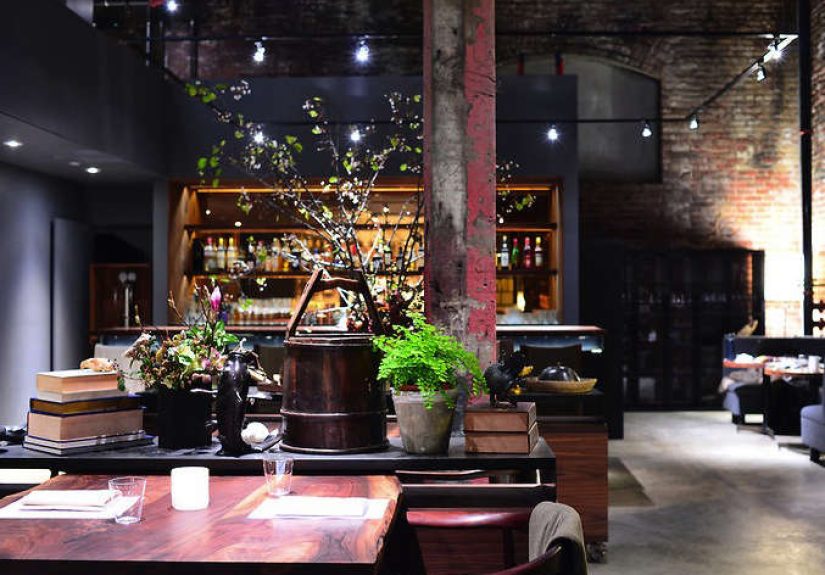
The move to its more polished home did not make Saison less distinctive; it made the differences sharper. Remodelista’s famous “The Next French Laundry?” feature lingered on the details that made the restaurant feel intimate and modern rather than old-world formal: hand-etched glasses from Japan, handwritten menus, live-edge walnut tables, banquettes with throws, and food prepared within sight of diners. It looked like fine dining had wandered into a design studio, borrowed a woodpile, and decided it never wanted to go back to the white-tablecloth script.
Meanwhile, food media kept emphasizing what made Saison impossible to ignore. Critics described it as expensive, yessometimes eye-wateringly sobut also thrillingly personal. Bon Appétit ranked it among the best new restaurants in America. Eater chronicled the escalation of both ambition and price. SFGATE and the Chronicle followed its growth from rough-edged pop-up to major culinary force. At its peak under Skenes, Saison reached three Michelin stars, which turned the comparison to The French Laundry from provocative headline into serious industry conversation.
What Made Saison Feel Like a Successor
1. It had a point of view, not just technical skill
Great restaurants are not remembered merely because they cook well. Plenty cook well. The memorable ones make you feel as if the meal could only have come from that kitchen, from that chef, in that place, at that moment. The French Laundry did that through polish, refinement, and a uniquely Californian interpretation of luxury. Saison did it through fire.
Skenes spoke openly about wanting flavor that felt more elemental and more honest, and the hearth became central to Saison’s identity. Fire was not decoration there. It was philosophy. Smoke, embers, charring, roasting, and the pursuit of “pure flavor” gave the restaurant a primal edge that contrasted beautifully with the precision of the plating.
2. It made Northern California taste new again
Both The French Laundry and Saison are California restaurants, but they express California differently. The French Laundry presents abundance with exquisite composure. Saison, at least in its defining rise, presented it with a little more wildness. The ingredient list still sparkledsea urchin, abalone, pristine seafood, rare producebut the mood was less manicured-garden perfection and more beautifully controlled bonfire.
That mattered because American fine dining was shifting. Diners still wanted luxury, but they increasingly wanted luxury to feel rooted, local, and alive. Saison gave them that. It looked toward the landscape and the season, but it also looked toward texture, smoke, and immediacy. It made people feel close to the act of cooking.
3. It treated the meal like an immersive experience
The French Laundry has long been revered for making a meal feel choreographed without becoming robotic. Saison offered a different kind of immersion. The kitchen and dining room spoke to one another more openly. The design signaled warmth and modernity. The menu changed, the pacing expanded, and the entire evening could stretch luxuriously, even extravagantly. This was not dinner as refueling. This was dinner as event, narrative, and occasionally glorious overkill.
And honestly, overkill has its place. Nobody books a bucket-list tasting menu because they want restraint. They book it because they want to tell the story later with hand gestures.
Why the Comparison Was Always a Little Unfair
Calling Saison “the next French Laundry” helped people understand its importance, but it also flattened what made it original. The phrase assumes that culinary greatness moves in a neat line: one icon steps down, another steps up, and the torch changes hands with cinematic grace. Restaurants do not work that way. They are messier, more personal, more local, and more fragile.
The French Laundry and Saison came from different emotional temperatures. Keller’s restaurant perfected a form of hospitality that feels almost ceremonial. Saison, by contrast, gained power from its tension between rigor and rawness. One suggested a cathedral of refinement. The other felt like a forge where refinement was constantly being tested by heat.
There is also the matter of influence. The French Laundry’s reach is enormous because so many chefs passed through its kitchen or absorbed its methods from afar. Its cookbook became required reading in serious culinary circles. Its standards for service, sourcing, and repetition at the highest level changed expectations across the country. Saison’s influence has been real too, especially in the embrace of live-fire luxury and ingredient-driven theatricality, but it speaks a different dialect. It is less about reproducing a canonical grammar and more about expanding the language.
What the Question Means Now
Today, the question “Who is the next French Laundry?” feels less like a search for one restaurant and more like a search for the next defining idea in American dining. Saison itself has changed. Joshua Skenes stepped away years ago, and the restaurant lives on in a new phase, now describing itself as a two-Michelin-star open-woodfire restaurant led by co-owner and executive chef Richard Lee. That evolution is a useful reminder: restaurants are living organisms, not marble statues.
Meanwhile, the fine-dining world has diversified. There are more styles, more regional expressions, more chefs refusing old hierarchies, and more diners who want excellence without the feeling that they have accidentally joined a diplomatic banquet. The next great American restaurant may not resemble The French Laundry at all. It may be more casual. It may be more intimate. It may be louder, weirder, more locally specific, or more emotionally direct.
Still, the old benchmark remains useful. The French Laundry symbolizes consistency, polish, and long-haul excellence. Any restaurant that inspires comparisons to it has probably done something extraordinary. But maybe the healthiest way to use the phrase is not as a crown. Maybe it is better as a test: Does this restaurant feel like it could change what ambitious American dining looks like?
By that standard, Saison absolutely deserved the conversation. Not because it copied Keller’s model, but because it challenged it. It proposed that luxury could smell like smoke, that a dining room could feel both sparse and lavish, and that a meal could be as much about elemental force as about polished finesse.
So, Is There a Next French Laundry?
Yes and no. Yes, in the sense that American dining will always produce restaurants ambitious enough to chase immortality one course at a time. No, in the sense that true greatness usually refuses to arrive as a duplicate. The restaurants that matter most do not become famous for being the next anything. They become famous for making everyone else update their definitions.
The French Laundry changed the rules by proving that an American restaurant could operate with world-class rigor while remaining deeply tied to its place. Saison changed the conversation by showing that fine dining could be both fiercely luxurious and thrillingly elemental. One polished the silver. The other fed the fire. Both, in their own ways, told diners that the meal could be art, memory, and argument at once.
That may be the real answer to the headline. The next French Laundry is never just one address. It is the next restaurant bold enough to make even jaded diners sit up, blink, and say, “Well, that changes things.”
Experience Notes: What Chasing “The Next French Laundry” Really Feels Like
For many diners, the experience starts long before the first bite. It begins with the reservation itself, which in fine-dining culture can feel less like booking dinner and more like securing concert tickets for a one-night-only reunion tour. You compare dates, text friends, pretend to be calm, and then behave exactly like someone who is not calm. When the reservation is finally set, the restaurant begins occupying space in your brain rent-free. You wonder what to wear. You debate whether the wine pairing is financially irresponsible or spiritually necessary. You tell yourself it is just dinner, which is adorable.
Then comes the arrival. Restaurants in this class understand anticipation, and the best of them build it without seeming to try. The walk in, the greeting, the first glance at the room, the first clue about whether the evening will lean temple, theater, or workshopthese details matter because they tell you what kind of story the restaurant wants to tell. A French Laundry-style experience often feels polished from the first second, as if every moment has been pressed, folded, and aligned. A Saison-style experience can feel warmer, moodier, more tactile. Wood, smoke, movement, the visible energy of the kitchensuddenly the meal feels alive before anything is plated.
Once you sit down, time starts behaving differently. This is one of the least discussed and most important parts of a tasting menu at the highest level. You stop measuring the evening in minutes and start measuring it in impressions: the first small bite that resets your expectations, the course that makes your whole table go quiet, the moment the sommelier says something about a vineyard that somehow makes the next sip taste smarter. You notice textures you normally speed past. You become absurdly interested in butter. You begin using phrases like “the arc of the meal,” which would be embarrassing anywhere else but somehow feels earned here.
There is also a weirdly emotional side to the experience. A restaurant being called “the next French Laundry” creates pressurenot just for the kitchen, but for the diner. You do not want merely to eat. You want to understand why this place matters. You start looking for evidence. Is the service seamless? Is the room memorable? Is there a signature idea powerful enough to justify the hype? By the middle of the meal, though, the analytical part usually gives up. If the restaurant is truly great, your brain stops grading and starts surrendering.
And afterward? That is when the real afterglow begins. You walk out slightly dazed, pleasantly overfed, and oddly reflective. The best meals of this caliber do not just fill you up; they reorganize your standards. They make ordinary dinners look a little sleepier for a while. They become stories you tell in fragments: the smoke on the seafood, the impossible sauce, the tiny course you thought would be decorative and then could not stop thinking about, the room, the pacing, the feeling that everyone around you understood they were participating in something temporary and precise.
That, ultimately, is the experience behind the phrase. Chasing “the next French Laundry” is not really about finding a clone of a famous restaurant. It is about chasing that rare, electric combination of anticipation, craft, hospitality, surprise, and memory. Sometimes the room is old-world and serene. Sometimes it smells faintly of firewood and ambition. But when it works, you leave with the same conclusion: dinner can still astonish grown adults into talking about scallops like poets.