Table of Contents >> Show >> Hide
- What Exactly Is a Shaker Box (and Why Do People Keep Falling for It)?
- Why Japan Keeps “Getting” Shaker Design
- The 5 Hardworking Designs from Japan
- 1) The Shaker Tissue Box (Because Cardboard Isn’t a Design Style)
- 2) The Shaker Cat Bed (A Luxury Suite for Your Tiny Roommate)
- 3) The Shaker Sewing Series (Pin Cushion + Tray + Sewing Box = Sanity)
- 4) The Shaker Tray (The Quiet Hero of “Put It Here for a Second”)
- 5) The Shaker Dust Box (A Wastebasket That Knows How to Behave)
- Bonus: Two More Japanese Shaker-Inspired Pieces Worth Knowing
- Japan’s Shaker Masterclass: The Work of Masashi Ifuji
- How to Choose the Right Shaker Box for Your Home
- Why These “New Uses” Actually Make Sense
- Real-Life Experiences: Living with Japanese Shaker Box Designs (Add-On)
- Conclusion
If you’ve ever seen a classic Shaker oval box, you already know the vibe: simple, handsome, and quietly confidentlike a cast-iron skillet that doesn’t need to brag about how many steaks it’s seared. The original Shaker box was made to work for a living: it held dry goods, sewing notions, herbs, seeds, and the small daily clutter that has followed humanity since the dawn of “Where did I put my keys?”
Here’s the twist: designers in Japan (and Japan-loving makers around the world) have been reimagining the Shaker box for modern life while keeping the old-school craftsmanship details that make these boxes so satisfying to use. Think swallowtail joints, copper tacks, and that iconic oval shape… now pulling overtime as a tissue holder, a lidded dust box, even a cat bed. Yes, your cat can now nap in folk-art history. You’re welcome.
What Exactly Is a Shaker Box (and Why Do People Keep Falling for It)?
Shaker communities in the United States were known for practical designobjects meant to be used, not just admired. Oval boxes (often called pantry boxes) became one of the most recognizable Shaker forms: lightweight, stackable, and easy to store because smaller boxes nest inside larger ones. They look clean on a shelf, but they’re also sturdy enough to earn their keep in daily routines.
The “Anatomy” of a Shaker Oval Box
The magic is in the method. Traditional Shaker boxes are made from thin hardwood bands softened in hot water (or boiled), then bent around a form to create that smooth oval wall. The ends overlap with distinctive “fingers” (often called swallowtails), fastened with copper tacks that are clinchedbent backon the inside to lock the joint. The top and bottom pieces (historically called the “heading”) are fitted into the band and secured with small pegs or points, often without glue. It’s a clever system: strong, repairable, and friendly to wood movement as humidity changesaka, “my house is either a desert or a rainforest depending on the season.”
Historically, Shaker oval boxes were made in standardized sizes and were often sold as “nests” (a graduated stack). Many early examples were painted (milk paint is famously associated with Shaker finishing), with natural wood sometimes left visible at edges where lids meet bodies so they wouldn’t stick in humid weather. In other words: Shakers cared about beauty, but they cared even more about not wrestling a stuck lid before breakfast.
Why Japan Keeps “Getting” Shaker Design
Japan has a long love affair with objects that are both minimal and deeply thoughtfulthings that feel calm but also brilliantly engineered. Shaker design fits right into that lane: honest materials, clean lines, and a focus on utility that still feels warm, not sterile.
There’s also a practical angle: many Japanese homes prioritize efficient storage and multi-use items. When you’re designing for real life in a real space (not a photo shoot where nobody owns chargers), an object that stacks neatly, hides clutter, and looks good doing it is basically a small miracle.
That’s why it’s so delightful to see Japanese reinterpretations that keep the traditional construction details while pushing the form into new jobs. These aren’t “Shaker-ish” props. They’re hardworking, daily-use tools that just happen to look like they belong in a museum (and also on your coffee table).
The 5 Hardworking Designs from Japan
Below are five practical Japanese takes on the Shaker box concepteach one using the classic oval/bentwood language but aimed squarely at modern routines. The through-line: keep the craft, upgrade the function, and make clutter behave itself.
1) The Shaker Tissue Box (Because Cardboard Isn’t a Design Style)
Let’s start with the one object that appears in every home, office, and car: tissues. Traditional tissue boxes arrive wrapped in bright cardboard graphics that scream, “I was purchased during a head cold.” The Japanese Shaker-style tissue box turns that visual chaos into a calm wooden object you’ll actually want on display.
What makes it work: the oval box shape is naturally stable, and the lid can be designed to accommodate a standard stack of tissues. It’s the kind of upgrade you’ll appreciate dailyespecially in spaces where you want a clean look (bedside tables, guest bathrooms, living rooms). Bonus points if you choose a darker finish for high-traffic zones where fingerprints love to audition for a crime drama.
- Best room: bathroom vanity, entry console, or nightstand
- Most satisfying moment: when you replace the tissues and the box still looks expensive
- Style tip: pair it with a small tray so the whole surface looks intentional, not accidental
2) The Shaker Cat Bed (A Luxury Suite for Your Tiny Roommate)
Yes, the Shaker box has been promoted to pet furniture. A Shaker-style cat bed uses the familiar oval vessel as a cozy “nest,” often paired with a cushion designed to fit snugly inside. It’s a brilliant match: cats love contained, den-like spaces, and humans love items that don’t look like they were made from neon fleece and pure chaos.
Why it’s practical: it’s easy to place anywhere (living room corner, sunny window, next to your desk), and the shape helps keep the cushion from sliding around. It’s also a subtle way to integrate pet life into a design-forward homewithout pretending your cat doesn’t own the place. (They do. They just let you pay rent.)
- Best room: wherever the sunbeam lands at 2:17 p.m.
- Best for: cats who love curling up, kneading, and judging you softly
- Care tip: choose a removable cushion covercats are adorable, but they’re not exactly “low-lint”
3) The Shaker Sewing Series (Pin Cushion + Tray + Sewing Box = Sanity)
The Shakers originally used these boxes for all kinds of small itemssewing notions includedso it’s fitting that Japanese designers have leaned into this heritage with a modern sewing set. Think of it as a “craft corner upgrade” for people who are tired of losing needles in the couch like it’s a horror movie.
A Shaker-style pin cushion can perch neatly on a matching tray, and a two-tier sewing box can keep thread, buttons, scissors, and measuring tape separated instead of living in a tangled heap. The genius here is the modularity: each piece works on its own, but together they create a contained, portable station you can move from table to shelf in one trip.
- Best room: home office, craft room, or “this corner is my hobbies now” nook
- Best for: mending, embroidery, hand stitching, and anyone who owns more than one kind of thread
- Pro move: store a tiny magnet inside for rogue pins that like to vanish
4) The Shaker Tray (The Quiet Hero of “Put It Here for a Second”)
Trays are the unsung champions of home organization. A Shaker-style tray keeps surfaces tidy by giving your daily carry items an official parking spot: keys, wallet, earbuds, hand cream, that one pen you actually like, and the mysterious screw you found on the floor (and are now pretending you don’t need to worry about).
The Japanese approach tends to emphasize clean proportions and gentle edgesso the tray looks good while doing the very unglamorous work of stopping clutter from spreading. It also fits beautifully into both minimalist and warm-wood interiors. In short: it’s a “design object” that actively prevents your house from looking like a design accident.
- Best room: entryway, kitchen counter, bedside table, desk
- Best for: daily-drop items and styling small vignettes without trying too hard
- Bonus use: serve tea and snacks like you planned it (even if you didn’t)
5) The Shaker Dust Box (A Wastebasket That Knows How to Behave)
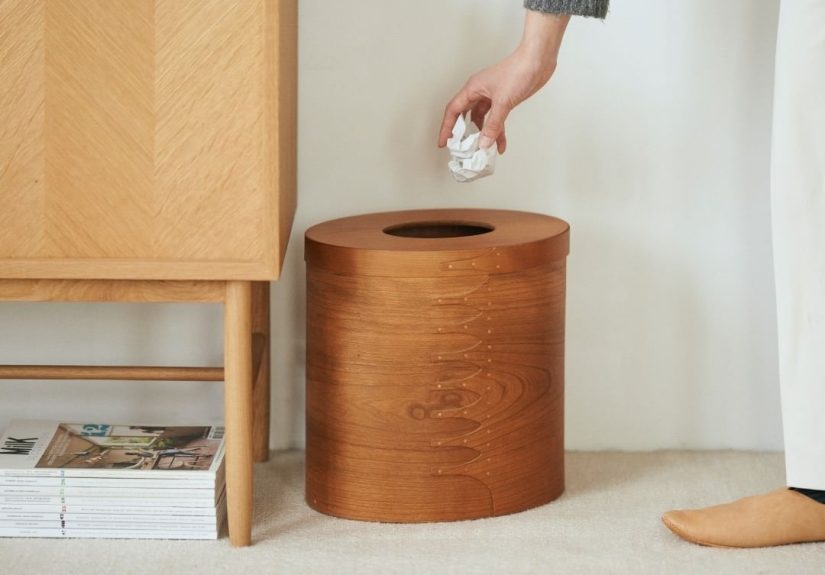
The lidded dust box is an especially clever reinterpretation: a small wastebasket with a removable lid that keeps trash out of sight. This is the kind of thing you want in a bathroom, bedroom, office, or near a vanityanywhere a normal open bin feels visually messy.
Why it’s “hardworking”: it solves a real daily problem (tiny trash piles and visual noise) while staying compact. A lid also helps reduce odors and hides tissues, cotton pads, pet treats packagingbasically, the evidence of being a human who lives in a home.
- Best room: bathroom, under a desk, near a vanity
- Best for: small-space living and anyone who likes surfaces to look calm
- Practical detail: removable lid makes it easier to empty without a wrestling match
Bonus: Two More Japanese Shaker-Inspired Pieces Worth Knowing
Shaker Box Glasses Case
A glasses case based on the Shaker box form is peak “small object design.” It’s protective, handsome, and far less likely to be crushed in a bag than a flimsy fabric sleeve. Plus, it makes the daily act of taking off your glasses feel like a tiny ritual instead of a chaotic scramble.
Shaker Mirror
A mirror framed with Shaker-style wood elements fits naturally into this collection: simple, warm, and functional. It’s a reminder that Shaker design isn’t only about storageit’s about making everyday objects more quietly livable.
Japan’s Shaker Masterclass: The Work of Masashi Ifuji
If you want to see how far this tradition can go without losing its soul, look at Japanese woodworker Masashi Ifuji. He has studied Shaker boxes deeplydown to techniqueand produces refined oval boxes and related pieces that feel both faithful and contemporary. Reports of his process describe traditional bentwood methods (softening the wood, shaping it, then letting it dry in a mold) and a commitment to classic construction details like swallowtail joints and copper tacks, often avoiding glue.
The bigger point isn’t celebrity craftsmanship; it’s proof that the Shaker box isn’t stuck in history. When a form is truly functional, different cultures can adopt it, respect it, and still invent new uses that feel perfectly naturallike the box simply evolved because our lives changed.
How to Choose the Right Shaker Box for Your Home
Start with the job, not the shelf
The fastest way to buy the “wrong” box is to choose based on looks alone. Instead, decide what you want it to do. Is it hiding visual clutter (dust box)? organizing daily-drop items (tray)? upgrading a functional eyesore (tissue box)? The best Shaker box purchase is the one you use constantly without thinking about it.
Pick a finish that matches your reality
Natural wood finishes feel warm and classic, but they show wear more easily in high-use areas. Painted finishes (including milk paint styles) can be forgiving and add character. Dark finishes are great for offices and entry tables; lighter finishes shine in kitchens and bathrooms. Choose based on where it will live, not where it looks best in a fantasy home with no fingerprints.
Respect the craft (and it will respect your stuff)
Bentwood bands are strong, but they’re still thin wood shaped into curves. Treat your Shaker box like a well-made tool, not a hockey puck. Don’t overload it with heavy items, avoid soaking it, and be gentle if it takes a tumblecopper tacks and thin bands can be stressed by hard impacts. If you’re buying as a gift, include care notes so the box doesn’t get “cleaned” with a method that belongs in a car wash.
Why These “New Uses” Actually Make Sense
A lot of modern design tries to be clever by reinventing the wheel. The Japanese Shaker box trend is clever in a different way: it keeps what already works. The oval bentwood form is stable, stackable, and visually calm. The lidded format hides mess. The joinery and tacks are strong without being bulky. So when designers shift the usetissues, trash, sewing, pet loungingthey’re not forcing a new identity onto the form. They’re simply assigning it a new job description.
And maybe that’s why Shaker-inspired objects age so well: they were never trying to be trendy. They were trying to be useful. Trendy things expire; useful things get adopted.
Real-Life Experiences: Living with Japanese Shaker Box Designs (Add-On)
Let’s get practical. Below are five lived-in scenariosthings people actually dowhere these Japanese Shaker box designs shine. No showroom fantasies, no “I only own one perfectly folded linen throw.” Just real life, with a little extra charm.
Experience #1: The Tissue Box That Stops Apologizing for Itself
You know the moment: guests arrive, someone sneezes, and suddenly the bright cardboard tissue cube is front-and-center like it paid rent. Swapping that for a Shaker-style tissue box is a surprisingly big upgrade. The experience isn’t just “prettier tissues”it’s that your space feels calmer because the object blends in. You stop repositioning it before company comes over. You stop hiding it behind a candle. It just sits there, quietly doing its job like a polite adult.
Experience #2: The Cat Bed That Doesn’t Hijack Your Decor
Pet beds are usually one of two things: an eyesore or a suspiciously expensive eyesore. The Shaker cat bed idea is different. It looks like a beautiful wooden vessel, so you don’t mind seeing it in the living room. Meanwhile, your cat experiences it as a VIP lounge: contained, elevated, and smugly exclusive. The funniest part is how quickly it becomes “their spot.” You’ll catch yourself stepping around it as if it’s a sacred artifact. Because to your cat, it is.
Experience #3: The Sewing Setup That Prevents “Craft Spill”
Even if you’re not a full-time maker, most households have a mini sewing situation: a button that popped off, a hem that needs fixing, a loose strap that’s threatening to become a full-blown wardrobe emergency. A Shaker sewing box system makes those tiny tasks feel doable because the tools aren’t buried under chaos. There’s a spot for thread. There’s a spot for needles. The pin cushion stays where it belongs. You finish the repair, close the lid, and the entire “project” disappearswithout you stuffing everything into a random drawer and hoping future-you develops telepathy.
Experience #4: The Tray That Turns Clutter into a “System”
A Shaker-style tray is the difference between “my entryway is a mess” and “I have a landing zone.” Keys go here. Sunglasses go here. The wallet goes here. Even if you’re the kind of person who normally drops items wherever gravity feels strongest, the tray creates a subtle habit: you start aiming for it. Then something magical happens: you spend less time hunting for small essentials. And you get to feel like a highly organized person, which is great, because self-delusion is one of the most affordable luxuries.
Experience #5: The Dust Box That Keeps the Peace
Tiny trash is the villain nobody talks about. Bathroom tissues. Cotton rounds. Tea bag wrappers. Receipts. The bits and bobs that accumulate and make a clean room feel mysteriously messy. A lidded Shaker dust box changes the experience because the mess is contained and hidden. You don’t see it. Your brain relaxes. The room feels tidier without you doing more work. That’s the best kind of organization: the kind that makes life easier instead of adding “trash aesthetics manager” to your list of unpaid jobs.
In the end, these Japanese Shaker box reinterpretations aren’t just pretty objectsthey’re behavior nudges. They make it easier to keep a home calm, functional, and a little more intentional. And if that sounds like a lot of meaning for a wooden box… well, welcome to design. Sometimes the smallest objects do the heaviest lifting.
Conclusion
The Shaker box has survived for centuries because it solves problems with grace: it stores, stacks, and simplifies without demanding attention. Japan’s “practical new uses” keep that spirit intact while adapting the form to modern routinestissues, trash, sewing, serving, even pets. It’s proof that timeless design doesn’t need constant reinvention; it just needs thoughtful application.