Table of Contents >> Show >> Hide
- What “Top 10” Means (and Why It Matters)
- The Current Top 10 S&P 500 Stocks (by Index Weight)
- A Deep(er) Look at Each of the Top 10
- 1) NVIDIA (NVDA): The Picks-and-Shovels King of Modern AI
- 2) Apple (AAPL): The Ecosystem With a Subscription Side Hustle
- 3) Microsoft (MSFT): Enterprise Glue, Cloud Growth, and AI Everywhere
- 4) Amazon (AMZN): Retail Scale + AWS Profit Engine
- 5–6) Alphabet (GOOGL & GOOG): Search, YouTube, and the AI Arms Race
- 7) Meta Platforms (META): Attention, Ads, and Recommendation Engines
- 8) Tesla (TSLA): More Than a Car CompanyAlso More Than a Valuation Debate
- 9) Broadcom (AVGO): Semiconductors Meet Infrastructure Software
- 10) Berkshire Hathaway (BRK.B): The “Business Buffet” With an Insurance Engine
- What This Top 10 List Reveals About Today’s S&P 500
- How to Use the Top 10 List (Without Making Risky Assumptions)
- FAQ: Quick Answers People Actually Ask
- 500+ Words of Real-World “Experience” Around the Top 10 S&P 500 Stocks
- Conclusion: The List Is Short, the Impact Is Big
If the S&P 500 is the giant group chat of American business, the “top 10 stocks” are the people who keep changing the topic,
hogging the mic, and somehow still getting invited to every hangout. These are the biggest, most influential companies in the index
the ones that can make your S&P 500 index fund look brilliant on Tuesday and emotionally complicated by Thursday.
In this guide, we’ll break down the current top 10 S&P 500 stocks (by index weight), why they’re so dominant, what investors
love about them, what can go sideways, and how to use this list without turning your portfolio into a one-theme park ride.
(Fun! Also: whiplash.)
What “Top 10” Means (and Why It Matters)
The S&P 500 is float-adjusted, market-cap weighted. Translation: companies with the largest public market value
get the largest influence on index performance. When mega-cap stocks surge, they can lift the whole index. When they stumble,
they can make the entire market feel like it tripped over a charging cord.
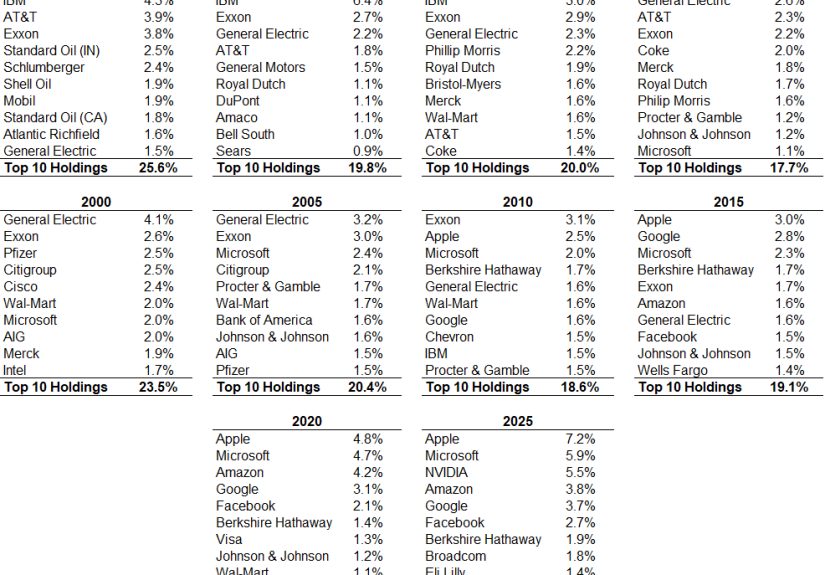
That’s why the top 10 matters. Even though the index has about 500 companies, a relatively small handful can represent a very large
share of the total weight. If you own an S&P 500 fund (think: SPY, VOO, IVV), you already own these giantsoften in meaningful size.
Quick reality check: Index weights change constantly with prices, share counts, and rebalancing. Consider the percentages below a
“snapshot,” not a tattoo.
The Current Top 10 S&P 500 Stocks (by Index Weight)
Below is a snapshot-style list of the largest S&P 500 constituents by weight, along with a “why it’s huge” explanation you can actually
use at a dinner party (or in a very intense group text).
| Rank | Company | Ticker | Approx. Index Weight | What Drives the Story |
|---|---|---|---|---|
| 1 | NVIDIA | NVDA | ~6.8% | AI chips, data centers, platform ecosystem |
| 2 | Apple | AAPL | ~6.6% | iPhone ecosystem, services, cash flow machine |
| 3 | Microsoft | MSFT | ~4.8% | Cloud, enterprise software, AI tooling |
| 4 | Amazon | AMZN | ~3.9% | E-commerce scale, AWS cloud, advertising |
| 5 | Alphabet (Class A) | GOOGL | ~3.3% | Search + YouTube + cloud + AI |
| 6 | Alphabet (Class C) | GOOG | ~3.1% | Same business, different voting rights |
| 7 | Meta Platforms | META | ~2.8% | Advertising, social platforms, AI recommendation engines |
| 8 | Tesla | TSLA | ~2.4% | EVs, software margins, autonomy narrative |
| 9 | Broadcom | AVGO | ~2.4% | Semiconductors + infrastructure software |
| 10 | Berkshire Hathaway (Class B) | BRK.B | ~1.8% | Insurance float + diversified ownership |
A Deep(er) Look at Each of the Top 10
1) NVIDIA (NVDA): The Picks-and-Shovels King of Modern AI
NVIDIA became a top S&P 500 heavyweight by selling the “muscle” behind high-performance computing: GPUs and accelerated computing
platforms that power AI training and inference in data centers. If AI is the gold rush, NVIDIA sells the mining equipmentand also
the operating system for the mining equipment.
Why investors care: demand for AI compute, expansion of data center budgets, software ecosystem lock-in, and a brand that
has become synonymous with “AI infrastructure.”
What could bite: competition, customer concentration, cyclical semiconductor demand, and the universal law that
“growth expectations can’t levitate forever.”
2) Apple (AAPL): The Ecosystem With a Subscription Side Hustle
Apple’s iPhone is still the center of its universe, but the gravitational pull comes from the broader ecosystemservices, wearables,
accessories, and the “I guess I live here now” experience of being tied into Apple hardware and software.
Why investors care: pricing power, brand loyalty, massive buybacks, and services revenue that can smooth hardware cycles.
What could bite: slower upgrade cycles, regulatory scrutiny around app distribution, and dependence on a few blockbuster
product lines to keep the engine humming.
3) Microsoft (MSFT): Enterprise Glue, Cloud Growth, and AI Everywhere
Microsoft is what happens when business software becomes as essential as electricityexcept you can’t generate it with a solar panel.
Its strength comes from broad enterprise adoption (Windows, Office/365, Teams), plus cloud (Azure) and developer tooling.
Why investors care: recurring revenue, switching costs, cloud scale, and rapid AI integration across products.
What could bite: cloud growth slowdowns, competition from other hyperscalers, and the fact that governments everywhere
enjoy making Big Tech’s life “interesting.”
4) Amazon (AMZN): Retail Scale + AWS Profit Engine
Amazon is two huge businesses wearing one trench coat: a logistics-heavy retail operation and a high-margin cloud platform (AWS),
plus a fast-growing advertising business riding on shopping intent. (You searched for “socks.” Amazon heard “sponsored socks.”)
Why investors care: AWS as a cash generator, ad monetization, and operational leverage when efficiency improves.
What could bite: consumer slowdowns, margin pressure in retail, and intensified cloud price competition.
5–6) Alphabet (GOOGL & GOOG): Search, YouTube, and the AI Arms Race
Alphabet appears twice because it has two major share classes in the index. Same underlying business: search advertising,
YouTube, cloud, and a portfolio of other bets. The core question investors track is whether Alphabet can defend and evolve its
ad machine as AI changes how people discover information.
Why investors care: enormous reach, strong profitability, YouTube’s ecosystem, and optionality in AI + cloud.
What could bite: regulatory risk, competition in ads, and the potential for “search” to get reshaped by new user behavior.
7) Meta Platforms (META): Attention, Ads, and Recommendation Engines
Meta monetizes attention at planetary scale through advertising across its social platforms. Its performance often ties to the health
of ad budgets, improvements in targeting and content recommendation, and its ability to keep users engaged without making everyone
feel like they’ve been doomscrolling for a decade. (Because they have.)
Why investors care: ad monetization strength, AI-driven engagement improvements, and massive user base.
What could bite: regulation, platform shifts, ad cyclicality, and big spending cycles that may (or may not) pay off.
8) Tesla (TSLA): More Than a Car CompanyAlso More Than a Valuation Debate
Tesla sits at the intersection of EV manufacturing, software, energy storage, and autonomy ambitions. Bulls see a tech platform
and future autonomy leader. Bears see a car company with extra volatility. The truth is that Tesla’s narrative and fundamentals
both matterand they don’t always show up to the party at the same time.
Why investors care: brand, manufacturing scale, margin potential from software, and optionality from autonomy/energy.
What could bite: pricing pressure, competition, demand variability, and execution risk on autonomy timelines.
9) Broadcom (AVGO): Semiconductors Meet Infrastructure Software
Broadcom is a heavyweight because it plays in critical semiconductor niches (often tied to data centers and connectivity) and has
expanded its footprint in infrastructure software. That combination can create a diversified earnings profileat least compared to
a single-product semiconductor story.
Why investors care: exposure to data center trends, strong cash generation, and software revenue streams.
What could bite: chip cycle downturns, customer concentration, and integration/execution risk from large software moves.
10) Berkshire Hathaway (BRK.B): The “Business Buffet” With an Insurance Engine
Berkshire is a conglomerate powered by insurance “float” and a wide mix of operating companies and investments. It’s often viewed as
a different flavor of mega-cap: less dependent on one product cycle and more tied to capital allocation and broad economic conditions.
Why investors care: diversified earnings, conservative balance-sheet posture, and long-term compounding culture.
What could bite: exposure to insurance underwriting cycles, market swings in its investment portfolio, and the reality that
very large ships don’t turn quickly.
What This Top 10 List Reveals About Today’s S&P 500
1) Concentration Is a Feature, Not a Bug (But It Can Feel Like One)
The S&P 500 is designed to reflect the market’s biggest companies. When a small set of companies becomes extremely large,
the index naturally becomes more concentrated. That can boost returns during “mega-cap leadership” periodsbut it can also increase
headline risk when those same names wobble.
2) Tech and Tech-Adjacent Businesses Dominate the Mood
Even when a company isn’t labeled “Technology,” many of the biggest names are driven by software economics, data center buildouts,
AI spending, and digital advertising. In other words: the index is increasingly shaped by businesses whose products are either
code or run on code.
3) Two Share Classes Can Make One Company Look Like Two
Alphabet’s dual presence (GOOGL and GOOG) is a helpful reminder that the S&P 500 can include multiple share classes.
If you combine them, the “top 10” becomes “top 9 companies,” with Alphabet taking up a bigger combined slice.
How to Use the Top 10 List (Without Making Risky Assumptions)
Use it to understand your index exposure
If you own an S&P 500 fund, you already own these companiesoften at meaningful weights. This list helps you answer:
“What am I really betting on?” If your portfolio is mostly S&P 500, you may be more exposed to mega-cap tech leadership than you realize.
Don’t confuse “big” with “safe”
Large companies can be resilient, but size doesn’t cancel risk. Antitrust actions, product cycles, competition, valuation compression,
and macro slowdowns can still hit mega-caps hardespecially when expectations are sky-high.
Consider complement strategies (if concentration keeps you up at night)
- Equal-weight S&P 500 funds: reduce mega-cap dominance, increase mid-size exposure.
- Broader diversification: add small-cap, international, or bonds to dilute single-theme risk.
- Rebalancing: periodically reset allocations so winners don’t become “accidental life partners.”
Important: This article is educational and not financial advice. If you’re making decisions with real money, consider your time horizon,
risk tolerance, and tax situationbecause “I read a blog once” is not a compliance-approved investment policy.
FAQ: Quick Answers People Actually Ask
Are these the “best” stocks in the S&P 500?
Not necessarily. This is a list of the largest by index weight, not a ranking of future returns or quality. Large companies can be
excellent businessesand still be overpriced, overhyped, or simply due for a normal stretch of underperformance.
Why does the top 10 change?
Prices move daily. Companies buy back shares, issue shares, spin off units, merge, and shift profitability. The index adjusts over time,
and your “top 10” can shuffle even if the same cast stays in the top group.
Should I just buy the top 10 instead of the full S&P 500?
That’s a concentration choice, not an upgrade. You might outperform when mega-caps lead, and you might underperform when leadership broadens.
Owning the whole index is a diversification decision; owning only the top names is a conviction bet.
500+ Words of Real-World “Experience” Around the Top 10 S&P 500 Stocks
Investors’ experiences with the top 10 S&P 500 stocks tend to follow a few surprisingly consistent storylinesespecially for people who
own index funds and only occasionally peek under the hood. One common moment is the “Wait… I own how much of those companies?”
realization. Many people buy an S&P 500 fund expecting a smooth blend of America’s corporate landscapelike a diversified smoothie.
Then they discover it’s a smoothie where a few mega-caps are the bananas. Delicious. Also: dominant.
Another frequent experience is emotional whiplash during earnings seasons. Because these top constituents can heavily influence the index,
it’s not unusual for investors to feel like “the market” is doing something dramatic when, in reality, a handful of mega-caps are simply
having a mood swing. When a giant reports stronger cloud growth, better margins, or upbeat AI guidance, index holders can feel like geniuses
for doing absolutely nothing (a cherished sensation). When the opposite happens, index holders can feel personally wronged by a quarterly
conference call they never attended.
People also experience a unique flavor of FOMO with the top 10. When a company like a chip leader or a cloud titan runs hard, it can be tempting
to abandon broader diversification and “just focus on the winners.” That urge usually shows up right after the winners have already won a lot.
Seasoned investors often describe learningsometimes the hard waythat chasing what’s already flying can turn your portfolio into a highlight
reel of yesterday’s headlines. Meanwhile, the boring part of the market (the rest of the 490-ish companies) keeps doing boring things like
manufacturing, shipping, powering homes, paying dividends, and quietly compounding.
A practical experience many long-term investors share is how rebalancing changes the vibe. Without rebalancing, top winners can slowly take over
a portfolio, turning “I own the S&P 500” into “I mostly own whatever dominated the last cycle.” Rebalancingwhether through a disciplined
schedule or simply adding new contributions to underweighted areascan feel like trimming a garden: it’s not glamorous, and it’s mildly annoying,
but it helps prevent one plant from eating the whole yard.
Finally, investors often learn that the top 10 list is more useful as a diagnostic tool than a shopping list. It tells you what themes are
driving the index right now (AI infrastructure, cloud services, digital advertising, consumer ecosystems, and sometimes a charismatic amount of
volatility). It can help you decide whether you’re comfortable with that concentrationor whether you want a portfolio that’s less “blockbuster”
and more “well-rounded cast.” The healthiest experience isn’t obsessing over the list daily; it’s understanding what you own, why you own it,
and how you’ll behave when the market’s favorite companies stop being everyone’s favorite for a while.
Conclusion: The List Is Short, the Impact Is Big
The top 10 stocks in the S&P 500 matter because they often drive a large share of index returnsespecially during periods when mega-caps lead.
Knowing who they are helps you understand your exposure, your concentration risk, and the themes shaping “the market” headlines.
Treat this list as a map, not a prophecy: it shows where the market’s weight sits today, not where future returns must go tomorrow.