Table of Contents >> Show >> Hide
- What the Amazon cabin kit actually is
- Why people are paying attention to cabin kits like this
- What you get for the base price
- What is not included, and why that matters
- What the real all-in cost could look like
- Permits, zoning, and code: the unsexy chapter you cannot skip
- Who this cabin kit is best for
- Who should probably keep scrolling
- The real experience of buying a cabin kit on Amazon
- Final verdict
If you had told people a few years ago that they could impulse-browse throw pillows, dish soap, batteries, and an entire cabin on the same website, they would have laughed and asked whether the cabin at least came with free returns. And yet, here we are. Amazon is now deep into the “yes, you can buy a house-ish thing online” era, and one of the most eye-catching options is a rustic wood cabin kit that has recently been listed for under $41,000.
The product turning heads is the Allwood Timberline, a Scandinavian-style cabin kit that has been featured across multiple U.S. home and lifestyle publications for its cozy front porch, lofted layout, and surprisingly roomy footprint. On paper, it sounds like a dream for anyone who has ever muttered, “I just want a small place in the woods,” preferably while staring into a mug of coffee and avoiding real-estate websites. But before you mentally move in and name the porch rocker, it is worth asking a few practical questions: What do you actually get for the money? What do you still have to pay for? And is this a genuine shortcut to cabin life, or just a very attractive stack of expensive lumber?
The short answer is this: the cabin kit is real, the appeal is real, and the fine print is also very, very real.
Note: Prices and availability can change quickly, and every buyer should verify local zoning, permits, utility hookups, foundation requirements, and delivery details before ordering.
What the Amazon cabin kit actually is
The Allwood Timberline has earned attention because it sits in a sweet spot that makes people stop scrolling. It is not one of those tiny, novelty-sized backyard sheds pretending to be a home. It also is not a full move-in-ready modular house with everything already installed. Instead, it lands in the middle: a legitimate wood cabin kit with real presence, real square footage, and just enough charm to make your imagination sprint ahead of your budget.
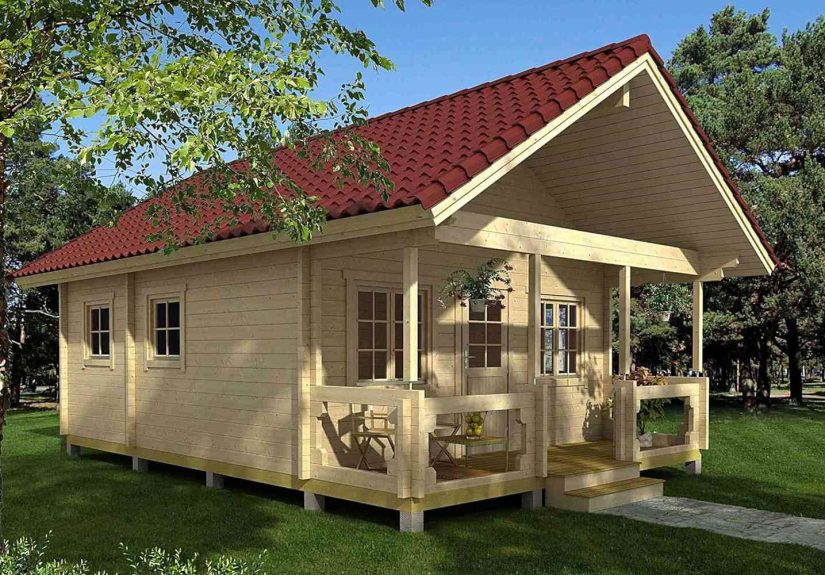
Recent coverage has described the Timberline as a roughly 483-square-foot structure with a main floor and loft, plus a front porch that does a lot of the emotional heavy lifting. The layout is flexible, but the standard concept includes open living space downstairs, room for a kitchenette, at least one bedroom, and additional sleeping or living space upstairs in the loft. In other words, it looks less like a backyard afterthought and more like the kind of place where someone might write a novel, host a weekend guest, or dramatically “disconnect” while still checking email on their phone.
The exterior leans hard into the classic cabin look. You get natural wood, a steep gable roofline, shuttered windows, and that covered porch that practically begs for plaid blankets, potted evergreens, and one very smug cup of hot chocolate. Inside, the warm wood finish gives it the kind of cozy atmosphere that many new builds spend thousands trying to fake. This one starts out looking like a cabin, which is part of the magic.
Why people are paying attention to cabin kits like this
The real reason a product like this gets traction is not just aesthetics. It is timing. Traditional housing remains expensive, and many buyers are getting more comfortable with smaller spaces, second structures, and flexible ways to use property. U.S. housing data has shown new-home prices staying far above what most people would call casual-spending territory, while homebuilders have also reported growing interest in smaller homes and right-sized living. Against that backdrop, a cabin kit under $41,000 does not just look cute. It looks like an alternative.
That does not mean it is automatically cheap in the big-picture sense. But psychologically, a $40,000 cabin kit feels dramatically more approachable than a conventional home with a price tag that starts in the hundreds of thousands. It also appeals to a wider crowd than full-time tiny-home purists. Some buyers want a guesthouse. Some want a studio. Some want a backyard office that does not require attending Zoom calls next to the laundry basket. Others want a weekend place where the loudest notification is a bird landing on the railing.
That versatility matters. A cabin kit like this can live many lives: vacation retreat, detached office, hobby room, art studio, future ADU, or a rental-style structure where local rules allow it. It is easier to justify a structure when it can evolve with your needs instead of locking you into one use forever.
What you get for the base price
Now for the important part: the base price is not the same thing as the final price.
With a kit like the Timberline, you are generally paying for the structural shell and the core materials needed to assemble it. That usually means the wood components, floor and roof construction materials, doors, windows, hardware, and instructions. The appeal is that you receive a designed package rather than starting from scratch with raw materials and a hopeful attitude.
The Timberline’s specifications are part of why it stands out. The cabin is made from Nordic spruce, a material that shows up repeatedly in coverage of Allwood’s more premium kits. It has enough room to feel substantial, and it looks refined enough that it can work as more than just a rough utility structure. This is not exactly “shed with ambition.” It is closer to “small cabin with a main-character porch.”
Still, cabin kits are famous for one thing: they look far more complete in photos than they are in reality. That is not a scam. It is just how kits work. You are buying the bones, not always the organs.
What is not included, and why that matters
This is where many dreamy product headlines meet the cold breeze of reality. Recent reporting and product background on Allwood-style kits make it clear that buyers should expect to handle several major pieces separately. For similar Allwood kits, roof shingles, tar paper, and foundation materials are not included. Coverage of the Timberline also notes that plumbing, electricity, insulation, and fully built-out kitchen and bathroom components are part of the after-purchase journey, not the opening act.
That means the cabin kit price is better understood as a starting line, not a total project cost.
If you want the cabin to function like a true livable space, you may need to budget for:
- foundation work
- roofing materials and installation
- insulation for your climate
- electrical wiring and fixtures
- plumbing and drainage
- HVAC or heating and cooling
- kitchen cabinetry, sink, and appliances
- bathroom build-out
- permits, inspections, and possible engineering review
- site prep, grading, and utility connections
That list is not meant to kill the vibe. It is meant to protect the vibe from being body-slammed by reality later. A kit cabin can still be an excellent value, but only if you understand that the photos show a finished vision, not the exact moment the truck leaves.
What the real all-in cost could look like
One reason this cabin kit feels so exciting is that small kit homes often fall into the same general price band as high-end renovations, luxury SUVs, or one very chaotic wedding weekend. Rocket Mortgage notes that small kit homes under 600 square feet often range from roughly $15,000 to $50,000, which places the Timberline right in the upper part of that bracket. So yes, the asking price is believable for the category.
But the total project cost can climb fast. Broader kit-home and cabin-cost estimates suggest foundation work alone can add thousands, roofing can add more, and plumbing and electrical are often some of the biggest line items. Interior finishes, HVAC, labor, land prep, and utility hookups can turn a $40,000 cabin kit into a much larger overall investment.
That does not make the Timberline a bad deal. It just makes it a project. Buyers who understand that up front usually fare much better than buyers who treat the listing like a plug-and-play home with porch included, happiness pre-installed.
A smart way to think about it is this: the cabin kit may buy you the structure and the look. The livability comes later, with planning and additional spending.
Permits, zoning, and code: the unsexy chapter you cannot skip
No one pins permit documents to a dream board, but they matter more than the porch flower boxes.
Off-site and kit-built structures are still subject to the rules where they will be installed. That means local code requirements, zoning rules, inspection processes, and foundation standards can all shape whether your project is simple, complicated, or a new part-time hobby called “calling the county.” Official guidance from the International Code Council notes that off-site construction still has to comply with the jurisdiction where it is assembled, and HUD research on accessory dwelling units shows how important local rules are when placing compact secondary housing on a residential lot.
Some buyers may hope to use a cabin like this as an ADU, or accessory dwelling unit. That can be possible in some places, but “possible” is doing a lot of work in that sentence. Local ordinances vary, and so do the rules around size, setbacks, foundation type, utility access, occupancy, parking, and whether the structure can be rented or used as a separate residence.
There is also a technical distinction between terms people often use interchangeably. Manufactured homes, modular homes, tiny homes, and kit cabins are not always regulated the same way. In everyday conversation, they all blur together into “small house I want.” In permitting offices, not so much.
Who this cabin kit is best for
This Amazon cabin kit makes the most sense for a buyer who is realistic, somewhat patient, and either handy or willing to hire the right help. It is especially appealing for people who want a structure with personality rather than a generic prefab box.
You are probably a strong candidate if you want:
- a guest cottage on an existing property
- a backyard office with actual separation from home life
- a vacation cabin shell you can customize over time
- a hobby or studio space that feels inspiring
- a cabin-style retreat with more charm than a metal prefab unit
It is also a compelling option for people who genuinely enjoy the idea of shaping a place. The Timberline is not for shoppers who want to tap “Buy Now” and start boiling pasta that night. It is for people who like the idea of making design choices, solving practical problems, and turning a structure into something personal.
Who should probably keep scrolling
If you want a fully finished, move-in-ready home with plumbing, appliances, insulation, and easy financing wrapped neatly into one package, this is probably not your best match. Likewise, if your site is difficult to access, your local permitting rules are strict, or you have no appetite for managing contractors, this kit may feel less like an adorable shortcut and more like a very organized headache.
Buyers in harsh climates should be especially careful. Wood cabin kits can absolutely work in cold or mixed-weather environments, but climate readiness depends heavily on the insulation package, foundation approach, roofing choice, air sealing, and how the interior is finished. Cozy cabin photos do not automatically equal four-season performance.
The real experience of buying a cabin kit on Amazon
There is something deeply funny and weirdly thrilling about adding a cabin kit to an online cart. It feels a little rebellious, like you have hacked adulthood. One minute you are comparing paper towels, and the next you are wondering whether your future porch should have a black lantern sconce or a wagon-wheel chandelier. The internet has always been good at selling fantasy, but cabin kits sell a very specific one: the fantasy that a calmer, prettier, more intentional life can be delivered in boxes.
And in a way, that fantasy is not completely wrong. The experience begins with excitement. You look at the photos and immediately start narrating a new life for yourself. Maybe it is a writing cabin. Maybe it is a lake escape. Maybe it is where your in-laws stay, which is perhaps the noblest use of architecture. You picture the windows glowing at dusk, a knit throw on a chair, a little table on the porch, and the kind of peace usually only found in coffee commercials.
Then the practical stage arrives. Suddenly, your search history becomes wildly less romantic. You are not googling “best cabin aesthetic” anymore. You are googling “what kind of foundation for cabin kit,” “can I run utilities to detached structure,” and “why does every permit form look like it was designed during the fax era?” This is the point where the dream matures. It stops being just a mood and starts becoming a project.
Delivery day would probably feel equal parts Christmas morning and logistical chess match. There is excitement, yes, but also a strong awareness that you now own a very large puzzle. Not the fun kind with a snowy village on the box. The kind where every piece can throw out your back if you get overconfident. Assembly becomes an experience in teamwork, patience, and the occasional sentence that starts with, “Well, according to the instructions…”
But there is also a strange satisfaction in that process. Every wall panel that goes up makes the place feel more real. Every window changes it from a pile of parts into a structure with personality. By the time the roofline is recognizable, the project starts giving something back emotionally. You are no longer just buying a space. You are building a memory around it.
And then comes the best part: the first ordinary moment inside. Not the dramatic reveal. Not the finished Instagram shot. The ordinary moment. Maybe it is sitting on a bucket because the chairs have not arrived yet. Maybe it is eating takeout on the floor. Maybe it is standing in the doorway at sunset, looking at a place that existed first as a product page and now exists as an actual room with actual light moving across actual wood. That is the part people are really buying. Not just square footage, but the feeling of creating a place where life can happen differently.
That is why cabin kits keep pulling people in. They are not just selling shelter. They are selling possibility with a porch attached.
Final verdict
The headline is real: there really is an Amazon cabin kit that has recently been listed for under $41,000. And yes, it is charming enough to make almost anyone start fantasizing about simpler living and better mornings. The Allwood Timberline stands out because it offers more space, more character, and more flexibility than many of the novelty-level tiny structures that crowd the category.
But the smarter headline might be this: This Amazon cabin kit is under $41,000, and that is only the beginning.
For the right buyer, that beginning could be fantastic. If you have the land, the patience, the permitting path, and the budget to finish what the kit starts, this cabin can become something genuinely special. If you want instant turnkey living for the sticker price, you may want to step away from the porch and read the specs again.
In other words, the Timberline is not a gimmick. It is a real opportunity wrapped in real work. And honestly, that might be the most cabin-like thing about it.