Table of Contents >> Show >> Hide
- Why the ’90s Kitchen TV Trend Is Back
- The “Newstalgic” Trick: Old Feel, New Hardware
- Choose Your “Kitchen TV” Style
- Where to Put It: Placement That Works in Real Life
- 10 Ways to Blend a Kitchen TV into Your Decor
- 1) Treat it like an appliance
- 2) Tuck it into a niche
- 3) Hide it behind a cabinet door
- 4) Use art mode and style it like wall art
- 5) Float it on open shelving
- 6) Go under-cabinet to save counter space
- 7) Frame it with trim or millwork
- 8) Cover it with a sliding panel
- 9) Make it part of a command center
- 10) If you need a swivel, keep it subtle
- Styling Formulas That Make It Look Intentional
- Setup Notes Designers Love (and Your Future Self Will Too)
- Common Mistakes to Avoid (So It Doesn’t Look Random)
- of “Kitchen TV” Experiences
- Conclusion
In the late ’90s, plenty of kitchens had a tiny TV perched on a counter, keeping you company through everything from school lunches to Sunday sauce. Then sleek minimalism, open-concept layouts, and “nothing lives on the countertop” rules took over. The kitchen TV vanishedalong with your excuse to watch daytime reruns while chopping carrots.
Now it’s making a comeback. Today’s version doesn’t have to look like you raided your parents’ basement. With slim smart TVs, art-mode “frame” screens, and compact smart displays, you can bring back the cozy kitchen-TV vibe and keep your space looking intentional.
Why the ’90s Kitchen TV Trend Is Back
Warm, nostalgic kitchens are trending again: wood tones, patterned backsplashes, and “lived-in” details that feel personal instead of showroom-perfect. In that context, a kitchen TV reads less like clutter and more like a comforting ritualbackground noise that turns cooking into a hangout.
Social media helped, too. People are styling small screens with layered, quirky decor (think fruit-shaped cookie jars and a comfort show playing softly in the corner). The goal isn’t high cinema; it’s cozy, everyday joy.
The “Newstalgic” Trick: Old Feel, New Hardware
The easiest way to make this trend work in a modern kitchen is to aim for newstalgia: keep the comforting vibe of the ’90s, but update the materials, proportions, and visual clutter. Translation: you’re not recreating a chunky CRT on a laminate counter unless you truly want to. You’re recreating the feelingthe gentle background TV energyusing a screen that fits today’s kitchens.
- Swap bulk for slim: a small flat-screen or smart display gives the same “company while cooking” effect without eating your workspace.
- Let decor do the nostalgia: bring in the ’90s through warm woods, playful ceramics, glass-front cabinets, gingham or stripes, and a few charming countertop pieces.
- Balance old + new: pair a modern screen with vintage-looking accessories (stoneware canisters, framed prints, wicker baskets) so the tech feels softened.
- Keep it edited: one screen + a few intentional objects reads curated; one screen + twenty random gadgets reads chaotic.
Choose Your “Kitchen TV” Style
Small smart TV (the true throwback, updated)
If you want full-on TVstreaming, news, sportsa small smart TV is the closest modern match. Sizes in the 19–32 inch range often work well in kitchens because they’re visible from across the room without dominating the wall.
Art-mode or frame TV (the decorator’s favorite)
Want the screen to disappear when it’s off? Art-mode TVs can display artwork so your “black rectangle” becomes… not a black rectangle. This is the easiest way to make a TV feel like decor rather than equipment.
Smart display (the countertop-friendly option)
If your main needs are recipes, timers, music, and quick videos, a smart display is low-commitment and compact. It’s also easy to move if you change your layout (or your mind).
Tablet on a mount (minimal + flexible)
A mounted tablet is great for renters or anyone who wants a removable solution. It’s excellent for recipe apps and video calls, and it can tuck away when you’re not using it.
Vintage CRT (maximum nostalgia, maximum personality)
A real CRT is a vibe. Treat it as a decorative statement and be honest about practicality: you’re doing it for the charm, not for 4K picture quality.
Where to Put It: Placement That Works in Real Life
A kitchen is hot, steamy, splashy, and full of sharp objects. Translation: placement matters. The best spot depends on what you watch and how you move through the space.
- Coffee station: ideal for morning news, weather, and “background comfort.” It’s also a natural styling zonetrays, mugs, and canisters help the screen feel intentional.
- Breakfast nook: great if you want the TV to function like a tiny “kitchen living room” moment. Art-mode works especially well here.
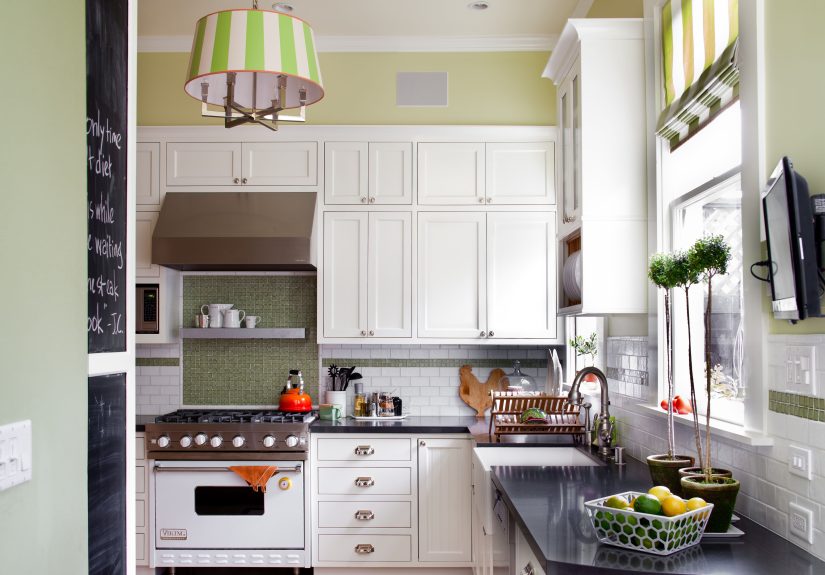
- Appliance wall or pantry run: perfect for integrating a TV like another built-in rectangle (and for hiding cables).
- Corner shelf: the most classic ’90s nod. Keep it tidy with a few anchored objects so it reads curated, not cluttered.
Whatever zone you choose, keep these basics in mind:
- Avoid heat + steam zones: don’t place a screen right above a range or where boiling pots fog it daily.
- Respect the splash zone: keep it out of direct sink spray (and far from your “power wash” faucet setting).
- Make it neck-friendly: “up high” can be okay for standing viewing, but too high gets old fast.
- Plan power and cords: hiding cables is half the design battle.
10 Ways to Blend a Kitchen TV into Your Decor
1) Treat it like an appliance
Group it with other built-ins (ovens, microwave, coffee station). In an “appliance wall,” the TV stops feeling random and starts feeling purposeful.
2) Tuck it into a niche
A shallow niche or recessed shelf makes a TV feel custom. Paint or wallpaper the back of the niche to tie it into your palette.
3) Hide it behind a cabinet door
Hinged, folding, or pocket-style doors can conceal the screen completely when it’s offperfect for traditional or cottage kitchens.
4) Use art mode and style it like wall art
Hang it where you’d hang a painting: near a breakfast nook, coffee bar, or at the end of a cabinet run. Choose art that matches your kitchen’s mood.
5) Float it on open shelving
Place a small TV on a shelf like you would a microwave. Balance it with cookbooks, pottery, and one “soft” element (a plant or textile).
6) Go under-cabinet to save counter space
Under-cabinet placement is a classic throwback. Keep wiring hidden and choose a clean mount so it doesn’t look clinical.
7) Frame it with trim or millwork
Even without a frame TV, adding simple trim or a matching surround helps the screen feel integrated rather than stuck-on.
8) Cover it with a sliding panel
Sliding wood panels, tambour doors, or an art panel can hide the TV and add textureespecially nice in warm, wood-forward kitchens.
9) Make it part of a command center
Put the screen near calendars, grocery lists, or a family hub. When it lives with “life admin,” it reads as a smart tool, not clutter.
10) If you need a swivel, keep it subtle
Articulating arms are practical, but they can look medical. Choose hardware that tucks close and pair it with cabinetry or shelving so it stays visually grounded.
Styling Formulas That Make It Look Intentional
Warm ’90s revival
Pair the screen with wood tones, patterned textiles, and charming countertop pieces (canisters, cookbooks, playful ceramics). The goal is “cozy kitchen,” not “tech corner.”
Modern minimal
Choose a frame/art-mode TV or hide the screen in flat-panel cabinetry. Keep styling sparse: one tray, one sculptural object, one plant. Stop there.
Classic cozy
Conceal the TV behind a cabinet door or within millwork. Add layered lighting and a few framed pieces nearby so the screen doesn’t become the only focal point.
Setup Notes Designers Love (and Your Future Self Will Too)
Make cords disappear. If you’re renovating, ask for a recessed outlet behind the screen and a hidden pathway through cabinetry. If you’re not renovating, use paintable cable channels and route cords along cabinet edges so they visually “vanish.”
When in doubt, get the wiring right. If you’re adding a new outlet or running cables through walls, follow local electrical requirements (kitchens often use GFCI protection) and consider hiring a qualified professional. A clean installpower where you need it, cords hidden, ventilation respecteddoes more for the “blended” look than any decorative canister ever could.
Think about viewing angles. Kitchens have multiple standing and sitting spots. A slightly angled mount or a location that faces your main prep area is usually more comfortable than a screen you can only see by twisting your body like you’re in a yoga class.
Plan for grease and cleaning. Even far from the stove, kitchens accumulate film. Choose a placement that’s easy to wipe down and keep a microfiber cloth nearby. The cleaner the screen, the more it reads like a deliberate design feature.
Choose sound that fits the room. Kitchens are noisyvents, dishwashers, sizzling pans. If you watch often, a compact speaker or small soundbar (neatly placed) helps without turning dinner into a stadium event.
Curate “kitchen content.” The charm of this trend is low-stakes viewing: cooking shows, morning news, comfort sitcoms, and playlists. When the content matches the space, the screen feels cozynot distracting.
Common Mistakes to Avoid (So It Doesn’t Look Random)
- Going too big: a giant screen can overpower cabinetry. In most kitchens, smaller reads more intentional.
- Mounting it too high: “I’ll watch while standing” sounds fine until your neck disagrees. Aim for comfortable sightlines from your usual spots.
- Ignoring glare: direct sunlight or bright task lights can wash out the picture and make the screen feel harsh.
- Letting cords hang: visible cables instantly turn “designer moment” into “temporary setup.”
- Putting it in the danger zone: too close to a range, sink spray, or heavy-traffic corner invites steam, splashes, and bumps.
of “Kitchen TV” Experiences
A kitchen TV doesn’t just add a screen; it changes the rhythm of the room. Not in a dramatic “my life is a montage” waymore like a string of tiny moments that add up to cozy.
Morning coffee turns into a landing pad. Picture a quiet weekday at 7:12 a.m. The kitchen is softly lit, the kettle is warming up, and the screen is on low volumeheadlines, a weather map, or a familiar comfort show. You’re not scrolling at the counter with one eye closed. You’re present, holding a mug, letting the day start gently.
Meal prep feels less like a chore. Chopping vegetables is calming until it’s not. A kitchen TV gives you company while you work: a cooking tutorial that actually teaches a technique, or a sitcom you can half-listen to while you rinse rice. The best part is practicalyour phone stays out of the splash zone, and you stop balancing it against a spice jar like it’s modern art.
People drift inand stay. When something is playing, the kitchen becomes a magnet. A kid grabs a snack and ends up perched at the island because “this episode is the funny one.” A roommate lingers to chat while you unload the dishwasher. Even adults who swear they’re “just passing through” somehow wind up leaning on the counter for five minutes. The screen creates that old-school “someone’s home” hum that many ’90s kitchens had.
Weeknight dinners feel less rushed. On busy nights, the screen can keep the mood light while you cook: a playlist of old music videos, a short recipe clip, or even a timer-focused “cook with me” stream. It’s surprisingly motivatinglike having a tiny cheerleader that reminds you dinner can be pleasant, not just productive.
Hosting gets easier (and a little more fun). When friends are over, a kitchen TV can quietly show a game on mute, a photo slideshow, or a holiday movie in the background while everyone grazes. It gives people something to glance at between conversationslike a digital fireplace, but with more pasta.
You learn what “kitchen content” really is. This isn’t the room for tense, blink-and-you-miss-it thrillers. The kitchen likes low-stakes joy: baking competitions, travel food shows, old sitcoms, music videos, or a live sports game on mute while you host friends. The screen becomes part of the atmospherelike lighting, scent, and the clink of dishes.
You also discover your boundaries. The happiest setups feel optional. When the screen can disappearbehind a cabinet door, under a shelf, or into art modethe kitchen stays a kitchen. You can switch it off and let the room breathe. That’s the sweet spot: a touch of comfort when you want it, and a clean, beautiful space when you don’t.
That’s why the trend works. A kitchen TV is less about being glued to the tube and more about giving the heart of the home a little companythen styling it so well your backsplash doesn’t file a complaint.
Conclusion
The beloved ’90s kitchen TV is back because it’s both practical and emotional: it keeps you company, supports real routines, and adds a cozy “home” feeling. Choose a screen that fits your space, place it thoughtfully, hide the cords, and style it like it belongs. Your kitchen can be functional and funno rabbit ears required.